Prophetic Reform: Why Rectifying People Comes Before Seeking Power
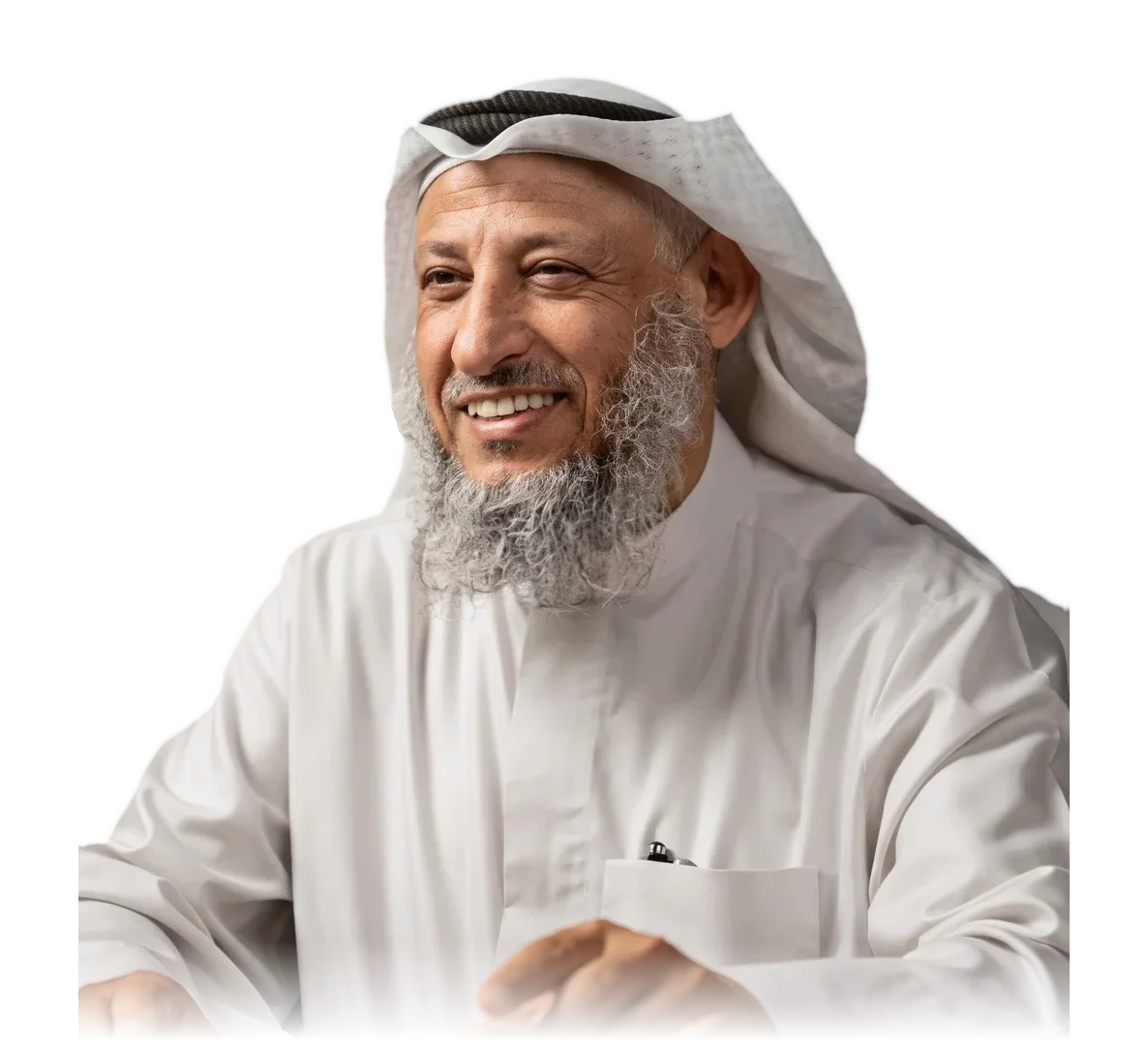
In this lecture, the speaker explains the Prophetic methodology of reform, emphasizing that rectifying the hearts of the people must precede the pursuit of political power. Drawing examples from the lives of the Prophet Muhammad ﷺ and Ibrahim (AS), he highlights how calling to Allah ﷻ is the primary goal. Additionally, he addresses the belief in the miracles (karamat) of the awliya.
Rectify the people.
If the people are rectified, then matters will follow automatically.
As for the one who says, "Revolutions, and I will reach power, then...
...you force the people," this is nonsense of no value.
Wasn't kingship offered to the Prophet ﷺ?
Quraysh said, "If you wish, we will make you king over us."
"If you wish, we will lead you, and decide nothing without you."
He could have said, "Alright, make me king over you."
He would have become king, then said, "Come,
worship Allah — I am the king,
I will bear with you. Worship Allah."
No, he did not do that. Why?
Because that was not his goal.
When Ibrahim (AS) went to Nimrod,
did he dispute his kingship?
He called him to Allah, Blessed be He.
What did Musa (AS) say to Pharaoh?
"Send the Children of Israel with us" — "with me."
He called him to Allah ﷻ.
Noah, and all the prophets: Salih, Hud, Shu'ayb...
They did not contest their rule, nor did they seek it.
Rather, they wanted people to worship Allah ﷻ.
All the prophets were sent to call to Allah the Almighty.
Likewise, if we worship Allah as He deserves,
all these matters will happen automatically. They will be eased.
"If you support Allah, He will support you."
Good evening,
and welcome to the "Without Papers" podcast.
Today's episode is different, with Sheikh Othman Al-Khamis.
Different because we held two sessions — we usually have only one.
In our first session with Sheikh Othman, we asked important questions and raised very important topics,
After the session, we found questions we'd missed, and wanted to open the floor to the audience.
May Allah reward the Sheikh — he accepted our invitation for a second recorded session.
And right after he accepted, we opened the floor to the audience through social media channels,
and there was great participation, with many questions posed to Sheikh Othman.
We summarized these questions and asked them to him.
The first session that you will see now is the audience's Q&A session,
and the second session is the main topics that we had prepared for him on 'Without Papers'.
A very enjoyable talk with Sheikh Othman Al-Khamis — masha'Allah, he draws you in.
Therefore, I wish you an enjoyable watch. With you is Faisal Al-Aql,
and this is the 'Without Papers' podcast.
What is the reason for choosing the name?
'Without Papers'. We, may you live long...
The idea behind traditional shows...
...is that when the environment is traditional, the result also becomes traditional.
Meaning, there are papers in the interview, so we...
...have to prepare. Prepare.
We just want to chat.
Spontaneously.
Spontaneously, as if we're sitting in a Diwaniyah, but respectfully.
And we believe that since we are producing artistic content in the end,
we know if we present content differently, the results will be completely different.
True, indeed.
So we said, this is it.
By Allah, Mohammad told me it's one of the most successful shows.
Alhamdulillah.
May Allah grant you success.
Alhamdulillah. It's your trust, may you live long.
I don't follow it, forgive me, but my son Mohammad...
...Mohammad told you the other day that it reaches foreigners.
...he listens to it in the car with a foreigner,
but he tells me about your show, Mashallah.
He says it's one of the most successful shows, if not the most successful.
Alhamdulillah. The guests, may Allah reward them, their trust, and we just...
And your selection too, Mashallah, and also your presentation and style...
and the young lady with you, may Allah protect her.
May He protect you too, Inshallah, may you live long.
Our idea is to ask real, insightful questions.
That is the most important thing.
And as I told you, we opened the floor. We have our own questions,
but we also opened the floor to the audience,
and Subhanallah, the audience engaged excellently.
Mashallah.
We don't want to deprive our followers, Inshallah.
May Allah protect you. Bismillah. To start, Doctor...
Before we begin, I have a question.
I would like to know from you personally,
who is the reciter you like to listen to, whether in general or in the Haramain?
Whom do you feel at peace listening to?
By Allah, I usually like to listen to Al-Minshawi.
Al-Minshawi, I see. What does that mean?
May Allah have mercy on him. I feel at peace.
- At peace. - I feel very at peace listening to his recitation.
And as for the younger reciters, Ahmad Al-Ajmi.
Ahmad Al-Ajmi.
From the Eastern Province.
From the Eastern Province, I see.
Yes, I feel very at peace with his recitation.
Indeed, wonderful.
And of course, there is a specific Surah that I like to listen to by Mishary Al-Afasy.
Which is?
Which is Surah Al-Qasas.
I listen to it right before I sleep.
He excelled in it; I feel he excelled in it greatly.
I feel at peace with his recitation. I listen to it.
We will put it in the description below for the viewers watching.
Because you encouraged me, I want to listen too.
No, no, listen to it. I mean, Masha'Allah, he recites it...
He did so well, it is as if he is reciting and explaining it.
Like an explanatory recitation—that's how I feel.
Maybe others... it depends, it just resonated with me that way.
I was listening to... Astaghfirullah, I forgot his name.
But I was listening to a narration different from the Quranic narrations.
The Qira'at.
Qira'at—are they narrations or Qira'at?
Qira'at.
They are all narrations. Qira'at and narrations are not the same.
In the narrations, in some of... do the meanings change with...?
It is possible, it can give you an additional benefit.
Okay, and...
...your Lord, and 'your Lord commanded'...
“To Allāh belongs whatever is in the heavens and earth. Indeed, Allāh is the Free of need, the Praiseworthy.” (Quran 31:26)
"Indeed, Allah is the Free of need, the Praiseworthy."
"...under which rivers flow."
"Indeed, he was of the chosen ones."
Meaning he was sincere, then Allah chose him for Himself.
You get meanings like: "The waters met for a matter destined."
So the waters met—meaning the water of the sky with the earth—for a matter.
You get very new, beautiful meanings in the recitations.
The science of Qira'at is a very beautiful science.
I am not deeply specialized in the science of recitations, but I like to read about beautiful recitations.
I listened to Sheikh Rashid Sufi.
He is well-known. And he is the one...
...outstanding in Hamzah and others.
Now, Abu Muhammad, which scholars do you refer to—
—in books or alive today, if a difficult Sharia issue arises?
In the past, our Sheikh, Sheikh Ibn 'Uthaymeen (RH),
if something was unclear, we would travel to him.
I rarely called. I would go to him, traveling to Al-Qassim to ask him.
With your questions prepared?
I would prepare my questions and go to him.
Sometimes I'd go just for one question.
So if a question came up, I would just make a quick trip to him.
Currently, there are some Sheikhs, like Sheikh Sa'd al-Humayd,
Sheikh Salih Al-Sheikh, and Sheikh Muhammad bin Hasan Al-Sheikh.
These are the ones outside Kuwait. In Kuwait,
there are some brothers, like our brother Waleed Al-Deyouli,
our brother Abdul-Qadir, and our brother Muhammad Al-Humood. You could—
meet to discuss Sharia matters and debate them?
It is more about sitting for a chat or a Q&A.
Ali might have knowledge on a certain issue, while I don't.
That's fine. Praise be to Allah, I have no problem asking anyone.
Is there a difficult issue you recall from recently that preoccupied you or something?
Not really difficult. I remember during the days of Sheikh Ibn Uthaymeen (RH)...
I remember a problem we had in Kuwait.
People would call me. Okay?
They called me saying, "We want a lecture."
Okay. I didn't know him, he was talking to me on the phone.
"I want a lecture." I'd say, "In sha Allah. Where are you?"
He would say, "Such and such place." I would give him an appointment. "Okay, In sha Allah."
While I was on my way, I received a phone call:
“Where are you going, Sheikh Othman?”
I said, "I'm going to give a lesson."
I didn't know who was calling. —Yes.
"I have a lesson." He said, "Those people you're going to—"
"—they are Turathis, meaning the Revival of Islamic Heritage Society,"
"the Heritage Society." —Okay.
"They are people of innovation, and this and that."
I said, "My dear, what is the matter?"
"These people have an appointment with me for a lesson."
“What do you want? Goodbye.”
Okay? —Okay.
A week later, I was also going to give a lesson.
Okay? I can tell you, it was at 10:00 AM in Al-Raqqah.
I was going to give a lesson and got a call the day before.
That one came while I was on my way. —Yes. —Yes?
He said, "Where are you going? You have a lesson,"
"with the group here?" I said, "Yes."
"They are Takfiris, why are you going to them?"
And brother, once I had a lesson, and the same thing happened.
A friend called and said, "Why go to them? They're Takfiris!"
I said, "What's the matter? I don't investigate people."
"If someone calls asking for a lesson, should I interrogate him?"
I remember at that time, my brother Dr. Mohammad Al-Tabtabaei and I went to Sheikh Ibn 'Uthaymeen (RH).
I went and said to him, "O our Sheikh, after we graduated and studied under you, we decided to give lessons.
I told him, 'Sometimes people call me and say, "Come give us a lesson."'
'And I do not investigate them, nor do I know them.'
'I just go and give them a lesson.'
But some criticize me: 'These are Tablighis, Muslim Brotherhood,'
these are the Heritage Society, these are Takfiris,
...these are I don't know what!' and so on, look at all these labels.
So, should I go or not?
I asked the Sheikh (RH).
He said to me, "I will ask you a question," (RH).
He said, "I will ask you a question." I said, "Go ahead."
He said, "When you go, do you say what they want..."
"...or do you say what you want?"
I said, "O our Sheikh, no one imposes anything on me."
"I say what I want."
"No one forces me to say something I do not believe in."
He said to me, "If they invite you, go."
"As long as you say what you want,"
"go, there is no blame on you."
Alhamdulillah, I adopted this as a methodology in my life.
Then I closed that door.
- You closed it? - I closed it. - Why?
- It is better to go to... - Lessons in the mosque.
- In the mosque. - But I do not go to diwaniyas.
I stopped all diwaniya lessons—they only caused these problems.
- This whole issue... - Yes. The categorizations, yes.
"This one is so-and-so, that one is so-and-so..."
And you get linked to this person or that.
I don't want to be linked to anyone.
I want to be counted among Muslims in general.
If anyone wants me, I'll teach in a mosque under the Ministry of Awqaf.
- Praise be to Allah. - Whoever wants me can come. - I'm relieved. - Yes, great.
Now, Doctor, recently we have seen, especially on social media platforms...
...news being circulated, and most of the time about well-known people going through legal cases...
...or certain issues, and this information about the cases is published,
and sometimes the cases are quite personal, but...
the person is helpless — a public figure, known either positively or negatively,
However, people say, "No, they must be made an example of. This information must be spread..."
Others say, "No, by Allah, we must cover for them, even if they're not well-known." What do you think?
The default is to conceal a Muslim's faults.
Meaning, he is presumed to be innocent.
Look, let me tell you something.
Just now, while I was on my way here,
someone called me.
He said, "There is someone I know."
Okay? He prays, remembers Allah, has memorized the Quran, and everything is perfect with him.
Okay? He was surprised when he wanted to get married or get a job.
When he sought work, they tested him and found he had AIDS.
La hawla wa la quwwata illa billah.
He said, "I don't recall doing anything wrong."
"I never strayed, never did this, never did that."
Where did this illness come from? I don't know.
Right? I mean, take this person, for example.
Given the severity of the illness, he then recalls...
...I mean, when he was young, people assaulted him.
Right? But in public, should someone like this be exposed?
"He has AIDS — surely he was immoral, surely it means..."
The basic principle is concealing people's faults.
One should shield people's faults just as— look, put yourself in his shoes.
Would you accept people spreading this talk? Of course not. That's it.
Look, the Hadith of the Messenger ﷺ solves this problem for you.
Just put yourself in his shoes. That's it.
Subhan Allah, this has always brought me peace.
"Even when I answer people, they feel relieved." "True."
I say: put yourself in his shoes.
Would you accept this or not?
If he says, "I wouldn't," I say, "Then don't accept it for your Muslim brother, or even a non-Muslim."
Injustice is darkness for Muslims and non-Muslims alike, but worse for a Muslim.
So if you don't accept it for yourself, don't accept it for others.
I believe this is the solution to this problem, but it is absolutely impermissible.
Okay, now Abu Muhammad, recently, isn't it that every Ramadan and every Eid we see...
...a group of people, or the people of Sudair, going out to sight the crescent moon to see if it is there?
- Tumair. - The people of Tumair. - Tumair is part of Sudair. - Yes, part of Sudair.
They go out to see if the crescent is visible.
Now they say science and astronomy can tell us a hundred years ahead when the crescent will appear.
Those astronomers...
Yes, those astronomers who go out—one of them is the director of the astronomy department at Majmaah University.
- Yes, mashallah. - They are not laypeople; they are students of knowledge.
- But I mean... - The director of the astronomy department at the university. You know, their head is my friend Abdullah Al-Khudairi.
The head of the astronomy department at the university—so not ordinary people. That's one point.
Second, the lunar months have nothing to do with astronomy. The lunar months depend on sighting.
That is why the Prophet ﷺ said: "Fast when you sight it and break your fast when you sight it."
Astronomy, through study, says it might be born on this day,
or that day, but whether it is visible or not is another matter.
Our relationship with the moon, or the crescent, is with its sighting, not its rising.
There is a difference. Yes, let it rise, no problem. If it rises but we don't see it, we are not bound by it.
Our obligation is tied to its sighting, not its rising.
And that is why you see Sharia rulings... This is the grace of Allah ﷻ.
Sharia rulings are connected to the crescent months, the lunar months, not the solar ones.
No one knows the solar months, whereas the lunar months, everyone knows them.
If you have no watch or anything and you are in a desert,
a forest, or an isolated place, can you know the Gregorian date?
- The Gregorian? No, you can't know it. - But the Hijri—the moon. - Right.
With the sun you can't tell, but with the moon you can.
You see the crescent. Once the crescent appears, the month begins.
Right? Once the crescent disappears, the month ends.
It becomes a crescent, then a full moon mid-month, then like the letter 'baa'—
that is for the first fifteen days.
And like the letter 'dal' for the second fifteen days, you see?
So here, everyone knows it,
the scholar and the layman, the man and the woman, the city dweller, the bedouin,
those who read and write and those who cannot—everyone knows it.
So it is from the mercy of Allah ﷻ that He linked the rulings
to the lunar months, including fasting.
Yes, and beyond fasting—expiations and Hajj—all based on the lunar months.
- Is that so? - Yes. - That is why it is clear now.
I thought it was based on its rising.
No, no — based on sighting it. Sighting it.
Okay, well, Doctor, in this day and age,
life is fast-paced; it's hard for people to be patient.
- Fast. - Fast.
Information is transmitted quickly. Cars, I mean, used to be slower.
Two weeks ago, not yesterday, I had a lesson. - Yes.
When the lesson ended, someone called: "I was watching you from Japan."
Masha'Allah, attending live.
Believe it or not, I just attended your lesson that finished.
He told me, "From Japan."
By Allah, another called: "I just finished the lesson, Masha'Allah — in Libya."
Masha'Allah. - So fast. - Indeed, it is fast. Distances have shrunk.
So today, there is an impact. I think this information travels fast.
People want everything fast, fast, fast.
So how can one maintain patience? How can they maintain...
What happens to a person when they get everything fast, fast, fast?
Nothing. Our issue — my grandfather and your grandfather.
He had none of these means of communication. What did they lack?
They lacked nothing.
You see, when we gather more information and know about TikTok—well, I don't have TikTok yet. Look,
knowing about TikTok, or what do they call it, Instagram, or others.
Yes, by Allah, "This just happened in London. Look, I saw it." Okay, how did you benefit?
You know what? On the contrary, these things are deadening the heart.
A person is no longer moved by such things that happen. They have become like ordinary things that do not affect a person.
The Companions (RA) knew nothing of the West, yet they lived happily.
We now are distracted. - Exactly. - Rather, these have distracted man from his real duties.
I do not call it social media; I call it social disconnection, honestly.
Because he communicates with strangers — mostly with strangers.
For instance, someone uses a pseudonym, especially on Twitter and such, he uses a pseudonym. Who is this?
He hasn't seen his aunt for two months, his uncle for three months, and he hasn't spoken to his brother for a year.
Where is the connection? What connection? While he sits in his room.
I like what some people do. I haven't seen it, but I heard that when he enters the house, he turns off the internet, saying, "I want to see my kids."
Indeed, it's off. "Is everything okay?" "Come and sit, I want to sit with you."
So I don't call it social media — it's social disconnection, leaving everyone in their own world.
Because even the young have become the reference for adults.
Yes, indeed.
You just mentioned that it deadens the heart.
For there is a Hadith: "Beware of laughing too much, for laughing too much corrupts the heart."
This is a narration from Umar (RA).
Yes, Al-Albani graded it, if I'm not mistaken.
Now, the idea of someone laughing a lot...
What's the difference? What does it mean that it deadens the heart?
Yes, because when someone is always laughing...
you know, they do not take matters seriously.
You know, the Prophet ﷺ only used to laugh by smiling.
Rarely did we see the premolars of the Prophet ﷺ.
Meaning, laughing with teeth showing, mouth wide open — it was all smiling,
ﷺ.
He was dignified; he would laugh a dignified laugh.
You know? Whereas laughing out loud...
As for excessive laughter, it indeed deadens the heart.
A person becomes undignified and frivolous.
So there is no doubt excessive laughter deadens the heart.
Muhammad, Masha'Allah, you are calm and you try to maintain your composure in lessons.
No, I do laugh.
I'm actually falling short in this regard.
Regardless of you or anyone else, Doctor.
My point is that it is important for a person today to maintain their composure,
and to maintain their dignity and...
True.
...not to get angry and so on.
Indeed. Yes.
In your view, what are the things that help
a person become a bit wiser and calmer?
Of course, reading texts from the Quran or Sunnah, such as "those who restrain anger."
When one reads the Hadith of the Prophet ﷺ: "If you become angry, remain silent."
One should think with their mind: if you get angry, then what?
What comes after anger?
Those who get angry always regret their actions.
Ninety percent of divorces that occur are due to anger.
When a person gets angry, they might kill.
And many criminals killed or did something similar in their anger.
And even the Dajjal will emerge because of a fit of anger.
So, anger... fundamentally, a person should control themselves.
And the Prophet ﷺ would not get angry except when the sacred limits of Allah ﷻ were transgressed.
He would control himself. This is our role model. O Allah, bless our master Muhammad.
Therefore, a person must try to control themselves.
These are emotions that you must control. Do not let them control you.
Don't let them play with you; you play with them — discipline and control them.
But if you let them play with you, they will ruin you.
Indeed. This is the one who follows his desires, Doctor.
Now, not all, but many of those who call me...
...say to me, 'By Allah, I divorced my wife,' all because of anger.
'She provoked me,' or 'she got angry,' or whatever the case may be.
If a person were to control himself when angry, as the Prophet ﷺ said:
"The strong is not the one who wrestles others down"—meaning, not the one who defeats people—"but the strong is the one who controls himself when angry."
So, the one who follows his emotions — is he the one who follows his desires, or who?
Part of it. Part of it.
A wise person is the one who controls himself and manages his affairs.
Doctor, we opened the floor to viewers and gathered their questions — I'll begin.
And there are indeed various types of questions, so we tried to group each type together.
- Right. - Samo Murad asks: when you speak about differences among madhhabs in general,
...the difference between the Ash'aris, Sufis, and Ibadis, and your view on them?
There are many. Each has their own methodology and path, you know?
The Ash'aris attribute themselves to Ali ibn Isma'il, Abu al-Hasan al-Ash'ari. The Maturidis to Abu Mansur al-Maturidi.
- Sufism? - The Ibadis, for example, to Abdullah ibn Ibad.
- Sufism. - Sufism. Of course, Sufism has no specific person they follow.
Especially Sufism, which is very late.
Meaning, it is not based on individuals, but rather, let's say, paths.
Sufi paths, they call them Sufi orders.
Rifa'iyyah, Naqshbandiyyah, Baziyyah, Qadiriyyah, Tijaniyyah.
There are so many, you would get tired of counting these paths.
Once, I was in Egypt, at the Al-Hussein Mosque,
and they were celebrating the Mawlid.
Every hour, a different Sufi order would pass by.
They were holding something like... what do you call it?
A banner — I'm not sure — held by two people, one on each pole.
The banner. Their banner.
The Baziyyah order, the Rifa'iyyah order, the Tijaniyyah order.
In the celebration... the Dasuqi order. There are so many paths!
And these are just a small fraction.
Look at how many other paths there are; Sufism has so many paths.
So they do not associate themselves with a specific person, but rather with the word Sufism, or Sufi.
Then they differed: what does the word 'Sufiyyah' trace back to?
They say it comes from 'safaa' (purity) and clarity, and so on.
But most scholars do not agree with them on this.
Some say it is from 'tasawwuf', from wearing wool (soof); they wear wool.
And some say Sufiyyah is from 'Theosophia', which is a Greek word,
meaning from Western philosophies, called 'Theosophia', which means the love of wisdom.
So they named Sufism after this word, which is originally non-Arabic, okay.
And some say Sufiyyah is in reference to the Suffah in Madinah, which is Ahl al-Suffah,
the poor Muslims, so they were called Sufiyyah because they were Ahl al-Suffah.
And the closest, and Allah knows best, is that it means the love of wisdom—a philosophical word that is originally non-Arabic.
So what is the issue with Sufism?
Sufis claim to be spiritual people—this is what reaches the public: that they are spiritual and have spiritual rituals.
The issue with Sufism is that, in my opinion, they are divided into three categories.
Among the Sufis, let's say, there are the heretics,
the innovators, and the ascetics. Okay.
Alright.
The heretics are those who reached the level of disbelief. For example, Al-Hallaj used to say, "I am Allah."
I seek forgiveness from Allah the Almighty.
We seek refuge in Allah. Another says, "Glory be to me, how great is my state!" Meaning, "I am Allah."
A third says, "The dog and the pig are nothing but our God, and Allah is but a monk in my church."
Meaning, they believe in incarnation—that Allah dwells in things and unites with them. Okay.
These are acts of polytheism and disbelief in Allah, Blessed and Exalted.
An amusing anecdote is that I was once in the Holy Mosque of Makkah,
...for Hajj. We had performed Umrah and were awaiting Hajj.
I think it was the 6th or 7th of Dhu al-Hijjah, I don't remember exactly when.
But it was during Dhu al-Hijjah. We had done Umrah early and went to wait for Hajj so we could pray in the Haram every day.
We were sitting on the roof of the Haram.
And while we were sitting, a poor old man asked my companion.
I should mention, with me was our brother Khalid Al-Sama'i. So he asked him a question.
I even forgot the question, as it wasn't directed at me but at him. I don't remember it.
But I recall the question was, I think, about Tawaf or something. So he was asking him.
So our companion answered him. And as he answered him, that man started shuddering.
His way was like this, shuddering like this.
I was surprised. I said, "What's wrong with you?" He had received quite a shock...
I asked, "What is wrong with you?" He said, "Nothing."
I said, "What do you mean nothing? Why are you twitching like that?"
He stared at me. I said to him, "Nothing."
When he stared at me, I stared back at him.
I said to him, "Why are you doing this?"
He screamed, then he got scared on his own.
He said, "Look, my son,
the thing is, when the people of the Tariqah connect with our Lord, they are protected from things."
I said, "What? Where are you going with this?
What do you mean 'connect with our Lord'? You don't even know the ruling on Tawaf.
What do you mean 'the people of Haqiqah connect with our Lord'?
And I started advising him, "Okay, this kind of talk is not permissible."
Of course, you remember how I started my story.
He yelled at me, so I yelled back at him.
People gathered around us on the roof,
forming a circle of maybe twenty or thirty people.
Okay, and I was talking to him.
This one drew closer, that one drew closer, seeing us talk, a circle formed.
So I took it as an opportunity and began to advise them.
I said, "This is the work of the Sufis, and this is not permissible, and this is so-and-so."
Two men in Ihram passed by—Syrians, I remember them.
We were not in Ihram; we had finished our Umrah, in our robes.
Two men in Ihram passed by and sat in the middle.
They stepped over the people and sat in the middle.
And one of them said to me,
"What, you don't believe in the miracles of the Sufis?"
I said to him, "I believe in the miracles of the awliya."
He said, "No, you don't believe in the miracles of the awliya."
He said, "You don't believe in miracles." I said, "No, I do believe in miracles, but I do not believe in the miracles of heretics."
"I do not believe in the miracles of one who says, 'I am Allah.'"
"Or one who says, 'Glory be to me, glory be to me! How great is my state!'"
"Nor do I believe in the one who says, 'The dog and the pig are nothing but God here.'
I do not believe in these people."
He said, "That is your problem."
I said to him, "How is it our problem?"
He said, "You do not understand."
I said to him, "Explain it to me."
Of course, by now the crowd had grown.
I said to him, "Explain it to me."
He said, "When Al-Hallaj said, 'I am Allah,'
he lost his mind for a minute.
He said, 'I am Allah,' then he regained his sanity. 'Do you think I am crazy?'"
I said, "Seriously?
Do you believe this talk?
If so, there is no disbeliever at all. Everyone...
...who utters a word of disbelief, it is just dismissed like this,
even if it is this big. Then they say, 'By Allah, he was crazy.'"
They have what they call 'Al-Fana' (annihilation).
'Al-Fana' in Allah.
Once you reach that, say whatever you want.
Once you reach that stage, the Pen is lifted from you.
"Okay." He said, "Do you think I'm crazy?"
I told him, "If you believe these things, you are the crazy one."
I don't believe these things. But I didn't tell him, "You're the crazy one."
I said, "If you believe these things, I don't believe they happened."
I told him, "The Muslim scholars back then in Al-Andalus..."
I said, "Muslim scholars in Al-Andalus unanimously agreed he was a disbeliever, executed for apostasy."
"Meaning, they didn't understand?" He said, "No, they didn't understand."
"You want proof?" I said, "Give me the proof."
He said, "You see, when they killed him"—he's speaking now—
"...when they killed him, blood came out."
"When they cut off his head, blood came out and wrote 'Allah' on the wall."
"So this is proof that the man was a monotheist."
Subhan Allah.
A week before that, before I went to Makkah.
He said some personal words to me, not meaning anything by them.
He hadn't said such things in a long time.
Regarding Ibn Taymiyyah (RH), someone said to him, defending Al-Hallaj:
He said to him, "Al-Hallaj is innocent, as evidenced by the fact that when he was killed,
blood came out and wrote 'Allah' on the wall."
What did Ibn Taymiyyah (RH) say?
He said, "This is proof of his wickedness.
Because spilled blood is impure, and no one writes the Name of Allah with impurities except a disbeliever."
See how he turned it against him!
My point is that these Sufis who say, "I am Allah,"
like Al-Tilimsani and Ibn al-Farid... you might remember the issue that happened in Kuwait
when they held a ceremony about Ibn al-Farid and so on,
whose poems are all blasphemous in this regard,
which is hulul and ittihad.
You know?
And that Allah manifests in human form, or wahdat al-wujud—that nothing exists except Allah. This is disbelief.
This is the atheists' side, you said?
Atheists. And these, unfortunately, without exception—
—without exception, are revered by the Sufis.
Ask any Sufi casually—ask him, "What about Al-Hallaj?"
He'll say, "I hold him in the highest regard."
"Ibn Arabi al-Ta'i, Muhyiddin, I highly respect him."
"Al-Tilimsani, I highly respect him." Ibn al-Farid...
...what's his name, Abu Yazid, there is disagreement about him, you know?
So you find that these figures are revered by these Sufis.
Okay. This is the first group.
Okay. And by the way, most Shia scholars are Sufis.
How so?
Meaning they have this concept of ittihad, and Khomeini, his teachers, and so on. Almost all of them are Sufis.
Okay. Along this line, there is hulul, ittihad, and so on.
I
said,
When you look at the other side, let's say, the people of innovation,
Mawlids. Piercing the stomach with a skewer so it exits the back.
"Go
What do they call it? Yes, I didn't finish this story for you.
ahead,
When I told them this. Yes.
One of them said to the other,
He said, "This man doesn't believe in the karamat of the awliya."
show
"Show me a miracle! Show me a miracle!"
"Let him show me a miracle." I said, "Excuse me?"
us a
"Let him show me a miracle."
He said to me. I said, "And why don't you show me?"
miracle."
He said, "I haven't reached it yet." "I have reached it! I have reached it!"
I said, "You have reached it?" He said, "I have reached it."
And he said to me, "Give me a dagger..."
"...to insert it—a shibriya, a dagger—into my stomach and have it come out of my back."
I said, "We're in the Haram — you can't bring a shibriya in here."
He said, "Light a fire, I'll walk through it." I said, "In the Haram? How can I light a fire?"
"Find me something reasonable."
And I had a pencil, one of those with a sharp tip. I said to him, "Go on, insert this into your stomach and have it come out of your back."
He took it. By Allah, just like this. He took it, looked at it, and tapped it.
He didn't give it back — may Allah guide him. He threw it away saying, "This won't do. Not sharp enough."
He said to me, "No, this won't do."
I said, "Aren't you the people of the khutwa?"
He said to me, "Yes."
I said, "Come to the roof edge — we're on the roof."
What do you mean by "people of the khutwa"?
They take one step...
...and you arrive at the place you want.
We had a doctor, may Allah have mercy on him and remember him well.
We had a Sa'idi doctor who said, "I went back to Upper Egypt after being away from my family for two years,
and I found that a Sufi sheikh had come and deceived them."
He said, "When I arrived and he knew I studied in Saudi Arabia, he hated me and I hated him.
It was mutual love."
So I asked them, "What is this?" They said, "He is...
one of the Awliya of Allah ﷻ."
I said, "Alright, God willing."
Anyway, he said, "I told them, 'It is not right that he does not pray with us.'
They said, "Pray with you? He goes to pray in the Haram!"
'These are people of Allah, the people of the step.'"
...a step to the Haram.
He said, "That cannot be. The Prophet ﷺ migrated
for ten days or two weeks.
And this one is a step to the Haram? This cannot be, good people.
He said, "No, no, these are people of God."
He said, "And what if he turns out to be a liar?"
"How could he be a liar? He is a wali."
"He is like this." He said, "Alright, insha'Allah."
He said, "That day, I had a few of our group with me, saying, 'Oh my father!' and so on."
I said to him, "O Sheikh, why don't you pray with us?"
He said, "I pray with you?"
"I pray in the Haram."
I said to him, "Okay, did you pray Asr in the Haram today?"
He said, "No."
He said, "On time." Meaning, not making it up.
He said, "On time."
He said, "With the Imam?"
He said, 'No.'
He just said to me, 'Never mind, forgive me.'
He said, "I took off my sandals and hit him with them."
"I hit him with the sandal." Out of anger.
Yes, yes. He said, "I hit him with the sandal."
I said to him, "Now, didn't he bleed in the Haram?"
I said to him, "Now, didn't he bleed in the Haram?"
He said he didn't know how to respond because of the element of surprise. "The element of memory."
Anyway, I told him, "This step of yours..."
I told him, "Kissing the Stone — come on, let's see you do it."
He said, "No, look, this one, I haven't reached it yet."
So the point is, these people, who are the people of the skewers...
...who dance in the mosques with drums and such, and songs and chanting.
These are people of bid'ah. They are very deviant. But unfortunately, they venerate heretics.
The third category, we and they agree on them.
But we call them one name, and they call them another.
We call them the ascetics. They call them the Sufis.
Such as al-Hasan al-Basri (RH),
Umar ibn al-Khattab (RA),
Ali ibn Abi Talib (RA),
Sufyan al-Thawri (RH), Ahmad ibn Hanbal (RH).
Ascetics.
And... Ibrahim ibn Adham (RH),
and Dhul-Nun al-Misri (RH). Meaning, these are worshippers.
Okay, we call them worshippers,
and they call them Sufis.
That is the only difference between us and them.
But we all believe these are righteous people.
It is just that they attribute them to themselves,
whereas we attribute them to asceticism, not Sufism.
That is basically it.
So, they are the allies of Allah ﷻ.
You mentioned them. Who are the allies of Allah ﷻ, Doctor?
The allies of Allah ﷻ — Allah ﷻ clarified who they are.
He said,
“Unquestionably, [for] the allies of Allāh there will be no fear concerning them, nor will they grieve -”
“Those who believed and were fearing Allāh.” (Quran 10:62-63)
Therefore, the scholars say: "Every pious believer is one of the allies of Allah ﷻ."
Therefore, Allah ﷻ says: "Allah is the ally of those who believe."
Every believer is an ally. You are an ally, I am an ally.
Every believer is an ally of Allah. Allah supports those who believe.
Meaning, he has no special miracles or anything?
No, no, no. Never, never.
But these miracles, which they call "breaking the laws of nature,"
Allah ﷻ performs them for His servants when they need them.
Therefore, the scholars say: "Whenever faith and certainty grow stronger,
miracles decrease, because Allah leaves him to his faith, so he does not need them.
When do miracles happen? When faith weakens, He gives a miracle to firm him up,
to keep him firm on the truth.
But that is why miracles were few among the Companions (RA).
Why? The strength of their faith — they did not need them.
Those who came after needed them more.
Miracles increased among them as steadfastness from Allah ﷻ.
These miracles are very common — for example, the story of Maryam (AS)...
“So her Lord accepted her with good acceptance and caused her to grow in a good manner and put her in the care of Zechariah. Every time Zechariah entered upon her in the prayer chamber, he found with her provision. He said, "O Mary, from where is this [coming] to you?" She said, "It is from Allāh. Indeed, Allāh provides for whom He wills without account."” (Quran 3:37)
...is a miracle. Okay.
The story of the People of the Cave is a miracle.
The story of Jurayj the worshipper, whose mother kept calling him,
and then they accused him of adultery. He spoke to the infant.
He asked, "Who is your father?" The infant replied, "My father is the shepherd,"
when they accused him of adultery with the woman.
The story of the People of the Ditch is also a miracle.
The story of the companion Khubayb ibn Adiy (RA):
when he was a prisoner in a house, grapes were seen with him when there were no grapes in Makkah.
He was a prisoner, tied up in the house.
They said, "We found grapes with him when there were no grapes in Makkah."
This is a karamah. We do not deny the karamat of the awliya; we believe in them.
We have no issue with the karamat of the awliya— that Allah ﷻ honors some of His awliya.
But a karamah is not a condition for wilayah. Yes. Yes.
Alright, Abu Muhammad, we want to talk. Questions regarding the Shia have been repeated, so I want to summarize them in one question.
Simply put, what is Sheikh Othman Al-Khamis's stance on the Shia? If we want to simplify it.
If you want to simplify it: as for the Shia, I don't have a problem with the name. I have a problem with the action.
I don't care about the name. Call yourself Shia or Sunni— I have no problem with that.
But what is your creed? What is your ideology? What is your action? This is what is very important.
Therefore, regarding the Shia as a school of thought, as books of a school of thought...
when you tell me about Shia scholars who believe in the creeds found in their authoritative books,
such as Al-Kafi, Bihar al-Anwar, Al-Anwar al-Nu'maniyyah...
including Al-Safi, and also, for example, Al-Saduq, who is the reliable author of "Man La Yahduruhu al-Faqih",
Al-Istibsar, and Tahdhib al-Ahkam,
their books, [such as] Wasa'il al-Shi'ah and Mustadrak al-Wasa'il.
If the Shi'ah believe in what these books contain, especially Usul al-Kafi...
Whoever believes in what is in these books,
such as declaring the Companions (RA) disbelievers and accusing Aisha (RA) of adultery,
claiming the Quran is distorted, and claiming they know the unseen,
that they give life and cause death, and control the universe,
as lords besides Allah ﷻ,
then whoever holds these beliefs is undoubtedly a disbeliever.
But whoever does not hold these beliefs is fundamentally a Muslim,
as long as they testify that there is no deity but Allah and Muhammad ﷺ is His Messenger,
and do not supplicate to other than Allah ﷻ.
But if I see someone supplicating to other than Allah ﷻ,
meaning, when one of them tells me that if things get difficult and so on,
"Do not supplicate to Allah; supplicate to Ali."
or "call upon al-Mahdi"— this person is a disbeliever.
How so? Where did he call upon Allah ﷻ?
“Is He [not best] who responds to the desperate one when he calls upon Him and removes evil and makes you inheritors of the earth? Is there a deity with Allāh? Little do you remember.” (Quran 27:62)
“And your Lord says, "Call upon Me; I will respond to you." Indeed, those who disdain My worship will enter Hell [rendered] contemptible.” (Quran 40:60)
How can I call upon Ali? Why not call upon Allah ﷻ directly?
Did Ali use to call upon Muhammad ﷺ? He used to call upon Allah.
And this one calls upon Allah ﷻ. So the point is...
that whoever holds these beliefs I mentioned: claiming knowledge of the unseen,
claiming that they control the universe,
that Paradise and Hell are in their hands, they give life and cause death,
making them gods besides Allah ﷻ,
or declares the Prophet's ﷺ Companions to be disbelievers,
or accuses Aisha (RA) and the Mothers of the Believers of adultery,
claims the Quran is distorted, supplicates to other than Allah ﷻ,
fears other than Allah, or hopes in other than Allah.
In short, giving attributes exclusive to Allah ﷻ to other human beings.
Well, such a person is a disbeliever.
But in my view, the general Shia, the ordinary people...
do not hold these beliefs.
Therefore, the default is that they are Muslims,
because these beliefs are taught in the hawzas,
but they are found in the authoritative books.
but the Shia do not read their own books.
So my point is that the Shia laypeople...
do not know these things.
But for me, the binding rule is:
whoever says these things is a disbeliever,
unless they are confused, in which case it is clarified to them.
If they persist in it, they disbelieve.
But the default state is that they are Muslim.
For any Shia, my default is that they are Muslim—that is my baseline.
Even—I don't mean by "scholar" anyone who wears a turban or ascends the pulpit.
The scholar who utters disbelief while knowing that this statement is disbelief,
and spreads it among the people—this disbeliever who lies and twists things,
As for the default, it is that they are Muslims.
This is the default, although, you see, the Shia...
...some scholars, not even our own, say they are more than seventy sects.
So you cannot pass a single judgment on the Shia as a whole; they are different sects.
For example, the Nusayris are Shia, the Druze are Shia, the Baha'is are Shia,
the Babis are Shia, the Qarmatians are Shia, the Batiniyyah are Shia, the Ismailis are Shia,
the Agha Khanis, the Makarimah, the Rafidah,
the Usulis, the Akhbaris, the Rashtiyyah, the Ihsa'iyyah, the Ahmadiyyah,
the Ja'faris, the Hishamiyyah, the Hashimiyyah—seventy sects, okay?
The Zaidis are the best of the Shia, the mildest of the Shia.
And the Zaidis themselves are twenty sects.
Among them, the most extreme are the Jarudiyyah, who are called the Rafidah of the Zaidis,
who are the Houthis today. They have converted to Twelver Shi'ism and become Rafidah.
But originally, the Zaidis are the closest of the Shia to Ahl al-Sunnah.
Okay, now they ask you, and this is another important question:
Generally, when we talk about sects, when we talk about the Shia, they say:
a proposal for the future, from scholars and Sheikhs, that we should focus on the common ground.
Because focusing on the differences might breed animosity,
directly or indirectly, affecting the Islamic Ummah.
We have no problem. We coexist.
Not just with the Shia, but even with Jews,
even Christians—whether a Kuwaiti Christian or a non-Kuwaiti Christian living with us, we have no problem.
A Jew living with us—we have no problem.
Zoroastrians, Hindus, Buddhists living here, we have no problem with coexistence.
But if they want us to say 'you are correct,' that cannot be.
I mean, saying "let's just focus on the common ground"...
Imagine—excuse me, forgive me for this expression—
someone who has cancer, and you say, "Masha'Allah, he is perfectly fine, here is an aspirin." That is deception.
A fraud of a doctor!
What do you mean 'you're fine'? Treat me—I have cancer!
You cannot tell me "you're fine."
You cannot hide these things.
Before, the Shia in Kuwait had no problem with other Kuwaitis.
They lived so well, there was no problem.
Our neighbors were Shia, our friends were Shia, at school, at the club...
there were Shia with us. By Allah, we had no problem at all.
But once Khomeini emerged—
once Khomeini emerged, they started putting up: 'O Qaim of the Family of Muhammad,' 'O Avengers of Hussein'...
Otherwise, before that, they had nothing. We were all fine, things were going well, and we had no issues.
After the ideology became politicized.
Yes, the ideology became politicized, and they felt empowered.
To sum it up: before, if you asked, 'Are you Shia or Sunni?' they'd say, 'I don't make takfir.'
Now if you ask, 'Are you Shia or Sunni?' he says, 'I am Shia.'
You see? Let him be Shia—I have no problem. Tell him: 'I have no problem with you being Shia.'
You stay Shia and I am Sunni, and we live together, supporting each other. I have no problem, but...
Do not cross the limit. Do not insult...
Umar. Do not insult Abu Hurayrah (RA), Uthman (RA), Abu Bakr (RA), or al-Bukhari.
Do not attack the Sunnah of the Prophet ﷺ. Now, follow along with me:
'O avengers of Husayn!'
Husayn — when was he martyred, may Allah ﷻ be pleased with him?
In the year sixty-one
In the Hijri calendar. Now someone comes saying: 'O avengers of Husayn!'
Who? Who wants to rise up for the right of —
— to avenge Husayn? From whom?
They are the ones causing problems, not us.
Those here live among us. By Allah, we have no problem with them.
That's why I said not only them — even Jews, Christians, even Magians. In Kuwait there are no Hindus.
In Kuwait.
And there are Magians, and there are Shia, and there are Christians, and there are a few Jews.
Good. In Kuwait.
Buddhists — yes, I think there are some, but they're not Kuwaitis.
But there are — true, just so you know.
I think there are some Buddhists living here; they have no problem.
True.
Fine, but don't provoke.
How can the Islamic Ummah unite so we can fight — what do we lack today as an Ummah?
Islamic... Generally, we are getting off topic now.
We're entering a new topic: what is it...
What do we need today as an Islamic Ummah to unite,
and become strong again to confront the Western thought that has invaded us today?
Of course, there is no doubt, first of all, let's say, we must become one hand.
Okay, and agree on the basics. Okay?
Differences will remain, as the Prophet ﷺ said:
"My Ummah will split into seventy-three sects." These sects exist, we do not deny them.
But we can cooperate on issues that concern Islam in general,
and we have no objection to this.
Excuse me, but let no one say: 'Tell me you are right.'
No, we are not talking about that.
I am talking about what we lack as an Islamic Ummah.
We lack self-confidence and trust in Allah ﷻ,
relying on Him, Majestic and Exalted, and putting our trust in Allah ﷻ.
We lack coordination of efforts and hard work.
Unfortunately, we need to reform ourselves first.
Unfortunately, we are now struggling with simple matters, like cleaning the mosque.
Why is this our goal? Putting this box, what does that mean?
When someone cheats, is extremist, and takes an unlawful salary,
who doesn't work, sleeps at home, but registers as present. Is he fit to lead the Islamic Ummah?
So we must reform what is within ourselves.
We must reform our relationship with Allah ﷻ.
It is impossible Allah ﷻ will grant us victory while we are in this state.
We must... Look at Saladin Al-Ayyubi.
When Saladin expelled the Christians from Bayt al-Maqdis and liberated it.
Who actually liberated Bayt al-Maqdis? Nur ad-Din... Nur ad-Din Zengi,
and Mahmud Zengi before Saladin. They are the ones who started it.
But do you know, during the days of Saladin and Nur ad-Din Zengi,
every Friday they would complete the recitation of Sahih al-Bukhari in its entirety.
Those who prayed Fajr were more than those who prayed Dhuhr and Asr.
Right. Yes. They reformed the people. They reformed the people.
Look at the Messenger ﷺ... Now, these cries,
of "Jihad" and so on, what Jihad? What Jihad? Who is going to fight Jihad with you?
He doesn't even pray Fajr — how can he fight Jihad with you?
This person cannot fight Jihad with you.
If he sees danger, he will flee immediately — because he is not up to it.
Well, the Prophet ﷺ stayed in Mecca for 13 years, and there was no Jihad.
Not because Allah ﷻ didn't want Jihad — it simply wasn't its time yet.
First comes creed (aqeedah).
Establish the creed firmly — even when he went to Madinah, he stayed two years with no Jihad.
The Prophet ﷺ — nor...
A state — there was no state. First reform the people; when the people are reformed, everything else follows naturally, naturally.
As for those who say: revolutions, seize power, then force the people — that is empty talk, it has no value.
The Messenger ﷺ — they offered him kingship.
Quraysh said: "If you wish, we will make you our king; if you wish, we will find you a wife, until we return to you."
He said, "Alright, make me king over you." So he became king.
He said, "Alright, worship Allah. I am the king appointed over you,
you shall worship Allah in humility, and none other than Him." Why?
Is this not his goal?
When Ibrahim (AS) went to Nimrod, did he dispute his kingship?
He called him to Allah. And Musa (AS), what did he say to Pharaoh?
"Send with us the Children of Israel," "with me the Children of Israel."
He called him to Allah, Blessed and Exalted is He. And Nuh (AS),
and all the prophets—Salih, Hud, Shu'ayb (AS)—did not dispute their kingship,
nor did they want kingship at all.
Rather, they wanted people to worship Allah, Blessed and Exalted is He.
All the prophets were sent to call to Allah the Almighty.
Likewise, if we worship Allah as He truly deserves, Glorified and Exalted is He,
all matters will automatically fall into place and become easy.
"If you support Allah, He will support you."
Back to martyrdom operations. All the questions I am asking you are from the audience. Okay,
Why do Friday sermons supplicate against disbelievers? Why not pray for their guidance?
We do pray for their guidance. We don't pray against all disbelievers, but against the oppressors among them.
Therefore, when we supplicate,
we say, "Whoever intends harm for Muslims, keep him occupied with himself." But we pray for their guidance.
We do not pray against them unless they harm us or transgress against us.
But if they do not transgress against us, we pray for their guidance.
Abu Hurayrah—excuse me, they are all from the same tribe, Daws, right.
When Tufayl ibn 'Amr (RA) came to the Prophet ﷺ,
he said, "O Messenger of Allah, supplicate against Daws, for I invited them [to Islam] and they refused."
They did not respond or embrace Islam. Supplicate against them.
So the Prophet ﷺ raised his hands and said, "O Allah ﷻ, guide Daws."
He did not supplicate against them; he supplicated for them.
Likewise, we also pray for the Jews, Christians, and others, and not against them,
but if they transgress against us, harm us, kill us, or violate our honor, we pray against them. What is the issue?
However, we pray against the criminal among them, but we do not pray against [entire] countries; we pray for their guidance, saying, "O Allah ﷻ, guide them."
Well, martyrdom operations in general, did you forbid them,
or did you issue a fatwa forbidding them in Palestine specifically?
Palestine or otherwise—if Allah ﷻ wills, we will return it to its people, and all Muslims will liberate it, insha'Allah.
No, I do not call them martyrdom operations; I call them suicide operations.
Okay, what is meant by 'martyrdom'?
Now, Jihad is not something cheap and worthless.
No, Jihad in the cause of Allah ﷻ, its primary goal is victory, not death.
So, when we perform Jihad, we do not do it to die.
We perform Jihad to be victorious and to raise the name of Allah ﷻ, Blessed and Exalted.
We perform Jihad so that the Sharia of Allah ﷻ is established. We do not do it to die.
But death is a possibility.
This 'martyrdom seeker' or suicide bomber—
...he went and killed himself.
There was no active battle. There is no active battle.
You are a Muslim soul, precious to Allah ﷻ, Blessed and Exalted.
Ibn Umar (RA) stood by the Kaaba and said, "By Allah, how sacred you are to Allah ﷻ,
but the blood of a Muslim is more sacred than you."
So when these people beautify this to these poor youth,
"Go on, blow yourself up, you are a martyr."
This poor guy...
- Right.
- ...wants martyrdom, Paradise, and so on.
We pray that Allah ﷻ will forgive him.
But these people trick him, saying, "Come, you are a martyr."
"Go on, kill yourself and you will be a martyr."
Okay, what is the benefit?
He kills two or three Jews.
He kills five, ten.
But they kill even more Muslims.
Exactly. What is their usual reaction?
They kill even more.
Isn't this what we're seeing? Correct.
Because they are in control. They have control.
Did the Prophet ﷺ ever tell the Companions (RA), "Go blow yourself up among them"?
- No.
- It never happened.
All they use as evidence is Al-Bara' ibn Malik (RA)
in the Battle of the Garden against Musaylimah the Liar and the apostates.
When the disbelieving apostates fled and locked the gate...
...they lifted him on the tips of the spears, and he jumped in among them by himself.
He said, "This is a suicide mission."
Jumping in among the disbelievers alone— you'd think it was a suicide mission.
But he opened the gate.
He opened the gate. He opened the gate.
He didn't go to kill himself; he went to bring victory.
Yes, meaning he did something and he did not die.
He didn't die, right? He didn't die.
He opened the gate for the Muslims, and they entered the battle.
So, when you do something like this...
...blowing up people and the like, whereas in an ongoing battle, you go and charge at them—you don't necessarily die.
No, do not seek death.
Seek victory, and death is a possibility.
I might die, indeed.
"The coward's love for life leads him to flee, the brave man's love for life leads him to war."
Well, the coward stays behind, and the brave one goes and exposes himself to death.
What did Ibn al-Walid say?
He says, "By Allah, there is not a space of a hand span on my body except that it has a stab wound from a spear,
or a strike from a sword, or a shot from an arrow.
And here I am, dying like a camel dies on my bed — may the eyes of cowards never sleep.
When we fight the Jews or others who transgress against the Muslims, we don't fight them just to slaughter them
or kill only two or three of them.
What you see is that they are in control.
Do not sell yourself short.
So then, what?
Don't sell yourself short.
What? What?
Prepare yourself.
What did the Messenger of Allah ﷺ do?
Before the Prophet ﷺ, the parents of 'Ammar — his father Yasir and his mother Sumayyah — were killed right in front of the Prophet ﷺ.
What did the Prophet ﷺ say to them?
"Be patient, O family of Yasir, for your destination is Paradise."
The Companions were also tortured—Khabbab, Bilal,
and others, before the eyes of the Prophet ﷺ.
He would tell them, "Be patient, be patient." And they were patient and attained it.
So the point is that these operations, even if they harm and sadden the Jews,
when one, two, or three die—and sometimes no one dies, unfortunately—
or women and children sometimes.
Yes, as you said. But in the end, what about the reaction? Will they stay silent?
Imagine you kill five Jews.
And they are stronger.
Okay, they kill 200 of you, assault 100 women, and imprison 200 people.
What did we gain?
That is true. So patience is the path to take. Of course.
Okay, now let's start on the topics.
We have mostly finished the madhhab-related topics.
Now we will start with the personal topics.
We have many who shared their personal concerns.
We have someone who asked: "What sins have no forgiveness from the Lord of the Worlds?"
There are no sins that have no forgiveness. Okay.
“And those who do not invoke with Allāh another deity or kill the soul which Allāh has forbidden [to be killed], except by right, and do not commit unlawful sexual intercourse. And whoever should do that will meet a penalty.” (Quran 25:68)
"...the punishment will be multiplied for him on the Day of Resurrection, and he will abide therein humiliated—except those who repent and do good."
Even Shirk—there is nothing greater than Shirk.
- Right. - What sin is greater than setting up a rival to Allah who created you?
If he repents, Allah will forgive him. So all sins, without exception...
All sins, without exception—if a servant repents, Allah accepts his repentance.
Well, what if—let's talk about if, for example, you...
...between you and me, there is something in this world, and then in the Hereafter...
...things Allah ﷻ has forgiven me. Can He forgive even if I wronged you...
...or do you have to pardon me?
Of course, regarding this, there is the saying of Allah, Blessed [and Exalted]...
This is a place before Paradise called Al-Qantarah.
After the Muslims cross the Sirat,
they come to a place called the Qantarah.
This Qantarah is the entrance to Paradise.
At this Qantarah, Muslims settle their accounts with one another.
Meaning, if I wronged you, you take from my good deeds or you forgive me in this place.
You do not enter Paradise unless you are 100% clean.
Either I take from your good deeds, or you take from mine.
Either you forgive me, or I forgive you,
and so on for the rest.
You see, they do not enter Paradise in the end except after being cleared.
And if I forgive you...
Allah ﷻ will compensate you.
Compensate me?
He, Glorified and Exalted, will give you more.
Yes. So, ideally, one should forgive.
It is up to you.
By Allah, I want my good deeds.
Now, there is a question, my dear: if the oppressor prays, fasts, and adheres to his religion,
will Allah not exact the right from the oppressor?
That has nothing to do with it. Oppression is darkness, and it has many types.
There is the oppression of Shirk, oppression of oneself, and oppression of others.
Allah ﷻ forgives the oppression of Shirk through repentance.
Allah ﷻ also forgives self-oppression through repentance.
As for oppressing others, Allah ﷻ does not forgive it unless one restores their rights or they forgive him.
Yes, yes.
So the oppressor, if he oppresses himself with Shirk, as Allah ﷻ said, this requires repentance.
If the oppressor oppresses himself by committing major sins without harming others, but rather it is against himself—meaning,
...for example, let's say, severing ties of kinship, not visiting his parents,
...consuming Riba, gambling, or something similar.
This is oppressing oneself by committing major sins without affecting others.
This is also forgiven by Allah ﷻ through repentance. But wrongdoing against people is not.
They must either forgive or take their due right.
Now we have a question from someone who asks:
Is a bracelet Haram for a man if his intention is not to imitate women? He wears a bracelet.
Allah ﷻ says: "And is one who is brought up...
“So is one brought up in ornaments while being during conflict unevident [attributed to Allāh]?” (Quran 43:18)
This refers to women.
"Or one who is brought up in ornaments, and who..."—women are those who are brought up in ornaments.
As for a man, he is not raised in ornaments.
A woman is the one who wears gold, beautifies herself, pierces her ears, and so on.
Because a woman adorns herself with these ornaments. A man does not need such things.
And if the scholars say wearing these things—the necklace, the bracelet—is a form of imitating women, then a person should avoid it.
I still have one issue, which is regarding this bracelet they call the medical one.
I have an issue with this, because once I was sitting in the diwaniya,
and there were four doctors there.
So I asked the question, I said, "This bracelet, they call it a medical bracelet. Is it really medical or not?"
One of the doctors stood up and said, "Yes, it is medical."
And if it doesn't close, there will be a gap. And this regulates the electricity inside the body.
So if that is the case, it is a treatment, and we have no problem with it.
Another doctor replied to him, saying, "This is not true.
This is psychological; they are tricking you.
Show me an accredited scientific, medical journal that said this.
You are a doctor, and you are relying on what people say,
'I felt better with this bracelet. Since I wore it, I felt better.'
Show me a scientific journal, something academic,
a recognized scientific, medical journal that said this,
that indeed this bracelet regulates the electricity in the body."
So the other doctor fell silent.
Therefore, what I incline to is that no, as long as there is no scientific journal...
Because these things are proven by experiment or by Sharia text.
No Sharia text has come regarding this.
As for scientific experimentation, there is none to my knowledge,
according to the doctor whom I know. I have no problem mentioning his name.
Okay. He said, "Absolutely not."
He said, "I know of no journal," with four doctors present.
He said, "I know of no scientific journal
that says this bracelet regulates electricity in the body.
This is nonsense; it is just marketing for the product."
This is what a doctor said,
while the other two doctors remained silent.
As for me, I have nothing to do with this.
I am not a doctor, and I have no relation to these matters.
But I am telling you what happened before me.
Understood. Okay. So, if it is proven, then this is our rule.
If it is medically proven through scientific research from respected, accredited scientific centers,
and they say, "Yes, it regulates the electricity in the body,"
then I tell you it is permissible.
But if they say it is nonsense and incorrect,
I say it is impermissible, as it imitates women.
Take kohl, for example — kohl used to be normal, right?
Yes, it still is.
For men. Today, men...
Men don't apply kohl, but there is nothing wrong with it.
Especially since there are texts from the Prophet ﷺ recommending ithmid.
Yes, true, true.
So there is no harm in it.
But people have abandoned it, like abandoning certain names.
Have you seen anyone named Al-Zubair?
- No. - Have you seen anyone named Abu Ubaydah? Rarely.
Actually, yes, I do see some named Abu Ubaydah, lest he gets upset with me.
Okay. But I mean, these names, for example, are no longer used.
The general public doesn't use these names, you see?
So, nothing can be said against that.
Likewise, kohl was used in the past, but it is not exclusive to women.
Clear. Okay.
We speak of growing the beard and shortening the garment as a rewarded Sunnah that brings one closer to Allah.
Isn't it more appropriate to follow the Sunnah of contemplation, which heals and brings us closer to Allah?
I mean, this is the question.
That it is more appropriate to follow matters of contemplation that bring us closer to Allah ﷻ, instead of outward matters.
What do you think? Does this outward appearance bring us closer to Allah?
- You tell me, Sheikh. - It brings us closer to Allah. Okay,
these are commands made obligatory by the Prophet ﷺ.
I mean, someone might say, "O good people..."
Let me tell you a story. There was an old man, may Allah have mercy on him.
- May Allah have mercy on him. - He didn't pray. An old man of 80,
and a heavy smoker. He didn't even use matches.
As soon as one cigarette finished, he would light another. He burned his bed twice.
He fell asleep with the cigarette in hand, he was so addicted. And he didn't pray.
I spoke to him once. I said, "Why don't you pray?"
He said, "Look, the most important thing is faith in the heart, not prayer."
I said to him, "Yes, but prayer is important."
And if there is faith in the heart, it would urge you to pray.
He said, "No, no, no, no. Faith is in the heart, not in prayer."
"Okay." He said, "I want to tell you something." I said, "Go ahead."
He said, "A woman died, and the angels gathered around her."
They said, "Where to take her? Paradise or Hell?"
The angels disagreed about her.
One angel said, "I have a solution." "What is it?"
He said, "Look at her deeds." They said, "Come on, smell her feet."
The angels smelled her feet. He said, "Oh my, oh my!"
"She walked to forbidden things, striving in them, and so on."
"Smell her hands." "Oh my! I seek refuge in Allah."
"Smell her eyes." "I seek refuge in Allah. She looked at forbidden things."
"Smell her mouth." She cursed and insulted. "Smell her ears."
"It was hopeless. Okay."
They said, "To Hell! To Hell!" Then an angel stood up...
Wait, wait, they smelled her heart.
They smelled her heart. He said it was white. But a white heart is not smelled.
My brother, they smelled her heart.
He said it was white, he said, "Jinn, jinn, jinn." I asked, "Is this a verse or a Hadith?"
What are you saying?
I got so engrossed with him.
Yes. So I asked him, "Is this a verse or a Hadith?"
"And what is this you are saying?"
He said, "No, look—the most important thing is the heart."
So this is the same question, the same thing.
Okay, he says, "Leave meditation." And the religion of Allah ﷻ...
Then someone comes and says, "Why pray? The most important thing is meditation."
Contemplating the religion of Allah ﷻ.
Another says, "Why give charity? Why pay Zakat?"
"The most important thing is to treat people well."
A third one comes to me saying, "Why the Hijab?" Okay.
"The most important thing is character and conduct."
Where did it go? Religion is gone. Religion is gone. This talk is not correct.
Secondly, the beard is not just a Sunnah—the beard is obligatory
by the consensus of the scholars.
And shaving the beard is haram; he has fallen into sin.
So it is not a matter of, "How does he grow a beard?" or "What if he is bearded?"
Isn't that right?
Likewise, the garments.
There is a difference of opinion among the scholars.
But the correct view is that it is not permissible.
Meaning, isbal is haram.
Isbal—"Whatever of the lower garment is below the ankles is in the Fire," says the Prophet ﷺ.
So the matter is not to be taken this way.
"The only statement of the believers when called to Allah and His Messenger is: 'We hear and we obey.'"
This is the principle: that he hears and obeys.
This is a religion, not...
not based on whims.
When he says: "Mention Allah's name, eat with your right hand, and eat from what is nearest you,"
when someone does this, they call it mere formalities.
It is a religion for which one is rewarded.
Look at a Jew mocking Salman al-Farisi (RA).
He said, "Your Messenger has taught you everything, even how to defecate?"
Meaning, how to relieve yourselves. Salman said, "Yes."
He forbade us from cleaning ourselves with the right hand,
and from cleaning ourselves with fewer than three stones,
and forbade us from facing the qibla while relieving ourselves,
or — in another narration — dung or bone.
See how he takes pride in his religion.
This — we must take pride in our religion.
Meaning, when we mention these things, they are not mere formalities.
No, these are part of the religion.
Yes, nothing else compares to it.
And that is why Allah ﷻ, when some of them said —
Umm...
“Have you made the providing of water for the pilgrim and the maintenance of al-Masjid al-Ḥarām equal to [the deeds of] one who believes in Allāh and the Last Day and strives in the cause of Allāh? They are not equal in the sight of Allāh. And Allāh does not guide the wrongdoing people.” (Quran 9:19)
Okay. One says, "Providing water is more important."
Another says, "Praying in the Sacred Mosque is more important."
A third stood up and said, "Jihad is more important."
And Allah ﷻ supported him, saying, "Yes, Jihad is more important."
But this does not mean these things are unimportant. They are important.
So the point is that this statement is incorrect.
Okay, is there water?
- Do you want us to read for you? - No, no.
Do you have another water? I want...
It's here, it's here.
May Allah bless you.
Now, what are the Sharia guidelines for engagement and marriage in the current era?
- The situation has changed. - It has not. - It has not changed?
It is one religion. One.
One religion — the same as in the time of the Messenger of Allah ﷺ.
In the time of the Messenger of Allah ﷺ, he said, "Have you looked at her?"
Perhaps it will create a bond between you.
Alright.
He said, "Souls are like recruited soldiers; those that recognize each other unite, and those that do not, differ."
This is the command of the Messenger of Allah ﷺ: "Go and look at her."
Fair enough. He goes to look at her, and either he likes her...
...or he doesn't, and that's it. Likewise, just as he sees her, she sees him.
True. Alright.
Let me tell you an anecdote.
Someone said, "I went to propose to a woman."
So he went to propose, and she came in wearing a niqab.
Alright. She stayed for a bit and then left.
He said, "Uncle, what is this? Why did she come in wearing a niqab?"
"How can I see her? I didn't see her."
"This won't do, she must take off the niqab so I can see her." He replied, "Well, she said, 'If I like him...'"
"'...then I will take off the niqab.'"
"...and if I don't, I won't." She is clever too!
Clever. Clever.
Not only you see her, but I see her too.
Now, regarding the idea of using the phone during engagement under...
let's say, the mothers' supervision...
or giving them each other's numbers to chat, get to know each other, and see... What do you think of this idea?
Do you reject it? — Absolutely.
Giving them each other's numbers to chat. — Yes.
This is not right at all.
I wouldn't accept my sister chatting with a non-mahram who doesn't know her and she doesn't know him.
It's difficult. — Even if he is proposing or has proposed...
What is engagement? It is a promise of marriage — he is not a husband.
He is still a non-mahram to her.
He is not a husband for her to go out with, chat with, or joke around with.
And of course, you shouldn't rule out: "By Allah, I love you," and "By Allah, this and that."
They are not married yet. This kind of talk is not right.
It is not right. Okay. Therefore, the traditional way of the past is the correct one.
Okay. He proposes. He knocks on the door.
"We want your daughter, so-and-so." The family goes to see her.
If they like her, initially, let's say, they call the son.
"Come see her, and let her see you." Okay. Do you want to talk to each other? No problem.
But in our presence. Literally present. We are present.
Sit to the side, no problem. Talk to her.
But we are present. They don't leave them alone in a room.
They don't leave them in a living room and walk away. No — they stay present.
So they can ask each other questions and talk. There is no objection.
Okay. But in the presence of the family. As for calling her on the phone, absolutely not.
- If he wants to talk to her from her mother's phone... - Like that? - Yes, yes.
With the mother present, using her phone. He sends a message from the mother's phone.
He shouldn't call her on her own phone. Because, look, nowadays, things have become a bit too open.
Meaning, he goes out with his fiancée, and he might kiss her or touch her.
It might be said this is forbidden, but they say, "We are going to get married anyway."
She is not your wife yet! "We are getting married" is one thing, and "we are married" is another.
What is the meaning of love in Islam? What is halal love and what is not allowed?
Islam never forbids chaste love. Chaste love.
Like Qays and Layla, how they loved each other, yet he never touched her.
But going out and sitting together, this is wrong.
But he has never touched her, right? Because they have a chaste love.
Right? No kissing, no touching, no, it is chaste love.
He loves her with marriage in mind.
And this is normal.
We have no problem with love,
but he shouldn't start conversations with her,
saying, "I love you," "I love you too," "give me a kiss," and so on.
This is not right.
Especially now that people have become a bit lenient in this matter.
So, love, we have absolutely no problem with it.
These are feelings; they are not in your hands or mine.
Right? That you love a woman, or she loves you.
These are feelings beyond one's control.
Therefore, the best thing for those in love is marriage.
Let them get married.
How long will they keep loving each other?
If, for example, there is no way for her to get married...
That's it, leave her. Once she is married, you cannot love her while she is married.
Right, this is not permissible.
It is not permissible for her to love someone other than her husband.
Okay, now there is a question: Can we have children in Paradise? This is a question.
I do not know.
We do not know.
What advice does the Sheikh have for teenagers in this day and age?
I advise... Wallahi, many have become negligent.
First of all, I am against the term 'teenagers.'
Against teenagers?
No, against the term 'teenagers.'
Not against them.
No, no, no. I am saying there is no such thing as 'teenagers.'
They are men and women the moment they reach puberty.
Exactly. Calling him a teenager is like saying, 'Do as you please.'
Yes, 'Make mistakes as you please.'
'Make mistakes freely. You're a teenager, you're excused.' No.
For me, once a boy reaches puberty, he is a man. Once a girl reaches puberty, she is a woman.
They should be treated as such.
Because they are accountable before Allah ﷻ, and their good and bad deeds are recorded.
From birth until they reach the age of discernment—
Around age 6, when they begin to understand, they earn good deeds but no bad deeds, whatever they do.
Only good deeds.
Only good deeds.
Once they reach puberty, both good and bad deeds are recorded.
He has become a man. The same goes for a woman.
Once she turns 6, she reaches the age of discernment—able to understand speech and respond. You know?
Once she reaches discernment, she earns good deeds but no bad deeds.
Once she reaches puberty, she becomes a woman.
She can get married—both good and bad deeds are recorded.
So labeling them as "teenagers" is done to say, "He is a teenager, let it slide."
That is why, even now, look at juvenile detention and how they treat minors,
on the basis that a minor shouldn't face legal punishments. This is not correct.
Not correct.
They must take responsibility.
I mean, is it fitting that Usama ibn Zayd (RA) led an army at 17 years old?
Mashallah, a real man indeed.
For us, what would Usama ibn Zayd (RA) be?
A teenager.
A teenager at 17 years old.
I believe this is like telling him, "You are not capable."
Calling him a teenager is like saying, "You are not capable."
But Abu Muhammad, don't you think back then...
It was different.
I used to watch old interviews from the early days of Kuwait TV.
Young people in their twenties, Mashallah, but their speech and manner were far more mature than their age.
My cousin was telling me...
He said, "My father and I traveled to Riyadh by car.
And my father knew a friend of his in Al-Khafji.
So he told me, 'We will stop by so-and-so to have coffee with him on our way.'
I told him, 'He will delay us and keep us for lunch.' He said, 'No, he cannot force me.
He cannot pressure me. He knows me.'
I said, 'Just coffee, then? We will just go greet him and have coffee with him.
We will stay half an hour or an hour, then leave, God willing.'
I said, 'Father, what can I say?'
When we knocked on the door, a boy of about 10 or 11 years old came out to us.
He said, 'Welcome, uncle, please come in!'
"Where is your father now?" Okay?
We sat there, having tea and coffee,
until the Dhuhr call to prayer.
"My father is coming soon."
When the Dhuhr call to prayer was made,
he said, "We will pray Dhuhr, and my father will be here, in sha Allah."
He said, "We prayed Dhuhr,
and left the mosque, and a few people came out with us
to see us off from the mosque."
He said, "My father looked at me and said, 'We are in trouble.'"
I asked him, "Why?" He said, "We have to make lunch."
We went home, and they served lunch.
These people had come to eat lunch with us.
We had lunch, and when we finished, this boy, okay?
kissed my father's head and said, "Uncle, by Allah, my father is in Riyadh.
If he knew you were coming, he wouldn't have traveled.
He said, "Your father couldn't handle me, but you could."
Meaning, this is a behavior...
— of a man. — A man, you know?
My point is, when we say we have a "teenager," it's as if we say to him:
"You're not good enough, not a man, not up to it."
But when we tell him, "You are a man," right? "You are up to it, you are great."
You see, the term "teenager," I think we are disparaging him with it.
Finding fault, telling him, "You're a child. You're not a man yet."
"You are in a stage before manhood." But when we tell him, "You are a man."
"You are a woman." You know the difference?
And they understand at this age. They understand.
My mother at eight or nine used to milk the cow.
You know? And sweep, clean, and wash the house for the whole household.
Right? Meaning, they lived the life of a woman. — True.
They prepare her to be a woman, and him to be a man.
So I am against the term "adolescent."
But let's talk about today's youth, this generation.
The youth — great.
What is your advice to them? What do you advise?
By Allah, of course, for the youth, I advise that...
...they invest in this period.
I mean, "I wish youth would return one day, so I could tell it what old age has done."
I say, invest in your youth. The Prophet ﷺ...
...says, "Take benefit of five before five:
your youth before your old age."
You know? Today, you are a strong youth,
free, with spare time. You know?
Strive hard.
In seeking knowledge, you mean?
In knowledge, with parents, in jihad,
in strengthening the body. Whatever you want.
Right. You are young now.
Just don't stay home.
Yes, don't stay at home.
Strengthen yourself in every aspect. Take advantage of and invest in youth.
Invest in these things. One day, it will be gone.
It will go. - Yes, youth will go, right?
When you're young, you don't think this way.
You don't think. That is where guidance comes in.
This is where the parents' role comes in to guide him,
to adjust his compass,
to make his compass point in this direction.
Alright. How can one attain tranquility by drawing closer to Allah ﷻ?
How does one immerse in tranquility, read, and so on, but—
“Those who have believed and whose hearts are assured by the remembrance of Allāh. Unquestionably, by the remembrance of Allāh hearts are assured."” (Quran 13:28)
...hearts find rest. Remembering Allah often.
Supplication. A good deed brings another good deed.
Prayer, fasting, remembrance, reciting the Quran, honoring parents, charity.
All these acts of obedience bring you closer to Allah and bring you peace and tranquility.
Is there a link between honoring parents and provision?
Or maybe I read that somewhere once?
It is close to that. When the Prophet ﷺ says:
"Whoever wishes for a longer life and increased provision, let him maintain ties of kinship."
And they are the core of kinship—one's father and mother.
Okay, now, does repeatedly returning to sin after repentance corrupt the heart or not?
We are all like this.
We're all like this, huh?
We all... Meaning, the Prophet ﷺ says:
"A servant committed a sin and said: 'O Allah, I have committed a sin, so forgive me.'"
Allah ﷻ said, 'My servant sinned and knew he has a Lord who forgives sins and accepts repentance,
so I have forgiven him.'
He said, 'He remained as long as Allah willed, then he sinned a second time.'
And said, 'O Allah, I have sinned, O Allah, forgive me.'
Allah ﷻ said, 'My servant sinned and knew he has a Lord who forgives sins and accepts repentance,
so I have forgiven him.'
'He remained as long as Allah willed, then he sinned a third time.'
And said, 'O Allah, I have sinned, O Allah, forgive me.'
Allah ﷻ said, 'My servant sinned and knew he has a Lord who forgives sins and accepts repentance,
so I have forgiven him as long as he is like that.'
Meaning, as long as a person repents when they sin, Allah ﷻ says, 'If he repents, I forgive.'
That's it, it's a rule. You understand? Two sins, a hundred, two hundred.
The most important thing is that a person repents. Just repents.
And guidance after guidance. Okay.
Okay, on the other hand, after guidance, what helps me to remain steadfast?
What keeps me steadfast? I mean, I try...
Supplication.
Supplication.
Supplication. One might say, 'In every prayer we say: "Guide us to the straight path."'
Scholars said one of its meanings is: 'Keep us firm on the straight path.'
Okay. Supplication. Accompanying the righteous.
Because a companion influences, as they say. Okay.
Performing many acts of obedience draws one closer to Allah ﷻ, because a good deed brings another.
Supplication—I already said supplication. Persisting in obedience.
Knowledge. The most important thing is knowledge.
You mean knowledge?
Religious knowledge. Knowledge of Allah ﷻ.
“And among people and moving creatures and grazing livestock are various colors similarly. Only those fear Allāh, from among His servants, who have knowledge. Indeed, Allāh is Exalted in Might and Forgiving.” (Quran 35:28)
The scholars. The more a person knows about Allah ﷻ, the closer they are to Him.
All of these are stabilizers—meaning, contemplating the Quran like this.
Contemplating the Quran, getting to know Allah ﷻ through His names, His attributes, and His actions.
Getting to know Allah ﷻ more. - It brings him closer. - Yes, indeed.
Someone says: my relationship with Allah ﷻ has weakened. How do we strengthen it?
The same thing we just said. - Yes, indeed.
You must look at who your companions are.
If your companions don't bring you closer to Allah ﷻ, leave them.
Find companions who bring you closer to Allah ﷻ.
Look at your deeds. Good. Try to give charity.
Try to increase your recitation of the Quran.
Try to increase your prayer.
Try to increase your remembrance of Allah ﷻ.
“Those who have believed and whose hearts are assured by the remembrance of Allāh. Unquestionably, by the remembrance of Allāh hearts are assured."” (Quran 13:28)
These are all things that bring...
Surely someone has asked you this question before.
Yes, and we want to ask you a similar question.
What should a person do if they feel that their fear of Allah ﷻ has been stripped away?
What should I do to draw closer to Allah ﷻ? It is the same as what we said.
It is not stripped away. It is not stripped away, but rather it weakens.
- Okay, it weakens. - It weakens.
Strengthen it. Strengthen it. Strengthen it, as we said,
“And among people and moving creatures and grazing livestock are various colors similarly. Only those fear Allāh, from among His servants, who have knowledge. Indeed, Allāh is Exalted in Might and Forgiving.” (Quran 35:28)
...the scholars. Knowledge.
I feel like you're saying there's a secret to knowledge.
By Allah, there is indeed a great secret in it.
The more a person learns, the more they know Allah, the more they love Him and fear Him.
The more you know Allah, the more you love Him, fear Him, and hope in Him.
When you know that Allah is the Merciful, you feel at peace.
When you know Allah is the All-Powerful, the Magnificent, you fear Him.
When you know that Allah is the Provider, you hope in Him.
So, subhanAllah, knowing Allah's Names and Attributes is very comforting.
Amazing. Okay, what about patience? How does a person remain patient during calamities?
What helps someone in a crisis? Many people today, Abu Muhammad, are going through crises.
Someone whose life has become difficult needs to be patient.
What helps and contributes most to patience?
Yes, look, there is one matter; if a person grasps it correctly, they will find peace.
“Say, "Never will we be struck except by what Allāh has decreed for us; He is our protector." And upon Allāh let the believers rely.” (Quran 9:51)
It is the decree of Allah ﷻ. What He willed, He did.
What He willed, He did. The matter is settled. / Look at the verse.
“No disaster strikes upon the earth or among yourselves except that it is in a register before We bring it into being - indeed that, for Allāh, is easy -” (Quran 57:22)
"So that you do not
“In order that you not despair over what has eluded you and not exult [in pride] over what He has given you. And Allāh does not like everyone self-deluded and boastful -” (Quran 57:23)
over what He has given you.
“In order that you not despair over what has eluded you and not exult [in pride] over what He has given you. And Allāh does not like everyone self-deluded and boastful -” (Quran 57:23)
Look, if a person believes in divine decree and destiny, and that this is decreed and written,
any calamity that befalls him — he says, "Allah has decreed, and what He willed has happened."
"Praise be to Allah in all circumstances." He finds peace.
Consequently, he does not rejoice excessively if money comes to him,
or successes; he does not over-rejoice.
He feels a natural joy, and he does not grieve excessively
if a calamity befalls him; he feels a natural grief.
Why? It is decreed and written.
“Say, "Never will we be struck except by what Allāh has decreed for us; He is our protector." And upon Allāh let the believers rely.” (Quran 9:51)
Belief in Al-Qadar (divine decree) is something extraordinary.
Extraordinary — do you know what that means? - Yes.
Extraordinary. Once you believe in Al-Qadar... - Yes.
...all these calamities become meaningless.
It all becomes easy. - Amazing.
Yes, by Allah. Allah has decreed and what He willed has happened.
"What can I do?" - "Nothing."
"Nothing is in my hands. Allah has decreed and what He willed has happened."
Don't worry. Your affair is in the hands of Allah ﷻ.
My affair is in Allah's ﷻ hands. But now, the most important thing is...
"how can I benefit from this calamity?"
Rashwan, how can I benefit?
I benefit if, when afflicted with hardship, I show patience,
and gain the reward of patience.
How else can I benefit? By learning from the mistakes I made
that caused this calamity.
I lost in a business deal, or an accident like that,
meaning I wasn't paying attention.
Pay attention. Okay.
I hadn't studied the matter properly.
Among the many employees I had, some were not upright.
My partner turned out to be a thief. I didn't ask about him properly.
So next time, you ask.
Next time, I will ask.
For instance, a woman called me a few days ago saying, "My husband..."
"...after we got married, is into drugs, alcohol, and so on."
Yes, that is a calamity.
How can he be into drugs and alcohol?
Didn't you ask about him? Or is this recent?
She said, "No, it has been a long time."
I said, "Where was your family? Why didn't they ask about him?"
Nowadays, if someone proposes to our daughters, the first thing we do is ask.
We ask at his workplace, his neighbors, the mosque he prays in,
and the diwaniya he hangs out in.
When you ask, you will get a result — it's impossible not to.
Right. He said, "No, we didn't ask about my cousin."
There was negligence.
So, I should learn. Next time, I will not marry off anyone this way.
Why? Because we threw the girl into ruin.
How did we marry her to someone unsuitable?
Okay, just because he is our cousin. Next time...
Even if he is our cousin, we must ask.
One should learn from their mistakes. - Right.
Okay. Therefore, these calamities that afflict a person, first of all,
he should seek reward from Allah ﷻ,
and accept Allah's decree and destiny.
He remains silent, does not panic or the like.
Then, in the end, he tries to learn from these mistakes and correct them. That's it.
And contentment, Abu Muhammad, what is...
How do we reach contentment, and what is its concept?
People's reactions to calamity are fourfold.
Sheikh Ibn 'Uthaymeen (RH) says...
People in the face of calamity are in four states.
The first category: he is neither content nor patient.
Meaning, he despairs. He screams, "Why, O Lord? Why me?"
At the same time, he is not content with Allah's decree. This is the worst of them.
The second category: he is patient but not content.
He has endurance and patience. He does not shed a tear.
He is hard-hearted, but he is not content.
If you nudge him just a little bit, he says, "Why me? Why me?"
This is also blameworthy in the sight of Allah ﷻ.
The third category is the one who is content and patient.
Patient and content. If you speak to him, he says, "Allah has decreed, and what He willed, He has done."
"Allah has decreed, and what He willed, He has done." "Who, when disaster strikes them..."
“Who, when disaster strikes them, say, "Indeed we belong to Allāh, and indeed to Him we will return."” (Quran 2:156)
...returning [to Him]. He is content and patient.
This is the third, and this is praiseworthy. The fourth...
...is patient, content, and praising.
Do you understand?
Meaning, not just patience, but praising Allah, Blessed and Exalted,
even after the calamity.
Al-Sha'bi said: 'If a calamity befell me, I would praise Allah four times.'
Why four times?
He said: 'I praised Allah that it was not in my religion.'
A calamity in worldly matters, not in religion.
Therefore, among the supplications of the Prophet ﷺ is: "Do not make our calamity in our religion."
Worldly calamities are easy. The most important thing is that the calamity not be in one's religion.
He said, "I praised Allah that it was not in my religion."
"I praised Allah, the Blessed, that it was only this and not worse."
Because calamities vary in severity. Meaning, when...
One relative dying differs from five relatives dying.
One calamity differs from another. It differs. Okay.
They give an example of this: a man was told, "Your house has burned down."
"Is this a calamity or not?" - A calamity. - A calamity.
They said, "Your mother, father, children, and wife are in the house."
What is this?
The greatest calamity.
Greater. The calamity increased.
When he went and saw the fire engines and the crowd gathered,
he was almost paralyzed.
Thinking, "My house, my mother, my father, my children, and my wife are in this?"
Then, his neighbor, so-and-so,
said to him, "We got your family out. Your mother, father, wife, and children
are staying at our house."
His gratitude would probably grow.
- Yes, exactly. - Right? - Right.
But your house burned down — how would gratitude increase?
But what was my mindset? The house is ruined,
but the most important thing is my wife, children, mother, and father.
Right? Right. Okay.
So he says, "I praise Allah ﷻ it was not in my religion."
I praise Allah ﷻ that I had this mindset.
I praise Allah ﷻ I was patient — others might not be.
I praise Allah ﷻ that I was guided to say, "Indeed we belong to Allah, and indeed to Him we will return."
Not everyone is guided to say it.
Therefore, praising Allah ﷻ for a calamity brings the greatest reward.
They mention 'Urwah ibn al-Zubayr ibn al-'Awwam (RH),
whose aunt was 'Aishah (RA), Mother of the Believers, and mother was Asma' bint Abi Bakr (RA),
and his father was al-Zubayr ibn al-'Awwam (RA). A noble lineage.
His leg was afflicted with something like gangrene.
So, it was decided that it had to be amputated.
He asked, "Is there another way?" They said, "No — it must be amputated."
He said, "Cut it off." They cut it off, and he fainted.
As soon as he woke up, they said to him, "May Allah console you for your leg; it is gone."
"May Allah console you for your son; he has died. A horse kicked him and he died."
What did he say? He said, "O Allah, to You belongs all praise."
"You gave me four limbs: two hands and two legs."
You took one and left me three. O Allah, all praise is Yours.
You blessed me with seven children, took one, left me six. O Allah, to You belongs all praise.
Look, during a calamity, he remembers the blessings of Allah, Glorified and Exalted be He.
This makes it easier.
Excellent. Excellent. Now, Abu Muhammad, we just have some simple questions...
then we move to another section and finish, God willing.
We have an idea.
What did you tell me — do you have money?
Yes, I have money.
Finish what you have. - Yes. - Sure.
Shift Regi.
By Allah, I am embarrassed by this. By Allah, Muhammad, forgive us.
Go ahead, may you live long.
May Allah protect you. - Bon appétit.
Okay, now we will move on to the concept of...
"necessity permits the forbidden,"
and I want examples of it.
Some people say, well, you know...
for example, transplanting a pig's heart into a human out of necessity,
since this is the only option left. Does this count?
What is the concept of "necessity permits the forbidden"?
This is a Sharia maxim.
Meaning, when a matter becomes tight, it expands.
"Necessity permits the forbidden," and "there is no prohibition in necessity."
Okay. Therefore, Allah ﷻ...
“He has only forbidden to you dead animals, blood, the flesh of swine, and that which has been dedicated to other than Allāh. But whoever is forced [by necessity], neither desiring [it] nor transgressing [its limit], there is no sin upon him. Indeed, Allāh is Forgiving and Merciful.” (Quran 2:173)
So if a person feels hungry and has nothing but carrion, he should eat carrion and not die; rather, it is obligatory...
...to eat.
Not just eat; it is obligatory to eat and not die.
Rather, some scholars view that he has committed suicide if he does not eat.
This is a necessity.
Someone says: 'I have no option — either prison or taking riba.'
Fine, there is no other option — either I go to prison and my children and wife and family suffer, or I take riba.
Then take the riba.
Fine, these are necessities.
Each person is judged by the necessity of their situation. This is an accepted principle.
But the problem with people is that they consider everything to be a necessity.
They go looking for the risk, so to speak.
He wants to do business and says: 'I am compelled to take riba.'
"No one will lend me money." Well, you don't have to be a merchant.
This is not a necessity. Being a merchant is not a necessity.
If no one will lend to you, do not take riba,
because it is not a necessity for you to be a merchant, you see?
Yet he calls this a necessity.
Someone says: 'I need a car — it's a necessity. What can I do?'
I cannot go to work without a car."
As if taking a bus or taxi every day costs more than the market price.
So this is a necessity.
Where else can I go?
Fine, then buy a used car
within your budget.
A car for 700 or 1000 dinars — within your budget. Save up and buy one.
Why would you take out a riba loan?
For example. — Exactly.
The problem with people is their understanding of necessity.
Some people consider everything to be a necessity.
Okay. But other people have controlled the matter,
so it is only when it truly becomes a necessity.
An issue like a pig's heart transplant, this talk is easy.
When this happens, the specialist doctors should be asked.
Right? There are records. What are the available alternatives? What can I do?
For example, the other day someone told me they put a mesh for the stomach,
and they said the best one is from a pig.
I asked a consultant, a surgeon friend of mine.
I asked him, and he said there are alternatives.
Alternatives exist.
There are alternatives.
People say it is a necessity because they think there are no alternatives.
But a few days ago, someone called me about some pills,
saying they contain alcohol and other things.
Gelatin, for example.
For example, yes.
So I called a pharmacist friend of mine.
I asked him, and he said there are alternatives.
Some people tell you that this is a necessity, but it is not. They just do not want to bother themselves.
So these cases of necessity are very few.
Understood. Now, there is a question, apparently from a father or a mother:
"How to deal with the disobedience of children according to Sharia?"
Of course, by advising. Advising the children. They should advise them,
and remind them of Allah ﷻ.
The right of parents. They should remind them of their favors upon them,
not by way of boasting, but rather as a reminder.
Right? "Your mother did so much for you, and your father did the same. She breastfed you,
and she would not sleep at night."
I mean, this is something we see. I see my children,
my children with their own children, of course.
How they struggle, how they do this and that. You know?
I mean, really, I see how my children tired their mother, my wife.
Right? Indeed.
So you remind them. But when do they remember? When they see their own children.
You start to remember. Look...
"Look what you did as a child — you used to do this to us."
But man, Subhan Allah, does not remember these things because he was a child.
He doesn't remember. But when children come and trouble him...
He feels it.
Right? I don't mean trouble — like crying at night or something.
He feels for his parents when he has to go out at 12 or 1 AM to take his child to the hospital...
...realizing what his parents went through back then.
So they remind him: "Look at what you were and what you have become."
Right? It could also come from other external parties.
They could enroll them in courses.
Or the influence could come through teachers.
Right? To influence them, and so on. Maybe...
...educational courses. Maybe the masjid imam can counsel and advise them.
I mean — advising. He can share relevant verses and Hadiths with them.
Just advising. And praying for them in their absence that Allah ﷻ guides them.
But can't they say, "I won't speak to you, son — I don't want to"?
These are punishments. This is a type of treatment,
Yes, shunning him. For example, not talking to him, not giving him an allowance.
"You are disobedient, you don't listen" — so I won't give you an allowance. This is also a punishment.
Yes. On the topic of allowance, we'll return to that shortly.
But someone asked, it seems, "Is it permissible for a father to cut off housing, food, and drink expenses for an unmarried, employed daughter?"
Can a father say, "I won't support you — you're employed now"?
The daughter and the son are the same in this. Right?
And as long as she, thank Allah, is employed and has her own salary and so on,
I believe the default is that she should contribute to the household. - Correct.
You have your salary — a thousand, more or less. Contribute to the household.
Do not wait for your father to tell you this.
On your own, bring two hundred or three hundred dinars,
and put them toward household expenses as a contribution — on her own initiative.
Right? Without him having to ask.
But I don't believe it is the father's right to speak this way to his children. It is wrong.
You mean it is wrong, right?
Wrong. I'm not sure.
Listen to me, kid.
Now, Muhammad, is the Ramadan Ghabqa and Qirqian a bid'ah or not?
I mean, I don't think it is a bid'ah. You know what I mean?
But going to extremes with it is a problem.
How is it a problem?
Yes. Someone told me...
...about Girgian.
He said, "My son came to me and said, 'I want to celebrate Girgian for my son.'"
He said, "His friends and everyone else are celebrating Girgian for their kids."
What kind of Girgian, he says?
He says, for every child— - An expense. - A car.
A ride-on toy car with a remote control.
Right? Meaning, Girgian for each child costs 80 Dinars.
Right? Yes. So, if he invites 50 children at 80 Dinars each...
Do the math, that's 4,000 Dinars.
Four thousand. Four thousand dinars.
He said, "For my son, I want to celebrate Girgian."
He said, "No, why? Your son doesn't understand. He is three years old, he doesn't understand."
"I don't need this money. Here, take this check for three thousand dinars."
"Here, go travel with your wife and son."
"Go enjoy yourselves for ten days or a week, spend the money, and come back."
It is strange. Things have become exaggerated.
Girgian has now become a burden.
Before, our Girgian was peanuts, milk fudge,
and things like that. Simple things.
Yes. Now, no, it is costly.
Those who celebrate Girgian now must have special clothes.
And those who give them Girgian must give them things like money and I don't know what else.
It has exceeded its limit now.
So, I am against this Girge'an that is happening in this manner.
And Ramadan Ghabqas — is that fine?
A Ghabqa is just a dinner.
Yes. But if there is exaggeration, this is also wrong.
Alright. Now we have a set of three questions from female followers.
A woman looking at a stranger. Do women have to lower their gaze, even on TV?
For women, it is less strict than for men.
Less strict?
That is why a woman is commanded to cover herself, just as you are commanded to cover.
Right? Meaning, a man's 'awrah is different from a woman's 'awrah.
Right? And that is why a woman is not commanded to lower her gaze in the same way a man is.
And a woman is not tempted by a man,
whereas a man is tempted by a woman.
Do you understand?
A man, if he sees even a silhouette— now it is not just that.
When a man sees a woman, he is affected.
A woman, however, is less affected, if not entirely unaffected, compared to a man.
And that is why Allah ﷻ commanded the believing men and women to lower their gaze.
However, the Prophet ﷺ permitted Fatima bint Qays to observe her waiting period at the house of Ibn Umm Maktum, who was blind.
He said, "Observe your waiting period at his house, for he is blind."
But he did not permit a woman to display her beauty in front of a man.
A woman is commanded to lower her gaze, but not like a man — a man is more so.
With so many tribulations today, how can a woman protect herself from tribulations?
This is another question.
Just as a woman is commanded to protect herself from tribulations, so too is a man.
He must fear Allah ﷻ and stay away from doubtful matters.
He should lower his gaze and eat from what is halal.
This is today's calamity. You just mentioned the excess of capitalism.
Everyone just wants to make money.
True.
It pained my heart when one of the group told me, quoting his cousin —
a family affairs consultant, a judge —
he said: "I'm not exaggerating if I say 90 to 95% of all divorce causes are money."
Everything comes down to money.
Money — between husband and wife. The majority of divorce causes is money.
People want money by any means.
Halal or haram — no problem. I just want money.
Indeed, many people have become very lax regarding usury (riba).
I mean, the issue of stocks — especially forbidden stocks — and so on.
There has been a great deal of laxity in the pursuit of money.
I want money.
Staying at home is not pleasant that way.
Go on, work for a company and sit at home so they pay you.
Ghost employment.
Ghost employment.
Claim that you have a disability so we can get disability money.
You're on early retirement or disability payments.
So he claims he is disabled or something just to receive money.
Fine, write that you are—
Just today someone asked me, saying: I didn't attend — what's it called — the travel allowance, and I have no travel allowance.
But the official says: write it, I'll give it to you. That's not permissible.
Since you didn't go, it is not permissible.
People have become lax in these matters — just taking money.
Halal or haram — that's a separate matter.
Especially when one becomes — I seek Allah's ﷻ forgiveness —
saying: this is government money, it is my right.
"It is my right to take it — a share of the wealth."
What a calamity.
Now, how does Haram wealth affect the person who consumes it?
The one who consumes Haram wealth. You mentioned it among the trials.
Of course. - Yes, so does this reflect on...
Certainly. The Prophet ﷺ mentioned a man who travels far, disheveled and dusty,
raising his hands to the sky, "O Lord, O Lord!"
But his food is Haram, his drink is Haram, his clothing is Haram,
and he has been nourished with Haram, so how can he be answered?
You see? Meaning, Allah does not answer the supplication of one whose body grew from Haram.
In fact, a Hadith states: "Every body that grows from Haram, the Fire is more deserving of it."
This is a very dangerous matter.
It is enough — if you want to know why...
I won't say "give me one example," but the majority of them are in debt.
Why?
He wants to live beyond the life he is supposed to live according to his means.
Instead, he goes and borrows. He goes and takes out loans.
He wants to live like the wealthy.
My brother, live within your means. What a beautiful proverb!
"Stretch your legs according to your blanket."
There is no shame in that.
Yes, but everyone wants to be wealthy.
Haram or halal, no problem. Just debts.
Look at the prison.
It is as if it is shameful when someone...
No — and look at the prison.
Look at the prison. Many prisoners—not most, but many of them are there for money, checks, and so on.
Someone owes half a million in checks. What is this? Half a million, and he is 39 years old.
What? 39 years old, owing half a million?
...on him, and he wants to become a merchant.
And today, it is as if it is a shame for a person to live within their means.
- Unfortunately. - Yes, but it's normal.
- The general atmosphere. - The general atmosphere.
The general atmosphere is annoying,
but one's contentment, how beautiful it is.
Contentment is beautiful.
Be content with what you have, and that's it.
Alhamdulillah. That is one.
He goes to fish in the forenoon,
catches a fish or two, and goes back home.
And that is their meal. The next day, he goes to catch a fish or two.
So someone said to him, "O so-and-so,
why don't you fish in the afternoon, not just in the morning?"
He said, "Why?" He replied, "You'll catch more."
He said, "And if I catch more, what do I do with it?" He replied, "You sell it."
Some you eat, and some you sell.
He said, "And if I sell it?" He replied, "You'll have money."
He said, "And I'll have money."
He said, "You don't fish at night."
You buy yourself a boat and go deeper.
He said, "You will catch more."
He said, "You will sell more."
He said, "And then?" He said, "You will have more money."
He said, "Then?" He said, "You buy a second boat."
He said, "Then?" He said, "You put workers on it."
And then you catch more, and then more money, and you buy a third boat.
He said, "Then?" "And a fourth, and a fifth."
He said, "Then?" He said, "You sit back and relax."
He said, "I am already relaxed."
Where are you taking me?
You won't get anywhere. Where are you taking me?
To relaxation.
He said, "You sit back and relax."
He said, "I am relaxed right now."
Yes.
Wealthy people are not relaxed.
Not relaxed.
Yes, meaning the Prophet ﷺ said, "If the son of Adam were given...
...a valley of gold, he would seek a second one."
'...and nothing fills the mouth of the son of Adam except dust.'
So contentment is for a person to be satisfied with what they have.
Then you will find peace. - It is indeed a blessing.
Organize your time to see your family more.
Of course, of course.
Everyone is working, especially those between the ages of twenty-five and forty.
Morning, afternoon, night — they don't see their families.
Morning, afternoon, night — all for money.
And once he gets money, he goes and gets married.
Is that so? - Yes, by Allah, that's it.
He goes abroad, marries another woman, and ruins his home.
I'm not saying everyone who marries ruins his home,
but I mean money tempts him. - True.
In this matter, or with traveling and so on.
Now, we received a question from a woman asking about the view on women.
What is Sheikh Othman Al-Khamees's opinion on a woman who works on her own project without mixing with men?
Does she have the right to ask the suitor to let her continue working?
Meaning, she stipulates to the suitor, "Look, I will not leave my job or my business."
She has the right, she has the right. These conditions are marriage conditions, you know?
Meaning, both the man and the woman decide them in the contract,
so if she says, "My condition is that he does not prevent me from working," and he agrees, he must abide by it.
Yes, that's fine. So he can't— okay. So he can't force her to stop? She doesn't have to.
There's no relationship between us right now, you know? There is no relationship between us.
Want to marry? This is my condition. Did he agree? He must abide by it.
But afterwards, he must abide by the condition.
Of course. Of course. Of course. "O you who have believed, fulfill [all] contracts."
Now, people are following us from outside Kuwait, and apparently even from outside the Arab world,
asking: how can minorities in the West raise their children well in non-Islamic countries?
Take them with you to the mosque,
Spend as much time as possible with them. Do not get too busy earning a living.
to Quran memorization classes,
Seek your livelihood, but you must take care of them as much as you can.
and instill
morals in them.
Morals are the most important thing.
Yes, instill good morals in them, look for friends for them,
and answer their questions. There are indeed many things that one must pay attention to.
Now, there is a question: How do we protect ourselves from the wave of homosexuality, especially in the West?
I don't call it homosexuality; I call it deviance.
There is a difference. I call it deviance. They call it homosexuality so it sounds acceptable.
Yes, indeed. Just like calling alcohol "spirits."
You know? Zina is called "relationships," and Riba is called "conventional banking."
I don't like these terms. We call things by their real names.
We call it by its origin: deviance.
They go against fitrah. So, how do we protect ourselves?
By fighting it in our homes, warning against it, and alerting our children to it,
that it is unacceptable by Sharia, reason, or fitrah.
Now, I think—I haven't done a statistic—
but I think, from what I hear from some brothers who travel abroad a lot, that the West rejects it.
Currently, as peoples, but governments are imposing this.
Why? That is another topic.
But as peoples, they reject it, and indeed it is something very vile.
Very.
Therefore, how does a person protect himself?
He must instill values in his children, his family, and so on, and warn them against these things.
And remind them of the people of Lut (AS), and how Allah ﷻ caused the earth to swallow them, and of this homosexuality.
If it is authentically reported from Abd al-Malik ibn Marwan, he said, 'By Allah, had Allah not mentioned this in the Quran, I would not have...
...believed that a man would approach a man.'
But it is mentioned in the Quran. He said that the Arabs would not accept such things.
Traveling to seek knowledge?
No harm in it.
No harm in it.
On the contrary.
Recently, the issue of co-education has come up,
where some people have co-education where the girls sit on the right and the men...
or women on the right and men on the left, or women upstairs and men downstairs.
Is this not permissible, or what?
By Allah, I am against co-education.
Yes. Okay, because it is not free from...
chatting, joking, laughing, and so on,
especially since many women do not adhere to the hijab,
and many young men do not adhere to proper manners.
They might harass, chat, or worse.
Let me tell you an anecdote. - Yes.
This... let's say, everyone... - Everyone. - Yes. I told my aunt...
Okay, he traveled to America to study.
He came to Kuwait for summer vacation,
so his friends called him.
They said, "Ahmed, since you are here for the summer,
why don't you take two courses at Kuwait University to lighten
the load of the courses you are studying?"
I said, 'Sure, let's do it—you're here three months anyway.'
Right. I said, "Let's go."
He took two courses,
for two weeks at Daar, then withdrew.
Why?
My aunt called me and said, 'Uthman,' I said, 'Yes?'
She said, 'Ahmad is upset.'
It's as if he's just sitting there.
I said to her, 'Why?'
She said, 'He enrolled in the university to take two courses, then he left.'
I asked, 'Why did you leave?' He said, 'Fitnah.'
He came from America telling me Kuwait is fitnah.
Stop this nonsense talk.
Of course, he is now a doctor, may Allah ﷻ protect him.
Okay, he came from America and told me, "Kuwait is a temptation."
So I said, "Alright, I will talk to him."
So I talked to him and asked, "What is going on?"
He said to me, "Othman, in America,
a girl hasn't even washed her face; she just came to study.
No lipstick, no powder, no perfume; she just came to study.
She has no business with you, and you have none with her.
And every girl has her friend; they don't pay attention to you.
But here, he says, many students did not come to study.
He says, "It is as if she is calling me,
by her clothes, her laughter, her perfume,
her walk, and sometimes she calls me, 'Come here.'"
Not all of them, but this exists. He says, "Those [in America] came to study."
"Therefore," he says, "I could not continue.
I felt temptation here more than there."
So mixing, if it is like the mixing in the market,
a modest woman with her family, but just in the hallway or something.
We asked about this in the lecture halls: "Come, let's do research together."
Someone told me, "It's a research project — me and three girls. How are we supposed to work together?" and he laughed.
Let me tell you more. Someone told me, "I was appointed to a place that was all women—
five women, and I was the only male," he said.
He said, "I went in and said, 'Why? What is this? All women?'
Since it's one room, everyone at their desk, I said, 'I will transfer. I cannot sit with women.'
'I want to make sure I don't greet them.' He said, 'I don't greet them.
'I enter, sit at my desk, finish, and leave. I don't greet them or talk to them.'
He said, "The problem is they greet me. Every time I enter, they say, 'As-salamu alaykum.'
'It would be rude of me not to reply.' So when I entered..."
I say, "Peace be upon you." How did things go?
He says, "No, when I entered late, they had arrived before me."
I sat down and said, "Peace be upon you." "Good morning..."
"...Abu Muhammad."
"Good morning. Good morning, Abu Muhammad."
"Good morning."
The one who comes after me,
you wish her good morning.
I must say to her, "Good morning."
Repeating "Good morning. Good morning."
Then a side conversation started
about the economy, social issues, political issues, and financial issues.
A conversation took place, and I started to participate
by virtue of my work involvement.
He says, "Until that day, a discussion took place on the subject."
One of them said, "No, no, Abu Hamoud, this cannot be."
I said, "Oh, the voice of Abu Hamoud."
At this point, that was it.
He said, "The voice of Abu Hamoud..."
He said, "Should I get up and leave?" I told him, "Do not move."
He said to me, "But I can't."
It is as they say: a glance, then a smile, then a greeting, then a conversation, then an appointment, then a meeting.
So, do not pour oil on fire and then say, "We got burned."
I am against mixing, especially with the presence of tabarruj, casualness in speech, and the presence of
a lack of morals in some, whether boys or girls.
No, this is not right, especially with close ages.
Alright, now Abu Muhammad, there is an idea...
I am sorry to take more of your time, but there is this idea of fatwas—but the viewers deserve it.
Fatwas changing from Haram to Halal with the change of times, like the satellite dish, television, and so on.
Before, they used to say it was declared Haram at some point, or we heard it was Haram.
I didn't see it myself, but we heard from our parents it was Haram. Today, it's normal.
No, it is not Haram in itself. These things are Haram due to external factors.
These are means; if they are used for Haram, they become Haram.
If they are used for Halal, they become Halal. And this is very normal.
If someone fears that something is being used entirely for Haram,
they prohibit it because it leads to Haram.
It is not Haram in itself. For example:
Women driving... Okay, when a woman drives, what is the difference?
She sits in front holding the wheel, or without. What is the difference?
There is no difference.
Is holding the steering wheel what is Haram? No.
It is not holding the wheel that is Haram, but what driving entails—going out alone.
Before, we used to talk about a woman driving a car, and a man driving a car.
Okay, driving out of necessity. But now, no. Now girls pick each other up to go drink coffee.
They pick each other up to drive around out of boredom, or to get juice.
You see? It has gone beyond the issue of driving out of necessity.
Now it has become exactly like boys. Once she turns seventeen, she starts driving.
Now, what has happened? Dating has started between boys and girls; she goes in her car, and he goes in his.
So those who prohibited it did not do so because of holding the steering wheel.
It is not about driving in and of itself, but rather the evils that result from it.
So when they say it is Haram, they say it because of the Haram that is expected to occur.
Same thing you just said.
Satellite dishes, because most people use them for Haram.
But when you use it for Halal, it is permissible.
Now we will start, in sha Allah.
I remembered something. Abu Muhammad asks:
Has the Islamic religion been influenced by Arab customs and traditions, or not?
I mean, today there are many mixed matters.
We're talking about the Islamic religion—about Sharia.
"Or do they have partners who legislated for them..."
“Or have they partners [i.e., other deities] who have ordained for them a religion to which Allāh has not consented? But if not for the decisive word, it would have been concluded between them. And indeed, the wrongdoers will have a painful punishment.” (Quran 42:21)
The advantage of Islam is that it is the law of Allah ﷻ.
Allah ﷻ is not influenced by customs and traditions.
That is not what I meant.
I know.
My point is that this was the law of the Prophet ﷺ at that time, and he said...
Allah ﷻ said to him: "This day I have perfected for you your religion."
The religion was completed long ago, in the days of the Prophet ﷺ.
It is not influenced by customs and traditions. On the contrary, it refined them.
But if you say there are scholars who are lenient,
who yield to certain customs and traditions,
let's say,
they twist the evidence for the sake of customs and traditions.
That is why our Sheikh, Sheikh Ibn Uthaymeen (RH),
used to say: "Scholars are of three types:"
a scholar of authority, a scholar of the nation, and a scholar of the religion."
"The scholar of authority issues fatwas according to what kings and presidents desire."
This is the scholar of authority.
The scholar of the nation issues fatwas to please the people,
seeking to win them over, wanting people to love him and love the religion.
The scholar of the religion issues fatwas based on what Allah ﷻ and His Messenger ﷺ said.
He cares not if you are pleased or angry. This is Allah's ﷻ religion—take it or leave it.
You see? Therefore, some scholars might be like that,
but is Islam itself affected?
No, this is Allah's ﷻ legislation; it is not affected. Not at all.
Okay, now there are some specific questions for you,
Muhammad, and these are the last ones... the last thing.
Regarding the fatwa, or conveying the fatwa—you spoke about this topic just now—
Does the fatwa, or conveying it, take into account the state's political positions?
Of course—especially fatwas.
Look, we have a proverb in Kuwait, right?
Well, this is part of our customs and traditions.
It says: "Give your bread to the baker, even if he eats half of it."
So, we have this concept of respecting specialization.
I am not a doctor. If asked about a medical issue, I go to a doctor to ask him.
If asked a purely economic question, I ask an economist.
A political issue, a politician; social, a sociologist; psychology, a psychologist;
carpentry — I ask a carpenter;
ironwork — I ask a blacksmith;
electricity — I ask an electrician.
Give the baker your bread
even if he eats half — you benefit from the other half.
But if I speak about everything, that is not right.
Political issues must take into account benefit and harm.
It's not reasonable that I, as a mufti, speak on political matters that would embarrass the state.
That is not correct; this is not permissible.
meaning there is no benefit in it — only harm.
So, weighing benefits and harms is a very important matter.
- It is important. - Of course.
Well, why don't you dedicate time to debate atheists directly?
Or do you dedicate time and we just don't know?
No, first of all, I don't have time to debate atheists.
Secondly, I am not specialized.
- Specialized. - In this subject, I am not specialized.
This is another specialization.
Of course, of course, those who read their books and refute them and so on,
and there are people, mashallah, who have taken up this field.
Yes. You were asked about digital trading,
and we also asked, but I looked into whether you had answered the question.
And you said, "I do not know."
Is digital trading and digital currencies halal?
I still don't know.
You still don't know.
Because I haven't researched it, nor do I intend to.
Okay. The followers want book recommendations on the Prophet's ﷺ Seerah
and Fiqh that are easy to read and beneficial.
Well, books on the Prophet's ﷺ Seerah are indeed many.
Okay, "Ar-Raheeq Al-Makhtum" by Al-Mubarakpuri is an excellent book.
"Ad-Durar" by Ibn Abd al-Barr.
"Al-Fusool fi Seerat ar-Rasool" by Ibn Kathir.
"As-Seerah an-Nabawiyyah" by Ad-Dhahabi.
Also, "Al-Lu'lu' al-Maknoon" by our
brother Musa bin Rashid Al-Azami.
And "Hatha Al-Habeeb, Ya Muhibb" by Abu Bakr al-Jaza'iri.
Books on the Seerah are indeed very numerous, and all of them...
...revolving around some aspects, you know... I see.
And fiqh? / As for fiqh, by Allah, there are nice booklets on fiqh.
There is a book by Sheikh Dr. Khalid Al-Mushayqih...
...on acts of worship: purification, prayer, zakat, Hajj, and fasting.
It is very nice, light, well-organized, and beautiful.
It contains small booklets on fiqh,
covering the fiqh of prayer, fasting, and zakat, each on its own, available in the market.
I recommend 'Dalil al-Talib' on the madhhab of Imam Ahmad.
I studied it a lot and I love it.
The book 'Dalil al-Talib', and also 'al-Zad', are on the Hanbali madhhab.
Every madhhab has a book, a summary in fiqh.
They are nice, good, and light books.
A foundation.
'Manhaj al-Salikin' by Sheikh Ibn Sa'di —
excellent, very excellent.
Now, there is a personal question for you,
Abu Muhammad, regarding the issue of the Bidun.
He says, "Some criticize you because you don't speak about it, and others...
...say it is a humanitarian issue after all, and they wish you would give it a bit more time."
You, Masha'Allah, do your best.
I do not want to speak about this subject,
because
I think the Bidoon know that I am among the most people who stand with them.
But I don't speak frankly about it — they know.
But I will say just this one thing.
Now, the families of Salwa, Block 8 — they want a role model like you for them.
Yes, by Allah, I am embarrassed.
You won't respond to them?
It's gone. But Allah is the one whose help is sought.
May Allah protect them.
And may He protect you too, insha'Allah. Abu Muhammad, we'd like to close with a du'a.
So, for us and for the viewers.
By Allah, I love this supplication: 'O Allah, suffice me with Your lawful instead of Your unlawful.'
I wish everyone would make this supplication, especially in this age when people are so eager for wealth.
A believer always supplicates: 'O Allah, suffice me with Your lawful over Your unlawful,
and make me independent of all besides You. O Allah, inspire me with guidance and protect me from the evil of myself.'
'O Allah, Lord and Master of all things, forgive me everything so nothing remains.'
'O Allah, You are Forgiving and love forgiveness, so forgive us.'
The supplication: "O Allah, I ask You for the good of what Your servant and Prophet Muhammad ﷺ asked of You,
and I seek refuge in You from the evil of what Your servant and Prophet Muhammad ﷺ sought refuge from.
In truth, the supplications are very many, but the ones I love most are:
'Suffice me with Your lawful over Your unlawful,' and 'O Allah, inspire my guidance and guard me from my soul's evil.'
These are among the supplications I love and recite most.
Well done, Abu Muhammad.
May Allah ﷻ protect you.
Doctor, may Allah ﷻ protect you.
May Allah protect you all. Thank you for your efforts
and for your noble deeds, if Allah ﷻ wills.
We thank you — well done.
May Allah ﷻ protect you.
May He protect you, my brother.
You are welcome. Goodbye.