Commentary on the Forty Hadith of Imam al-Nawawi | Complete Lecture
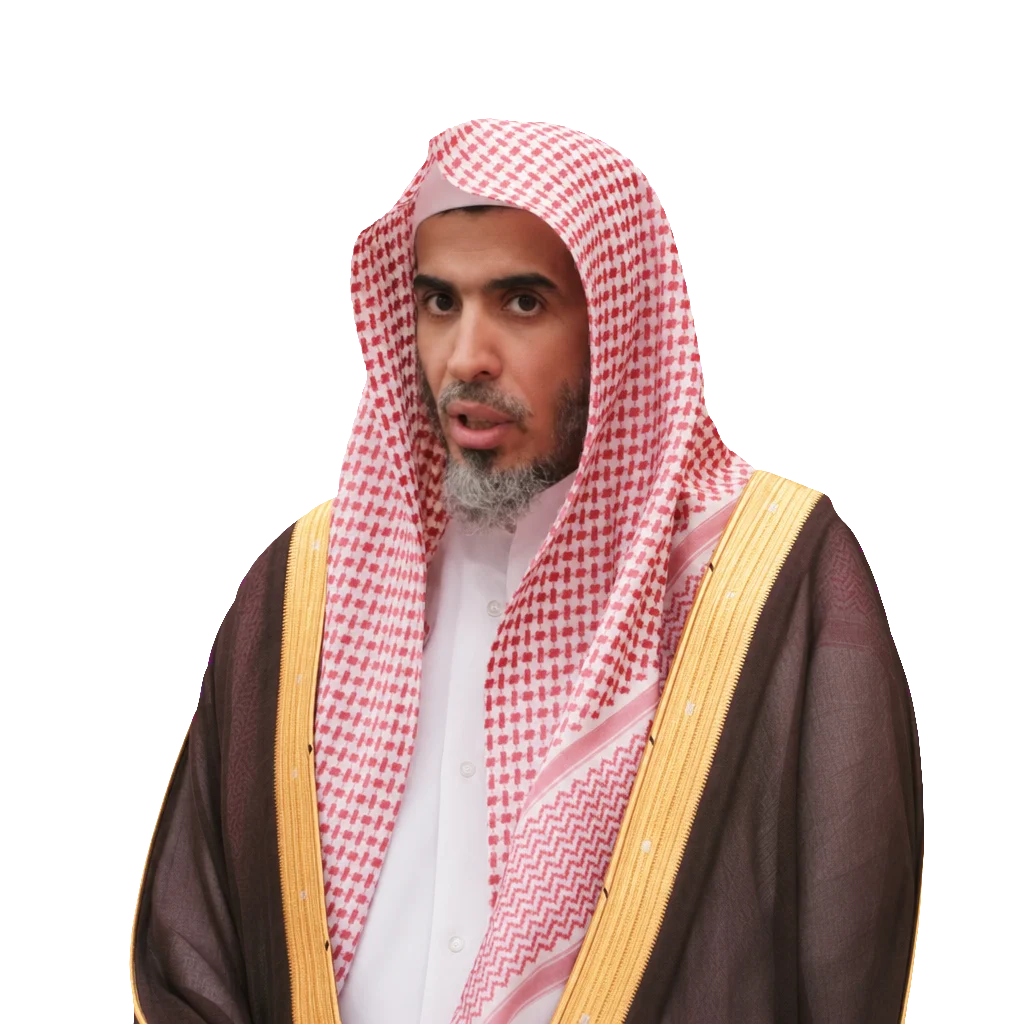
The complete commentary on Imam al-Nawawi's Forty Hadith by Sheikh Abdussalam al-Shuway'ir in one continuous lecture: the introduction, all forty-two hadith, and the conclusion. Each hadith is read and explained with its meaning, key lessons, and the rulings scholars derive from it.
“In the name of Allāh, the Entirely Merciful, the Especially Merciful.”
“[All] praise is [due] to Allāh, Lord of the worlds -” (Quran 1:1-2)
...of the worlds. And may Allah ﷻ bless Muhammad ﷺ, his family, and all his companions.
O Allah, forgive us, our Sheikh, his parents, his teachers, and all the Muslims.
The great scholar Al-Nawawi (RH) said:
“In the name of Allāh, the Entirely Merciful, the Especially Merciful.”
“[All] praise is [due] to Allāh, Lord of the worlds -” (Quran 1:1-2)
[Lord of] the worlds, the Sustainer of the heavens and the earths,
the Disposer of all creation.
Sender of the Messengers — peace and blessings be upon them —
to those legally responsible, to guide them and clarify the laws of the religion,
guiding them with definitive proofs and clear demonstrations.
I praise Him for all His blessings, and ask Him for more of His grace and generosity.
And I bear witness that there is no god but Allah, alone — the One, the Subduer, the Oft-Forgiving.
And I bear witness that Muhammad ﷺ is His servant, messenger, beloved, and intimate friend — the best of creation,
honored with the mighty Quran, an ongoing miracle across the passage of years,
and with the illuminating Sunnah for those who seek guidance — distinguished by comprehensive speech and the ease of this religion.
May Allah's ﷻ blessings and peace be upon him, all prophets, their families, and the righteous.
As for what follows:
We have narrated from 'Ali ibn Abi Talib (RA), 'Abdullah ibn Mas'ud (RA), Mu'adh ibn Jabal (RA), and Abu
ad-Darda', Ibn Umar, Ibn Abbas, Anas bin Malik, Abu Hurayrah,
and Abu Sa'id al-Khudri (RA),
through many chains with diverse narrations,
that the Messenger of Allah ﷺ said:
"Whoever preserves for my Ummah forty Hadiths concerning its religion,
Allah ﷻ will resurrect him on the Day of Resurrection among the jurists and scholars."
In another narration: "Allah ﷻ will resurrect him as a jurist and scholar."
In Abu ad-Darda's narration: "I will be his intercessor and witness on the Day of Resurrection."
And in Ibn Mas'ud's narration: "It will be said to him, 'Enter Paradise through whichever gate you wish.'"
And in Ibn Umar's narration: "He will be recorded among the scholars and resurrected among the martyrs."
The Hadith masters agree that it is a weak Hadith, despite its many chains of narration.
Scholars (RH) have compiled countless works on this subject.
The first I know to have written on this is 'Abdullah ibn al-Mubarak,
then Muhammad ibn Aslam al-Tusi, the godly scholar,
then al-Hasan ibn Sufyan al-Nasawi, and Abu Bakr al-Ajurri,
and Abu Bakr Muhammad ibn Ibrahim al-Asfahani,
and al-Daraqutni, al-Hakim, and Abu Nu'aym,
and Abu 'Abd al-Rahman al-Sulami, and Abu Sa'd al-Malini,
and Abu 'Uthman al-Sabuni,
and 'Abdullah ibn Muhammad al-Ansari, and Abu Bakr al-Bayhaqi,
and countless others among the predecessors and successors.
“In the name of Allāh, the Entirely Merciful, the Especially Merciful.”
“[All] praise is [due] to Allāh, Lord of the worlds -” (Quran 1:1-2)
...of the worlds. I bear witness there is no deity except Allah, alone, without partner,
and that Muhammad is His servant and Messenger. May Allah bless him, his family, and companions abundantly until the Day of Judgment.
To proceed: Indeed, if Allah ﷻ wills, today, at Maghrib and after 'Isha,
we will speak, by the will of Allah ﷻ, about reading this book: the book of Al-Arba'in al-Nawawiyyah,
named after its author, Abu Zakariyya Muhyi al-Din Yahya al-Nawawi (RH),
We have already read some of its introduction, and I will point out some matters related to it.
Among the matters related to what we read in the author's introduction
is that the author hinted at his purpose in compiling these forty, which are two things.
The first thing is that he intended, by compiling these forty Hadiths, for the forty to be from the concise and comprehensive speech,
And therefore he said: "the one distinguished with jawami' al-kalim."
When Al-Hafiz Ibn Rajab (RH) explained these forty, he named his book "Jami' al-Ulum wal-Hikam"
(The Compendium of Knowledge and Wisdom in Explaining Forty Comprehensive Hadiths).
So the purpose for which the author compiled them is to gather the jawami' al-kalim.
The second matter is regarding the basis that led him to compile these forty,
which is the hadith narrated using the term "ruwina."
The scholars said that when this term "ruwina" is used in the passive voice,
it indicates the weakness of the hadith,
meaning that this hadith is weak and not authentic.
The author mentioned multiple wordings of this hadith and pointed out its weakness,
and that the hadith masters all agreed on its weakness and that it is not authentic.
We will discuss, if Allah ﷻ wills, the ruling on acting upon this hadith.
However, among the most important virtues narrated for memorizing forty hadiths from the Prophet ﷺ...
is that whoever memorizes them will be resurrected on the Day of Judgment among the scholars,
and in another wording, "the fuqaha," and in another, "raised as a faqih and scholar."
This hadith indicates the virtues, and we will discuss the ruling on virtues in a short while when the author refers to it.
The author (RH) has hinted that although this hadith is not established, the scholars (RH) have adopted the number of forty.
The first one known to have authored a work collecting forty hadiths from
the Chosen One ﷺ is Imam al-Hafiz Abdullah ibn al-Mubarak al-Khurasani,
who passed away in the year 181 after the Hijrah of the Prophet ﷺ,
then after him, Muhammad ibn Aslam al-Tusi. And the "Forty" of Muhammad ibn Aslam al-Tusi is printed.
Al-Tusi died in about the year 272 of the Hijrah of the Prophet ﷺ,
and it is on the ahadith of rulings.
Then after him, Al-Hasan ibn Sufyan al-Nasawi—or al-Fasawi—
based on the non-Arabs' pronunciation of this letter, as they pronounce it between Ba' and Tha'.
And his book, the Forty, is also printed and is famous.
In its beginning, he tracked the transmission chains of the hadith...
...regarding whoever preserves forty ahadith for the Ummah of Muhammad ﷺ.
Then after them came prominent scholars, like Abu Bakr al-Ajurri (RH),
and his book is printed, as well as al-Asbahani and others. Yes.
May Allah reward you.
He said: "I have sought Allah's ﷻ guidance in compiling forty ahadith,
following these prominent Imams and preservers of Islam."
He explained his purpose was to follow the way of the scholars,
even if the hadith is not authentic.
Yes. Scholars have agreed on the permissibility of acting upon weak Hadith regarding the virtues of deeds.
His saying: "Scholars agreed on acting upon weak Hadith in virtues of deeds,"
this is agreed upon in general, but it has conditions.
The first condition is that the Hadith must not be severely weak, such as being munkar or fabricated.
The second condition: the basis of the action must be legislated.
For memorizing the Hadiths of the Prophet ﷺ is legislated.
Therefore, the major scholars acted upon it, such as Abdullah ibn al-Mubarak and others. Yes.
May Allah reward you. Despite this, my reliance is not on this Hadith,
but on his saying ﷺ in the authentic Hadiths: "Let the one who is present among you convey to the one who is absent,"
and his saying ﷺ: "May Allah make radiant a man who hears my words, understands them, and conveys them as he heard them."
Yes, the author says in this sentence that his purpose is to convey and spread the Hadiths of the Prophet ﷺ.
Therefore, perhaps due to the sincerity of his intention (RH),
this collection of forty became famous, widely memorized, and extensively commented upon.
For many people,
their first exposure to these forty Hadiths was through this book compiled by its author (RH).
So when a believer performs an act of obedience, they should be keen to follow the Prophet ﷺ,
and that their intention is good. Yes.
May Allah reward you.
Some scholars compiled the Forty in the principles of religion.
These are a group, and among them is Abu Ismail al-Harawi al-Ansari,
for he compiled a Forty — printed — on the evidences of Tawhid.
And some compiled them in subsidiary matters (furu').
Yes, many such have passed by us,
such as al-Basawi,
Among them is Al-Mundhiri in his book, "Al-Arba'in fi al-Ahkam".
And some on Jihad.
Yes, like Ibn Asakir in his published "Al-Arba'un fi al-Jihad".
And some on Zuhd.
Yes, like Abu Abd al-Rahman al-Sulami and Abu Nu'aym; they compiled Hadiths on Zuhd, and forty on Zuhd. Yes.
And some on manners.
Yes, including al-Bayhaqi and others.
And some on sermons.
Yes, some of them on sermons. This is one person, who is Ibn Wad'an,
Abu Nasr ibn Wad'an, the Sheikh of Abu Tahir al-Silafi.
For he compiled forty Hadiths from the Prophet ﷺ regarding his sermons.
But all the Hadiths compiled by this Ibn Wad'an are fabricated.
Therefore, this narrated manuscript of forty Hadiths from the sermons of the Prophet ﷺ is referred to by scholars as the manuscript of
Ibn Wad'an, the fabricated, or the fabricated forty of Ibn Wad'an.
because most of the Hadiths, if not all of them, that he cited are fabricated.
And they all have good intentions, may Allah ﷻ be pleased with those who intended them.
I have deemed it fit to compile forty Hadiths more important than all of these, encompassing all of that,
and each Hadith among them is a great foundation of the religion, which the scholars have described as the axis of Islam,
or half of Islam, or a third, or the like.
Here, the author explained that he wanted to gather forty Hadiths,
and these forty gather rulings, manners, and what relates to the fundamentals of the religion, which is creed,
and among them is what relates to asceticism, piety, and other matters.
The author explained that he wanted to mention the Hadiths that the scholars stated are the axis of the religion.
And he mentioned that among the first to attribute the axis of the religion to a number of Hadiths was Imam Ahmad (RH),
For it was narrated from him by Abdullah and others that he said: "The pivot of religion rests on three Hadiths:"
The Hadith: "Actions are but by intentions,"...
and the Hadith of Ibn Mas'ud (RA): "Each of you is gathered in his mother's womb for forty days as a drop..."
and the Hadith of Aisha (RA): "Whoever does an act not in accordance with our matter will have it rejected."
Then, his student Abu Dawud (RH) said:
"I have compiled this book containing over four thousand Hadiths, and upon them the pivot of religion rests."
Then, the pivot of religion boils down to four or five Hadiths.
The narrations from him differed in identifying these four or five.
and multiple chains of narration were reported from Abu Dawud identifying the Hadiths upon which the pivot of religion rests.
Abu Tahir al-Silafi, in the introduction to Ma'alim...
...al-Sunan by al-Khattabi, for he dictated an introduction when he wanted to dictate Ma'alim al-Sunan,
then he mentioned with his chain from Abu Dawud the Hadiths upon which the religion revolves.
Then, after them came Abu Amr ibn al-Salah,
the Imam and Hafiz, than whom no one more knowledgeable in hadith entered Damascus in his time.
He compiled a book in which he gathered about twenty-six hadiths
of the comprehensive speech upon which the religion revolves.
And he took these hadiths from Abu Dawud, Ahmad, and others.
Then, al-Nawawi took these twenty-six hadiths
and added about fifteen hadiths to them,
so the total became forty-two hadiths, which are the Nawawi Hadiths or the Forty of al-Nawawi,
their origin being what Abu Amr ibn al-Salah had in his well-known treatise.
Then, after that, Ibn Rajab added about ten more Hadiths to it,
bringing the total to approximately fifty Hadiths.
In reality, the Hadiths of jawami' al-kalim are very numerous and not limited, as
Abu Dawud, may Allah ﷻ have mercy on him, said.
Abu al-Faraj ibn Rajab (RH) pointed out
that some scholars dedicated themselves to collecting Hadiths that are concise speech,
such as Abu Bakr ibn al-Sunni,
and al-Shihab al-Quda'i, the author of Musnad al-Shihab.
Musnad al-Shihab is very well-known, with multiple commentaries by al-Rafi'i and others.
Yes.
As-salamu alaykum.
Then I commit in this Forty (Hadith) that they be authentic, and most of them are in the two Sahihs — Sahih al-Bukhari and Sahih Muslim.
I mention them with chains of narration omitted, to ease memorization and spread benefit, if Allah ﷻ wills.
The Most High.
Then, I will follow them with a chapter on clarifying their obscure terms.
Everyone who desires the Hereafter should know these Hadiths,
due to the important matters they contain and their guidance to all obedience.
And that is obvious to anyone who reflects.
Upon Allah the Generous is my reliance, and to Him is my delegation and support.
To Him belong praise and grace, and from Him is success and protection.
Yes. Now, the author (RH) will begin mentioning the Hadiths.
Since time is limited, we will not discuss everything in the Hadiths
regarding fiqh, knowledge, and language,
for lifetimes would be exhausted in pursuing the words of the Prophet ﷺ,
especially since this is of his concise speech.
Rather, I will focus on the author's purpose, as the author (RH) pointed out
to clarify that these Hadiths are the pivot of the religion.
We will pause at each of these Hadiths to explain what they indicate
of some of the general, universal rules.
The scholars mentioned—this is Sheikh Taqi al-Din's statement in Al-Istiqamah—
that the Prophet ﷺ was sent with Jawami' al-Kalim.
What is meant by Jawami' al-Kalim
is that a statement encompasses a universal issue and a general rule.
If it encompasses a universal issue and a general rule,
then it is considered part of Jawami' al-Kalim.
Then the Sheikh (RH) mentioned that
whoever understands the Jawami' al-Kalim of the Prophet ﷺ
will have encompassed all the subsidiary issues that people need.
For in the Jawami' al-Kalim of the Prophet ﷺ,
there is an encompassing of all subsidiary issues that people need.
Therefore, we will point out some of the principles derived from these hadiths,
not discussing all their details and what they indicate.
Yes. Peace be upon you.
He (RH) said — First Hadith: On the authority of the Commander of the Faithful,
Abu Hafs Umar bin al-Khattab (RA),
who said: I heard the Messenger of Allah ﷺ say:
"Actions are but by intentions, and every man shall have only what he intended.
Thus, he whose migration was for Allah and His Messenger,
his migration was for Allah and His Messenger;
and he whose migration was for worldly gain,
or a woman he might marry,
his migration was for that which he migrated."
It was related by the Imam of Hadith scholars, Abu Abdullah Muhammad bin Ismail
bin Ibrahim bin al-Mughirah bin Bardizbah al-Bukhari al-Ju'fi,
and Abu al-Husayn Muslim bin al-Hajjaj bin Muslim al-Qushayri al-Naysaburi,
in their two Sahihs, which are the most authentic compiled books.
Yes, this is the first Hadith with which the author began,
As Ishaq ibn Rahwayh (RH) suggested to his student Muhammad ibn Isma'il al-Bukhari (RH)
to begin his book with this Hadith,
This Hadith is a foundation of the religion, and ash-Shafi'i (RH) mentioned that
half of the religion's rulings refer back to this Hadith,
and it is said a third of it refers back to this Hadith.
In general, two rulings are related to intention:
that which relates to the actions of the heart, and that which relates to the actions of the limbs.
As for what relates to the actions of the heart, they are three things related to intention:
faith, sincerity, and purpose.
So, what relates to the actions of the heart are three: faith,
sincerity, and purpose, and they overlap.
As for faith, whoever lacks the intention that is in the sense of faith,
then no deed will be accepted from him, nor any obligatory or voluntary act,
because Islam is a condition for the validity of deeds.
So whatever deeds a servant performs, as long as he is not a Muslim, they will never be accepted from him.
This is the first type of the actions of the heart: Iman.
The second type is Ikhlas.
Opposite to Ikhlas are two things: minor Shirk, which is showing off (Riya') or seeking reputation,
And the second type is Tashreek, which is performing a deed for Allah ﷻ,
while intending some worldly gain, like a wage or the like.
As for the first type, which is related to minor Shirk, namely Riya',
it invalidates the deed in terms of reward,
because Shirk erases the reward of the deed,
but it does not invalidate the deed in terms of its validity.
Accordingly, whoever prays to show off,
or gives Zakat or fasts to show off, there is no reward for him,
and we do not command him to repeat it, but rather he...
in charity and voluntary deeds.
He is not ordered to repeat it, because what matters is the outward.
Obligatory acts are judged by their outward appearance; as long as he is a Muslim, they are valid.
But if the deficiency in intention is a matter of tashreek (combining intentions),
then whoever combines intentions, his reward is reduced but not completely invalidated. This is the correct view,
because some scholars equated tashreek with riya' (showing off), making them one, like Al-Ghazali.
But verifying scholars, like Sheikh Taqi al-Din (RH), refuted this.
The specific evidence for tashreek is the hadith from the Prophet ﷺ,
who said: "No raiding party goes out and gains spoils but two-thirds of their reward is taken in advance."
This shows us that whoever intends to worship Allah ﷻ, but also intends some worldly gain, his reward is reduced,
And his reward is not like the one whose intention was purely for Allah ﷻ, with no association in it.
We distinguish between shirk in intention and tashreek in intention.
The first voids the deed, because shirk invalidates the deed,
whereas the second only diminishes it. This is the verified scholarly view.
The third type related to the actions of the heart is intention (al-qasd),
and this intention is what the jurists discuss in books of fiqh. What is intention?
They require intention to distinguish between similar acts of worship,
so they require intention to distinguish between obligatory and voluntary prayers,
And they require intention to distinguish between similar prayers like Asr and Dhuhr,
so one must intend the specific one, and specification is necessary.
However, they do not require intention to distinguish on-time from make-up prayer.
So if someone prays a missed prayer with the intention of performing it on time,
or prays on time with the intention of making up—the opposite—it is still valid,
Rather, it is only required to specify whether it is obligatory or voluntary,
and its type, if it has more than one, such as the types of prayers.
The same applies to fasting and Hajj—whether vowed or obligatory—and so on.
These three matters are those related to the actions of the heart.
As for what relates to the actions of the limbs,
the actions of the limbs are divided into two parts, and this is what Al-Shafi'i (RH) meant.
For some actions of the limbs have their effects entailed whether intention is present or not,
and other actions of the limbs do not have their effects entailed except with intention.
Therefore, Al-Shafi'i (RH) said that intention is half of knowledge, meaning half of the issues refer back to it.
So the default rule is that every action must have an intention, due to the saying of the Prophet ﷺ: "Actions are but by intentions."
This indicates restriction, because the preventive particle 'ma'
enters 'inna', it prevents its action and signifies restriction in meaning.
However, there are exceptions to this rule.
Among these exceptions mentioned by the scholars, they said:
whatever falls under the category of acts of omission,
then all omissions are valid, even if no intention is present.
A well-known example of omission is the removal of impurities.
For if an impurity falls on a garment,
and then it is removed by your action,
even if you did not intend it, it is still removed.
This is the first. The second matter:
everything that falls under the category of damages and what results from them.
So whoever damages another person's property
or the like, they must compensate for it,
or if he kills someone else without intention,
then diyah is obligatory — which is the compensation.
The third matter: they said,
"Everything that falls under the category of causes, if it is made a cause for something, it is a cause for it, except for expiations,
for expiations, according to the scholars, are akin to punishments,
and punishment requires the action be done with intention.
Thus, there is no expiation for an action done without intention,
except if it is one of the things akin to destruction, such as intercourse according to some scholars,
who say that intention is not required for it,
and like those who said so regarding some destructions.
And the proper place for this is in the books of fiqh. Yes."
May Allah protect you.
He said: The second Hadith: On the authority of 'Umar (RA), who said:
"While we were sitting with the Messenger of Allah ﷺ one day,
there appeared before us a man whose clothes were exceedingly white and whose hair was exceedingly black,
with no signs of travel on him, and none of us knew him.
He sat down by the Prophet ﷺ, resting his knees against his knees,
and placing his palms on his thighs. He said, "O Muhammad, tell me about Islam."
The Messenger of Allah ﷺ said, "Islam is...
to testify that there is no god but Allah ﷻ and that Muhammad ﷺ is His Messenger,
to establish prayer, to give zakat, to fast Ramadan, and perform Hajj if you are able.
He said: 'You have spoken the truth.'
We were amazed at him — he asks and then confirms.
He said: 'Tell me about Iman (faith).'
He said: 'To believe in Allah ﷻ, His angels, His books, His messengers, and the Last Day,'
'and to believe in divine decree, its good and its evil.'
He said: 'You have spoken the truth.'
He said: 'Then tell me about Ihsan.'
He said: 'To worship Allah ﷻ as though you see Him,'
'and if you do not see Him, then indeed He sees you.'
He said, "Then tell me about the Hour."
He said, "The one questioned about it is no wiser than the questioner."
He said, "Then tell me about its signs." He said, "Then tell me about its signs."
He said, "That the slave-girl will give birth to her mistress,
and that you will see the barefoot, naked, destitute shepherds competing in construction."
He said, "Then he departed, and I remained for a while. Then he said, 'O 'Umar, do you know who the questioner was?'"
I said, "Allah and His Messenger know best."
He said, "Indeed, he was Gabriel, who came to teach you your religion."
Narrated by Muslim.
Yes, this Hadith of 'Umar (RA) is a great Hadith containing all the rulings of Islam.
Therefore, the Prophet ﷺ said,
"Indeed, he was Gabriel, who came to teach you your religion,"
so all the rulings of Sharia are included in this Hadith.
For it clarified Islam, Iman, and Ihsan:
Islam is the actions of the limbs, Iman is the actions of the hearts,
And Ihsan is mindfulness of Allah ﷻ in the actions of the hearts and the actions of the limbs.
And this Hadith, everything you want to speak about...
...regarding the outward and inward rulings of religion is included in it.
Therefore, some of the major scholars of the Muslims (RH) used to say:
"If you begin with this Hadith, you will never finish."
You can speak about all of Islam, speaking about purification, prayer, fasting, and Hajj.
So if you begin a lecture with it,
a month or two will pass, and you will not
finish explaining the greatness of this Hadith.
So this Hadith is one of the greatest Hadiths teaching the religion,
but people, as you know, are not equal in knowledge;
some people know more than others. Yes.
He (RH) said:
The third Hadith: On the authority of Abu Abdur-Rahman, Abdullah bin Umar (RA),
who said: I heard the Messenger of Allah ﷺ saying:
"Islam has been built on five: testifying that there is no deity worthy of worship except Allah and that Muhammad is His servant and Messenger,
establishing prayer, paying zakat, pilgrimage to the House, and fasting Ramadan."
Narrated by al-Bukhari and Muslim.
Yes, this is the Hadith of Abdullah bin Umar, also narrated by others,
explaining the pillars of Islam, that they are five, and these are the acts of worship.
Therefore, the scholars paid great attention to explaining these five pillars.
And in each of the four madhhabs of the jurists, may Allah have mercy on them,
they dedicate specific mutun to explaining the five acts of worship.
Among the early scholars who wrote on this from the companions of Ahmad is Abu al-Khattab,
the student of Abu Ya'la,
for he wrote a published book which he named "Al-Ibadat Al-Khams",
which was explained by Al-Ba'qubi in the book "Sharh Al-Ibadat Al-Khams".
Indeed, the first thing a Muslim must learn and care to understand deeply is the acts of worship,
and not to prioritize any other rulings over them,
for whoever's acts of worship are sound, his transactions and dealings with others will be sound.
And the discussion on this Hadith is like that of the previous one, in that it generally encompasses all outward rulings.
Yes. May Allah bless you.
He (RH) said:
Hadith Four: On the authority of Abu Abd al-Rahman, Abdullah bin Mas'ud (RA),
who said: "The Messenger of Allah ﷺ, who is the truthful and believed, narrated to us:
the creation of each one of you is gathered in his mother's womb for forty days,
then he becomes a clot for a like period, then a piece of flesh for a like period,
then the angel is sent, breathes the soul into him, and is commanded
to write down his provision, his life span, his deeds, and whether he will be wretched or blessed.'"
By Him besides Whom there is no other god,
one of you may do the deeds of the people of Paradise until there is nothing between him and it but a cubit,
then the decree overtakes him, and he does the deeds of the people of the Fire and enters it;
and one of you may do the deeds of the people of the Fire until there is nothing between him and it but a cubit,
then the decree overtakes him, and he does the deeds of the people of Paradise and enters it.
Narrated by al-Bukhari and Muslim.
Yes, in this Hadith, Ibn Mas'ud (RA) says the Prophet ﷺ, the truthful and believed, narrated to us...
He used this expression because this is part of the complete...
...unseen, which the Prophet ﷺ did not know except for what Allah ﷻ revealed to him.
His saying: "then he becomes a clot." Al-alaqah means thick, clotted blood,
and it is called "abit" because it is fresh,
Therefore, it is called 'alaqah because it is moist.
His saying: "Then he becomes a mudghah like that."
The mudghah is a piece of flesh; it is called mudghah because it is small,
about the size of a bite of meat, so it is a small piece of flesh.
This Hadith is a fundamental principle of religion regarding several rulings.
We will look at two or three of them.
The first ruling is that this Hadith is a fundamental principle of religion
concerning the sixth pillar of faith, which is belief in Al-Qada' and Al-Qadar,
as this Hadith indicates two of the four levels of Qadar,
which are the knowledge of Allah ﷻ and His writing [of it].
For by the knowledge of Allah ﷻ, He knows what was
and what did not happen, how it would be if it were to happen.
Allah ﷻ knows everything: what was, what will be, and what did not happen, if it were to happen, how it would be,
and this is what this Hadith indicates.
Just as this Hadith also indicates the matter of writing,
for writing is of different types: cosmic writing.
Allah ﷻ wrote what will exist fifty thousand years before creating the heavens and the earth.
And there is the lifetime writing, which is indicated by the Hadith of Ibn Mas'ud (RA).
And there is the annual writing, in which Allah ﷻ writes every year what will happen in it.
It was said to be on Laylat al-Qadr, or on the night of mid-Sha'ban,
and there is a narrated Hadith for both.
And there is a weekly writing, and there is a daily writing.
The point of this is that the stages of writing, or that writing is one of the four known stages of Qadar.
Therefore, when a believer believes in Al-Qadar and knows this Hadith,
it becomes a reason for him to increase in obedience, and this is the faqih.
Listen to the words of Imam Ahmad (RH) when he spoke of this Hadith,
meaning the Hadith of Ibn Mas'ud (RA). He said, "This Hadith...
...should be the strongest incentive to increase in good deeds,
because you do not know whether you are among the people of bliss or the people of misery,
so you must continue performing your deeds until the time of death."
And this is what some scholars, like Abu al-Faraj ibn al-Jawzi, wrote about regarding steadfastness at death.
The second matter related to this Hadith is that it explains that the stages of human creation are:
a nutfah, then after that a 'alaqah, then after that a mudghah.
As for the nutfah, it generally has no ruling,
but if it is an alaqah, meaning it has completed eighty days,
then at that point, it has begun to form, as it has left the stage of flesh,
so certain rulings apply to it.
Among these rulings is that if a woman miscarries a fetus over eighty days old,
then in this case, the blood that comes out of her is nifas,
and if she is in mourning for a deceased husband, her mourning ends,
and her iddah ends if she was divorced.
So what matters is eighty-one days, per the apparent meaning of this Hadith—the well-known view of the madhhab.
The second narration holds that what matters is the formation,
because it was reported in some wordings of this Hadith by al-Bayhaqi that the Prophet ﷺ said,
“Then it becomes an alaqah for a similar period.”
And [the word 'in'] denotes a timeframe; the fetus may be formed before eighty [days],
after about fifty-four days.
Accordingly, if the woman or the midwives see formation in the fetus,
even if it has not reached eighty days but has passed forty, it takes the two previous rulings.
The second ruling concerns its completion of one hundred and twenty days.
If it completes one hundred and twenty days and is then miscarried dead, it is washed,
shrouded, prayed over, and buried in the Muslim graveyard.
This is what concerns the difference between what has passed 80 days and what has passed 120. Yes.
May Allah reward you. He (RH) said:
The fifth Hadith, from the Mother of the Believers, Umm Abdullah, Aisha (RA):
The Messenger of Allah ﷺ said:
"Whoever introduces into this matter of ours what is not from it, it is rejected."
Narrated by al-Bukhari and Muslim.
In a Muslim narration: "Whoever does an act not in accordance with our matter, it is rejected."
And al-Bukhari cited it as mu'allaq.
This Hadith is one of the religion's foundations, as Imam Ahmad and Abu Dawud (RA) said, and the religion revolves around it.
This Hadith entails a number of universal principles in Sharia. The first of these principles is the prohibition of innovations,
for everything by which a servant worships his Lord ﷻ other than what Allah ﷻ has legislated is prohibited,
So we worship Allah ﷻ only by what He has legislated.
Therefore, the principle among the scholars is that the default state of acts of worship is prohibition,
unless Sharia evidence indicates its permissibility.
This is the first principle. The second principle is that this Hadith indicates a universal principle in the branches of fiqh,
namely, the rule that prohibition implies invalidity.
This rule is one of the most complex among scholars,
and two views concern us in the disagreement on it.
The first view: the relied-upon position of our jurists
is that every prohibition prohibited by the Prophet ﷺ implies the invalidity of the prohibited act,
whether it is an act of worship or a contract, such as marriage, sale, or otherwise,
unless evidence indicates validity, such as the affirmation of the option,
for the affirmation of the option establishes validity,
and similar matters in certain transactions.
This is the first view, the relied-upon position of our jurists.
Sheikh Taqi al-Din (RH), Ibn Rajab (RH), and other scholars chose
that rights are of two types:
if the prohibition is for the right of Allah ﷻ,
then the prohibition absolutely implies invalidity, unless evidence indicates its validity,
And if the prohibition is for the right of a human being, then it is contingent upon his permission.
If he approves, it is valid; if not, it is invalid.
And his approval is only valid after having knowledge of it.
Among this is what relates to bay' al-fuduli, and what relates to gharar in contracts and others.
The third rule derived from this Hadith
is that the scholars (RH) established a universal rule:
which is that acts of worship and concessions cannot be achieved through, nor do they occur by, a prohibited matter.
So one may not avail of a concession through a prohibited means.
Thus, whoever travels for a journey of disobedience cannot avail of the concession of shortening or combining prayers,
nor wiping over the khuffayn for more than a day and a night.
And whoever earns a prohibited earning, it is not accepted from him in charity,
rather, it is only by way of disposing of it if its rightful owner is unknown.
This is a universal rule with hundreds of sub-issues branching from it. Yes.
May Allah reward you.
He (RH) said: The sixth Hadith: On the authority of Abu 'Abdillah, al-Nu'man bin Bashir (RA), who said:
"I heard the Messenger of Allah ﷺ saying:
'That which is lawful is clear, and that which is unlawful is clear, and between them are doubtful matters many people do not know.
He who avoids doubtful matters clears himself in his religion and honor,
but he who falls into doubtful matters falls into the unlawful,
like a shepherd grazing near a sanctuary, risking entry into it.
Truly, every king has a sanctuary,
and truly, Allah's sanctuary is His prohibitions.
In the body is a morsel of flesh which, if sound, the whole body is sound,
but if it be diseased, the entire body is diseased. Truly, it is the heart.'"
Narrated by al-Bukhari and Muslim.
Yes, this is the hadith of Al-Nu'man bin Bashir (RA)
regarding the saying of the Prophet ﷺ:
'The lawful is clear and the unlawful is clear...' to the end of this hadith.
This hadith contains a number of important, comprehensive issues.
The first of these issues is in the saying of the Prophet ﷺ:
'which many people do not know.'
His saying, 'which many people do not know,' indicates to us
that among the doubtful matters are those which many people do not know,
implying that some people do know them,
Allah ﷻ has said:
“It is He who has sent down to you, [O Muḥammad], the Book; in it are verses [that are] precise - they are the foundation of the Book - and others unspecific. As for those in whose hearts is deviation [from truth], they will follow that of it which is unspecific, seeking discord and seeking an interpretation [suitable to them]. And no one knows its [true] interpretation except Allāh. But those firm in knowledge say, "We believe in it. All [of it] is from our Lord." And no one will be reminded except those of understanding.” (Quran 3:7)
“...verses... they are the foundation of the Book...”
“...in it are verses that are precise—they are the foundation of the Book—and others unspecific.”
“It is He who has sent down to you, [O Muḥammad], the Book; in it are verses [that are] precise - they are the foundation of the Book - and others unspecific. As for those in whose hearts is deviation [from truth], they will follow that of it which is unspecific, seeking discord and seeking an interpretation [suitable to them]. And no one knows its [true] interpretation except Allāh. But those firm in knowledge say, "We believe in it. All [of it] is from our Lord." And no one will be reminded except those of understanding.” (Quran 3:7)
The scholars established that there are two ways of reciting: stopping at the name of Allah ﷻ, and continuing.
Both are established recitations. Accordingly,
indeed, among what is in the Book of Allah ﷻ is that which is known to none but Allah ﷻ,
and among what is in Allah's ﷻ Book is what none knows but Allah ﷻ and those firmly grounded in knowledge.
This is what is intended by this hadith — the second type.
This is the first matter.
The second matter: this hadith indicates that there is nothing in the Sharia except that it is clear.
"Indeed the halal is clear and indeed the haram is clear."
The third matter — an important universal principle in the Sharia —
Al-Qadi Husayn al-Marwazi al-Shafi'i made it one of the five foundational principles in the Sharia, and it concerns the matter of ambiguity.
For the Prophet ﷺ said: "And between them are ambiguous matters."
"Whoever avoids doubtful matters protects his religion and his honor."
This rule is called the rule of ambiguity.
Ibn al-Qayyim (RH) established in his book Al-Bada'i' that ambiguity is of two types, not one:
ambiguity in the sense of doubt regarding existence or non-existence,
and ambiguity in the sense of mixture,
and that the ruling between the two rules is different, not the same.
He said: "Many scholars might confuse the two issues."
As for ambiguity between existence and non-existence, it is built upon certainty—it is built upon certainty.
It is also said—the second narration in Ahmad's madhhab and Sheikh Taqi al-Din's choice—that if strong probability exists, it is acted upon,
otherwise, the well-known view is that it is built upon certainty, so "he should not leave until he hears a sound or smells an odor."
As for the rule of ambiguity in the sense of mixture,
it is when one is certain of the existence of both things, but is unable to distinguish one from the other.
...unable to distinguish one from the other.
For he does not know which woman is forbidden if there are several, one being his foster sister,
nor does he know the specific forbidden item, such as when it is carrion,
or forbidden by description, having mixed with other meats,
nor does he know the impure water from the pure, or the pure garment from the impure. In this mixed case,
the rule is to resort to precaution.
Sheikh Taqi al-Din preferred resorting to the preponderance of probability.
Therefore, Ibn al-Lahham (RH) said that the rule of Sheikh Taqi al-Din is more precise,
more accurate, and more consistent,
mentioning this in his book 'Al-Qawa'id'.
This is a very lengthy issue and one of the most precise matters of fiqh, which I have only briefly pointed to here.
Yes. Peace be upon you.
He (RH) said: The seventh Hadith,
on the authority of Abi Ruqayyah Tamim ibn Yusuf ad-Dari (RA),
that the Prophet ﷺ said:
"Religion is sincerity." We said, "To whom?"
He said, "To Allah, His Book, His Messenger, and to the leaders of the Muslims and their common folk."
Narrated by Muslim.
Yes, this Hadith is a foundation of the religion from two aspects.
The first aspect is sincerity to Allah, His Book, and His Messenger, through compliance and truthfulness in complying
with the command of Allah ﷻ and the command of His Messenger ﷺ,
and what has come in the Book of Allah ﷻ.
The second type is sincerity to the leaders and common folk of the Muslims, by offering it.
Indeed, the greatest acts of worship by which a servant draws close to Allah ﷻ, after the obligatory duties, is spreading knowledge,
as was said by the Leader of the Believers in Hadith, Abdullah ibn al-Mubarak, with whose name the author opened this book,
and mentioned that he was the first to compile [a book of] forty [Hadiths].
Ibn al-Mubarak (RH) said: "I do not know...
...after Islam, of any worship better than spreading knowledge."
So a person spreads knowledge and teaches people, young and old, far and near.
For it is among the best acts of drawing close to Allah ﷻ.
And this is one of the signs of the goodness of this Ummah.
For in this Ummah, the predecessor teaches the successor,
the former teaches the latter, and the first teaches the second.
This Ummah will remain in a good state as long as knowledge is widespread, manifest, and clear among them.
And it will remain manifest until the Hour, due to the saying of the Prophet ﷺ:
"A group of my Ummah will remain manifest upon the truth."
Thus, knowledge, religion, the Sunnah, and the truth will remain manifest until the Hour.
This was said by the one who does not speak from inclination, Muhammad ibn Abdullah ﷺ.
So the point is that this Hadith was one of the comprehensive foundations,
because it encourages teaching and clarifying to all people, young and old, elite and commoners.
Yes. Peace be upon you. He (RH) said:
The eighth Hadith: On the authority of Abdullah bin Umar (RA),
that the Messenger of Allah ﷺ said:
"I have been commanded to fight people until they testify that there is no deity except Allah and that Muhammad is the Messenger of Allah,
and establish prayer and give zakat.
If they do so, their blood and wealth are protected from me, except by the right of Islam, and their account is with Allah the Exalted."
Narrated by al-Bukhari and Muslim.
Yes, this Hadith is a foundation in safeguarding the blood and honor of a Muslim,
for the default state of a Muslim is that his blood and honor are protected,
and it is not permissible to transgress against him, neither by taking his life, nor any of his limbs, or any of his faculties,
nor by anything less than that, such as harming his skin by beating or wounding,
or harming his honor by words or the like.
Therefore, it is not permissible to kill or fight a Muslim except for what makes that lawful,
which is leaving the religion, or if it is one of the reasons for fighting, even if it is not killing.
And this is what the scholars (RH) explained regarding the rulings on the bughat,
and they mentioned that among the forms of rebels are those who refuse to perform an apparent ritual of Islam. Yes.
Peace be upon you. He (RH) said: The ninth Hadith, on the authority of Abu Hurayrah, Abd al-Rahman ibn Sakhr ad-Dawsi (RA),
that he said: I heard the Messenger of Allah ﷺ say:
"What I have forbidden you, avoid; and what I have commanded you, do of it as much as you are able.
For those before you were destroyed only by their excessive questioning and disagreeing with their prophets."
Narrated by al-Bukhari and Muslim.
Yes, this Hadith is among the jawami' al-kalim (concise comprehensive speech),
and I will mention three universal rules related to it.
The first of these rules is what Ibn al-Qayyim (RH) pointed out,
that this Hadith encompasses all the rulings of Sharia.
Ibn al-Qayyim (RH) mentioned that the Prophet ﷺ
divided the matters in this Hadith into three, with no fourth, which is an exhaustive division:
either it is a commanded matter,
so the Prophet ﷺ explained in this Hadith that the obligation is to do it according to one's ability.
The second matter is that it is a forbidden matter,
so the obligation upon Muslims is to avoid it entirely.
And the third matter is that it is left unmentioned,
so it should not be approached with questioning or probing, and should be left alone.
This ruling presented by the Prophet ﷺ is not specific to him,
nor to his lifetime, nor to his companions,
rather, it is general for all Muslims until the Day of Resurrection.
So, whatever a Muslim has no need of, he should remain silent about.
Therefore, asking questions was forbidden during the Prophet's ﷺ lifetime,
and the jurists of the Salaf forbade hypothesizing issues after him.
They mentioned that whoever hypothesizes an issue before it occurs,
his ijtihad might be deficient due to not conceiving the need for it,
and not conceiving its full ruling,
so whoever needed it might imitate him and fall into hardship.
Therefore, scholars frequently forbade the "What if? What if?" questions.
By 'What if? What if?', they meant either introducing hypotheticals or incapacitating,
or what I mentioned to you earlier: asking about an issue that has not occurred,
for that is likely to lead to deficient and incorrect ijtihad.
Many issues — a person only knows their ruling when tested with them.
Al-Shatibi dedicated a section in Al-Muwafaqat
on the difference between one tested with an issue
and one who is not, and the difference in their ijtihad. This is one issue.
The second issue related to this great hadith
is that this hadith is related to a rule
that Ibn Rajab singled out in his Qawa'id and illustrated at length.
The text of this rule is that what the Lawgiver has forbidden,
the prohibition applies to it as a whole and to its parts,
so it is forbidden entirely, and its parts are forbidden,
and doing part of it is forbidden, even doing its means is likewise forbidden.
And whatever the Lawgiver has commanded, compliance is not achieved
except by performing it in its entirety. It must be performed completely,
so it is not valid to perform only one rak'ah of it.
while omitting the rest of the rak'ahs, nor by performing only some pillars of Hajj,
nor by fasting half a day; rather, you must fast the entire day.
This is a rule for which Ibn Rajab (RH) mentioned many examples. Yes.
However, there are matters where parts can be performed if those parts are divisible,
such as wudu, as they mentioned that the parts of wudu are divisible.
So whoever finds only enough water for some of his limbs washes those limbs,
basing this on their rule that the parts of wudu are divisible.
The final issue in this Hadith is his saying:
"What destroyed those before you was their excessive questioning and disagreement with their prophets."
And this has a lengthy discussion.
The best to explain this statement is Ibn al-Qayyim (RH) in I'lam al-Muwaqqi'in. Yes.
May Allah bless him. He (RH) said: "The tenth Hadith:
On the authority of Abu Hurayrah (RA), who said: The Messenger of Allah ﷺ said:
"Indeed, Allah ﷻ is pure and accepts only that which is pure."
Indeed, Allah ﷻ commanded the believers as He commanded the Messengers,
for He said: "O Messengers, eat of the good things and work righteousness,"
and He said: 'O you...
“O you who have believed, eat from the good [i.e., lawful] things which We have provided for you and be grateful to Allāh if it is [indeed] Him that you worship.” (Quran 2:172)
...We have provided you."
He then mentioned a man on a long journey, disheveled and dusty,
raising his hands to the sky,
"O Lord! O Lord!"
while his food is unlawful, his drink is unlawful,
his clothing unlawful, nourished on the unlawful—so how can he be answered?
Yes, this Hadith is one of the principles of the religion upon which Islam, or the rulings of Islam, revolve.
This indicates a number of universal principles, among them:
that this hadith indicates to us that the default ruling
regarding the essences of things —
the default ruling for the essences of things is permissibility.
So the default regarding foods,
and the default for material things is permissibility.
I used 'material things' (al-aʿyān) because some scholars distinguish
between actions and material things,
as is the method of Abu al-Wafāʾ Ibn ʿAqīl,
distinguishing between the default for material things and for actions.
The correct view is that the default for both is permissibility.
Thus, the default state for contracts and physical objects—whether food, drink,
or mounts, or otherwise—is permissibility.
Yes, some scholars mentioned a rule, and I will mention it briefly just to clarify.
Some scholars say that the default state regarding meat is prohibition.
They do not mean, when saying the default state of meat is prohibition, its category,
but rather they mean that it is prohibited due to a missing condition.
That is because if someone doubts a meat whose type is known,
but does not know if it is halal or haram, like a giraffe,
as no specific text addresses giraffes,
we say the default is permissibility, so it is allowed to eat it.
However, whoever doubts the meat due to the absence of its condition...
such as whether Allah's ﷻ name was mentioned over it, and there is no apparent indication
that it is from the slaughter of Muslims or People of the Book, the default is prohibition.
Like someone who finds meat in a wilderness or in a country with both People of the Book and pagans,
with no apparent sign or certainty—the default, due to the missing condition, is prohibition.
We must distinguish between the two cases, as Ibn al-Qayyim (RH) noted in one of his books—I believe Al-Miftāḥ.
This is the first rule.
The second rule is that this Hadith...
shows us that the means take the ruling of the ends.
because the Prophet ﷺ said: "Indeed, Allah is Pure and accepts only what is pure."
And among what this Hadith indicates is what relates to supplication, which we will discuss later.
Yes. May Allah bless you.
He (RH) said: The Eleventh Hadith.
On the authority of Abu Muhammad, al-Hasan bin 'Ali bin Abi Talib,
the grandson of the Messenger of Allah ﷺ and his fragrant flower, may Allah be pleased with them both,
who said: "I memorized from the Messenger of Allah ﷺ:
'Leave what makes you doubt for what does not make you doubt.'"
Narrated by at-Tirmidhi and an-Nasa'i, who called it a Hasan Sahih hadith.
Yes, this hadith is a foundational principle of the religion.
I will briefly mention two principles based on it.
Among the principles built upon this hadith
is the universal principle that applies to most contracts and acts of worship, which is the principle of precaution.
The meaning of this principle is that if a person doubts something,
he should take precaution for himself.
I said "for oneself" because there is a difference between precaution for oneself and for others.
Precaution for others is not permissible except with knowledge,
so do not restrict rulings for people and forbid what is permissible to them,
when you have only based it on precaution; a person takes precaution for himself,
taking precaution for himself by abstaining.
Therefore, when Al-Qadi Abu Ya'la (RH) cited this Hadith,
he said, "What is meant by this Hadith is leaving doubt and building upon certainty."
For part of precaution is building upon certainty.
We previously discussed building upon certainty and predominant assumption.
Accordingly, if a forbidden thing is confused with a permissible one,
then precaution is to leave both of them together,
which is the rule of mixing (ikhtilat).
But if it is a matter of hesitation between existence and non-existence, then...
one builds upon certainty, which is non-existence,
unless one has presumed the continuation of one of the two original states.
The second rule based on this Hadith
which is a very important rule, is the issue of estimations.
The scholars (RH) say that whatever is in need of estimation,
reference is made regarding it to three things:
either reference is made to the text, if it exists.
If no text exists, then reference is made to linguistic indication.
If there is no linguistic indication, then reference is made to custom.
And the evidence for referring to custom is this Hadith,
which is what Imam Ahmad used as evidence.
Abu Bakr al-Khallal (RH) said:
the established narration from Abu Abdullah, Ahmad ibn Hanbal,
that what is excessive is what is deemed excessive by each person individually,
due to the saying of the Prophet ﷺ: "Leave what makes you doubt for what does not."
Ahmad used this Hadith as evidence that the standard is one's own estimation
regarding the excessive amount that invalidates wudu from discharges other than the two passages,
and the impurity that is excused in purification,
and in many other issues whose tracking would require time, and which scholars have compiled individually.
Yes. As-salamu alaykum.
He (RH) said: The twelfth Hadith: On the authority of Abu Hurayrah (RA),
who said: The Messenger of Allah ﷺ said:
"Part of the excellence of a person's Islam is leaving that which does not concern him."
A hasan Hadith recorded by al-Tirmidhi and others in this manner.
Yes, this Hadith is one of the foundations of the Sunnah, as Abu Dawud expressed,
for Abu Dawud said: "The foundations of the Sunnah are four Hadiths," mentioning this Hadith among them.
The reason this Hadith is one of the foundations of the religion and the Sunnah
is that this Hadith includes leaving words and actions
—words, which are deeds, that are unnecessary.
As for leaving words, leaving many of the prohibited words,
such as backbiting, gossip, and so on, and even some permissible speech that may lead to the prohibited,
is indeed a sign of the goodness of a servant's Islam.
As for actions, they are too numerous to count,
among actions left, such as the prohibited, the disliked, and others.
There remains a third matter that I will point out, which is
the way of the scholars among the Tabi'un and the Companions (RA),
that this Hadith indicates that a part of a person's good Islam
is leaving delving into matters of the unseen
with what has not been mentioned in the texts.
So what is not mentioned in the text regarding the Essence of Allah ﷻ, His attributes, and His names,
and what relates to the past and future unseen
that Allah ﷻ has informed of, such as the portents of the Hour,
and the terrors of the Day of Resurrection, indeed, part of your good Islam is to leave off speaking about them.
Listen to this beautiful, grand statement
said by the one who nursed wisdom, Al-Hasan bin Abi Al-Hasan Al-Basri (RH):
For he nursed wisdom when raised in the house of the Mother of the Believers, Umm Salamah (RA).
Al-Hasan (RH) says:
"Praise be to Allah, belief in Whom includes ignorance of other than what He has described Himself with."
A very great statement: "Praise be to Allah, belief in Whom..."
is ignorance of what He did not describe Himself with.
Indeed, part of belief in Allah ﷻ and a person's good Islam,
and his sound belief, and his following of his Prophet ﷺ, his Companions (RA), and the Salaf of the Ummah,
is that he does not delve into what has not been mentioned in the Sharia regarding the Essence of Allah ﷻ, His attributes, and descriptions.
So we believe in what has come in the Book of Allah and from the tongue of the Messenger of Allah ﷺ,
according to the intent of Allah and His Messenger, and we do not delve
into details, delving into which is harmful and not beneficial,
and speaking about them is a fitnah and has no reward.
This is a great matter that Muslims must pay attention to.
The author, who is al-Nawawi (RH), mentioned
that these Hadiths encompassed the fundamentals of religion, including this chapter.
Yes. Peace be upon you.
The author (RH) said: The thirteenth Hadith: On the authority of Abu Hamzah Anas bin Malik (RA),
the servant of the Messenger of Allah ﷺ,
from the Prophet ﷺ that he said:
"None of you believes until he loves for his brother what he loves for himself."
Narrated by al-Bukhari and Muslim.
Yes, this Hadith is the statement of the Prophet ﷺ:
"None of you [truly] believes until he loves for his brother what he loves for himself."
The Prophet ﷺ explained that a condition for the validity and completeness of faith is that a person loves for others,
and this entails two rulings and two universal principles: one related to usul al-din,
and the other related to its branches and manners.
As for the one related to usul al-din, it establishes the great principle of al-wala' wal-bara' among believers,
For the believer loves the believers according to their faith,
and dislikes people according to the evil they possess and their distance from the religion, whether it is disobedience or leaving the religion entirely.
This is undoubtedly one of the fundamentals of the religion.
As for what relates to the branches, when a Muslim loves good for his brother,
he extends to him good character, wealth, kind treatment, benevolence, and removes malice and envy,
which leads to the righteousness of the person, his brother, and the entire society. Yes.
I ask Allah for you...
He (RH) said:
The fourteenth Hadith: On the authority of Ibn Mas'ud (RA),
who said: The Messenger of Allah ﷺ said:
"The blood of a Muslim is not lawful to shed except in one of three cases:
the married adulterer, a life for a life, and one who abandons his religion and splits from the community."
Narrated by al-Bukhari and Muslim.
Yes, this hadith—the hadith of Ibn Mas'ud (RA)—
indicates two matters.
First: the preservation of a Muslim's blood, except for one of the causes that permit killing him.
Scholars have used this universal rule to argue that ta'zir by death is impermissible, which is the majority view, except for Malik,
or many of the companions of Imam Malik (RH), and one of the two narrations from Ahmad.
Otherwise, the majority holds that killing is not allowed except in retribution (qisas) or due to leaving the religion (apostasy); anything else is impermissible.
These are the ramifications of the rule I mentioned just now,
even though some scholars have cited evidence for them that serves as an exception to the general principle.
The second rule or ruling we derive from this hadith
is that this hadith clarifies the gravest of major sins,
It mentioned three acts that are among the greatest of major sins.
The first is leaving the religion, which is apostasy, shirk with Allah ﷻ.
And there is no doubt that shirk is the greatest, gravest, and most severe of them.
The second is adultery — when he said "the married adulterer" — for adultery is one of the greatest major sins.
But the death penalty by stoning is not carried out unless he is married, meaning muhsan.
The third matter is taking a life unjustly.
These major sins entail a number of rulings.
For whoever commits any of the major sins loses their uprightness ('adalah),
and losing uprightness entails many rulings regarding testimony, leadership, and so on. Yes.
May Allah bless you. He (RH) said: The fifteenth Hadith, on the authority of...
Abu Hurayrah (RA) narrated that the Messenger of Allah ﷺ said:
“And when they have [nearly] fulfilled their term, either retain them according to acceptable terms or part with them according to acceptable terms. And bring to witness two just men from among you and establish the testimony for [the acceptance of] Allāh. That is instructed to whoever should believe in Allāh and the Last Day. And whoever fears Allāh - He will make for him a way out” (Quran 65:2)
"let him speak good or remain silent." And whoever
“And when they have [nearly] fulfilled their term, either retain them according to acceptable terms or part with them according to acceptable terms. And bring to witness two just men from among you and establish the testimony for [the acceptance of] Allāh. That is instructed to whoever should believe in Allāh and the Last Day. And whoever fears Allāh - He will make for him a way out” (Quran 65:2)
should honor his neighbor. And whoever
“And when they have [nearly] fulfilled their term, either retain them according to acceptable terms or part with them according to acceptable terms. And bring to witness two just men from among you and establish the testimony for [the acceptance of] Allāh. That is instructed to whoever should believe in Allāh and the Last Day. And whoever fears Allāh - He will make for him a way out” (Quran 65:2)
let him honor his guest." Narrated by Al-Bukhari and Muslim.
Yes, this hadith, the hadith of Abu Hurayrah (RA), is composed of three sentences.
The first is the saying of the Prophet ﷺ:
“And when they have [nearly] fulfilled their term, either retain them according to acceptable terms or part with them according to acceptable terms. And bring to witness two just men from among you and establish the testimony for [the acceptance of] Allāh. That is instructed to whoever should believe in Allāh and the Last Day. And whoever fears Allāh - He will make for him a way out” (Quran 65:2)
"let him speak good or remain silent."
This sentence is among the concise speech of the Prophet ﷺ,
And his saying, 'let him remain silent,' means keeping quiet while able to speak.
Otherwise, one who is unable to speak is either mute, unable to speak,
or inarticulate, unable to express himself.
But the one praised is not the mute, nor the one with a speech impediment.
Rather, the one praised is capable of speech yet refrains from it.
If the motive is what is with Allah ﷻ, or to honor a Muslim, his reward is great.
And if it is otherwise, he will not be without some good.
This is the first matter. This hadith in its first part
points us to a great principle.
since the actions of servants are either physical deeds or verbal ones,
So if a person guards his tongue from evil, saying only good or remaining silent,
then he has indeed gathered the greatest good.
And the Prophet ﷺ said: "Are people thrown into the Fire on their noses..."
"...except for the harvests of their tongues?"
So it is because of the tongue that people enter the Fire.
And the scholars have said, as affirmed by Al-Muwaffaq and others,
that it is recommended for a person to speak little, except in what is beneficial.
This is their general statement: it is recommended to speak little except in what is beneficial.
And few are the people who can do that.
The second and third sentences relate to honoring the neighbor and the guest.
And these two sentences are related to a great character trait, which is generosity.
And generosity is among the greatest of noble manners.
The Prophet ﷺ made it clear that a believer is not stingy,
and the one most deserving of honor is the neighbor.
What is meant by "neighbor" is not just the physical neighbor,
rather, neighborhood can include whoever is with you in the house,
as al-A'sha said: "O neighbor, depart, for you are divorced," meaning his wife.
For among the greatest honors is for a man to honor his wife,
and his father—or before that, his father, mother, wife, children, and siblings,
for these are most deserving of honor, followed by the neighbor.
Neighborhood is of two types: neighborhood of kinship, by being related by blood or close proximity,
and the second is to be further away, and after that, anyone who is a guest, even if there are no ties between them.
Yes.
The sixteenth Hadith:
On the authority of Abu Hurayrah (RA),
that a man said to the Prophet ﷺ, "Counsel me,"
He said, "Do not become angry." The man repeated it, and he said, "Do not become angry."
Related by al-Bukhari.
Yes, this Hadith is the Hadith of Abu Hurayrah, that the Prophet ﷺ said
to the one who sought his counsel, "Do not become angry."
The scholars said: because anger is the worst of manners
and the greatest of bad manners,
as all bad manners fall under this trait.
And because of this, it is the greatest, and it only arises from something major, which is arrogance.
Imam Ahmad narrated in "Kitab al-Zuhd" that
Yahya ibn Zakariyya said to his cousin Isa ibn Maryam, peace be upon them and our Prophet:
"What brings one closer to Allah's pleasure and distances one from His wrath?"
Isa (AS) said, "Do not get angry."
Zakariyya (AS) asked, "What causes anger?"
Jesus, son of Mary (AS), replied, "Pride, arrogance, and self-importance."
No man gets angry unless there is arrogance in his heart,
and in his heart is pride and self-importance over the creation of Allah ﷻ.
Therefore, whoever protects himself from anger
and is able to control himself and restrain it from anger,
For he is, in reality, the Forbearing One.
The Arabs (RH) mentioned that the most noble of manners
are forbearance and humility, and they are interconnected,
and the worst of manners are arrogance and anger, and they are interconnected.
When we say "not getting angry," this includes all anger,
especially towards those under one's authority, whether due to weakness, guardianship, or the like.
For some people only get angry at the weak, at those who are below them.
who is a hired worker or the like,
or who is under his guardianship, like a son or a wife,
or who is a student of his in the classroom.
For indeed, some teachers wrong their students because they have authority over them, even if only for a few hours,
and all of that is not permissible.
Indeed, the noblest of manners is as the Prophet ﷺ explained when advised to avoid anger. Yes.
He (RH) said: The seventeenth Hadith.
On the authority of Abu Ya'la Shaddad bin Aws (RA),
from the Messenger of Allah ﷺ that he said:
"Verily, Allah ﷻ has prescribed Ihsan in all things.
So when you kill, kill well; and when you slaughter, slaughter well.
Let one of you sharpen his blade, and let him comfort his sacrificial animal." Related by Muslim.
Yes, this Hadith, the Hadith of Shaddad bin Aws (RA),
states that the Prophet ﷺ said: "Verily, Allah ﷻ has prescribed Ihsan in all things."
The scholars (RH) say that Ihsan is of two types:
Ihsan towards oneself, and Ihsan towards creation.
As for Ihsan towards oneself, its perfection, which was mentioned in the previous Hadith,
is "to worship Allah as if you see Him,
and if you do not see Him, He indeed sees you."
This is the greatest Ihsan towards oneself — worshipping Allah ﷻ
and being mindful of Him, Glorified and Exalted be He, in secret and in public.
As for Ihsan towards creation, it is an absolute term with no limit to its extent.
The scholars (RH) only speak of its minimum limit,
for Ihsan is shown to parents, and there is no limit to honoring them,
and Ihsan is shown to relatives, with no limit to keeping ties with them,
and Ihsan is shown to neighbors, with no limit to treating the neighbor well,
and other forms of Ihsan towards the creation of Allah ﷻ.
The scholars (RH) have said
that the minimum limit of Ihsan is that which, if fallen short of, becomes prohibited,
Therefore, the scholars (RH) determined
that some forms of Ihsan are obligatory,
and what exceeds that is recommended.
This varies according to the type of recipient.
For example, what came in the rest of this Hadith, in the saying of the Prophet ﷺ:
"When you kill, kill well, and when you slaughter, slaughter well,
let one of you sharpen his blade and give relief to his animal."
For among the obligatory Ihsan to the animal is the obligation of sharpening the blade.
Accordingly, whoever slaughters an animal, whether by piercing the throat or cutting,
or by wounding it, it must be done with something that penetrates and cuts,
so it must be sharp; otherwise, it does not become lawful.
So whatever is struck by its broad side is not lawful; it does not become lawful by it.
And whatever exceeds that of Ihsan, such as hiding the knife,
and waiting until the meat cools down completely, and other such matters,
scholars consider it to be part of the perfection of Ihsan in slaughtering.
And likewise, apply this to all matters in your life,
in your mornings and your evenings,
in your sleep and your waking,
all of your life contains Ihsan — for yourself or for others.
Yes.
He said, may Allah have mercy on him:
The eighteenth hadith —
on the authority of Abu Dharr Jundub ibn Jundub, or Abu Abd al-Rahman ibn Mu'adh ibn Jabal (RA),
from the Messenger of Allah ﷺ, that he said:
"Fear Allah wherever you are,
and follow a bad deed with a good one — it will erase it,
and treat people with good character."
Narrated by al-Tirmidhi, who said it is a hasan hadith,
and in some versions: hasan sahih.
O Allah, send blessings upon Muhammad.
This Hadith is of the concise speech (jawami' al-kalim),
and the Prophet ﷺ uttered three statements spoken by his mouth, peace and blessings be upon him.
As for the first, it is his saying ﷺ: "Fear Allah wherever you are."
This taqwa is one of the greatest things a Muslim can advise his brother with.
If every Muslim advised his brother with taqwa, and contemplated and knew its meaning, this would be among the greatest advice.
Therefore, some scholars said that it is obligatory in the Friday Khutbah to have an admonition in each of the two sermons.
And the minimum admonition is to say: "Fear Allah."
This is the minimum admonition a Muslim can give his brother — to say: "Fear Allah."
They said it is not specific; if he said "Fear Allah" (khafu Allah), it would suffice.
The least you can do to exhort your brother is to say: "Fear Allah ﷻ."
"Fear Allah ﷻ wherever you are" shows us that taqwa must be upheld in secret and in public,
and in all states of the servant, even when he is in private relieving himself and no one can see him, for there is taqwa in that.
Look at the life of 'Uthman ibn 'Affan (RA) when he entered his place of privacy — out of shyness before Allah ﷻ.
The scholars (RH) have said that taqwa, like faith, has levels,
so taqwa is not the same for all people.
Rather, a person may be more mindful of Allah on one day than another; on one day his taqwa decreases, and on another it increases,
Taqwa increases and decreases according to what resides in the heart and the actions of the limbs.
So fear Allah ﷻ wherever you are regarding the actions of your heart,
regarding what your tongue utters, and regarding what your limbs do.
The most knowledgeable of taqwa are those most knowledgeable of Allah's ﷻ Sharia and of Allah ﷻ.
The one most knowledgeable of Allah ﷻ has his heart attached to Him ﷻ,
and the one most knowledgeable of Allah's ﷻ Sharia guards his limbs and tongue the most, speaking and acting only in ways that please Allah ﷻ,
or at the very least, he does nothing that angers Allah, Glorified and Exalted be He.
So acquire knowledge, for whoever acquires knowledge is the one who knows taqwa of Allah ﷻ,
thus there is an inseparable link between taqwa and knowledge.
Where is that? In the saying of the Prophet ﷺ:
"Indeed, I know Allah the most among you and fear Him the most."
And the "waw" implies absolute association, as the scholars (RH) said,
which indicates that knowledge of Allah and His Sharia...
leads, for most people except the hypocrites, to the fear of Allah ﷻ.
The second sentence is in the saying of the Prophet ﷺ:
"Follow a bad deed with a good deed—it will wipe it out."
This is one of the principles of Sharia regarding the expiation of bad deeds,
And the expiations for bad deeds are many.
Among the best who compiled a treatise on them is Al-Hafiz Abu al-Fadl Ibn Hajar al-Asqalani (RH),
He compiled a treatise on expiations for bad deeds, including this Hadith: following a bad deed with a good one.
Allah's ﷻ mercy is vast in expiation, encompassing both minor and major sins.
The other matter is the great comprehensive principle:
which a Muslim must keep in mind in every gathering,
gathering with other people, is the saying of the Prophet ﷺ: "And behave decently with people."
The greatest advice in dealing with people is good character—in buying and selling,
at work, at home, in the street, on the road, in the mosque,
wherever you are, treat people with good character. Yes.
I ask Allah ﷻ for well-being.
He (RH) said: The nineteenth Hadith:
On the authority of Abu al-Abbas, Abdullah bin Abbas (RA), who said:
"One day I was behind the Prophet ﷺ and he said: 'O boy,
I shall teach you some words: Be mindful of Allah ﷻ and He will protect you.
Be mindful of Allah ﷻ and you will find Him before you.
If you ask, ask of Allah ﷻ; and if you seek help, seek help from Allah ﷻ.
Know that if all people gathered to benefit you, they could only benefit you with what Allah ﷻ has written for you.
And if they gather to harm you with anything, they would not harm you except with something Allah has written against you.
The pens have been lifted and the pages have dried."
Narrated by al-Tirmidhi, who said: A Hasan Sahih Hadith.
And in a narration other than al-Tirmidhi's:
"Be mindful of Allah and you will find Him before you. Acknowledge Allah in prosperity and He will remember you in adversity.
Know that what passed you by was never meant to befall you, and what befell you was never meant to pass you by.
And know that victory comes with patience,
relief with affliction, and ease with hardship."
Yes, this is a very great Hadith,
the Hadith of Abdullah bin Abbas (RA).
And I say about it—and the like I say of every Hadith—but this Hadith in particular,
one cannot encompass all its meanings in a whole day.
And among the best who compiled an explanation of this Hadith is Al-Hafiz Ibn Rajab (RH), who dedicated a whole volume to it,
"Whoever is referred to a wealthy debtor, let him accept."
But to fulfill my oath, I will mention some of the great meanings related to this Hadith,
which do not replace contemplating this Hadith and studying its meanings.
The Prophet ﷺ said to his cousin Abdullah bin Abbas: "Be mindful of Allah, and He will protect you."
Whoever is mindful of Allah ﷻ, by avoiding prohibitions and fulfilling obligations,
then Allah will protect him in his own self, in his health,
Allah ﷻ will protect him in his wealth,
Allah ﷻ will protect him in his children,
Allah ﷻ will protect him in the blessing of his time,
except for what Allah ﷻ wills as a trial for him,
so he is tested to expiate his sins, and to distinguish his truthfulness from its absence.
Therefore, Allah ﷻ protects the limbs of human beings
by their preservation of Allah ﷻ.
So whoever has weak offspring and fears for them, let him fear Allah and speak words of appropriate justice.
Likewise, whoever wants to preserve his wealth, let him fear Allah and use it for good.
"Zakat never mingles with wealth by being withheld except that it ruins it."
And likewise with one's lifespan and its blessing.
Not to mention what is with Allah ﷻ.
“If you ask, ask Allah.”
This is half of the religion: asking Allah ﷻ, and not asking any of the creation.
Shirk has only occurred among many people because of their asking other than Allah ﷻ.
They believe some people have closeness and status with Allah ﷻ, so they ask them instead of Him, Glorified and Exalted is He.
"If you seek help, seek help from Allah."
Actions of the heart—seeking help, aid, and reliance (tawakkul)—must be directed to Him alone, Glorified and Exalted.
And in his saying ﷺ:
"Know that if the nation were to gather to benefit you with something,
they could not benefit you except with what Allah has already decreed for you."
This is certainty. This is a very great certainty.
Whoever is able to bring this statement to mind at all times and during every calamity,
then this is one whose heart has been filled with certainty and faith in Allah,
Mighty and Majestic—certainty and faith.
If a Muslim recalls this in every situation, then he is the happy one.
But look after that at what he ﷺ says; he says:
"And know that what passed you by was never going to befall you,
and what befell you was never going to pass you by."
It is a reality. And do not say, "If only,"
because if they all gathered, they would neither benefit nor harm you.
And know that victory comes with patience.
This is optimism, and Allah ﷻ loves optimism,
and He loves thinking well of Him, Glorified and Exalted.
"I am as My servant thinks of Me, so let him think as he wills."
And that relief comes with distress, and that with hardship comes ease.
And the scholars said, “One hardship will never overcome two eases.” Indeed,
“For indeed, with hardship [will be] ease [i.e., relief].”
“Indeed, with hardship [will be] ease.” (Quran 94:5-6)
Yes, let us continue. Is there more? Okay, go ahead.
He (RH) said: The twentieth Hadith: On the authority of Abu Mas'ud 'Uqbah bin 'Amr al-Ansari al-Badri (RA)
who said: The Messenger of Allah ﷺ said:
"Among the words of the early prophets that people have is: If you feel no shame, do as you wish." Narrated by al-Bukhari.
Yes. This Hadith is the Hadith of Ibn Mas'ud al-Badri (RA). Of course, he is called al-Badri
not, as some scholars mistakenly thought, because he witnessed the Battle of Badr.
It was said that he is called al-Badri because he lived in Badr or passed through it, not because he witnessed it,
although some scholars thought otherwise.
That the Prophet ﷺ said: "Among the words of the early prophets that people have reached:
If you feel no shame, then do as you wish."
His saying "among what people have reached" means what they inherited in their speech from the words of the early prophethood,
meaning it was spoken by the prophets and revealed by Allah ﷻ to His prophets,
so a remnant of the words of prophethood remained among them, including: "If you feel no shame, then do as you wish."
This sentence, which is his ﷺ saying: "If you feel no shame, then do as you wish."
Why was it attributed to him?
Because it is a form of approval, making it a verbal Sunnah of approval, since approval is of two types: silence and verbal approval.
And this verbal approval is the stronger of the two types.
This statement was said by the Prophet ﷺ and the prophets before him.
Some scholars thought that it is a command in the sense of initiation.
"If you feel no shame, then you may do as you wish," but that is not the case.
Rather, it is a statement in the sense of a threat,
that he who has no modesty does whatever he wishes,
so it is by way of threatening and intimidating him.
Therefore, Imam Ahmad (RH)
mentioned that the explanation of this hadith is:
"If a person has no modesty, he will do anything."
He said, "Its explanation is not 'do what you wish'
as a command, but rather it is a statement."
This hadith shows us that all goodness lies in modesty.
And Imam Ahmad (RH) said,
"If modesty is stripped from a person, all goodness is stripped from him."
A person only covers his private parts because of the modesty ingrained in his nature.
A person only refrains from certain forbidden and prohibited acts because of modesty.
This abstention earns reward, because its motivator — which is hayā' — is part of religion,
and hayā' is good.
it has been reported from some of the Salaf — I believe Ibn Mas'ood (RA), or Ibn 'Abbas (RA) — that he said:
"If you see a young man at the start of his youth who is modest, it is a sign of his uprightness,"
because if a person is modest at the very beginning of his youth,
then in this state he refrains from many actions out of shame from certain things.
Regardless of who he feels shame before — his father, mother, teacher, or another —
at that point, no youthful misconduct occurs from him.
And it has come in the hadith: "Indeed Allah ﷻ" — and in one wording: "Indeed Allah ﷻ marvels at the young man who has no youthful misconduct."
who has no youthful folly recorded against him and has committed no error.
Rather, what prevented him in the prime of his youth was modesty.
Modesty. Therefore, modesty brings nothing but good.
And whoever has modesty stripped from him might commit every evil,
and might commit every wickedness.
Therefore, the scholars (RH) determined
that this Hadith is one of the pillars of Islam, as some commentators said.
They said, "Because human actions are either those that one should be ashamed of,
or those that one should not be ashamed of.
What one should be ashamed of is either because it is forbidden by Allah ﷻ, whether in action or omission,
so one feels shame before the people of obedience,
or it is something that violates custom, which is muru'ah, so one feels shame before the people of muru'ah.
Thus, refraining from what one should be ashamed of is either obligatory or recommended.
And either the action is something one does not feel ashamed of,
in which case it revolves between the obligatory, the recommended, and the prohibited.
As for that which one feels ashamed of, doing it is either prohibited or disliked.
Thus, all human actions fall under this Hadith.
Therefore, when the Salaf (RH) said: "Imagine that a righteous man is beside you,"
this is not a matter of showing off (riyaa), but rather to stimulate natural modesty,
so a person refrains from things he feels ashamed of.
And Yusuf (AS)—it has been narrated, and Allah ﷻ knows best if this is authentic—
that the image of his father appeared to him, so he felt ashamed before his father,
upon them both, and the finest prayers and peace upon our Prophet.
Therefore, doing what one is ashamed of is either prohibited or disliked, violating muru'ah,
and violating muru'ah results in the loss of uprightness (adalah).
He (RH) said: The twenty-first Hadith.
On the authority of Abi 'Amr—also said to be Abi 'Amrah— Sufyan bin 'Abdullah (RA),
who said: I said, "O Messenger of Allah, tell me something about Islam I can ask no one but you."
He said: "Say: I believe in Allah, and then stand firm." Narrated by Muslim.
Yes, this is the Hadith of Sufyan bin 'Abdullah al-Thaqafi in Sahih Muslim,
that when a man said to the Prophet ﷺ, "Tell me about Islam what I ask no one else,"
meaning, it encompasses the entire religion, so it is among the Hadiths that summarize the whole religion.
The Prophet ﷺ said: "Say: I believe in Allah, and then stand firm."
Belief in Allah, Tawheed, worship, and faith.
And his saying, "then stand firm," means: stand firm in acting in obedience to Allah ﷻ.
And this is in the Book of Allah ﷻ.
For indeed, Allah ﷻ says:
“Indeed, those who have said, "Our Lord is Allāh" and then remained on a right course - the angels will descend upon them, [saying], "Do not fear and do not grieve but receive good tidings of Paradise, which you were promised.” (Quran 41:30)
This Hadith is derived from the verse, and it encompasses all goodness,
and it includes steadfastness in intention, action, and speech altogether.
Therefore, Ibn al-Qayyim (RH) said:
"This Hadith encompasses all the stations of religion,
it encompasses all the stations of religion, for the servant is commanded to be steadfast.
This is Ibn al-Qayyim's meaning: that the servant is commanded to be steadfast,
since steadfastness is correctness,
and if he is unable to achieve steadfastness, then he is commanded to approximate,
and if he falls below approximation, then he is negligent and wasteful of the Sharia of Allah.
People are thus divided into three categories: steadfast, approximating, and negligent.
The steadfast are the most perfect of people, and they too have degrees among them.
The approximating one is whom the Prophet ﷺ meant: "Adhere to the right path and approximate,"
and the negligent—we ask Allah ﷻ for safety and not to be among them.
So the point is that this hadith encompasses all goodness and all rulings,
and through it, the conditions of all people become clear.
Yes.
“In the name of Allāh, the Entirely Merciful, the Especially Merciful.”
“[All] praise is [due] to Allāh, Lord of the worlds -” (Quran 1:1-2)
...of the worlds. May Allah send peace and blessings upon Muhammad, his family, and all his companions.
The author (RH) said: Hadith Twenty-Two.
On the authority of Jabir bin Abdullah al-Ansari (RA):
that a man asked the Messenger of Allah ﷺ, saying:
“Do you think that if I perform the obligatory prayers and fast Ramadan,
and treat the lawful as lawful and the forbidden as forbidden,
and do not add anything to that, will I enter Paradise?”
He ﷺ said, “Yes.” Reported by Muslim.
The meaning of "treating the forbidden as forbidden" is avoiding it,
and the meaning of “treating the lawful as lawful” is doing it while believing it to be lawful.
“In the name of Allāh, the Entirely Merciful, the Especially Merciful.”
“[All] praise is [due] to Allāh, Lord of the worlds -” (Quran 1:1-2)
...of the worlds. And I bear witness that there is no deity except Allah, alone, without partner,
and I bear witness that Muhammad is His servant and Messenger. May Allah ﷻ send peace and blessings upon him, his family, and companions until the Day of Judgment.
To proceed: This is the Hadith of Jabir (RA),
that a man asked the Prophet ﷺ, saying: "Tell me, if I pray the obligatory prayers and fast Ramadan,
treat the lawful as lawful and the unlawful as unlawful, and add nothing to that — will I enter Paradise?" He ﷺ said, "Yes."
This Hadith points us to a number of universal principles.
Among these universal principles in Sharia is that...
obligatory acts are more emphasized than voluntary ones.
Based on this, if a person restricts themselves to the obligatory acts without performing voluntary ones, it would suffice them.
And the obligatory acts include both performing what is commanded and avoiding what is forbidden.
For neglecting what is commanded is forbidden,
and therefore they say that prohibiting something is commanding its opposite.
The point of all this is to know that obligatory acts are more emphasized than recommended ones,
and based on this, limiting oneself to them is not generally blameworthy.
Secondly, if time is too tight for both the voluntary and the obligatory,
then one must perform the obligatory duty and omit the voluntary one.
A third matter also branches from this, which is that many acts of worship
cannot be performed as voluntary acts before performing the obligatory ones,
if they are of the same kind.
An example they give of this is when they say that if a person has an obligatory fast to make up,
and performs a voluntary fast before it, it does not suffice him
nor is it valid from him, according to their well-known view.
Another example is their view that if someone enters Hajj or Umrah
without having performed the obligatory Hajj or Umrah of Islam,
but entered with a voluntary intention, it turns into the obligatory one.
This is based on the rule I mentioned just now.
I said "in general" because there are exceptions to it,
such as the Sunnah prayers before the obligatory ones,
especially if the prayer has an extended time, not a restricted one.
As for making up missed prayers, it must be done immediately,
and immediate makeup mirrors timely performance,
so one prays the Sunnah prayers along with making them up in order.
What this Hadith also indicates
is that acts of obedience draw one another,
for whoever persists in the obligatory deeds will not restrict himself to them,
Rather, his soul must incline and his spirit must yearn to perform voluntary deeds.
One cannot restrict himself to obligatory deeds without adding to them;
rather, if a person loves something, he increases in it.
Conversely, whoever restricts himself to the limit and does not increase,
it is feared that he will fall short.
This is the meaning of the saying of some scholars (RH):
that whoever does not pray the Sunan al-Rawatib is a bad man,
due to the fear that he will neglect them,
and thus delay performing them, or miss their prescribed time.
The point of all this is that we know that acts of obedience lead to one another,
and that obligatory deeds lead to voluntary ones. Yes.
He (RH) said:
The twenty-third Hadith: On the authority of Abu Malik
al-Harith ibn Asim al-Ansari (RA), who said: The Messenger of Allah ﷺ said:
"Purity is half of faith, and 'Alhamdulillah' (praise be to Allah) fills the scale,
and 'Subhanallah' and 'Alhamdulillah' fill—or fills— what is between the heavens and the earth,
prayer is a light, charity is a proof, patience is a brightness, and the Quran is a proof for you or against you.
Everyone starts his day and is a vendor of his soul, either freeing it or bringing about its ruin." Narrated by Muslim.
Yes, this Hadith, the Hadith of al-Harith ibn Asim (RA), contains statements, all of which are from the concise speech (jawami' al-kalim).
The first of these statements is the saying of the Prophet ﷺ: "Purity is half of faith."
Purity is half of faith because...
worship is either a belief in the heart or in the limbs, and the greatest action of the limbs is undoubtedly prayer,
For prayer is the first thing a servant will be questioned about on the Day of Resurrection,
and it was the last thing the Prophet ﷺ advised before his death.
It is the most emphasized worship; if sound, the rest of his deeds flourish, and if rejected, so are they.
Therefore, since purification is a condition for the validity of prayer...
"Allah does not accept the prayer of one of you who breaks his wudu until he performs wudu."
Thus, purification—which is cleanliness—was half of faith, because it is the most important of physical acts of worship,
while the other half relates to belief.
Some commentators have mentioned that this hadith has another meaning,
since the Speech of Allah and the speech of His Messenger ﷺ carry multiple meanings, as Abu al-Darda (RA) said,
under two conditions: they must not contradict one another, nor violate the language.
Some scholars said that purification here means the purification of the heart,
by the heart being free from shirk,
and free from actions that Allah ﷻ dislikes, such as rancor and the like.
So whoever's heart is free from hypocrisy, showing off, and shirk,
and whose heart is likewise free from rancor, envy, and hatred towards Muslims,
has fulfilled one half of faith, with the other half and physical deeds remaining.
Both meanings are possible. Just as the Quran has multiple aspects, so does the Sunnah.
And his ﷺ saying: "'Alhamdulillah' fills the scale,"
"and 'Subhanallah' and 'Alhamdulillah' fill what is between the heavens and earth."
This is the greatest words a servant can say after the Quran,
which are: Alhamdulillah, Subhanallah, La ilaha illa Allah, and Allahu Akbar,
and they will be discussed later.
And his saying: "Prayer is light, and charity is a proof." This shows the virtue of charity and prayer,
And before it: "and patience is illumination" — showing the importance of patience,
for it is illumination for its companion, for his heart, and a cause for the expansion of his chest.
For when a person is patient and seeks reward from Allah ﷻ,
and knows that what befell him is only by the decree and predestination of Allah ﷻ,
then his soul will be at peace,
and his life will not be as miserable as the life of someone who was afflicted with the same but did not have patience.
Therefore, scholars say patience is of different types:
some of which is obligatory, and some is recommended, in which people differ.
Among the highest degrees of patience is contentment, which goes beyond patience,
and the scholars have discussions regarding it.
He said: "The Quran is a proof for you or against you."
This shows us that not every reader of the Quran is doing good with it,
for among those who read the Quran, the Quran will be a witness against them.
Therefore, the Prophet ﷺ explained that honoring Allah ﷻ
includes honoring the bearers of the Quran who do not exaggerate in it or neglect it.
So the people who read the Quran are between two extremes and a middle path:
between the exaggerator, the neglector, and the middle — who is to be honored.
He said: "All people go out selling themselves — freeing or ruining it."
Every person goes out in the morning; everyone works and strives.
Therefore, the Prophet ﷺ said: "The truest names are Al-Harith and Al-Hammam,"
his heart is concerned with thought and action, and his limbs are busy with earning.
But the Prophet said: "selling themselves, thereby freeing or destroying it."
So you are between these two men: either you free yourself from the punishment of Allah ﷻ,
or destroy it in the Fire of Allah ﷻ. We ask Allah ﷻ for safety.
May Allah ﷻ reward you. He (RH) said:
The twenty-fourth Hadith: On the authority of Abu Dharr al-Ghifari (RA), from the Prophet ﷺ,
in what he narrated from his Lord ﷻ, that He said:
"O My servants, I have forbidden injustice for Myself and made it forbidden among you, so do not oppress one another."
"O My servants, all of you are astray except those I have guided, so seek guidance from Me and I will guide you."
"O My servants, all of you are hungry except those I have fed, so ask Me for food and I will feed you."
"O My servants, all of you are naked except those I have clothed, so ask Me for clothing and I will clothe you."
"O My servants, indeed you commit sin by night and by day, and I forgive all sins, so seek forgiveness from Me and I will forgive you."
"O My servants, you will never be able to harm Me,
and you will never be able to benefit Me."
"O My servants, if the first and last of you, humans and jinn among you,
were as pious as the most pious heart among you,
it would not increase My dominion in the slightest.
O My servants, if the first and last of you, and all humans and jinn,
were to be as wicked as the most wicked heart of any one man of you, it would not decrease My dominion in the slightest.
O My servants, if the first and last of you, and all humans and jinn,
were to stand in one plain and ask of Me, and I were to give each person what he requested,
that would not decrease what I have any more than a needle decreases the sea when it is dipped into it.
O My servants, it is but your deeds that I reckon for you, and then recompense you for them.
So whoever finds good, let him praise Allah ﷻ; and whoever finds other than that, let him blame no one but himself.
Narrated by Muslim.
Yes, this is a great Hadith because it speaks about a Great One, the Compeller ﷻ,
for the greatest knowledge is knowledge of His actions ﷻ and His perfect attributes,
And Allah ﷻ has essential attributes and actions described as active attributes.
This Hadith relates to a number of matters.
His saying ﷺ: 'Indeed, Allah ﷻ said: "I have forbidden injustice for Myself."'
Regarding his narration from his Lord ﷻ, I will stop at one issue as a digression,
established by the verifying scholars, including Sheikh Taqi al-Din and others,
that the Hadith Qudsi, both its wording and meaning, are from Allah ﷻ,
but it differs from the Quran in that its wording is not miraculous, and it is...
to touch it without purification, even in a state of ritual impurity,
and prayer is not valid with it, and it is permissible to narrate it by meaning,
but it is the speech of Allah ﷻ in both wording and meaning.
As for what the Prophet ﷺ speaks,
especially the concise speech, it is from Allah ﷻ in meaning,
and from the Prophet ﷺ in wording.
So attention must be paid to this issue.
And those who say that they—meaning Hadith Qudsi—their wording is from the Prophet ﷺ,
their saying that might be a pretext for the claim of "expression" uttered by
some who opposed the way of the Salaf (RH) in affirming the attribute of Speech to the Compeller ﷻ,
for the default is that the Prophet ﷺ does not narrate from his Lord except as his Lord ﷻ said it,
however, it is permissible to narrate it by meaning, so the narrators may differ in it by addition, omission, or changing some words.
The first attribute of Al-Jabbar ﷻ that He related about Himself in His saying:
"I have forbidden injustice for Myself,"
Allah does not oppress; rather, He is Just, Glorified and Exalted.
And this sentence indicates a matter concerning the servants, which is the prohibition of injustice among themselves.
The scholars (RH) have mentioned that the best attributes of a servant
with which he can be characterized are those with which Allah ﷻ described Himself.
Allah described Himself with generosity,
so the best of attributes in servants is to be generous.
And Allah ﷻ described Himself with forbearance,
so the best of attributes in servants is forbearance.
What is meant by these attributes are those that can exist in servants.
Otherwise, indeed Allah ﷻ has attributes and names
which servants are not permitted to be characterized by,
or to possess as descriptions and attributes.
What is meant are the attributes that may exist in humans by way of agreement in name,
not by way of likeness.
Secondly, this hadith indicates what pertains to asking,
when He said: "All of you are astray except those I have guided, so seek guidance from Me,"
Then He said: 'So seek food from Me,'
then He said: 'So seek clothing from Me,'
'So seek forgiveness from Me,' and so on.
This indicates that a person should vary his supplications to Allah ﷻ,
for among the best acts of worship is the du'a of request, since du'a is of two types:
the du'a of request and the du'a of praise.
And the du'a of request is beloved to Allah ﷻ.
Allah ﷻ loves the du'a of request,
and it is among the greatest acts of drawing near to Allah ﷻ.
That is why it is reported in al-Tirmidhi: 'Du'a is worship.'
And the separation between the operator and the operand by the pronoun of the matter indicates exclusivity and specificity,
indicating that du'a is among the best acts of worship.
Dua is worship.
So the servant should be eager to make dua to Allah ﷻ,
and should know that he is rewarded for the mere act of making du'a,
and therefore, there is no act of worship but that it contains du'a.
Prayer is not valid except with dua.
In fasting, it is recommended to make du'a.
Zakat, it is recommended—and some said obligatory—to make dua when giving it.
Therefore, when the author of Al-Muharrar, Al-Majd Abu Al-Barakat, said:
"And he must make du'a when giving it," he said...
Ibn Muflih said: "His saying 'and he must' indicates obligation according to the view of Al-Qadi and Abu Al-Khattab."
My point is that dua is recommended even in Zakat,
and in Hajj, buying, selling, eating, and other things.
So a person should make du'a to Allah ﷻ.
The best worship is dua.
Do not think that du'a is merely asking for your own benefit.
Yes, it is for your benefit in sustenance and in guidance.
It is for your benefit in goodness and in Paradise.
But there is a reward in it with Allah ﷻ, as it is an act of worship in itself.
The third matter this hadith indicates is the great attribute of Allah ﷻ: self-sufficiency (Al-Ghani).
For Allah ﷻ is self-sufficient, free of need of His creation.
He is not in need of them, neither in worship, nor in supplication, nor in asking,
and He is independent of all their affairs.
"You will never harm Me, nor will you ever benefit Me."
Allah ﷻ is Self-Sufficient, Glorified and Exalted.
Therefore, this name among the names of the Almighty, Majestic and Sublime, Al-Ghani, Al-Hamid,
is among His great names and attributes that deserve reflection.
When referring to some of the names and attributes of Allah ﷻ,
we recall the Hadith of Abu Hurayrah (RA) that the Prophet ﷺ said:
"Indeed, Allah has ninety-nine names; whoever memorizes them will enter Paradise."
Whoever memorizes them, meaning knows them,
and preserves them, and reflects on their meanings,
and supplicates to Allah ﷻ by them.
It is obligatory for the Muslim to always reflect on the Names of Allah ﷻ,
and on His actions and attributes, Glorified and Exalted be He.
For this is among the greatest things that increases faith.
That is why we reflect on His actions,
but we do not reflect on His essence.
It has been mentioned that part of faith in Him
is acknowledging ignorance of what He has not told us about Himself.
But His actions we can see.
For provision, health, well-being, and life are all from Him ﷻ.
Yes.
He (RH) said:
The twenty-fifth hadith,
narrated by Abu Dharr (RA),
and also that some companions of the Messenger of Allah ﷺ said
to the Prophet ﷺ: "O Messenger of Allah,
the wealthy have taken all the rewards —
they pray as we pray, and they fast as we fast,
and they give charity from their surplus wealth.
He ﷺ said, "Has Allah not given you means to give charity?
Indeed, in every Tasbih is a charity, every Takbir is a charity, and every Tahmid is a charity,
every Tahlil is a charity, enjoining good is a charity, and forbidding evil is a charity,
and in the intimate act of one of you is a charity."
They said: 'O Messenger of Allah, one of us fulfills his desire and gets a reward for it?'
He said: 'If he placed it in what is forbidden, would he not bear a sin?'
'Likewise, if he places it in what is lawful, he gets a reward.' Narrated by Muslim.
This hadith is also from the comprehensive words of the Prophet ﷺ,
and it affirms three principles or universal rules from the hadith. The first relates to dhikr,
which is the praise of Allah ﷻ, and this is the nourishment of the soul, as more than one scholar has established.
For indeed, among the greatest things that nourish the soul and connect it to Allah ﷻ
and spread joy and delight within it, is the remembrance of Him, Glorified and Exalted is He.
And the best remembrance after Allah's ﷻ Speech are four words in this Hadith: "Subhan Allah",
"Alhamdulillah", "La ilaha illa Allah", and "Allahu Akbar".
"Indeed, for every Tasbih you make is a charity,
and every Takbir is a charity, and every Tahmid is a charity, and every Tahlil is a charity."
These four words are referred to in the saying of Allah ﷻ:
"...and the everlasting good deeds..."
“Wealth and children are [but] adornment of the worldly life. But the enduring good deeds are better to your Lord for reward and better for [one's] hope.” (Quran 18:46)
"And the everlasting righteous deeds."
“And Allāh increases those who were guided, in guidance, and the enduring good deeds are better to your Lord for reward and better for recourse.” (Quran 19:76)
For in them is the best hope, goal, and reward.
So whoever desires the good of this world and the Hereafter
should focus on praising and remembering Allah ﷻ,
and the best of them are the four words.
Some of the Salaf, like Abu Sa'id, added:
"There is no power nor strength except with Allah."
The second meaning this Hadith indicates, one of the universal principles,
is what relates to the virtue of enjoining good and directing to it. 'And enjoining
good is charity, and forbidding evil is charity.'
So, a person's directing others to good, introducing it to them, and alerting them to error
is among the greatest ways to draw closer to Allah ﷻ.
The third matter is the issue of reward for habitual actions.
For it is from the mercy of Allah ﷻ to this Ummah that He rewards them for habitual actions,
even if they did not intend obedience by performing the habit.
"Does one of us satisfy his desire and get rewarded?" He said, "Yes. What if he did it unlawfully?"
The Prophet ﷺ did not say "if he intended," so intention was not made a condition.
Therefore, the believers of the Ummah of Muhammad ﷺ have the shortest lifespans,
yet they have the greatest rewards and make up two-thirds of the people of Paradise, because...
Allah ﷻ rewards them for many habits, turning them into acts of worship.
Secondly, Allah ﷻ has granted them seasons of obedience in which rewards are multiplied, which others were deprived of.
Friday was denied to the Jews and Christians, and we were blessed with it.
Laylat al-Qadr was not known to any nation before us, yet we were made aware of it.
Likewise with other virtuous nights, days, and seasons like Ramadan, Hajj, and others.
So the point is that customs turn into acts of worship,
provided that these customs are proper, meaning on the path of upright people.
He does nothing forbidden, nor intends anything forbidden by it. Yes.
He (RH) said: The twenty-sixth hadith, on the authority of Abu Hurayrah (RA),
that he said: The Messenger of Allah ﷺ said:
“Every joint of a person must perform a charity every day the sun rises:
to judge justly between two people is a charity,
and helping a man with his mount, lifting him onto it or raising his luggage onto it, is a charity,
and a kind word is a charity,
and every step you take towards the prayer is a charity,
and removing harm from the road is a charity.
Narrated by al-Bukhari and Muslim.
Yes, here in the saying of the Prophet ﷺ: 'every sulama of the people' — every sulama meaning every bone.
There is a difference of opinion as to which bone is meant.
However, a human being has many bones in his body.
His saying: "...of the people, owes a charity."
Regarding "owes" ("upon him"), we previously went over a rule,
which is that "upon" indicates obligation, according to this view.
Accordingly, this Hadith indicates obligation,
and this is what some scholars have stated.
Therefore, we say that a believer performs two types of charity:
an obligatory charity that must be performed every day and night,
which is performing the obligatory duties that Allah ﷻ has prescribed for him,
and refraining from what Allah ﷻ has forbidden. This is obligatory,
and it is the obligatory charity. Anything beyond that is a recommended charity.
Therefore, the Prophet's ﷺ saying: "Every day the sun rises, doing justice between two people is charity."
This is by way of example, not limitation,
since performing the obligations is required, and charity is obligatory for every joint of a human being.
It was said that this is to praise Allah ﷻ and thank Him for His blessing of health and well-being,
so it is a form of gratitude.
"Work, O family of David, in gratitude."
So gratitude for Allah's blessing is necessary.
It was also said... but the first view is the one held by most of the Salaf.
And it was said that this is for warding off affliction and adversity,
so that a person, to ward off affliction from his limbs, gives charity for every joint of his body,
which becomes a means of warding off affliction from them,
just as in the saying of the Prophet ﷺ: "Every child is pledged to his Aqiqah, which is sacrificed on his behalf on the seventh day."
Some scholars said: "Pledged" means the safety of the newborn.
So when a child is born to someone, as a good omen for his safety,
and to ward off affliction from him, this 'aqiqah is slaughtered for him on his seventh day, or fourteenth,
or on the twenty-first day, as part of charity.
These are examples of some charities. Charities are very numerous, and some scholars have compiled their types in a separate volume. Yes.
Peace be upon you.
He (RH) said: The twenty-seventh Hadith. On the authority of An-Nawwas ibn Sam'an (RA), from the Prophet ﷺ,
"Righteousness is good character, and sin is what wavers in your soul and you dislike people finding out about it."
Reported by Muslim. And on the authority of Wabisah ibn Ma'bad (RA) who said:
"I came to the Messenger of Allah ﷺ and he said: 'Have you come to ask about righteousness?'"
I said, "Yes." He said, "Consult your heart. Righteousness is that about which the soul and heart feel at ease,
and sin is that which wavers in the soul and hesitates in the chest, even if people give you their fatwas."
A Hasan hadith, narrated in the two Musnads of Imams Ahmad bin Hanbal and al-Darimi with a Hasan chain.
Yes, just before we begin explaining the hadith,
the last phrase could be in the active voice:
"Rawaynahu" (we narrated it), or it could be passive:
"Ruwinahu" (it was narrated to us), as the reciter just read.
But apparently, it is in the active voice because its chain is Hasan.
Since the chain is Hasan, one says "Rawaynahu" and not "Ruwinahu".
This hadith is among the Jawami' al-Kalim (comprehensive speech).
It is a principle of good character. What is it?
For good character is not limited to one or two traits,
Rather, what is mentioned in books of manners and noble character
is only the foundations of character.
As for character traits, they are endless.
Thus, there can be many different actions and behaviors.
And the Prophet ﷺ mentioned in this Hadith
that the basis of good character is what is within a person.
So whatever beautifies him and he likes people to see,
and people praise whoever possesses it, is part of good character.
And whatever a person dislikes in himself, or dislikes people to see—
meaning by "people" their wise, scholars, elders, and those of sound nature—
then it is a bad character trait, and so on under different circumstances.
This Hadith is a key principle of Sharia, used by scholars as evidence for
even matters of fatwa, when a commoner asks someone for a fatwa,
but his heart does not find peace with it.
What does that mean?
Scholars like Ibn Hamdan and others have addressed this,
and their words can be referred to in their proper place. Yes.
Peace be upon you. He (RH) said: The Hadith...
The twenty-eighth Hadith: On the authority of Abu Najih Al-Irbad ibn Sariyah (RA),
who said: "The Messenger of Allah ﷺ delivered to us
an admonition from which hearts feared and eyes shed tears,
so we said: 'O Messenger of Allah, it is as if it were a farewell sermon, so advise us.'
He said: 'I enjoin you to fear Allah, the Mighty and Sublime, and to hear and obey,'
even if a slave is appointed over you. For indeed, whoever among you lives will see much discord.
So adhere to my Sunnah and the Sunnah of the Rightly-Guided Caliphs.
Bite onto it with your molars, and beware of newly-introduced matters,
for every bid'ah is misguidance.' Related by Abu Dawud and al-Tirmidhi.
And al-Tirmidhi said: "A Hasan Sahih Hadith."
Yes, this is a very great Hadith, containing the rectification of people's religious and worldly affairs,
and it contains several comprehensive words, the first being when the Prophet ﷺ said: "I enjoin you to fear Allah," which we have covered.
The exhortation to fear Allah must be constant for the servant.
He said: "And to hear and obey, even if an Abyssinian slave is appointed over you."
This sentence indicates one of the great principles of Sharia,
in the adherence to which lies the order of the Ummah's interests and the rectification of its livelihood.
Therefore, some later scholars concerned with the science of Maqasid, namely Ibn Ashur,
said that the five objectives of Sharia mentioned by the scholars, and the sixth,
which is the objective of Sharia in preserving the order of the Ummah's interests,
and for this universal objective, successive Hadiths have come regarding two matters to preserve it.
adhering to the Jama'ah, and hearing and obeying those whom Allah ﷻ has placed in authority over the Muslims.
Through these two matters, the important objective of Sharia, which the Prophet ﷺ clarified, is achieved.
And his saying: "So adhere to my Sunnah and the Sunnah of the rightly-guided Caliphs; bite onto it with your molars."
This points us to an issue that is one of the principles of Sharia, which is following.
For following is broader in meaning than relying [on text],
Indeed, what the companions of the Messenger of Allah ﷺ adhered to,
especially during the era of the four Caliphs—Abu Bakr, Umar, Uthman, and Ali (RA)—is among the most emphasized matters,
to the extent that Ahmad said in one of his narrations that what the four Caliphs agreed upon
is a binding proof that is not permissible to oppose.
Accordingly, what was in the first era, in the era of the Caliphs (RA),
For whoever follows their way, their Sunnah, and is guided by their path, is in goodness and salvation.
In contrast is what we discussed: the Prophet's ﷺ saying: "Beware of newly invented matters, for every innovation is misguidance."
It has been narrated that Umar (RA) used to say that in the Friday khutbah. Yes.
Assalamu alaikum. He (RH) said: The twenty-ninth Hadith. On the authority of Mu'adh bin Jabal (RA),
who said: I said, "O Messenger of Allah, tell me of a deed that will admit me into Paradise and keep me far from the Fire."
He ﷺ said, "You have asked about a great matter, yet it is easy for whom Allah ﷻ makes it easy:
Worship Allah and associate nothing with Him, establish prayer, pay zakat, fast Ramadan, and perform pilgrimage to the House."
Then he ﷺ said, "Shall I not guide you to the gates of goodness?"
"Fasting is a shield, and charity extinguishes sin as water extinguishes fire,"
and a man's prayer in the depths of the night.
Then he recited: "Their sides depart from their beds..." until he reached "...what they used to do."
Then he said: "Shall I not inform you of the head of the matter, its pillar, and its peak? Jihad."
Then he said: "Shall I not inform you of the foundation of all of that?"
I said: "Yes, O Messenger of Allah." So he took hold of his tongue and said: "Restrain this."
I said: "O Prophet of Allah, will we be held accountable for what we speak?"
He said: "May your mother be bereaved of you! Does anything topple people into the Fire on their faces,
—or he said: 'on their noses'—but the harvests of their tongues?"
Narrated by al-Tirmidhi, who said it is a Hasan Sahih hadith.
Yes, this is the hadith of Mu'adh (RA),
It is a long hadith. It seems the copy held by the reader has an omission.
in this hadith: that when the Prophet ﷺ
when Mu'adh asked him, "Inform me of a deed that will admit me into Paradise and keep me far from the Fire,"
the Prophet ﷺ said, "You have asked about a great matter,"
This indicates that what the Prophet ﷺ informed of in this hadith is a great matter.
Whoever adheres to it holds fast to something great, and whoever neglects it neglects a great good.
And this great matter is easy, and indeed it is easy for whomsoever Allah, the Most High, makes it easy:
"Worship Allah and associate nothing with Him."
This indicates that the first thing a person should concern himself with and learn is Tawhid.
Therefore, it is obligatory upon people to give attention to teaching Tawhid.
"Worship Allah and associate nothing with Him." Attention to Tawhid is important, as is reminding people of it.
The Prophet ﷺ said this to Mu'adh (RA), who was one of the senior Companions.
Therefore, giving attention to Tawhid and protecting it is among the important matters.
He said: "establish prayer, give Zakat, fast Ramadan, and perform Hajj" — as preceded in the hadith of Ibn 'Umar (RA) and others.
...when we spoke about the pillars of Islam.
Then the Prophet ﷺ said: "Shall I not guide you to the gates of goodness?"
"Fasting is a shield," meaning it is a shield between a person and the Fire,
and a shield between him and the causes of the Fire.
Whoever fears falling into fornication should fast, for fasting is a shield for him.
And so on; it is a shield from the Fire and from the causes of entering it.
He said: "And charity extinguishes sin as water extinguishes fire."
Among the secrets that the Prophet ﷺ explained,
and which righteous servants discovered from this Hadith,
is that if you commit any sin, give charity immediately after it, even if a small amount,
for this is a cause for the evil consequence of the sin to leave you.
For when you commit a sin, a black spot is cast upon your heart.
Among the effects of this sin, which leaves a black spot on the heart,
is that it sometimes makes you turn away from some acts of obedience,
and keeps you away from some good deeds.
But if you follow a sin with charity,
charity erases its ill effects.
The Prophet ﷺ said: "Charity extinguishes sin,
meaning its evil and effect, just as water extinguishes fire."
And repentance wipes out the sin entirely.
He said: "And a man's prayer in the depths of the night."
This relates to Qiyam al-Layl, which is a great matter.
I recommend the book 'Qiyam al-Layl', the abridgment of which is published,
by Muhammad ibn Nasr al-Marwazi; it is a great book.
A student of knowledge should always be keen on reading it.
It mentions narrations of the Companions (RA) and the Tabi'un,
and how they used to pray and care for the night prayer.
Then he recited the verse and said:
'Shall I not tell you the head of the matter, its pillar, and its peak?'
I said, 'Yes.' He said, 'The head is Islam, its pillar is prayer, and the peak is Jihad.'
These are among the pillars.
Islam relates to worship: the head of the matter; its pillar—meaning actions—is prayer;
and the peak of its hump—actions related to non-Muslims—is Jihad.
Then he said, 'Shall I not tell you what holds all that together?' I said, 'Yes.'
So he ﷺ took hold of his tongue and said, 'Restrain this.'
'Are people thrown into the Fire on their faces but for the harvest of their tongues?'
This pertains to guarding the tongue,
and that one of the greatest things that causes a servant—whether male or female—to enter Hell is the tongue.
Indeed, the tongue may even be a cause for leaving Islam. We ask Allah ﷻ for safety.
For a person might utter a word without giving it any thought, which causes him to fall into Hellfire for seventy autumns,
So a person must guard their tongue
both when angry and when not angry,
when cautious and when not cautious— meaning at home and outside of it.
For the tongue is a serious matter.
And let the Muslim strive, even starting from today,
to watch their tongue, even if only gradually,
until their tongue is guarded against what Allah ﷻ has forbidden,
especially regarding speaking ill of religious matters and the affairs of Muslims.
So beware of speaking about the Sharia of Allah ﷻ without knowledge,
for this is an utterance whose sin remains upon you until the Day of Resurrection.
How many innovations have people spoken of, which, had they remained in their hearts, would not
have spread, appeared, or been attributed to them.
The same applies to speaking ill of Muslims.
So beware of slandering their honor or speaking of them in a way that harms them in any forbidden manner.
Peace be upon you.
He (RH) said: The Thirtieth Hadith.
On the authority of Abu Tha'labah al-Khushani (RA), from the Messenger of Allah ﷺ, that he said:
"Allah ﷻ has prescribed obligatory duties, so do not neglect them;"
“and He has set limits, so do not transgress them;”
"and He has forbidden things, so do not violate them;"
"and He has kept silent about things out of mercy—not forgetfulness—so do not seek them out."
A Hasan Hadith, narrated by al-Daraqutni and others.
Yes, this is the Hadith of Abu Tha'labah.
In it, the Prophet ﷺ said: "Allah has prescribed obligatory duties, so do not neglect them."
We have previously mentioned that it is obligatory to perform the duties completely.
As for whoever is unable to do so, they either transition to an alternative in form, or an alternative in description, or they are waived entirely.
Then he mentioned: "And He prohibited things, so do not violate them,"
meaning it is forbidden to violate them entirely or partially, as discussed earlier.
He also said in this hadith: "And He set limits, so do not transgress them."
Scholars have two perspectives on the interpretation of this sentence.
Some scholars said that what is meant by the statement of the Prophet ﷺ:
"Indeed, Allah has set limits, so do not transgress them,"
is that "limits" refers to deterrents, which are punishments,
whether they are the six or seven hudud in books of fiqh,
or more than that, which require a ta'zir punishment.
They said this is to avoid repetition,
because if we interpret "limits" as prohibitions,
it would be redundant with the sentence that follows.
Other scholars said—objecting to the first view—
that some scholars say that using the term "limit" (hadd)...
...to the six or seven hudud mentioned in books of usul—
in books of fiqh—is merely a newly coined technical term.
This is the approach of Shaykh Taqi al-Din (RH),
and I say "six or seven" depending on whether rebellion is a hadd or fighting.
Alright.
Some scholars say the Prophet's ﷺ words, "He set bounds, so do not transgress them,"
refers to legal rulings in general,
because Allah ﷻ called obligatory duties and inheritance laws "bounds" (hudud),
and He called prohibitions "bounds", and He called obligations "bounds",
so it serves as an emphasis on avoiding forbidden things,
so avoiding the forbidden does not mean leaving an obligation, nor committing a prohibited act,
thus serving as an emphasis on prohibitions.
In that case, two commands to avoid prohibitions combine with one command to perform...
performing the obligatory act.
Therefore, scholars derived that committing a forbidden act is more strongly emphasized —
that avoiding the forbidden is more strongly emphasized than performing the obligatory.
This is a principle Ibn al-Qayyim mentioned, I believe, in Al-Fawa'id.
Which is more emphasized: performing the obligatory or avoiding the forbidden?
He mentioned a detailed scholarly discussion on this matter.
Among what this hadith indicates from important matters are two principles.
The first principle is that this hadith indicates that all rulings are found in Islamic Sharia —
either explicitly in the text of the Quran and Sunnah,
or through implication (fahwa), which is the understood meaning (mafhum),
or through analogy (ma'na), which is qiyas.
'The meaning of the address' (ma'na al-khitab) is qiyas; 'the implication' (fahwa al-khitab) is its mafhum.
And its explicit text is the mantūq (what is directly stated).
And nothing whatsoever falls outside of these.
Therefore, whoever dispenses with or seeks a ruling outside the texts of the Sharia, it only shows their ignorance or lack of comprehensive knowledge of the rulings.
This is one of the great principles often reiterated by scholars of transmission and tradition.
The second principle from this Hadith
is that this Hadith points to a proof that is the weakest of proofs, yet it remains a valid proof.
I say it is the weakest because it is only resorted to when proofs from the Book, Sunnah, Ijma', sayings of the Companions, and others are absent,
and that is the proof of Istishab of original freedom from obligation.
For this Hadith indicates the default state of things is permissibility: "He remained silent about things out of mercy, not forgetfulness,"
indicating that the default ruling is permissibility.
There is a difference between two types of Istishab:
the Istishab of rational proof...
and the istishab of original exemption.
We say that the second proof, which is the istishab of original exemption,
As for the first—the istishab of rational proof—
it is not a proof because reason does not permit or forbid,
it is not a proof in itself.
Rather, what constitutes a proof is the istishab of original exemption (bara'a asliyya).
Scholarly consensus on this has been reported,
but it is the weakest of proofs; as Abu al-Khattab said, one resorts to it only when other proofs are absent.
Why did I say that?
Because the Zahiris,
since they did not act upon qiyas nor upon some types of implied meaning (fuhwa al-khitab) — on the grounds that it is qiyas,
what al-Shafi'i called qiyas jali —
that compelled them to rely heavily on the proof of istishab of original exemption.
Thus some odd opinions arose from them, clinging to a weak proof when a stronger one exists.
Yes. May Allah bless you.
He (RH) said: The thirty-first Hadith:
On the authority of Abu al-Abbas Sahl bin Sa'd al-Sa'idi (RA), who said:
A man came to the Prophet ﷺ and said: "O Messenger of Allah,
direct me to an action which, if I perform it, Allah will love me and the people will love me."
So he said: "Renounce the world, and Allah will love you;
and renounce what people possess, and the people will love you."
A Hasan Hadith, related by Ibn Majah and others with Hasan chains.
This Hadith concerns Zuhd (renunciation),
and it is the foundation of Zuhd.
Zuhd is not about performing a lot of worship.
It was narrated from Ibn Mas'ud, Abdullah bin Mas'ud (RA),
that he came to his companions and said:
"Today, you pray and fast more than the Companions of the Prophet ﷺ,
yet they were better than you."
They asked, "Why is that, O Abu Abd al-Rahman?"
He said, "Because they were more detached from this world than you, and more desirous of the Hereafter."
So asceticism is not merely physical deeds; rather, it is an action of the heart.
Taking care of the actions of the heart is among the most important matters.
Many scholars mentioned that studying fiqh and usul al-fiqh might distract one from actions of the heart,
and only the Quran brings one back to the actions of the heart.
Reciting the Quran abundantly, reflecting on its meanings, studying the lives of the Companions (RA),
and above all, the biography of the Prophet ﷺ—these soften the heart,
and cultivate detachment from this world.
This hadith shows zuhd is of two types: detachment from the world, and detachment from what people possess—
Whoever practices it is loved by Allah ﷻ.
Zuhd in worldly life means that the heart does not attach to the world, but to Allah ﷻ.
A person's hands may be full of wealth, like some Companions (RA), such as 'Uthman and 'Abd al-Rahman ibn 'Awf,
and among later generations, 'Abdullah ibn al-Mubarak (RH), mentioned earlier.
'Abdullah ibn al-Mubarak (RH) was among the most ascetic of his era.
He authored a voluminous book published long ago, titled Kitab al-Zuhd.
Scholars and jurists admired his Zuhd because he possessed wealth, yet remained ascetic.
What proved his Zuhd in wealth is that when an occasion for charity arose, he gave generously; this is true Zuhd.
It is not in not earning it, but rather in spending it and the ease of giving wealth.
The second type of zuhd is detachment from what people possess.
Whoever is detached from what people possess, people will love him.
Zuhd regarding what people possess means, first, abandoning envy of their wealth.
So whoever possesses wealth or possesses any of the enjoyments of this world...
“And do not extend your eyes toward that by which We have given enjoyment to [some] categories of them, [its being but] the splendor of worldly life by which We test them. And the provision of your Lord is better and more enduring.” (Quran 20:131)
This detachment from it and not pursuing it is part of zuhd regarding what people possess.
The second matter is renouncing what people compete for in matters of honor and authority.
So whoever renounces matters of authority and honor by which they gain prestige, such as being an eloquent orator,
since it is a matter of honor to be an orator where people gather and crowd around you, listening to you when you speak.
Whoever renounces that, people will love him.
However, some people might be tested. Ahmad said, "I am a man who has been tested with this."
But if you are tested, then this is a matter, as mentioned in the hadith of the Prophet ﷺ,
that came to you without asking or looking forward to it.
Whoever does these two things, then Allah عز وجل will love him, and people will love him for that.
Yes. May Allah bless you.
He (RH) said: The thirty-second Hadith:
On the authority of Abu Sa'id al-Khudri, Malik ibn Sinan (RA),
that the Messenger of Allah ﷺ said: "There should be no harming..."
He said: "There should be neither harming nor reciprocating harm."
A good Hadith, related by Ibn Majah, al-Daraqutni, and others with a continuous chain.
And Malik related it in al-Muwatta' as a mursal Hadith from 'Abdullah bin Yahya from his father, from the Prophet ﷺ,
thus omitting Abu Sa'id; it has chains that strengthen one another.
Yes, this Hadith is a major principle of Sharia,
And as you know,
some scholars, namely Al-Qadi Husayn Al-Marwazi Al-Khurasani,
author of Al-Ta'liqah and other works, teacher of Al-Baghawi,
came up with four maxims, saying the religion revolves around them:
"Actions are judged by intention," or "Matters are judged by their objectives,"
And after that, which the Hanafis formulated as: 'No action is valid without intention.'
And among these is: 'Certainty is not overruled by doubt.'
And among these rules is the rule: 'Harm must be eliminated.'
And it was derived from this Hadith.
This is a universal principle; Imam Ahmad (RH) and others accepted it.
Separate treatises have been written explaining this rule and this Hadith.
He wrote at length explaining this Hadith, addressing the rule of maslahah and others—
—namely Najm al-Din al-Tufi (RH) in his commentary on the Forty Hadiths.
For he wrote at length in this commentary and presented things that might have been misunderstood,
some of which he did excellently, while others are debatable and might not be correct in every aspect. Yes.
Peace be upon you.
He (RH) said: The thirty-third Hadith:
On the authority of Ibn 'Abbas (RA), the Messenger of Allah ﷺ said:
"If people were given according to their claims, men would claim others' wealth and blood.
But the burden of proof is on the claimant, and the oath is on the one who denies."
A good Hadith narrated by Al-Bayhaqi and others; its basis is in the Two Sahihs.
Yes, this Hadith is the foundation in the chapter of claims and evidence,
as well as in the book of judicial rulings.
In the chapter of claims and evidence, a claim is required; a person is not granted a right without a claim.
The second matter is that the claimant must provide proof, which is why he ﷺ said: "But proof is on the claimant,"
and that the oath is required of the one who denies.
This entails the issue of conflicting evidence (bayyinat).
When they conflict, is the insider's (al-dakhil) or outsider's (al-kharij) evidence prioritized?
The majority prioritize the evidence of the insider (al-dakhil),
while others said the evidence of the outsider (al-kharij) is prioritized,
due to this Hadith, which is the madhhab of Ahmad — a very well-known issue.
And his ﷺ saying: "The oath is upon the one who denies."
Is the oath always on the side of the defendant (al-mudda'a 'alayh),
as is the view of some scholars,
or is it on the side of the stronger of the two claimants,
even if the claimant has circumstantial evidence not strong enough to establish the right?
These are very lengthy issues.
The chapter of claims and evidences is built upon this Hadith. Yes.
Assalamu alaykum. He (RH) said:
The thirty-fourth Hadith: On the authority of Abu Sa'id al-Khudri (RA),
who said: I heard the Messenger of Allah ﷺ say:
"Whoever of you sees an evil, let him change it with his hand;
and if he cannot, then with his tongue;
and if he cannot, then with his heart — and that is the weakest of faith."
Narrated by Muslim.
Yes, this Hadith of Abu Sa'id (RA):
"Whoever sees an evil, let him change it with his hand;
and if he cannot, then with his tongue;
and if he cannot, then with his heart — the weakest of faith."
This is a principle regarding advising one another to do good.
Allah ﷻ said: "By time, indeed mankind...
“Indeed, mankind is in loss,”
“Except for those who have believed and done righteous deeds and advised each other to truth and advised each other to patience.” (Quran 103:2-3)
And advising one another to good, to truth, and to patience
is what has been detailed here as changing evil,
either by hand, tongue, or heart, and that is the weakest of faith.
So this hadith is a foundation for the issue of advising one another to good through its various means.
And Imam ash-Shafi'i (RH) said: "If people were to ponder this Surah"—meaning Surah al-Asr—"it would have sufficed them,"
meaning, it would have been enough for them regarding other meanings, as all good is included in that.
Allah ﷻ and His angels send blessings upon the one who teaches people good.
and teaching people is enjoining good and forbidding evil.
Yes.
As-salamu alaykum.
He (RH) said: "The thirty-fifth hadith:"
On the authority of Abu Hurayrah (RA), who said the Messenger of Allah
ﷺ: "Do not envy one another, do not inflate prices,
do not hate one another, do not turn away from one another, and do not undersell one another,
and be, O servants of Allah, brothers. A Muslim is the brother of a Muslim: he does not oppress him,
nor does he abandon him, nor does he lie to him, nor does he despise him.
"Taqwa is right here"—and he pointed to his chest three times.
"It is evil enough for a person to despise his fellow Muslim.
All of a Muslim is sacred to another Muslim: his blood, his wealth, and his honor." [Narrated by Muslim]
Yes, this Hadith is among the comprehensive ahadith regarding a Muslim's conduct towards his brother,
encompassing prohibited character traits such as mutual envy and hatred.
These are actions of the heart. Another is turning away from one another, an action of the body.
Others include Najash, selling over a brother's sale, buying over his purchase, or proposing over his proposal.
These pertain to transactions.
Then he said: "And be, O servants of Allah, brothers."
For brotherhood is among the greatest things—it is loyalty for Allah ﷻ.
"A Muslim is the brother of a Muslim: he does not oppress, fail, lie to, or belittle him."
"Taqwa is here"—pointing to his chest three times.
"It is enough evil for a person to belittle his Muslim brother."
"Every Muslim's blood, wealth, and honor are sacred to another Muslim."
This Hadith encompasses all dealings with people,
in buying and selling, and in what relates to avoiding arrogance and being humble with Muslims.
Yes. Peace be upon you.
He (RH) said: The thirty-sixth Hadith, on the authority of Abu Hurayrah (RA),
from the Prophet ﷺ, who said:
"Whoever relieves a believer of a worldly distress,"
"Allah will relieve him of a distress on the Day of Resurrection."
"Whoever eases one in difficulty, Allah will ease him in this world and the Hereafter."
"Whoever conceals a Muslim's faults, Allah will conceal his in this world and the Next."
And Allah is in the aid of His servant as long as the servant aids his brother.
And whoever treads a path seeking knowledge, Allah will make easy for him a path to Paradise.
No people gather in one of Allah's houses, reciting and studying His Book together,
but tranquility descends upon them and mercy covers them,
the angels surround them, and Allah mentions them to those in His presence.
And whoever is slowed by his deeds will not be hastened by his lineage.
Narrated by Muslim with this wording.
This hadith of Abu Hurayrah (RA) contains several principles.
and multiple statements, including what pertains to doing good to Muslims when the Prophet ﷺ said:
"Whoever relieves a Muslim of a worldly distress,"
Allah will relieve him of a distress of the Day of Resurrection,"
"Whoever eases one in hardship, Allah will ease him in this world and the Hereafter."
"Whoever covers a Muslim's faults, Allah will cover his in this world and the Hereafter."
"Allah aids the servant as long as the servant aids his brother."
This hadith also points to a principle:
that recompense is of the same nature as the deed.
When a person acts, Allah ﷻ recompenses him in kind, in this world and the Hereafter.
So whoever treats people well, Allah ﷻ will treat him well,
and this is observed in many things.
Some scholars have even authored a book on recompense being of the same nature as the deed.
The third principle from this hadith concerns seeking knowledge,
and that seeking knowledge is the path to Paradise.
The Prophet ﷺ said: "Whoever treads a path seeking knowledge therein, Allah will make easy for him a path to Paradise."
This shows us that the path to Paradise and Allah's pleasure is knowledge,
not as some say, that the path to Islam and perfection is inspired knowledge.
Some say this out of superstition and innovation,
while others say it out of glorifying the intellect.
And both paths, even if they differ, produce the same outcome.
The greatest path to knowing Allah is His revelation.
For Allah ﷻ has taught us about Himself and His attributes through this Book,
and through what the Prophet ﷺ informed about Him.
So this is the path to knowing Allah and reaching His Paradise,
not what some claim as inspired knowledge, attained by exercises or contemplation.
Indeed, in our current era, many calls have emerged
in many Muslim countries to revive intellectual contemplation and reasoning,
without looking into the source of Sharia, the two revelations: the Book and the Sunnah.
This leads us to the third principle, which is that means are important.
For considering the means is important, not just the outcome alone,
for the means gains virtue through the virtue of the objective. If the objective is noble, the means to it is noble.
The Prophet ﷺ mentioned some primary means that lead to acquiring knowledge, saying:
"No people gather in one of the houses of Allah, reciting and studying the Book of Allah together,
except that tranquility descends upon them.
We ask Allah ﷻ for His favor.
Mercy covers them, the angels surround them,
and Allah mentions them to those who are with Him."
These are very, very great virtues.
His saying "in one of the houses of Allah" points to an important principle:
that one of the greatest means of acquiring knowledge is that it takes place in the mosques.
It was reported from some of the Salaf— I believe from the Tabi'un—
that he said, "This nation will remain upon goodness as long as knowledge is in the mosques."
Knowledge in the mosques is good knowledge, full of blessing.
Does the hadith not mention four virtues for seeking knowledge in the mosque?
Knowledge in the mosque is the way of the scholars of Ahl al-Sunnah, because one speaks openly.
If I err, you correct me; if I am inaccurate,
you alert me; if I exceed the limit, you advise me.
Whereas the one who conveys his knowledge in hidden alleys and private places, not showing it to everyone—
there are very many doubts surrounding him.
He only speaks to someone he thinks is ignorant and shares his desires because he has a problem.
As some of the Salaf said: "This nation will remain upon goodness as long as knowledge is in the mosques."
Therefore, ensure that knowledge is in the mosque.
Your revision of the Quran, your recitation to your Sheikh,
learning the Sunnah, and so on.
The Prophet ﷺ said at the end of this hadith: "He whose deeds hold him back, his lineage will not speed him up."
This lineage, boasting about it...
Boasting about ancestry and defaming lineages.
The Prophet ﷺ mentioned that this will remain in his Ummah until the Hour begins.
The Prophet ﷺ clarified his lineage; he did not dismiss it.
but he never boasted about it. And so were the righteous after him.
Some scholars said: "Ahmad never boasted of his lineage to us."
This lineage is merely an identification, just like your name.
Allah ﷻ named you with a name and attributed you to a lineage.
So, he whose deeds hold him back...
and his deeds are slow, his good-doing is weak, and his obedience is deficient,
then by Allah, his lineage will not benefit him at all,
even if he were descended from the best lineage,
meaning his fathers were from Quraysh and his mothers from the descendants of Fatimah (RA), the daughter of the Prophet ﷺ.
So the point is that whoever is like this, if his deeds slow him down, he is in loss.
Indeed, the sons of the Companions killed a son of Abdullah ibn Ja'far, the cousin of the Prophet ﷺ,
because he was a heretic who insulted Allah and His Messenger and committed apostasy, though he was kin to the Prophet ﷺ.
Whoever is slowed by his deeds, his lineage will not speed him up, even if he were Qurayshi—the best of lineages.
Yes.
Peace be upon you.
He (RH) said: The thirty-seventh Hadith:
On the authority of Ibn 'Abbas (RA), the Messenger of Allah ﷺ related from his Lord ﷻ that He said:
"Verily, Allah has recorded good deeds and evil deeds, then He clarified that.
So whoever intended a good deed and did not do it, Allah records it with Him as a full good deed.
If he intended it and did it, Allah records it with Him as ten good deeds up to seven hundred fold, to many times more.
If he intended an evil deed and did not do it, Allah records it with Him as a full good deed.
If he intended it and did it, Allah records it as a single evil deed."
Narrated by Al-Bukhari and Muslim in their Sahihs in these exact words.
So consider, my brother—may Allah grant us success—the great kindness of Allah Almighty, and ponder these words.
And His saying "with Him" indicates special care for it.
And his saying "complete" is for emphasis and to show great care for it.
Regarding bad deeds one intended but then abandoned,
"Allah recorded it with Him as a complete good deed," emphasizing it with "complete".
and if he commits it, Allah records it as a single bad deed,
emphasizing its minimization with "single" and not emphasizing it with "complete".
So to Allah belongs all praise and favor, glory be to Him,
we cannot praise Him enough, and with Allah lies all success.
Yes, this is the thirty-seventh Hadith—the Hadith of Ibn Abbas (RA)—
stating that Allah has recorded good deeds and bad deeds.
His saying "recorded" means that He recorded their multiplication.
And the angels knew that from the writing,
so they did not need to ask again.
This is how some commentators mentioned it, including Ibn Hubayrah in Al-Ifsah.
This Hadith contains several matters. First: the mercy of Allah, Mighty and Majestic, towards His servants,
whereby He multiplied good deeds but not bad deeds.
This is what An-Nawawi (RH) mentioned earlier in his commentary.
Secondly, it is from the mercy of Allah ﷻ to this Ummah that He multiplies their good deeds.
Therefore, they perform few deeds, yet multiplied for them,
due to specific seasons, characteristics, or
due to many other factors, intentions, and so on.
Thirdly, this Hadith guides us to an important rule: that the believer's intention is greater than his action.
A narration was reported by al-Daylami, but is unauthentic, though its meaning is correct.
Therefore, some scholars said,
"The believer's intention is greater than the acts of obedience he is capable of performing,"
and the intention of the wicked person regarding acts of immorality and prohibition
is greater than what he actually does or is capable of doing."
However, Allah ﷻ rewarded the intention of the former and pardoned the intention of the latter.
The third matter: since this is the case,
a person should always strive to have a good intention.
Intending good does not mean the exaggeration cited by some later scholars,
when some of them said: "If you leave your house, write a treatise on it."
He said: "If you leave your house, make forty intentions."
He mentioned: intending to remove harm from the road, intending this and that.
No, that is not the case.
Rather, intending good means intending to perform an act of obedience,
intending to perform an act of worship, which is the prayer.
If you do it, your reward is multiplied; and if you do not, it is not so.
Waiting for one prayer after another, "that is Ribat, that is Ribat." This is the intention of good.
He intended to wait for the prayer to perform it on time.
And even more so if he is in a place of worship, namely the mosque,
Part of good intention is seeing someone who preceded you in doing good,
and wishing to be like them in their charity, fasting, and good character,
in seeking knowledge, dutifulness to parents, benevolence, and conduct,
so your hope is to be like them. This is the intention of good.
The final matter is to know that a bad deed is not multiplied,
but rather magnified.
For a bad deed in the Haram is magnified, not multiplied,
and similarly, a bad deed in the sacred months is magnified, not multiplied.
Scholars said that it being magnified means it is not expiated by just any expiating act,
for minor sins and sins in general have many expiating acts, as we mentioned,
However, if they are immense—either because they are major sins or due to place or time—
then they are expiated only by something greater among the expiators of sins.
Yes. As-salamu 'alaykum.
He (RH) said: The Thirty-Eighth Hadith.
On the authority of Abu Hurairah (RA), who said that the Messenger of Allah ﷺ said:
"Verily Allah ﷻ said: 'Whoever shows enmity to a ally of Mine, I have declared war upon him.
My servant draws near to Me with nothing more beloved to Me than what I have obligated upon him.
And My servant continues to draw near to Me with voluntary deeds until I love him.
And when I love him, I become his hearing with which he hears, his sight with which he sees,
his hand with which he strikes, and his foot with which he walks.
If he asks of Me, I will surely give him; and if he seeks refuge with Me, I will surely grant him refuge.'"
Narrated by al-Bukhari.
Yes, this Hadith, regarding "whoever shows enmity to an ally of Allah ﷻ..."
What is meant by "ally" is any believer, for all believers are allies of Allah ﷻ,
however, alliance has degrees, just as faith has degrees, piety has degrees, and people have degrees.
The lowest of believers is one who performs acts of obedience, as we saw in the Hadith of Ibn 'Abbas and others.
This Hadith points to two matters:
First, the recommendation of seeking Allah's ﷻ love and drawing close to Him through voluntary deeds,
for the greatest means to gain the love of Allah ﷻ is performing voluntary deeds.
Second, this Hadith is a core principle of Ahl al-Sunnah in affirming His active attributes,
for some people deny active attributes, saying they are not affirmed for Him, Glorified is He, and this is wrong.
Whoever attributes that to any of the Salaf imams and Hadith scholars is mistaken regarding them,
attributing to them what they did not say.
Some attribute that to Ahmad (RH), which is wrong; it was taken from al-Baqillani in his books,
for some of al-Baqillani's associates among Ahmad's companions conveyed speech they understood from him and attributed it to Ahmad,
while al-Baqillani had taken it from the approach of Ibn Kullab and others.
The point is that the active attributes of Allah ﷻ, especially the voluntary ones,
are established in the Quran and Sunnah, including love.
“My servant continues to draw near to Me with voluntary deeds until I love him.” So it is an active attribute.
"When I love him, I become his hearing with which he hears, his sight with which he sees,
his hand with which he strikes, and his foot with which he walks."
We are left with the meaning of these three phrases.
"'I become his hearing, his sight, his hand, and his foot.'"
The scholars say this involves three things.
First, that these faculties are preserved,
meaning they are protected from impairment and damage;
and this is indicated by ahadith, as we have seen previously.
Second, that they are blessed,
meaning that a person is granted blessing in his sight,
so he does not look at anything forbidden.
And Allah ﷻ, when He loves a servant, protects him.
For an ally drawing near to Him through voluntary deeds, Allah blesses his limbs,
such that he does not look at, strike, listen to, or walk toward anything forbidden;
he does not steal or do any such things, as Allah ﷻ turns his heart away from them.
Third, that Allah ﷻ grants blessing in them in this world,
making it blessed in this world. And this is only for the most perfect of the awliya'.
The Prophet ﷺ was blessed; he would place his hand and it would be blessed.
And it is not permissible to seek blessing from any other human besides him ﷺ.
For he is blessed as a Prophet, while we cannot be certain of others' blessing.
Therefore, it is not permissible to seek blessing from the person of anyone after the Prophet ﷺ,
even if it were Abu Bakr or Umar. Blessing is only in his person ﷺ, and none other.
Yes, of course, these three...
And this hadith in general was explained by Al-Shawkani in a complete volume,
and it is one of the most extensive commentaries on this hadith, may Allah ﷻ have mercy on him.
Yes. He (RH) said: The thirty-ninth Hadith:
On the authority of Ibn Abbas (RA) that the Messenger of Allah ﷺ said:
"Allah has pardoned my nation's mistakes, forgetfulness, and what they are coerced into."
A Hasan Hadith recorded by Ibn Majah, al-Bayhaqi, and others.
Yes, this Hadith is a major principle of Sharia regarding certain actions
committed by three: the mistaken, the forgetful, and the coerced.
These actions entail rulings, some of which we will mention.
First, regarding sin: it is lifted from all of them —
from the mistaken, the forgetful, and the coerced, because of this Hadith, so no sin is incurred in the Hereafter.
Therefore, the scholars (RH) mentioned that...
the condition for accountability is knowledge.
with the address; thus, the ignorant person is not accountable.
Likewise, the forgetful person is not accountable, according to the sounder of the two opinions.
Now, the second issue concerns financial liability (dhaman).
The scholars (RH) say that the coerced, the forgetful, and the ignorant are all liable,
so none of these three traits affects financial liability.
The third matter is worldly punishment.
Scholars say that worldly punishment is waived for the mistaken, the forgetful, and the coerced,
so no worldly punishment is applied to them.
As for blood money (diyyah), it falls under liability as previously mentioned, but retaliation is not executed.
Therefore, if someone is ignorant of the prohibition of fornication (zina),
punishment is not executed, and so on,
and the same applies to other punishments, unless it involves an exclusive human right, such as slander (qadhf).
The fourth matter: kaffarat (expiations).
The scholars (RH) say that kaffarat are punishments,
and based on this, whoever makes a mistake, forgets, or is ignorant,
has no kaffarah, except what involves invalidation according to some, like intercourse during the day of Ramadan,
for even if he was forgetful, he is not excused for it.
There are two well-known views on this issue.
There remains an issue for us, which is the case of whoever leaves or does something prohibited
that has an effect on invalidating the worship,
meaning, they did a prohibited act that invalidates the worship, or left one of its obligatory acts.
Does the worship become invalid by doing so out of ignorance or mistake?
And is the worship waived due to ignorance of it, or not?
Regarding this, there is a well-known rule among the scholars. The scholars (RH) mention...
that ignorance and forgetfulness make what is present as non-existent,
and they do not make what is non-existent as present.
This is an important rule.
This means that whoever does something that invalidates [an act of worship] out of ignorance or forgetfulness,
the presence of this invalidator is as if it does not exist, so the worship is not invalidated.
Whoever eats forgetfully or in ignorance, Allah ﷻ has fed him and given him drink.
The Hadith: "Whoever eats forgetfully, Allah ﷻ has fed him and given him drink."
Whoever does something that invalidates the prayer, other than speaking, then his prayer is not invalidated.
But whoever forgets...
that the prayer is obligatory upon him, or that the time for prayer has entered, and so he does not pray,
we say: forgetfulness does not make what is non-existent as present, so you must make it up.
"Whoever sleeps through a prayer or forgets it, let him pray it when he remembers, for that is its time."
Yes, there are exceptions to it, such as speech,
for some scholars exempted speech, considering it among matters with specific causes,
and scholars have detailed this in its proper place.
Yes, but keep it brief. Yes.
He (RH) said: Hadith Forty: On the authority of Ibn 'Umar (RA)
that he said, "The Messenger of Allah ﷺ took hold of my shoulders and said:
'Be in this world as if you were a stranger or a traveler.'"
Ibn 'Umar (RA) used to say:
"When evening comes, do not wait for morning;
and when morning comes, do not wait for evening.
Take from your health for your sickness, and from your life for your death."
Narrated by Al-Bukhari.
This hadith is among the great advice of the Prophet ﷺ,
and it is a very, very great piece of advice.
The Prophet ﷺ summarized it, saying:
"...as if you were a stranger or a traveler."
"Be in this world as if you were a stranger or a traveler."
Because a stranger and a traveler only take a small amount of provisions.
A stranger knows that no matter what he owns in this town, he cannot move his house, nor even his children,
especially in the old days, to move them with him to another land, so you find him content with little.
Therefore, if a person is turning towards Allah ﷻ,
and has performed the duties incumbent upon him, he should ensure that his heart does not become attached to this world.
I do not say this to all people, rather people differ,
and therefore, wara' and precaution are not spoken of to just anyone.
Ahmad (RH) only narrated the hadiths of wara' to some of his companions,
when he saw in them the quality of wara', such as Abd al-Wahhab al-Warraq and Abu Bakr al-Marrudhi.
Abu Bakr al-Marrudhi was among the most knowledgeable and most comprehensive collectors of Ahmad's words on wara',
and he gave him his book on wara'.
My point is that wara' is a great chapter, but it is only for the elite of people.
A person should not begin their life—especially in youth—with strict wara' and precaution,
for they would be like someone who pulls too hard and might break.
Do not be so sweet that you are swallowed, nor so bitter that you are spat out.
A person, if they start their affair with severity, might break,
but if they train themselves, and their heart and limbs become accustomed to acts of obedience,
after that, they can look into what relates to asceticism and scrupulousness,
just as Abdullah ibn al-Mubarak (RH) said:
"I struggled with myself to pray the night prayer for forty years, and it rested comfortably for forty years."
Few people are those who become disciplined quickly, but most people need training.
That is why most of the people who turn to Allah ﷻ are the elderly.
If a person violates this rule,
they will be among the three whom Allah ﷻ will not look at, nor speak to, and for whom there is a painful punishment:
an elderly adulterer. Worldly inclinations are weak in his heart;
he has grown weary of this world, had his fill of it, and seen much of it.
The motives of lust in him are few; despite that, if he commits adultery, his sin is far greater,
whereas he is more expected to have piety and wara'. My point is that a person...
should strive against themselves gradually—not all at once—so as not to be too hard on oneself in detaching from the world.
Rather, one should progress step by step, choosing the minimal option in clothing, personal affairs, and even food.
You need not eat the finest food; this trains the soul, for you do not know what your condition will be tomorrow.
Yes.
Peace be upon you. He (RH) said: The forty-first Hadith:
On the authority of Abu Muhammad Abdullah bin 'Amr bin al-'As (RA),
that he said: The Messenger of Allah ﷺ said:
"None of you truly believes until his desire follows what I have brought."
A Hasan Sahih Hadith, which we have related in Kitab al-Hujjah with a Sahih chain of transmission.
Yes, of course, Kitab al-Hujjah is printed in two volumes.
Okay, this Hadith: "None of you [truly] believes until his desire is subservient to what I have brought."
is one of the comprehensive principles regarding the heart of the servant.
This is because what is meant by "desire" is not lust, for lust invites to the forbidden,
and a person cannot prevent his thoughts and lusts. Rather, what is meant by "desire"...
...is the desire that is acted upon by the limbs, whether it is the action of the heart or the limbs.
People differ in this, as I mentioned. The most perfect of people...
...is the one whose desire is entirely aligned, loving what Allah loves and hating what Allah hates.
As for human nature's inclination toward worldly matters,
“Beautified for people is the love of that which they desire - of women and sons, heaped-up sums of gold and silver, fine branded horses, and cattle and tilled land. That is the enjoyment of worldly life, but Allāh has with Him the best return [i.e., Paradise].” (Quran 3:14)
No one is safe from this,
but the perfection is in those whose attachment to it weakens.
Yes. The last Hadith.
As-salamu alaykum. He (RH) said: The forty-second Hadith:
On the authority of Anas (RA) who said: I heard the Messenger of Allah ﷺ saying:
Allah ﷻ said: 'O son of Adam,
so long as you call upon Me and ask of Me, I shall forgive you for what you have done, and I shall not mind.
O son of Adam, were your sins to reach the clouds of the sky,
and then asked My forgiveness, I would forgive you.
O son of Adam, were you to come to Me with sins nearly as great as the earth,
and then meet Me associating nothing with Me, I would bring you forgiveness nearly as great as it.
Related by al-Tirmidhi, who said it is a Hasan Sahih Hadith.
Yes, this Hadith is from the words of Allah ﷻ, narrated by the Prophet ﷺ from his Lord,
in which Allah ﷻ says: "O son of Adam..."
reminding him of his weakness, and that he is a son of Adam, whom Allah ﷻ created,
and that all people are equal, because everyone on the face of this earth
is truly a son of Adam, as long as they are of his progeny.
There is no difference between me, you, an Easterner, or a Westerner; we are all from Adam, and Adam is from dust.
Allah ﷻ says: "As long as you call upon Me and hope in Me,
I will forgive you for what you have done, and I do not mind."
This contains two matters: the virtue of supplicating to Allah ﷻ, and not despairing of the mercy of Allah ﷻ.
Despairing of the mercy of Allah ﷻ is a sign of weak faith;
in fact, none despairs of the mercy of Allah completely except those who are not believers.
For a believer, no matter what sin they commit, knows that Allah forgives it.
What is reported in the books of some righteous people about weeping for years over a past sin—
the Prophet ﷺ did not do that, nor did the Companions (RA), even though they had committed sins, the greatest being shirk.
When a person is sincere in repentance, stops the sin, resolves not to return to it, and does good deeds,
Allah ﷻ will reward them with one of two things: either erasing that sin, or transforming it—
transforming the bad deeds of that sin into good deeds.
“Except for those who repent, believe and do righteous work. For them Allāh will replace their evil deeds with good. And ever is Allāh Forgiving and Merciful.” (Quran 25:70)
...their evil deeds into good deeds.
'O son of Adam, if your sins reached the clouds of the sky, then you asked My forgiveness, I would forgive you.' Allah is Great!
'O son of Adam, if you came to Me with sins nearly filling the earth, then met Me without associating any partner with Me, I would bring you forgiveness nearly filling it.'
This indicates two things: the virtue of supplication and its impact,
and that a believer must supplicate Allah ﷻ.
Therefore, the scholars said that supplication is of three types: obligatory, recommended,
and forbidden, either disliked or prohibited.
The obligatory is what is in the prayer, and the recommended is whatever is besides that,
while the disliked and prohibited is what involves transgression, whether in place—
such as supplicating in prostration, which is not prescribed except what was narrated—
or transgression in manner, in the request, or in what is requested,
as it would then be forbidden, either as disliked or prohibited.
As for what is recommended, it is whatever is besides that.
This hadith guides us to the foundation of everything regarding Tawhid of Allah ﷻ,
and that the best way to draw close to Allah ﷻ is singling Him out in worship.
'...then you meet Me associating nothing with Me,
I would bring you forgiveness almost as great as it.'
Meaning that Allah ﷻ forgives all of these sins.
The author concluded his book with this hadith because there is a subtle point in it,
for many scholars have mentioned—including Ibn al-Sam'ani in Adab al-Imla' wa al-Istimla'—
and many of those who wrote on this topic,
that it is recommended when concluding knowledge lessons to end them with supplication,
for one of the reasons supplication is answered is that it follows an act of obedience;
gathering in obedience to Allah ﷻ, studying His Book, and explaining it.
and what Allah ﷻ has legislated for His servants.
I ask Allah ﷻ, the Magnificent, Lord of the Noble Throne,
to grant us all beneficial knowledge and righteous deeds,
and to guide us, and to forgive us, our parents, and all Muslim men and women.
I ask Him, Mighty and Majestic, to have mercy on our weakness,
and to mend our brokenness,
and to protect us from the disgrace of this world and the punishment of the Hereafter.
I ask Him, Glory be to Him, to grant us the intercession of His Prophet ﷺ,
and to grant us the companionship of His Prophet in Paradise,
and that Allah ﷻ blesses us with gazing upon Him,
without harmful adversity or misleading trial.
O Allah, grant us beneficial knowledge and a humble heart,
righteous deeds, and tearful eyes.
O Allah, help us remember You, thank You, and worship You well.
O Allah, guide our leaders to all good, and protect our country from all evil.
May Allah send blessings and peace upon our Prophet Muhammad, and upon all his family and companions.
— May Allah reward you. — And you as well.
Many scholars, including Ibn al-Sam'ani in Adab al-Imla' wa al-Istimla', and others who wrote on this, mentioned that
it is recommended at the end of lessons to conclude with supplication,
as a reason for supplications being answered is that they come
after an act of obedience. Among the best acts of obedience is gathering in obedience to Allah ﷻ, studying His Book and its explanation,
and what Allah ﷻ has legislated for His servants.
I ask Allah the Magnificent, Lord of the Noble Throne, to grant us all beneficial knowledge and righteous deeds,
and to guide us, and to forgive us, our parents, and all Muslim men and women,
I ask Him, Exalted and Glorious, to have mercy on our weakness and mend our brokenness,
and to protect us from the disgrace of this world and the punishment of the Hereafter,
and I ask Him, Glorified be He, to grant us the intercession of His Prophet ﷺ,
and to grant us the companionship of His Prophet in Paradise,
and that Allah ﷻ bless us with looking upon Him, Exalted and Glorious,
without any harming affliction or misleading trial.
O Allah, grant us beneficial knowledge, a humble heart, righteous deeds, and tearful eyes.
O Allah, help us remember You, thank You, and worship You in the best manner.
O Allah, grant our leaders success in all good and protect our country from all evil.
May Allah ﷺ send peace and blessings upon our Prophet Muhammad, his family and companions.
May Allah reward you with goodness.
And you as well.