Understanding the Inner Spiritual Wisdoms of Hajj and Worship
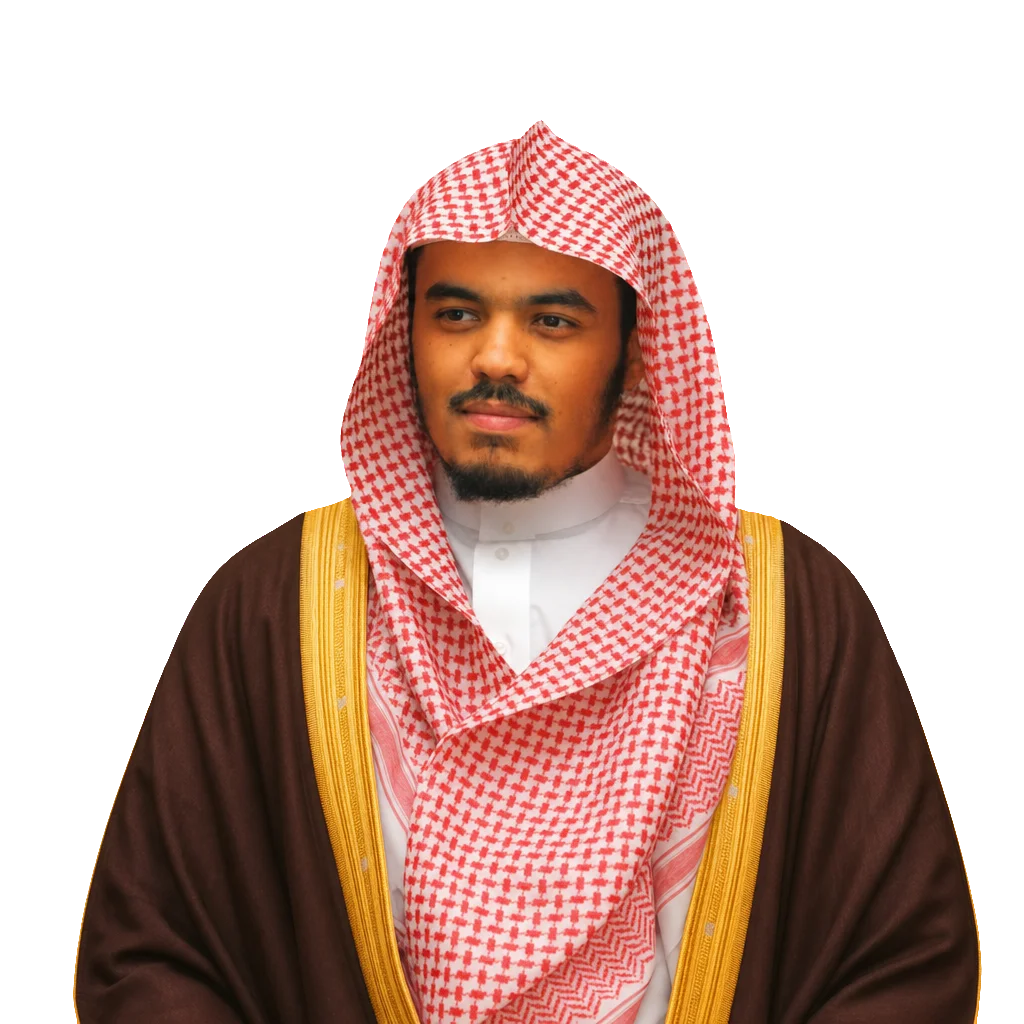
A lecture delivered at the Sacred Mosque reflecting on the spiritual wisdoms behind Islamic acts of worship, particularly Hajj. The speaker emphasizes directing all devotion exclusively to Allah ﷻ, using worldly life as a means to attain success in the Hereafter, and hastening toward righteous deeds.
“In the name of Allāh, the Entirely Merciful, the Especially Merciful.”
“[All] praise is [due] to Allāh, Lord of the worlds -” (Quran 1:1-2)
Who bestowed His favor and grace, and honored and dignified the children of Adam.
I praise Him with praise befitting His supreme majesty,
and I bear witness that there is no god but Allah alone, without partner,
Who created all things, perfecting and masterfully ordaining them;
and I bear witness that Muhammad is His servant and Messenger,
sent to all of mankind with the most upright religion.
May Allah's peace, blessings, and grace be upon him, his family, and companions.
To proceed: I greet you with the greeting of Islam,
May the peace, mercy, and blessings of Allah be upon you.
And I ask Allah ﷻ
to grant us beneficial knowledge and righteous deeds,
and to grant us such understanding of Him and His Messenger ﷺ
as will elevate us to the rank of the truthful, the martyrs, and the righteous.
And I ask Allah ﷻ that just as He gathered us in this Sacred Mosque,
and in this blessed season, during the ten days of Dhul-Hijjah, in the season of Hajj,
that He gather us together beneath the shade of His Throne, on couches facing one another, in Gardens...
“Indeed, the righteous will be among gardens and rivers,”
“In a seat of honor near a Sovereign, Perfect in Ability.” (Quran 54:54-55)
And I ask Allah ﷻ to grant us success in these ten days to perform righteous deeds,
and everything He loves and is pleased with—of words and deeds, both outward and inward.
And I ask Allah ﷻ to reward our rulers—headed by the Custodian of
the Two Holy Mosques King Salman bin Abdulaziz and his Crown Prince,
Prince Mohammed bin Salman—
for their care of the Two Holy Mosques and those heading to them—the Hajj pilgrims,
Umrah performers, and visitors—
and for their utmost care and supreme attention,
and to abundantly reward them for all they offer to Islam and Muslims everywhere.
And I ask Allah ﷻ to reward the Religious Affairs Presidency,
headed by our Sheikh, His Excellency Prof.
Dr. Abdul Rahman Al-Sudais, may Allah preserve him,
for organizing such blessed knowledge-based courses and lessons,
aimed at educating and enlightening people on what benefits them in their religion and worldly life.
Today, in this lecture,
we address one of the topics
of this blessed seminar,
titled: "Tafsir of the Verses of Hajj."
So I say, seeking help from Allah:
The wheel of time turns, alternating between night and day, evening and morning.
bringing an endless succession of ages and eras—a lesson for those who reflect,
and a reminder for those who ponder.
Allah ﷻ said:
“And it is He who has made the night and the day in succession for whoever desires to remember or desires gratitude.” (Quran 25:62)
And He ﷻ said: "Allah causes the night...
“Allāh alternates the night and the day. Indeed in that is a lesson for those who have vision.” (Quran 24:44)
...vision."
And every year, a noble guest arrives,
and a great season casts its shade:
the season of Hajj with its abundant blessings.
A season for which hearts yearn and souls long every year,
in response to the call of Ibrahim (AS),
when his Lord, Owner of Majesty and Honor, commanded him:
“And proclaim to the people the ḥajj [pilgrimage]; they will come to you on foot and on every lean camel; they will come from every distant pass -” (Quran 22:27)
Hajj is a great pillar of Islam
and one of its mighty foundations.
The Prophet ﷺ said, as is well known to your noble knowledge:
"Islam is built upon five: testifying that there is no god but Allah,
establishing prayer, paying zakat, fasting Ramadan, and pilgrimage to the House."
And this pillar—the pillar of Hajj—was enjoined
by Allah upon His accountable servants once in a lifetime—
Allah ﷻ enjoined it upon His servants once in a lifetime,
for whoever is able to find a way to it.
Allah ﷻ said:
“In it are clear signs [such as] the standing place of Abraham. And whoever enters it [i.e., the Ḥaram] shall be safe. And [due] to Allāh from the people is a pilgrimage to the House - for whoever is able to find thereto a way. But whoever disbelieves [i.e., refuses] - then indeed, Allāh is free from need of the worlds.” (Quran 3:97)
Ability in this era includes obtaining the Hajj permit
required by the relevant authorities to serve Shariah interests.
This was affirmed by the statement issued by the Council of Senior Scholars.
which emphasized that complying with obtaining the permit
serves the Shariah interests upheld by this noble Law,
for Shariah came to secure and perfect benefits,
and to ward off and minimize harms.
Hajj is an occasion of great status and monumental significance.
Among the greatness of Hajj is that Allah ﷻ mentioned it in several places in His Book:
in Surat Al-Baqarah, Surat Ali 'Imran, and Surat Al-Ma'idah.
Indeed, Allah ﷻ revealed a surah named after
this great pillar—the only surah named after a pillar of Islam: Surat Al-Hajj.
This calls upon man and motivates him to reflect and ponder,
and strive to extract the subtle meanings
to which the Quran drew attention,
and to be keen to explore the objectives and secrets
that the Quran sought to highlight.
For that prompts one
to understand those secrets and objectives,
grasp their aims, comprehend their intent, and make good use of them.
For when hearts and minds grasp these objectives and secrets,
they hasten, race, and strive.
However, when hearts and minds miss these wisdoms and secrets,
they slow down, lag, and fall behind.
And that is what we will try
to shed light on in this lecture:
focusing on the verses of Hajj and
explaining them through thematic tafsir.
And I chose to address the interpretation
of these verses through thematic tafsir
to align with the title of this course:
"Guiding the Traveler to the Objectives of the Rituals."
The first of these topics emphasized in the verses
of Hajj—which is abundant and clear in them—
the primary and most vital of these topics is establishing Tawhid.
For Allah ﷻ said: "And complete the Hajj and 'Umrah for Allah."
So you perform this act of worship seeking closeness to Allah ﷻ, sincere to Him.
Notice with me that throughout the verses of Hajj, this is abundant and evident.
For Allah ﷻ said in the midst of the verses of Hajj in Surah Al-Hajj:
“Inclining [only] to Allāh, not associating [anything] with Him. And he who associates with Allāh - it is as though he had fallen from the sky and was snatched by the birds or the wind carried him down into a remote place.” (Quran 22:31)
And also, the saying of Allah ﷻ:
“That is because Allāh is the True Reality and because He gives life to the dead and because He is over all things competent” (Quran 22:6)
And reviving the dead is among the acts of Allah ﷻ.
Also, Allah ﷻ says in Surah Al-Hajj: "He invokes
“He invokes instead of Allāh that which neither harms him nor benefits him. That is what is the extreme error.” (Quran 22:12)
"How wretched the protector, how wretched..."
And Allah ﷻ also says: "He calls...
“He invokes one whose harm is closer than his benefit - how wretched the protector and how wretched the associate.” (Quran 22:13)
He says, "He invokes...
“He invokes instead of Allāh that which neither harms him nor benefits him. That is what is the extreme error.”
“He invokes one whose harm is closer than his benefit - how wretched the protector and how wretched the associate.” (Quran 22:12-13)
And also, Allah ﷻ says:
“Do you not see [i.e., know] that to Allāh prostrates whoever is in the heavens and whoever is on the earth and the sun, the moon, the stars, the mountains, the trees, the moving creatures and many of the people? But upon many the punishment has been justified. And he whom Allāh humiliates - for him there is no bestower of honor. Indeed, Allāh does what He wills.” (Quran 22:18)
And Allah ﷻ also says in Surah Al-Hajj:
“That is because Allāh is the True Reality, and that which they call upon other than Him is falsehood, and because Allāh is the Most High, the Grand.” (Quran 22:62)
"And that Allah is Most High, Most Great."
“That is because Allāh is the True Reality, and that which they call upon other than Him is falsehood, and because Allāh is the Most High, the Grand.” (Quran 22:62)
And Allah ﷻ also says, "O mankind,"
at the end of Surah Al-Hajj: "O mankind,
“O people, an example is presented, so listen to it. Indeed, those you invoke besides Allāh will never create [as much as] a fly, even if they gathered together for it [i.e.,
that purpose]. And if the fly should steal from them a [tiny] thing, they could not recover it from him. Weak are the pursuer and pursued.” (Quran 22:73)
They are not only incapable of creating a single fly, even if they were to gather—
all the world's scientists wanting to create a single fly could not create one.
Then Allah ﷻ challenged them further, with the morsel taken from them by the fly.
Because when the fly takes a morsel to ingest it into its belly—
even before ingesting the morsel,
it secretes a substance on it, converting it into another substance,
and then takes it inside its body.
If you dissected the fly afterwards, you would not find the morsel it took from you.
So Allah ﷻ challenges them, saying:
“O people, an example is presented, so listen to it. Indeed, those you invoke besides Allāh will never create [as much as] a fly, even if they gathered together for it [i.e., that purpose]. And if the fly should steal from them a [tiny] thing, they could not recover it from him. Weak are the pursuer and pursued.” (Quran 22:73)
Then Allah ﷻ said:
“They have not appraised Allāh with true appraisal. Indeed, Allāh is Powerful and Exalted in Might.” (Quran 22:74)
Even in Surah Az-Zumar,
when Allah ﷻ addressed the Prophet ﷺ, warning him against
falling into shirk,
Allah ﷻ said to the Prophet ﷺ:
"And it was revealed to you and to those...
“And it was already revealed to you and to those before you that if you should associate [anything] with Allāh, your work would surely become worthless, and you would surely be among the losers.” (Quran 39:65)
"...and be among the losers."
“Rather, worship [only] Allāh and be among the grateful.” (Quran 39:66)
...and be among the grateful."
If this address was to the Prophet ﷺ, then we are all the more so.
Allah ﷻ warns the prophets against falling into shirk.
In Surah Al-An'am: "But if they had associated..."
“That is the guidance of Allāh by which He guides whomever He wills of His servants. But if they had associated others with Allāh, then worthless for them would be whatever they were doing.” (Quran 6:88)
And He says to the Prophet ﷺ:
"If you associate others, your deeds will be void,"
“Rather, worship [only] Allāh and be among the grateful.” (Quran 39:66)
"...and be among the grateful."
If this address was to the Prophet ﷺ, then all the more so for us.
Then He said after it:
“They have not appraised Allāh with true appraisal. Indeed, Allāh is Powerful and Exalted in Might.” (Quran 22:74)
"and the earth in His grip on Judgment Day,
and the heavens will be folded in His right hand.
Exalted is He and High above what they associate with Him."
“They have not appraised Allāh with true appraisal. Indeed, Allāh is Powerful and Exalted in Might.” (Quran 22:74)
When you contemplate Allah's creation—and this is among the teachings of Sharia—
that we contemplate Allah's creation and reflect upon Allah's creation—
so much so that Allah ﷻ said in Surah Al 'Imran:
"In the creation of the heavens and earth and the alternation of night and day are signs for those of understanding."
“Who remember Allāh while standing or sitting or [lying] on their sides and give thought to the creation of the heavens and the earth, [saying], "Our Lord, You did not create this aimlessly; exalted are You [above such a thing]; then protect us from the punishment of the Fire.” (Quran 3:191)
What did the Prophet ﷺ say about these verses?
He said, "Verses were revealed to me today; woe to him who reads them and does not ponder them."
And what do these verses call to?
at the end of Surah Al 'Imran:
"In the creation of the heavens and earth and the alternation of night and day are signs for those of understanding."
“Who remember Allāh while standing or sitting or [lying] on their sides and give thought to the creation of the heavens and the earth, [saying], "Our Lord, You did not create this aimlessly; exalted are You [above such a thing]; then protect us from the punishment of the Fire.” (Quran 3:191)
...in vain.
And Allah ﷻ says: "In the heavens and earth are signs...
“Indeed, within the heavens and earth are signs for the believers.”
“And in the creation of yourselves and what He disperses of moving creatures are signs for people who are certain [in faith].” (Quran 45:3-4)
"and in the alternation of night and day, and what Allah sends down of provision,
“And [in] the alternation of night and day and [in] what Allāh sends down from the sky of provision [i.e., rain] and gives life thereby to the earth after its lifelessness and [in His] directing of the winds are signs for a people who reason.” (Quran 45:5)
and the winds are signs
“And [in] the alternation of night and day and [in] what Allāh sends down from the sky of provision [i.e., rain] and gives life thereby to the earth after its lifelessness and [in His] directing of the winds are signs for a people who reason.”
“These are the verses of Allāh which We recite to you in truth. Then in what statement after Allāh and His verses will they believe?” (Quran 45:5-6)
So we must reflect upon Allah's ﷻ creation.
Shaykh al-Islam Ibn Taymiyyah (RH) said:
"Among the things that strengthen faith in people's hearts is reflecting upon Allah's creation,
and reflecting on what Allah placed in the universe, the celestial bodies, and within humans,
for Allah ﷻ said: "We will show them Our signs"
“We will show them Our signs in the horizons and within themselves until it becomes clear to them that it is the truth. But is it not sufficient concerning your Lord that He is, over all things, a Witness?” (Quran 41:53)
And this glimpse into reflection—
when you ponder now upon the sun that we see:
This sun that we see is how much larger than Earth? By 1.3 million times!
Modern science says the sun is 1.3 million times larger than Earth—
one million three hundred thousand times.
And this sun, along with all that is with it—
the planets of the solar system: Mercury, Venus, Mars, Jupiter, and others—
this solar system exists within the Milky Way galaxy,
which contains more than one hundred billion stars.
This is called the Milky Way galaxy. How many galaxies have they discovered so far?
More than two trillion galaxies!
“And they did not appraise Allāh with true appraisal when they said, "Allāh did not reveal to a human being anything." Say, "Who revealed the Scripture that Moses brought as light and guidance to the people? You [Jews] make it into pages, disclosing [some of] it and concealing much. And you were taught that which you knew not - neither you nor your fathers." Say, "Allāh [revealed it]." Then leave them in their [empty] discourse, amusing themselves.” (Quran 6:91)
Astronomers say, “We have only discovered four percent of the universe so far.”
This is what Allah ﷻ has revealed to His servants,
and creation is far greater and more magnificent than they think.
These are human attempts, but this is all they have reached.
“They have not appraised Allāh with true appraisal. Indeed, Allāh is Powerful and Exalted in Might.” (Quran 22:74)
What is there in the heavens?
There is not even the space of four fingers except
an angel prostrating, bowing, or standing.
And Al-Bayt al-Ma'mur is entered every day by 70,000 angels who never return to it.
One Throne-Bearer's earlobe to shoulder is a 700-year journey.
“And they did not appraise Allāh with true appraisal when they said, "Allāh did not reveal to a human being anything." Say, "Who revealed the Scripture that Moses brought as light and guidance to the people? You [Jews] make it into pages, disclosing [some of] it and concealing much. And you were taught that which you knew not - neither you nor your fathers." Say, "Allāh [revealed it]." Then leave them in their [empty] discourse, amusing themselves.” (Quran 6:91)
Ibn al-Qayyim (RH) said:
"If you are unable to imagine a creation among Allah's creations, then how about Allah?
If I told you to imagine this angel now—from here to here a 700-year journey—you could not imagine that.
“And they did not appraise Allāh with true appraisal when they said, "Allāh did not reveal to a human being anything." Say, "Who revealed the Scripture that Moses brought as light and guidance to the people? You [Jews] make it into pages, disclosing [some of] it and concealing much. And you were taught that which you knew not - neither you nor your fathers." Say, "Allāh [revealed it]." Then leave them in their [empty] discourse, amusing themselves.” (Quran 6:91)
Ibn al-Qayyim (RH) said, "Then the heart prostrates, never rising until the Day of Increase."
So we must establish Tawheed in our hearts and always recall this meaning in all our actions,
and to remember this great matter— the Tawheed of Allah ﷻ—
and reflect on His creation. Allah ﷻ said regarding us: "Do they not reflect upon themselves?"
And Allah ﷻ says:
“Do they not contemplate within themselves? Allāh has not created the heavens and the earth and what is between them except in truth and for a specified term. And indeed, many of the people, in the meeting with their Lord, are disbelievers.” (Quran 30:8)
And Allah ﷻ says:
“And in yourselves. Then will you not see?”
“And in the heaven is your provision and whatever you are promised.” (Quran 51:21-22)
Thus, the realization of Tawhid is clear in the verses of Hajj,
as we have previously explained.
Al-Shafi'i (RH) said regarding the verse,
"And complete Hajj and 'Umrah for Allah":
He specified 'for Allah' for Hajj and 'Umrah, not for Prayer and Zakat,
because they used to devote some acts of Hajj and 'Umrah to idols.
So He singled them out to urge sincerity in them and avoid that forbidden belief."
And worship is the right of Allah ﷻ alone, without any partner.
Tawhid is of three types: Tawhid al-Rububiyyah,
Tawhid al-Uluhiyyah, and Tawhid al-Asma' wa al-Sifat.
Tawhid al-Rububiyyah is singling Allah out in His actions:
that Allah is the Creator, Provider, Giver of life, Causer of death, Granter, and Withholder ﷻ.
Tawhid al-Uluhiyyah is singling Allah out through the actions of the servants:
that worship is directed only to Allah ﷻ—such as prayer, remembrance, sacrifice, and vows.
All acts of worship must be devoted solely to Allah ﷻ; none has the right to be worshipped except Allah.
Tawhid al-Asma' wa al-Sifat is affirming what Allah has affirmed for Himself,
and what His Messenger ﷺ affirmed for Him of names and attributes,
without distortion, negation, specification of manner, assimilation, or comparison.
Also among the themes present in the verses of Hajj
is realizing the meaning of servitude, obedience, and submission to Allah ﷻ.
Islam, as is well known to your noble knowledge,
Islam is submission to Allah through Tawhid,
compliance to Him through obedience, and disavowal of Shirk and its people.
Submission to Allah ﷻ means surrendering to the command of Allah ﷻ and complying with Him,
whether you know the wisdom behind it or not.
In some acts of worship, Allah ﷻ reveals to His servants some of the wisdom behind them,
and scholars deduce wisdoms from them, such as the prohibition of alcohol: why was it prohibited?
Because it impairs the mind. So there are clear wisdoms behind some commands.
However, there are other matters and rulings
that Allah ﷻ commanded, which have wisdoms intended by Allah ﷻ, but they are hidden from us.
Allah ﷻ intends these wisdoms. We must comply and submit
to Allah ﷻ regarding them,
even if we do not know the wisdom behind them, and even if it remains hidden from us.
For example, the number of prayers: why five prayers?
Why is Dhuhr prayer four rak'ahs? Why not three?
Why is Tawaf seven circuits? Why not eight circuits?
There are matters in which Allah ﷻ wants to see your submission to Him,
whether you know the wisdom behind them or not.
Devotional rulings, as I mentioned,
are those whose rationale human intellect cannot grasp.
...the detailed effective cause behind their legislation.
And among their characteristics is that qiyas cannot be applied to them,
because when applying qiyas, one must know
by which we measure the subsidiary case against the primary case,
or one against another. If this 'illah is hidden, no qiyas is possible.
Also, they are strictly divinely ordained (tawqifiyyah), from Allah ﷻ.
Another major theme in the verses of Hajj is:
Purifying the soul from blameworthy traits and nurturing it upon noble character;
this is clear.
Allah ﷻ says: "Hajj is [during] well-known months."
“Ḥajj is [during] well-known months, so whoever has made ḥajj obligatory upon himself therein [by entering the state of iḥrām], there is [to be for him] no sexual relations and no disobedience and no disputing during ḥajj. And whatever good you do - Allāh knows it. And take provisions, but indeed, the best provision is fear of Allāh. And fear Me, O you of understanding.” (Quran 2:197)
This is clear:
a person must maintain the highest standards in his character and conduct
while performing this great ritual,
and he is commanded to do so throughout the entire Sharia.
Allah ﷻ says: "And speak to people kindly,"
and He ﷻ says: "Repel [evil] with that which is better."
The Prophet ﷺ says: "I was only sent to perfect good character."
The Sharia has accorded a very high status to moral character,
to the extent that those closest in seat to the Prophet ﷺ are those best in character.
The Prophet ﷺ said: "The closest of you to me on the Day of Judgment are the best in character."
When the Prophet ﷺ was asked about the heaviest thing in one's scale on Judgment Day,
he said: "Taqwa of Allah ﷻ and good character."
Good character holds a very high status in the Sharia.
“Ḥajj is [during] well-known months, so whoever has made ḥajj obligatory upon himself therein [by entering the state of iḥrām], there is [to be for him] no sexual relations and no disobedience and no disputing during ḥajj. And whatever good you do - Allāh knows it. And take provisions, but indeed, the best provision is fear of Allāh. And fear Me, O you of understanding.” (Quran 2:197)
Steer clear even of arguing and useless debate.
One is required to avoid useless debate even outside the days of Hajj.
The Prophet ﷺ said: "I guarantee a house in Paradise's outskirts for one who leaves arguing, even if right."
So what then of the days of Hajj?
One should abandon argumentation that distracts him from worship.
As-Sa'di (RH) said: "You must venerate the Ihram of Hajj and safeguard it from all that invalidates or impairs it:
sexual relations (rafath), including foreplay, and wrongdoing (fusuq)..."
"...which includes all acts of disobedience, among them the prohibitions of Ihram, and arguing (jidal)..."
"...which means disputing, contending, and quarreling, because it stirs up evil and causes enmity."
The purpose of Hajj is humility before Allah ﷻ,
seeking closeness to Him through all possible good deeds, and refraining from engaging in arguments.
And there is a wise and subtle
point regarding argumentation.
It is said: "Arguing with a wise person turns into a dialogue,
while dialogue with an ignorant person turns into conflict."
Conflict with a wise person
turns into
into dialogue."
This applies outside Hajj. During Hajj, neither is allowed.
During Hajj, you leave all types of argumentation,
even if you are in the right. But this point was just by way of benefit.
Also among the great matters mentioned in the verses of Hajj is the statement of Allah ﷻ:
“Ḥajj is [during] well-known months, so whoever has made ḥajj obligatory upon himself therein [by entering the state of iḥrām], there is [to be for him] no sexual relations and no disobedience and no disputing during ḥajj. And whatever good you do - Allāh knows it. And take provisions, but indeed, the best provision is fear of Allāh. And fear Me, O you of understanding.” (Quran 2:197)
This invites us to recognize that Taqwa
is an intended goal of many acts of worship.
We find it in fasting,
Allah ﷻ says: "O you..."
“O you who have believed, decreed upon you is fasting as it was decreed upon those before you that you may become righteous -” (Quran 2:183)
And we find it in prayer.
"And enjoin prayer upon your family...
“And enjoin prayer upon your family [and people] and be steadfast therein. We ask you not for provision; We provide for you, and the [best] outcome is for [those of] righteousness.” (Quran 20:132)
And He ﷻ said, "prepared for..." He ﷻ said:
"Alif, Lam, Meem. This is the Book…"
“This is the Book about which there is no doubt, a guidance for those conscious of Allāh -” (Quran 2:2)
Who are the God-fearing?
“Who believe in the unseen, establish prayer, and spend out of what We have provided for them,”
“And who believe in what has been revealed to you, [O Muḥammad], and what was revealed before you, and of the Hereafter they are certain [in faith].” (Quran 2:3-4)
“Who believe in the unseen and establish prayer”—so, establishing prayer.
“And spend out of what We have provided for them”—in Zakat as well.
And regarding Hajj...
“Ḥajj is [during] well-known months, so whoever has made ḥajj obligatory upon himself therein [by entering the state of iḥrām], there is [to be for him] no sexual relations and no disobedience and no disputing during ḥajj. And whatever good you do - Allāh knows it. And take provisions, but indeed, the best provision is fear of Allāh. And fear Me, O you of understanding.” (Quran 2:197)
Taqwa and its derivatives are mentioned in the Quran 258 times,
which shows you the magnitude of this matter and the Sharia's emphasis on it.
This is evident in the verses of Hajj. Allah ﷻ says,
"O mankind," in the first verse of Surah Al-Hajj: "O...
“O mankind, fear your Lord. Indeed, the convulsion of the [final] Hour is a terrible thing.” (Quran 22:1)
And Allah ﷻ says:
"Remember Allah during specified days…"
“And remember Allāh during [specific] numbered days. Then whoever hastens [his departure] in two days - there is no sin upon him; and whoever delays [until the third] - there is no sin upon him - for him who fears Allāh. And fear Allāh and know that unto Him you will be gathered.” (Quran 2:203)
And Allah ﷻ says in Surah Al-Hajj: "Neither...
“Their meat will not reach Allāh, nor will their blood, but what reaches Him is piety from you. Thus have We subjected them to you that you may glorify Allāh for that [to] which He has guided you; and give good tidings to the doers of good.” (Quran 22:37)
What is taqwa? It is that Allah ﷻ sees you where He loves and not where He dislikes,
as defined by one of the Salaf.
And as you know, it has many definitions.
Also, among the matters mentioned regarding Hajj,
and in the verses of Hajj, is the reminder of the Last Day.
O...
“O mankind, fear your Lord. Indeed, the convulsion of the [final] Hour is a terrible thing.”
“On the Day you see it every nursing mother will be distracted from that [child] she was nursing, and every pregnant woman will abort her pregnancy, and you will see the people [appearing] intoxicated while they are not intoxicated; but the punishment of Allāh is severe.” (Quran 22:1-2)
This is the opening of Surah Al-Hajj.
“On the Day you see it every nursing mother will be distracted from that [child] she was nursing, and every pregnant woman will abort her pregnancy, and you will see the people [appearing] intoxicated while they are not intoxicated; but the punishment of Allāh is severe.” (Quran 22:2)
So, the verses of Hajj remind us of the Last Day.
Allah ﷻ also says a few verses later:
“That is because Allāh is the True Reality and because He gives life to the dead and because He is over all things competent”
“And [that they may know] that the Hour is coming - no doubt about it - and that Allāh will resurrect those in the graves.” (Quran 22:6-7)
'...those who are in the graves.'
And the verses regarding this matter are many.
The pilgrim must bear this in mind in all his actions—when he sees crowds gathering,
where no distinction is made between poor and rich, old and young,
moving in crowds, such as on the Day of Arafah; when you see people gathered in that scene,
you remember the Day of Resurrection and Reckoning.
And you remember that great Day; when you put on the ihram, you remember wearing the shroud,
and your transition from this world to the Abode of the Hereafter.
You also remember the insignificance of this world, for Allah ﷻ says in His Book:
"And the worldly life is not but enjoyment of delusion."
So one should always remember the Last Day,
and keeping the Last Day in mind helps you give
this world the weight Allah wants you to give it.
For Allah ﷻ—as is not hidden from you, Allah, the Exalted and Majestic—
if this world were worth the wing of a mosquito to Allah, He would not have given a disbeliever a drink of water from it.
Rather, Allah ﷻ said in Surah Az-Zukhruf:
“And if it were not that the people would become one community [of disbelievers], We would have made for those who disbelieve in the Most Merciful - for their houses - ceilings and stairways of silver upon which to mount.” (Quran 43:33)
...one single nation. This verse is among the verses
that remind man of the insignificance of this world and its true worth with Allah ﷻ.
He ﷻ said:
“And if it were not that the people would become one community [of disbelievers], We would have made for those who disbelieve in the Most Merciful - for their houses - ceilings and stairways of silver upon which to mount.”
“And for their houses - doors and couches [of silver] upon which to recline” (Quran 43:33-34)
"and for their houses doors, couches to recline on, and gold ornaments.
And all that is nothing but the enjoyment of the life of this world.”
What does it mean:
“And if it were not that the people would become one community [of disbelievers], We would have made for those who disbelieve in the Most Merciful - for their houses - ceilings and stairways of silver upon which to mount.” (Quran 43:33)
...one single nation?
Its meaning, as the commentators state:
Were it not for Allah's mercy upon the believers, lest they be tempted by the disbelievers,
“And if it were not that the people would become one community [of disbelievers], We would have made for those who disbelieve in the Most Merciful - for their houses - ceilings and stairways of silver upon which to mount.”
“And for their houses - doors and couches [of silver] upon which to recline”
“And gold ornament. But all that is not but the enjoyment of worldly life. And the Hereafter with your Lord is for the righteous.” (Quran 43:33-35)
...is but the enjoyment of the life of this world.
That is, out of Allah's mercy upon the believers—
so that they would not be tempted by the disbelievers—
Allah did not grant the disbelievers all of that.
Otherwise, Allah ﷻ would have granted the disbelievers all of this:
“And if it were not that the people would become one community [of disbelievers], We would have made for those who disbelieve in the Most Merciful - for their houses - ceilings and stairways of silver upon which to mount.”
“And for their houses - doors and couches [of silver] upon which to recline”
“And gold ornament. But all that is not but the enjoyment of worldly life. And the Hereafter with your Lord is for the righteous.” (Quran 43:33-35)
...an enjoyment of the worldly life.
Then He ﷻ said after that:
"And all that is but the enjoyment of the life...
“And gold ornament. But all that is not but the enjoyment of worldly life. And the Hereafter with your Lord is for the righteous.” (Quran 43:35)
The Prophet ﷺ exemplified this when 'Umar ibn al-Khattab was sleeping on a mat.
He asked about it; 'Umar was amazed, so the Prophet ﷺ said to him,
When 'Umar asked how Chosroes and Caesar sleep on gold and silver while he ﷺ slept on a mat:
"Are you not pleased, O 'Umar, that they have this world and we have the Hereafter?"
Now, to maintain balance, this does not mean that a person...
...should not take his share of this world, for Allah ﷻ said:
“But seek, through that which Allāh has given you, the home of the Hereafter; and [yet], do not forget your share of the world. And do good as Allāh has done good to you. And desire not corruption in the land. Indeed, Allāh does not like corrupters."” (Quran 28:77)
"And seek, through what Allah has given you..."
“But seek, through that which Allāh has given you, the home of the Hereafter; and [yet], do not forget your share of the world. And do good as Allāh has done good to you. And desire not corruption in the land. Indeed, Allāh does not like corrupters."” (Quran 28:77)
However, on one condition:
Whatever portion you take from this world,
it must be a means to an end.
If the world and all its gains become an end in itself, man begins to perish.
However, if one treats the world and all its gains as a means to the Hereafter,
and as a place of passage, not a permanent abode,
then one is indeed walking on the right path.
They utilize the world and all its gains, whatever they receive of it,
provided that these worldly gains are employed for the Hereafter, just as Sulaiman (AS) did.
Allah ﷻ spoke of him—who was granted divine
gifts unmatched by anyone after him—
Allah ﷻ said of him: "An excellent servant; he ever turned to Us."
If you channel the world for the Hereafter and walk this path, you are on the right track.
Likewise, bearing in mind the matters of the Unseen.
As you walk through Hajj, you remember Paradise,
Hellfire, good deeds, and bad deeds—all unseen matters
that you cannot see with your eyes,
yet you truly believe in them.
That is why the first quality of the righteous in the Book of Allah—
"Alif-Lam-Mim. This is the Book..."
“This is the Book about which there is no doubt, a guidance for those conscious of Allāh -” (Quran 2:2)
What is the very first quality? "Those who believe in the unseen."
And Allah ﷻ says:
“You can only warn one who follows the message and fears the Most Merciful unseen. So give him good tidings of forgiveness and noble reward.” (Quran 36:11)
And Allah ﷻ says: "Who feared the Most Merciful unseen."
You believe that Allah ﷻ will bestow upon you,
that by His permission ﷻ and His mercy ﷻ,
and you draw closer to Allah ﷻ so He honours you and accepts your righteous deeds.
Therefore, you may find two people
side by side,
yet the difference between them in faith in the unseen and sincerity to Allah ﷻ is as vast as between heaven and earth.
Hence, Shaykh al-Islam Ibn Taymiyyah (RH) said:
"Deeds vary in virtue
by the varying degrees of sincerity in hearts."
And you find such a person
who has directed all his affairs—
all his affairs to Allah ﷻ,
and Allah ﷻ explained how the sincere monotheist lives compared to the non-monotheist; Allah ﷻ said:
“Allāh presents an example: a man [i.e., slave] owned by quarreling partners and another belonging exclusively to one man - are they equal in comparison? Praise be to Allāh! But most of them do not know.” (Quran 39:29)
This is an example set by Allah ﷻ: a man who has
many masters—this one orders him, that one orders him.
Is he like one who has a single God commanding him?
No, he is not torn. The monotheist's heart is at ease and peaceful, receiving commands from Allah ﷻ,
and everything he does is to draw closer to Allah ﷻ, devoting his deeds purely to Him.
This is the state of the believer.
As for the other, whose life is in turmoil,
obeying now this master and now that—wealth, status, women, fame, and so on—
his heart torn among his masters in this world. The Prophet ﷺ said:
"Miserable is the slave of the dinar, miserable is the slave of the fine garment." He called him a slave.
Therefore, you find such a person content, not even seeking the approval of people,
because he seeks only the pleasure of Allah ﷻ.
And here is a beautiful quote from Ibn al-Qayyim (RH):
In Miftah Dar al-Sa'adah, he says:
"Pleasing people is neither achievable, nor recorded, nor commanded."
You can never attain it, as it is impossible;
nor is it recorded that anyone ever pleased everyone, nor is it commanded.
You were never commanded to do so in the first place; you are only required to turn to Allah ﷻ.
Therefore, notice how the Quran,
in its directives and vocabulary—
is extremely precise, being the Word of Allah ﷻ.
Regarding sustenance, Allah ﷻ says:
“It is He who made the earth tame for you - so walk among its slopes and eat of His provision - and to Him is the resurrection.” (Quran 67:15)
He termed it "walking": "Walk..."
In another verse He said: "And when the prayer has been concluded, disperse..."
“And when the prayer has been concluded, disperse within the land and seek from the bounty of Allāh, and remember Allāh often that you may succeed.” (Quran 62:10)
"Dispersal." See, dispersing after prayer, after people go to the mosque—that is dispersal.
Regarding acts of worship and obedience, what did Allah ﷻ say?
"Hasten to the remembrance of Allah." Hastening is more intense than walking.
Regarding acts of obedience, Allah ﷻ also says: "And hasten to forgiveness..."—racing.
And Allah ﷻ says:
“Race [i.e., compete] toward forgiveness from your Lord and a Garden whose width is like the width of the heavens and earth, prepared for those who believed in Allāh and His messengers. That is the bounty of Allāh which He gives to whom He wills, and Allāh is the possessor of great bounty.” (Quran 57:21)
"Racing." What is the difference between hastening and racing?
Why did He say "hastening" here, "racing" there, and "hastening" here?
Among the beautiful subtle points the exegetes mentioned is
that a person may be in an environment where someone is racing them to Allah, so they race,
because racing requires there to be another party.
As for hastening, it can be in an environment where no one but you is hastening to Allah, so hasten!
Thus, you are either hastening or racing toward Allah ﷻ.
But regarding one's relationship with Allah,
what did Allah ﷻ say? "So flee to Allah." Fleeing!
And what is fleeing? Fleeing is what unleashes a person's full potential energy.
If I set up a contest now with the biggest prize, one's full energy won't come out,
but if a lion were chasing you, your full energy comes out.
You face a tall wall, leap over it, and wonder, "How did I do that?"
This is full energy; this is fleeing: "So flee to Allah."
Also, among the matters
mentioned in the verses
that we must notice in the verses of Hajj
is urging veneration of Allah's symbols, clear in the Hajj verses.
“That [is so]. And whoever honors the symbols [i.e., rites] of Allāh - indeed, it is from the piety of hearts.” (Quran 22:32)
When a person gets used to venerating Allah's symbols—venerating Tawaf, Sa'i, and venerating
standing at Arafah, being in Muzdalifah, and staying overnight in Mina,
when he venerates these things, it helps him nurture veneration of Allah's symbols in Hajj,
and also, when he returns from Hajj, he venerates the commands of Allah ﷻ.
Additionally, the verses spoke about benefits, and that Hajj contains benefits.
Allah ﷻ said:
“There is no blame upon you for seeking bounty from your Lord [during ḥajj]. But when you depart from ʿArafāt, remember Allāh at al-Mashʿar al-Ḥarām. And remember Him, as He has guided you, for indeed, you were before that among those astray.” (Quran 2:198)
So, "There is no blame upon you for seeking bounty..."
“There is no blame upon you for seeking bounty from your Lord [during ḥajj]. But when you depart from ʿArafāt, remember Allāh at al-Mashʿar al-Ḥarām. And remember Him, as He has guided you, for indeed, you were before that among those astray.” (Quran 2:198)
So Islam and the Sharia do not prohibit earning a living,
or combining
worldly gains and
spiritual gains during Hajj,
because some of the Companions (RA) initially had reservations about that,
so Allah ﷻ revealed this verse:
“There is no blame upon you for seeking bounty from your Lord [during ḥajj]. But when you depart from ʿArafāt, remember Allāh at al-Mashʿar al-Ḥarām. And remember Him, as He has guided you, for indeed, you were before that among those astray.” (Quran 2:198)
"'That they may witness benefits for themselves,' as Allah ﷻ said in Surah Al-Hajj.
And what is the greatest of benefits? Achieving Tawheed.
This is clear in the Talbiyah,
and the Talbiyah is the motto of the pilgrim: "Labbayk Allahumma labbayk."
What does "Labbayk Allahumma labbayk" mean? It means response after response,
and steadfastness upon steadfastness in Tawheed—the oneness of Allah.
"Labbayk Allahumma labbayk, labbayk, no partner have You, labbayk.
All praise, grace, and sovereignty are Yours. You have no partner.
An emphasis: "You have no partner."
Also, among the benefits is learning, such as these blessed lessons now—learning
and benefiting from Sharia knowledge,
and asking the people of knowledge when one is ignorant,
because one wants to worship Allah ﷻ upon clear insight.
And Allah ﷻ says: "So ask...
“And We sent not before you except men to whom We revealed [Our message]. So ask the people of the message [i.e., former scriptures] if you do not know.” (Quran 16:43)
If any matter regarding Hajj is unclear to you, then ask the scholars about it.
The scholars hold a great status—reputable scholars.
You must seek out the scholars,
and the heirs of the Prophets who understood the Book of Allah and the Sunnah of the Prophet ﷺ
according to the understanding of the righteous Salaf,
according to the righteous Salaf—this condition is important.
The Book and Sunnah must be understood per the understanding of the righteous Salaf.
The scholars comprehend the universal principles of Sharia
and keep them in mind when
teaching Sharia and instructing the people,
as well as when issuing fatwas, while also considering the detailed rulings of Sharia.
When a scholar intends to issue a fatwa, he looks at Sharia's universal principles,
its detailed rulings, and the statements of the scholars,
as well as the understanding of the righteous Salaf.
He weighs benefits and harms, considering time, place, and people's circumstances.
That is why scholars distinguish between issuing a fatwa and a theoretical issue.
A scholar—and this happens often—may adopt a position on a theoretical issue,
favoring a certain view while teaching,
yet when issuing a fatwa, he may rule differently from his theoretical position.
Why does his position differ? Because the circumstances here are different.
Teaching is for establishing general rulings,
whereas a fatwa must take into account time, place, and people's circumstances.
And this is...
...lengthy topic that the people of knowledge have discussed.
Scholars have precise criteria and standards when they wish to apply the ruling of Allah ﷻ to any matter.
Now, praise be to Allah, there is what is called collective ijtihad, such as the existing fiqh academies,
where a group of scholars gather;
and if the matter pertains to a worldly issue, they seek the help of specialists.
If the issue is medical, they call physicians to form a clear picture, as judging a matter requires first conceptualizing it.
Thus, they must conceptualize the issue in all its dimensions to be able to apply the ruling of Allah ﷻ,
and they exert their utmost
effort to clarify the ruling
of Allah ﷻ and present their ijtihad on that issue,
such as the Council of Senior Scholars in our blessed country,
through which Allah has brought immense benefit to those far and near, inside the country and abroad.
I ask Allah to preserve our scholars, led by His Eminence, our teacher,
the scholar Sheikh Salih ibn Fawzan al-Fawzan, may Allah preserve him.
I ask Allah to extend his life, preserve Islam through him,
and benefit Islam and Muslims through him,
along with all our venerable scholars and scholars of the Muslims.
Also, among the great matters the Sharia brought is
—as the Hajj verses elaborate—remembering Allah ﷻ abundantly.
Allah ﷻ says—if you notice in the verses—
Allah ﷻ said: "There is no..."
“There is no blame upon you for seeking bounty from your Lord [during ḥajj]. But when you depart from ʿArafāt, remember Allāh at al-Mashʿar al-Ḥarām. And remember Him, as He has guided you, for indeed, you were before that among those astray.” (Quran 2:198)
“There is no blame upon you for seeking bounty from your Lord [during ḥajj]. But when you depart from ʿArafāt, remember Allāh at al-Mashʿar al-Ḥarām. And remember Him, as He has guided you, for indeed, you were before that among those astray.” (Quran 2:198)
guided you." Then Allah ﷻ said:
“Then depart from the place from where [all] the people depart and ask forgiveness of Allāh. Indeed, Allāh is Forgiving and Merciful.” (Quran 2:199)
He also says after it: "And when you have completed your rites, remember Allah."
And Allah ﷻ says: "And remember Allah during the appointed days."
In the Quran, Allah ﷻ commands and praises abundant remembrance.
He ﷻ says: "O...
“O you who have believed, remember Allāh with much remembrance” (Quran 33:41)
And Allah ﷻ also says: "...and the men who remember Allah much and the women who remember..."
The Prophet ﷺ said: "Tawaf, Sa'i, and stoning the Jamarat
were only ordained to establish the remembrance of Allah."
Also, among the things we learn from Hajj is
that Hajj is precise in its finest details:
what to say at every location; and He clarified pillars,
obligations, and conditions that you must abide by.
And if you fall into violating the conditions, obligations, or pillars,
What results from violating a pillar? A condition? An obligation? A Sunnah?
Meaning He explained everything to you. Islam is precise, teaching us discipline in everything.
Consider prayer, for example: at a precise time. The adhan is called at an exact moment.
Fasting: if you break fast half a minute early in Ramadan,
you fall into the prohibited and your fast is invalidated.
You must break fast at the right time and abstain at a set time. Our religion teaches discipline in everything.
And no successful person succeeds except by Allah's ﷻ grace, then through discipline.
Even in worldly matters, discipline is common to all successful people.
He is disciplined in what he succeeded in, after Allah's ﷻ grace.
Discipline is both in public and in private, even in your personal life with yourself.
And this is a principle: the more you conquer yourself in private, the more you will shine in public.
Now, when you see someone who excels academically,
where did this excellence come from? In solitude, he acquires sacred knowledge.
He learns for Allah ﷻ, but recognition is a natural byproduct,
while his primary intent remains seeking it for Allah ﷻ.
That is why al-Hasan al-Basri (RH) was asked: "Why do we see those who pray at night with such radiant faces?" He replied: "Because they secluded themselves with Allah...
...in the last part of the night in worship, so Allah ﷻ clothed their faces with that radiance."
Focus on what benefits you, especially today with technology. It can be a blessing or a curse.
It is a blessing if used correctly, but it becomes a curse if used improperly.
Benefit from technology and
everything this era has produced—even
artificial intelligence—and focus on what benefits you.
The Prophet ﷺ said: "Be eager for what benefits you." Avoid what doesn't benefit you in anything you pursue, read, or engage in.
Ask yourself: "Does this benefit me or not?"
The Prophet ﷺ said: "Be eager for what benefits you,"
Something may benefit you but not me, or benefit me but not you.
My field may differ from yours.
Every person should focus and know what benefits them and what does not,
as your life may be stolen without you realizing.
Now, with social media, your life can be stolen without your knowing.
And there are consequences, because algorithms now direct themselves wherever you go.
So be keen to always seek what benefits you and minimize harm—you cannot eliminate it fully.
That is, some dust of that harm will inevitably touch you.
But one should be mindful of Allah, strive diligently,
supplicating to Him, acting with sincerity, and exerting full effort, and Allah ﷻ will grant success.
Likewise.
That is why you find some people feeling pain,
because they say one thing and wish for things, but their actions contradict their wishes and goals.
Therefore, depression grows within a person
the wider the gap becomes between what they wish for,
what they plan, and what they actually do.
The wider the gap between your words and actions, the more depression and misery grow within you.
This applies to both religious and worldly matters.
As for the one devoted to this world and unmindful of the Hereafter,
his whole life is miserable, no matter what he does,
for Allah ﷻ has threatened him with misery in life. He ﷻ said:
“And whoever turns away from My remembrance - indeed, he will have a depressed [i.e., difficult] life, and We will gather [i.e., raise] him on the Day of Resurrection blind."” (Quran 20:124)
because true happiness—all happiness—lies in obedience to Allah ﷻ.
Also among the matters highlighted by the verses...
Yes.
is reminding us of the unity of the Ummah and its gathering—the people uniting during the Hajj season.
This serves as a reminder of the importance of this matter.
Shaykh al-Islam Ibn Taymiyyah (RH), discussing the definitive principles of Sharia—as you know, Allah ﷻ said:
“It is He who has sent down to you, [O Muḥammad], the Book; in it are verses [that are] precise - they are the foundation of the Book - and others unspecific. As for those in whose hearts is deviation [from truth], they will follow that of it which is unspecific, seeking discord and seeking an interpretation [suitable to them]. And no one knows its [true] interpretation except Allāh. But those firm in knowledge say, "We believe in it. All [of it] is from our Lord." And no one will be reminded except those of understanding.” (Quran 3:7)
"...precise verses—they are the foundation of the Book—and others unspecific,"
“It is He who has sent down to you, [O Muḥammad], the Book; in it are verses [that are] precise - they are the foundation of the Book - and others unspecific. As for those in whose hearts is deviation [from truth], they will follow that of it which is unspecific, seeking discord and seeking an interpretation [suitable to them]. And no one knows its [true] interpretation except Allāh. But those firm in knowledge say, "We believe in it. All [of it] is from our Lord." And no one will be reminded except those of understanding.” (Quran 3:7)
Ibn Taymiyyah (RH) said:
“Among the most decisive clear principles of Sharia
is Allah's ﷻ saying:
“And hold firmly to the rope of Allāh all together and do not become divided. And remember the favor of Allāh upon you - when you were enemies and He brought your hearts together and you became, by His favor, brothers. And you were on the edge of a pit of the Fire, and He saved you from it. Thus does Allāh make clear to you His verses that you may be guided.” (Quran 3:103)
This is very clear and evident in all acts of worship:
in prayer, when people gather behind a single imam,
likewise in Hajj, when people come and perform Umrah by Allah's ﷻ command, wearing one garment,
performing one act of worship at specific sacred sites.
This instills a sense within people
and reminds them of the importance of unity and uniting the ranks.
This also reminds us of something very important:
one of the greatest aids to unity is obedience to the rulers.
For as Imam al-Qarafi (RH) said:
"People will remain upon goodness as long as they honor the rulers and scholars."
Allah ﷻ says:
“And when there comes to them something [i.e., information] about [public] security or fear, they spread it around. But if they had referred it back to the Messenger or to those of authority among them, then the ones who [can] draw correct conclusions from it would have known about it. And if not for the favor of Allāh upon you and His mercy, you would have followed Satan, except for a few.” (Quran 4:83)
And the Prophet ﷺ says:
"Listen and obey."
And the Prophet ﷺ says:
"Whoever obeys the ruler has obeyed me,
and whoever obeys me has obeyed Allah;
and whoever disobeys the ruler has disobeyed me, and whoever disobeys me has disobeyed Allah."
A Companion said: "We pledged to the Prophet ﷺ to listen and obey in ease and hardship."
Therefore, listening and obeying are mandatory,
and the affairs of the people cannot be upright except with a ruler.
Scholars said: "Eighty years under a tyrant is better than one night without a ruler,"
for one night's corruption would surpass eighty years'."
Sharia came with this—listening to and obeying rulers is among its decisive principles:
"O you
“O you who have believed, obey Allāh and obey the Messenger and those in authority among you. And if you disagree over anything, refer it to Allāh and the Messenger, if you should believe in Allāh and the Last Day. That is the best [way] and best in result.” (Quran 4:59)
This must be emphasized,
and its result is unity of voice and alignment of ranks; this is linked to that.
Also among the matters found in the verses of Hajj are mutual acquaintance and harmony among people,
where one comes from the farthest part of the earth and another from nearby, meeting and getting to know one another.
Allah ﷻ said: "O mankind, We have created you...
“O mankind, indeed We have created you from male and female and made you peoples and tribes that you may know one another. Indeed, the most noble of you in the sight of Allāh is the most righteous of you. Indeed, Allāh is Knowing and Aware.” (Quran 49:13)
Getting to know one another is a Sharia objective,
People get to know each other, harmonize, and their hearts unite.
Allah ﷻ said:
“And brought together their hearts. If you had spent all that is in the earth, you could not have brought their hearts together; but Allāh brought them together. Indeed, He is Exalted in Might and Wise.” (Quran 8:63)
So Hajj reinforces and emphasizes these meanings.
Another matter we must keep in mind
and remember during Hajj is equality.
You see people, SubhanAllah, looking all the same.
If you look from above, as in camera footage of the sacred sites, they are all equal.
This reminds us of the Day of Judgment, as mentioned earlier,
making one recall these meanings and keep them constantly in mind.
The point is that Hajj
also balances asking
for this world and the Hereafter in prayers.
Allah ﷻ says:
“And when you have completed your rites, remember Allāh like your [previous] remembrance of your fathers or with [much] greater remembrance. And among the people is he who says, "Our Lord, give us in this world," and he will have in the Hereafter no share.” (Quran 2:200)
'...share.' Allah ﷻ reminds of the importance of seeking the Hereafter.
Allah ﷻ also says:
“But among them is he who says, "Our Lord, give us in this world [that which is] good and in the Hereafter [that which is] good and protect us from the punishment of the Fire."”
“Those will have a share of what they have earned, and Allāh is swift in account.” (Quran 2:201-202)
That is why, when a Bedouin came to the Prophet ﷺ—and he was a companion—
he said, "O Messenger of Allah, I cannot recite eloquently like you or like Mu'adh,"
meaning, "I do not know how to supplicate as you do, O Messenger of Allah, nor as Mu'adh does."
The Prophet ﷺ asked, "What do you say?" He said, "O Allah...
“But among them is he who says, "Our Lord, give us in this world [that which is] good and in the Hereafter [that which is] good and protect us from the punishment of the Fire."” (Quran 2:201)
The Prophet ﷺ said, "Around these we revolve."
What do we ultimately want, except for Allah ﷻ to grant us
“But among them is he who says, "Our Lord, give us in this world [that which is] good and in the Hereafter [that which is] good and protect us from the punishment of the Fire."” (Quran 2:201)
and to protect us from the punishment of the Fire.
I ask Allah ﷻ to preserve for us our religion and our worldly affairs,
and to grant us acceptance in all the deeds we perform, acceptance in our Hajj,
and to return the pilgrims to their lands after performing their rituals,
safe and successful,
and to help them perform this ritual and this rite in the best state and manner,
and to reward our rulers,
led by the Custodian of the Two Holy Mosques and his Crown Prince,
for all they provide of ease, facilitation, and all the services that would
enhance everything that facilitates for people, pilgrims, Umrah performers, and visitors
to perform their rituals in the best state and manner.
And I ask Allah ﷻ to grant them abundant reward
for all they offer to Islam and Muslims,
and to preserve this land's security and safety,
its stability, tranquility, creed, leaders, scholars, people, and blessings,
and to protect Muslim lands,
and to keep the lands of the Muslims and our land
in security, safety, tranquility, prosperity, and stability, forever and ever,
and to protect us and you, and protect our lands and your lands,
from the evil of the wicked and the plots of the transgressors,
and to keep them always in prosperity and stability.
And I ask Allah ﷻ to grant us such understanding of Him and His Messenger ﷺ
to raise us to the rank of the truthful, martyrs, and righteous,
and to gather us together
under His Throne's shade, on couches facing one another, in Gardens
“Indeed, the righteous will be among gardens and rivers,”
“In a seat of honor near a Sovereign, Perfect in Ability.” (Quran 54:54-55)
and grant us success in all He loves in these blessed days,
and make us and you among those accepted and triumphant.
May Allah send peace and blessings upon our Prophet Muhammad ﷺ, his family, and companions.