Preparing for Hajj with the Provision of Taqwa
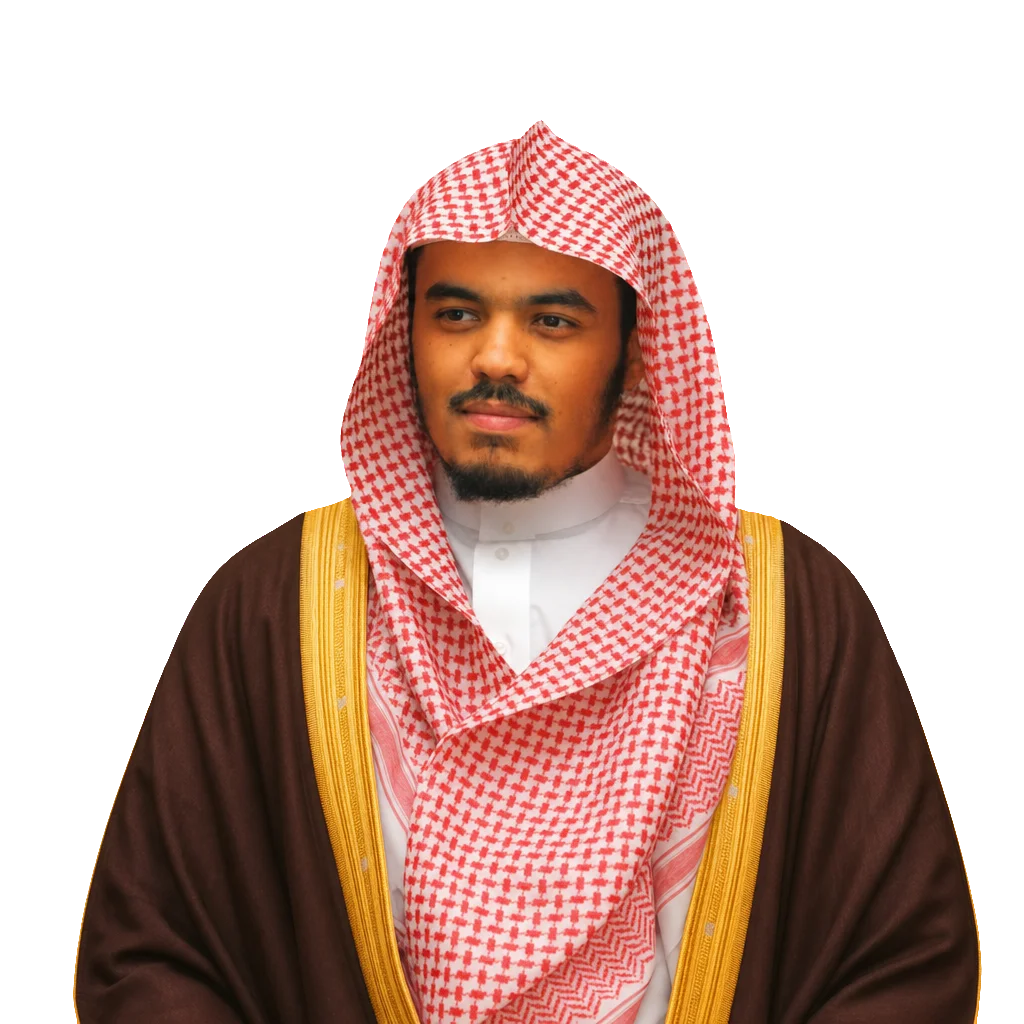
Dr. Yasser Al-Dossari explains the spiritual preparation for Hajj, highlighting taqwa (God-consciousness) as the ultimate provision for the journey. He details how pure intentions transform daily habits into worship, the importance of following the Prophet ﷺ and his Companions (RA), and practical guidance for pilgrims.
Who ordained Hajj upon His servants,
and attached to it great reward and recompense,
and promised therein forgiveness and freedom from Hellfire.
I praise Him, as He is worthy of all praise and extolment,
and I thank Him for the bounties and favors He has bestowed.
I bear witness that there is no god but Allah ﷻ alone, without partner,
and I bear witness that Muhammad ﷺ is His servant and Messenger, the leader of the righteous.
May Allah ﷻ bless him, grant him peace, and shower favors upon him,
and upon his pure family, companions (RA), and the Successors,
and all who follow them in righteousness until the Day of Recompense. Glory be to You,
“They said, "Exalted are You; we have no knowledge except what You have taught us. Indeed, it is You who is the Knowing, the Wise."” (Quran 2:32)
O Allah, teach us what benefits us, benefit us with what You taught us, and increase us in knowledge.
O Allah, we ask You for beneficial knowledge and righteous deeds.
To proceed:
First and foremost, I ask
I ask Allah ﷻ to reward our leaders in this blessed state
for all they provide in service of pilgrims,
Umrah performers, the Two Holy Mosques, and their visitors,
and for all they offer in service of knowledge, education, and benefiting people,
and supporting all that educates, enlightens,
and guides people to what benefits their religion and worldly life.
This lecture comes as part of the course
for the Imams of the Two Holy Mosques,
organized by the Presidency of Religious Affairs
at the Sacred Mosque and the Prophet's Mosque, headed by
His Excellency Sheikh Prof. Dr. Abdur-Rahman ibn Abdil-Aziz Al-Sudais.
May Allah reward them for their efforts in organizing these courses,
lectures, and lessons,
and place that on the scale of their good deeds.
This lecture is titled:
“Ḥajj is [during] well-known months, so whoever has made ḥajj obligatory upon himself therein [by entering the state of iḥrām], there is [to be for him] no sexual relations and no disobedience and no disputing during ḥajj. And whatever good you do - Allāh knows it. And take provisions, but indeed, the best provision is fear of Allāh. And fear Me, O you of understanding.” (Quran 2:197)
So I say, seeking help from Allah:
O guests of the Most Compassionate,
welcome to the place of revelation's descent and the sanctuary of faith.
We praise Allah ﷻ for allowing us and you to reach
these days and for gathering us all with you in this noble place.
Congratulations to you on what you are about to embark upon:
venerating the sacred places and rituals, and moving between the holy sites.
You set out in delegation after delegation, and crowd following crowd,
proclaiming Tawhid: "Labbayk Allahumma labbayk, labbayka la sharika laka labbayk."
You proceed from Mina to 'Arafah,
and depart from 'Arafah to Muzdalifah,
remembering Allah ﷻ at al-Mash'ar al-Haram,
and raising your needs to the Sovereign, the Most High.
Through this, souls are elevated and spirits ascend the ranks of righteousness,
and chests expand through abundant remembrance of Allah, in Talbiyah and Takbir.
Pilgrims of the Sacred House of Allah, guests of the Most Merciful!
Reason dictates that a traveler should prepare for his journey,
and take the necessary means to help him complete it and reach his destination,
enabling him to fulfill his purpose without getting stranded along the way.
Hence, fellow pilgrims, this lecture is titled...
“Ḥajj is [during] well-known months, so whoever has made ḥajj obligatory upon himself therein [by entering the state of iḥrām], there is [to be for him] no sexual relations and no disobedience and no disputing during ḥajj. And whatever good you do - Allāh knows it. And take provisions, but indeed, the best provision is fear of Allāh. And fear Me, O you of understanding.” (Quran 2:197)
This lecture will consist of three main themes.
The first theme is equipping oneself with Taqwa,
for this noble verse, in the saying of Allah ﷻ:
“Ḥajj is [during] well-known months, so whoever has made ḥajj obligatory upon himself therein [by entering the state of iḥrām], there is [to be for him] no sexual relations and no disobedience and no disputing during ḥajj. And whatever good you do - Allāh knows it. And take provisions, but indeed, the best provision is fear of Allāh. And fear Me, O you of understanding.” (Quran 2:197)
is like a beacon of light, a center of radiance, and a guiding sign illuminating the path,
dispelling doubt with certainty for those who are confused.
How magnificent a provision is Taqwa! And how sublime a goal!
It is the essence of Hajj, the secret of acceptance, and the key to success in this world and the Hereafter.
So let us seek light from this verse, and pause to ponder over it,
and draw inspiration from its meanings and
lessons that purify hearts and elevate souls.
The concept of Taqwa linguistically and in Islamic law.
Linguistically, Taqwa comes from waqa, waqyan, and wiqayah, meaning to protect or preserve something.
As for its definition in Sharia and technical terms,
it is said to be safeguarding oneself from sin by abstaining from the forbidden.
This is achieved even by avoiding some permissible things, as reported:
as reported that the Prophet ﷺ said: "The lawful is clear and the unlawful is clear,
"and between them are doubtful matters. So whoever guards against doubtful matters clears himself in regard to his religion and honor."
Allah ﷻ says:
“O children of Adam, if there come to you messengers from among you relating to you My verses [i.e., scriptures and laws], then whoever fears Allāh and reforms - there will be no fear concerning them, nor will they grieve.” (Quran 7:35)
Also, among the meanings of Taqwa is to place between yourself
and sins that which shields you from committing them,
so it becomes a shield for you in the Hereafter against the punishment.
It was also said regarding its meanings:
it is that Allah sees you where He loves, and does not see you where He dislikes.
Taqwa is that Allah sees you where He loves, and does not see you where He dislikes.
For Allah ﷻ loves to see you praying.
He loves to see you remembering Him. He loves to see you fasting.
He loves to see you performing Hajj;
He loves to see your life centered around the remembrance of Allah and what pertains to it,
and that you perform all deeds that bring you closer to Allah ﷻ,
even directing your worldly affairs for the sake of Allah ﷻ.
And such is the believer. The believer devotes his entire life to Allah ﷻ,
from when he wakes up until he reaches the evening.
So he seeks reward for everything he does, even permissible matters—even permissible matters.
He seeks reward for this deed with Allah ﷻ.
Even sleep, one can dedicate it to Allah ﷻ, because life in its entirety belongs to Allah ﷻ.
“And I did not create the jinn and mankind except to worship Me.” (Quran 51:56)
Allah ﷻ says:
“Say, "Indeed, my prayer, my rites of sacrifice, my living and my dying are for Allāh, Lord of the worlds.” (Quran 6:162)
...of all the worlds.
So, how can a person devote all his affairs to Allah ﷻ,
even sleep? How can he achieve this?
It is by intending, with everything he does, to draw closer to Allah ﷻ.
One performs a deed and is rewarded, while another performs the exact same deed and is not.
A person sleeps intending to strengthen his body to obey Allah ﷻ,
and thus he is rewarded.
Also, through this action, he obeys the command of Allah ﷻ,
as it is part of the self-preservation that Allah ﷻ commanded us to uphold.
"Indeed, your Lord has a right over you, yourself has a right over you, and your family has a right over you. So give everyone their due right."
And part of the body's right is for a person to take care of it.
That is why when the scholars discussed the five necessities,
they included preserving religion, life, wealth, honor, and lineage.
Thus, a person is required to preserve himself.
One person attends a family gathering, and another also attends his family gathering.
The former earns a great reward because he intends to uphold family ties,
while the latter attends just so people won't miss him. Is their reward the same?
Therefore, the more intentions a person makes, Allah ﷻ is even more generous and rewards him more.
A person goes out to work. Among people is one who goes out to work intending...
to earn a living and take money at the end of the month.
Another person comes with a better intention: to earn lawful money,
and thus gain reward by feeding himself and his family with lawful earnings.
This intention brings him an even greater reward.
He may also go further, thinking, 'Through my work,
I intend to serve the needs of my fellow Muslim,' as he may work where people need him.
He may also relieve the distress of others.
'Whoever relieves a hardship of his brother, Allah will relieve one of his hardships on the Day of Resurrection.'
The Prophet ﷺ said: 'Walking in my brother's need is dearer to me than i'tikaf in my mosque for a month.'
He ﷺ said this also brings a great, immense, and bountiful reward from Allah ﷻ.
It is well known that righteous deeds whose benefit extends to others carry a great reward from Allah ﷻ.
That is why Allah granted good character such a high status,
as its benefit extends to others.
The Prophet ﷺ said: 'The heaviest thing placed on a servant's scale on the Day of Resurrection is fear of Allah and good character.'
And he ﷺ said: 'The closest of you to me on the Day of Resurrection are those with the best character.'
It is also narrated that a person, through good character,
reaches the status of the one who fasts and prays at night.
This is a deed with transitive benefit, so its reward is immense with Allah ﷻ.
Also, when a person goes out to work, they should intend—
and this is out of Taqwa of Allah ﷻ—
to present a model of a Muslim,
that he is committed, disciplined, and excels in his work.
Thus, he earns a great reward for it.
He should also intend obedience to the ruler who...
...placed trust in him by putting him in this position,
and to be in this profession,
abiding by the orders of those in authority,
listening and obeying them,
and fulfilling his duties in this position.
The more good intentions a person has, the more Allah ﷻ grants them.
Make good, noble intentions—
which will, God willing, bring great benefit to you in your life and after your death.
In this way, a person can make their entire life for Allah ﷻ.
Even times spent sitting
and speaking about permissible matters,
which Allah ﷻ has allowed, he intends as relaxation for himself,
because the Prophet ﷺ said: 'An hour and an hour,'
so he intends by this to gain strength for worshipping Allah ﷻ.
And so, a person—as one of the predecessors said:
"A person attains through good intention—
what they cannot attain through their deeds."
Al-Hasan al-Basri (RH) also said his famous words,
and it was also narrated from others:
"Many a small deed is magnified by intention,
and many a great deed is rendered small by intention."
Also, a person must keep these meanings in mind:
he should love to be seen by Allah ﷻ, and this is part of the taqwa we mentioned:
that Allah sees you where He loves, not where He dislikes.
Whatever place you enter, ask yourself: "Is this place—
—a place Allah ﷻ loves to see me in?"
If Allah loves it,
then continue and carry
out the deed you came for.
And if this place is among the places where Allah dislikes seeing you,
and Allah ﷻ does not love to see you there,
stop immediately and leave that place.
Monitor every word you utter; this is taqwa of Allah ﷻ.
A person should monitor himself in the speech he utters:
"Does this speech please Allah or not?"
And as he ﷺ said: "Sin is that which wavers in your soul and you dislike that people discover it."
Allah ﷻ has placed within man a scale by which he measures his deeds.
So there are matters with which a person feels no peace of mind nor comfort.
"The lawful is clear and the unlawful is clear," as the Prophet ﷺ said.
But in doubtful matters, one should safeguard himself: "Whoever guards against doubtful matters safeguards his religion and honor."
Thus, taqwa is a grand matter of great status with Allah ﷻ.
Whoever reflects on the Hajj verses in the Quran finds taqwa present in many of them.
Surah Al-Hajj begins with the words of Allah ﷻ:
"O mankind, fear your Lord."
The very first command in this Surah is: "O mankind..."
“O mankind, fear your Lord. Indeed, the convulsion of the [final] Hour is a terrible thing.” (Quran 22:1)
And also, what has come in Surah Al-Hajj as well—the words of Allah ﷻ:
“Their meat will not reach Allāh, nor will their blood, but what reaches Him is piety from you. Thus have We subjected them to you that you may glorify Allāh for that [to] which He has guided you; and give good tidings to the doers of good.” (Quran 22:37)
...taqwa from you."
So taqwa is of immense importance.
Also, Allah ﷻ says in the verses of Hajj in Surah Al-Baqarah,
at the end of: "Perform Hajj and 'Umrah for Allah," He said:
“And remember Allāh during [specific] numbered days. Then whoever hastens [his departure] in two days - there is no sin upon him; and whoever delays [until the third] - there is no sin upon him - for him who fears Allāh. And fear Allāh and know that unto Him you will be gathered.” (Quran 2:203)
“And complete the ḥajj and ʿumrah for Allāh. But if you are prevented, then [offer] what can be obtained with ease of sacrificial animals. And do not shave your heads until the sacrificial animal has reached its place of slaughter. And whoever among you is ill or has an ailment of the head [making shaving necessary must offer] a ransom of fasting [three days] or charity or sacrifice. And when you are secure, then whoever performs ʿumrah [during the ḥajj months] followed by ḥajj [offers] what can be obtained with ease of sacrificial animals. And whoever cannot find [or afford such an animal] - then a fast of three days during ḥajj and of seven when you have returned [home]. Those are ten complete [days]. This is for those whose family is not in the area of al-Masjid al-Ḥarām. And fear Allāh and know that Allāh is severe in penalty.” (Quran 2:196)
And also, in the verse that follows it—the verse before us—Allah ﷻ says:
“Ḥajj is [during] well-known months, so whoever has made ḥajj obligatory upon himself therein [by entering the state of iḥrām], there is [to be for him] no sexual relations and no disobedience and no disputing during ḥajj. And whatever good you do - Allāh knows it. And take provisions, but indeed, the best provision is fear of Allāh. And fear Me, O you of understanding.” (Quran 2:197)
"and fear Me, O people of understanding."
"Hajj is during well-known months.
Whoever undertakes Hajj therein, there shall be no...
“Ḥajj is [during] well-known months, so whoever has made ḥajj obligatory upon himself therein [by entering the state of iḥrām], there is [to be for him] no sexual relations and no disobedience and no disputing during ḥajj. And whatever good you do - Allāh knows it. And take provisions, but indeed, the best provision is fear of Allāh. And fear Me, O you of understanding.” (Quran 2:197)
"and fear Me, O people of understanding."
And Allah ﷻ also says at the end of the verses—He ﷻ says:
“And remember Allāh during [specific] numbered days. Then whoever hastens [his departure] in two days - there is no sin upon him; and whoever delays [until the third] - there is no sin upon him - for him who fears Allāh. And fear Allāh and know that unto Him you will be gathered.” (Quran 2:203)
An important note on stopping and starting:
When some people recite,
“And remember Allāh during [specific] numbered days. Then whoever hastens [his departure] in two days - there is no sin upon him; and whoever delays [until the third] - there is no sin upon him - for him who fears Allāh. And fear Allāh and know that unto Him you will be gathered.” (Quran 2:203)
and stops, then reads...
“And remember Allāh during [specific] numbered days. Then whoever hastens [his departure] in two days - there is no sin upon him; and whoever delays [until the third] - there is no sin upon him - for him who fears Allāh. And fear Allāh and know that unto Him you will be gathered.” (Quran 2:203)
It might come to mind that taqwa applies specifically to the one who delays,
and has no relation to the one who hastens.
However, the correct view is that taqwa encompasses both,
for the one who hastens may be more God-fearing than the one who delays.
That is, it is not set in stone, because taqwa varies from person to person,
so the one who delays is not necessarily more God-fearing than the one who hastens.
Therefore, the scholars of the Quran advised that when one recites this verse, he says:
“And remember Allāh during [specific] numbered days. Then whoever hastens [his departure] in two days - there is no sin upon him; and whoever delays [until the third] - there is no sin upon him - for him who fears Allāh. And fear Allāh and know that unto Him you will be gathered.” (Quran 2:203)
For whom? "For him who fears Him."
This is the view of many scholars of the Quran and exegesis.
The one who delays may have greater piety,
but my point is that it is not necessarily so.
Piety varies from person to person and differs among people.
That is why we made this clarification.
The one who hastens may have a circumstance forcing an early exit,
yet he was eager to stay.
Sometimes his travel group is hastening, so he must join them while wishing to stay.
People's circumstances and situations differ.
Also, to emphasize piety, Allah ﷻ said after "for him who fears Him":
“And remember Allāh during [specific] numbered days. Then whoever hastens [his departure] in two days - there is no sin upon him; and whoever delays [until the third] - there is no sin upon him - for him who fears Allāh. And fear Allāh and know that unto Him you will be gathered.” (Quran 2:203)
Have we noticed how many verses
and divine instructions commanding taqwa have come
in the verses of Hajj in the Book of Allah ﷻ?
Ali ibn Abi Talib (RA) said:
"Taqwa is the source of all good and the foundation of every virtue."
Taqwa has been mentioned in many verses,
even outside the context of Hajj:
"O you who..."
“O you who have believed, fear Allāh as He should be feared and do not die except as Muslims [in submission to Him].” (Quran 3:102)
Also, Allah ﷻ says:
At the start of Surah An-Nisa: "O mankind..."
“O mankind, fear your Lord, who created you from one soul and created from it its mate and dispersed from both of them many men and women. And fear Allāh, through whom you ask one another, and the wombs. Indeed Allāh is ever, over you, an Observer.” (Quran 4:1)
a single soul, created...
“O mankind, fear your Lord, who created you from one soul and created from it its mate and dispersed from both of them many men and women.
And fear Allāh, through whom you ask one another, and the wombs. Indeed Allāh is ever, over you, an Observer.” (Quran 4:1)
And Allah ﷻ also says,
in the fasting verses: "O you..."
“O you who have believed, decreed upon you is fasting as it was decreed upon those before you that you may become righteous -” (Quran 2:183)
And Allah ﷻ also says: "O you...
“O you who have believed, fear Allāh and speak words of appropriate justice.”
“He will [then] amend for you your deeds and forgive you your sins. And whoever obeys Allāh and His Messenger has certainly attained a great attainment.” (Quran 33:70-71)
This verse also contains much guidance,
just like all the verses of the Quran.
Among the key guidance in this verse—
“O you who have believed, fear Allāh and speak words of appropriate justice.” (Quran 33:70)
Notice what Allah commanded. Allah ﷻ enjoined taqwa upon His servants,
that Allah sees you where He loves, and does not see you where He dislikes.
Then He said: "and speak words that are right,"
meaning that sound speech is for your words to be upright.
So what is upright speech? It is,
as Imam As-Sa'di (RH) said,
upright speech is remembering Allah and what pertains to it,
and everything that leads to the pleasure of Allah Almighty.
So we have two commands in this verse:
“O you who have believed, fear Allāh and speak words of appropriate justice.” (Quran 33:70)
If you fulfill for Allah taqwa and sound speech,
what is the result? What will Allah guarantee you?
Rectification of deeds and forgiveness of sins.
All your deeds, both religious and worldly— Allah will rectify them for you.
"O you...
“O you who have believed, fear Allāh and speak words of appropriate justice.”
“He will [then] amend for you your deeds and forgive you your sins. And whoever obeys Allāh and His Messenger has certainly attained a great attainment.” (Quran 33:70-71)
your deeds—all of them, the Lord of the worlds will rectify.
and forgive you your sins.
So the rectification of deeds and forgiveness of sins are
linked to mindfulness of Allah and speaking uprightly.
Guarantee Allah taqwa and upright speech, and He will guarantee you rectified deeds and forgiven sins.
“He will [then] amend for you your deeds and forgive you your sins. And whoever obeys Allāh and His Messenger has certainly attained a great attainment.” (Quran 33:71)
Here, Allah ﷻ makes clear that this is the greatest success and ultimate triumph:
that the servant obeys his
Lord and obeys the Prophet ﷺ.
To obey Allah and His Messenger— this indeed is the supreme success.
And that is why Allah ﷻ says in Surah As-Saffat:
"For the like of this let the workers work."
“Indeed, this is the great attainment.” (Quran 37:60)
In Surah as-Saffat: "Indeed, this..." comes after what was mentioned in the story of
a man in Paradise on the Day of Judgment talking to its people about a companion of his. He said:
“And they will approach one another, inquiring of each other.”
“A speaker among them will say, "Indeed, I had a companion [on earth].”
“Who would say, 'Are you indeed of those who believe” (Quran 37:50-52)
"Are you really one of those who believe? When dead and dust and bones, will we be judged?"
This companion tried to lead his friend astray, making him deny the Resurrection,
saying, 'When we die and become dust and bones, will we really be judged?'
He denied the Resurrection, but his friend did not believe him, so Allah ﷻ saved him.
He is telling the people of Paradise about this companion while in Paradise.
He said:
“And he will look and see him in the midst of the Hellfire.” (Quran 37:55)
He saw his companion who tried to misguide him in the midst of Hellfire.
Then he addressed him, saying: "By Allah! You almost brought me to ruin!"
Had he believed him, he would have been with him there.
“He will say, "By Allāh, you almost ruined me.”
“If not for the favor of my Lord, I would have been of those brought in [to Hell].” (Quran 37:56-57)
Allah ﷻ saved him: "I would have been among those brought [to Hell]."
A few verses later, Allah ﷻ says:
“Indeed, this is the great attainment.”
“For the like of this let the workers [on earth] work.” (Quran 37:60-61)
...to strive." Here comes the role of choosing a companion, and this is part of fearing Allah ﷻ.
A person must filter their companions and
choose those who help them obey Allah ﷻ,
and stay away from those who distance them from Allah ﷻ.
There is also a beautiful rule, a benchmark by which you can measure people.
It says:
"A righteous friend is one before whom
you feel ashamed to commit a sin.
And a bad friend is one before whom you feel ashamed to perform an act of obedience."
This is a standard that sorts people out for you.
If you hesitate to tell a friend, "Come, let's pray," feeling it would be burdensome, they are a bad friend.
And if you fear a friend's reaction should you suggest committing a sin,
they are a righteous friend.
One must choose friends carefully, as a single person can lead you astray to the lowest of the low.
That is why Allah ﷻ says in Surah Al-Kahf:
“And keep yourself patient [by being] with those who call upon their Lord in the morning and the evening, seeking His face [i.e., acceptance]. And let not your eyes pass beyond them, desiring adornments of the worldly life, and do not obey one whose heart We have made heedless of Our remembrance and who follows his desire and whose affair is ever [in] neglect.” (Quran 18:28)
This is part of taqwa of Allah ﷻ.
that a person chooses righteous companions.
“And keep yourself patient [by being] with those who call upon their Lord in the morning and the evening, seeking His face [i.e., acceptance]. And let not your eyes pass beyond them, desiring adornments of the worldly life, and do not obey one whose heart We have made heedless of Our remembrance and who follows his desire and whose affair is ever [in] neglect.” (Quran 18:28)
Now notice here, the verse speaks in the plural form.
“And keep yourself patient [by being] with those who call upon their Lord in the morning and the evening, seeking His face [i.e., acceptance]. And let not your eyes pass beyond them,
desiring adornments of the worldly life, and do not obey one whose heart We have made heedless of Our remembrance and who follows his desire and whose affair is ever [in] neglect.” (Quran 18:28)
Then notice the transition here.
Allah ﷻ said:
"And do not obey one whose heart We have made heedless"—
“And keep yourself patient [by being] with those who call upon their Lord in the morning and the evening, seeking His face [i.e., acceptance]. And let not your eyes pass beyond them, desiring adornments of the worldly life, and do not obey one whose heart We have made heedless of Our remembrance and who follows his desire and whose affair is ever [in] neglect.” (Quran 18:28)
What have the scholars derived from this?
Among the lessons of this verse is that a person may be with a righteous group,
with people of high ambition,
with the pious, the righteous,
and the successful,
then a single person comes along and takes him off the path. Allah said:
“And keep yourself patient [by being] with those who call upon their Lord in the morning and the evening, seeking His face [i.e., acceptance]. And let not your eyes pass beyond them, desiring adornments of the worldly life, and do not obey one whose heart We have made heedless of Our remembrance and who follows his desire and whose affair is ever [in] neglect.” (Quran 18:28)
Even in worldly matters,
sometimes a person is with
a successful, outstanding, optimistic, and hardworking group,
but, subhanAllah, someone comes along and leads him off course.
This meaning is reinforced by what is stated in Surah Al-Furqan, where Allah ﷻ said:
“And the Day the wrongdoer will bite on his hands [in regret] he will say, "Oh, I wish I had taken with the Messenger a way.” (Quran 25:27)
“Oh, I wish I had taken a path with the Messenger!”
“Oh, woe to me!”
“Oh, woe to me! I wish I had not taken that one as a friend.”
“He led me away from the remembrance after it had come to me. And ever is Satan, to man, a deserter."” (Quran 25:28-29)
Thus, he was on the right path.
The good Reminder had reached him, and he was about to follow the right path,
but this person came to him and took him off the path.
“He led me away from the remembrance after it had come to me. And ever is Satan, to man, a deserter."” (Quran 25:29)
"Satan is ever a deserter to man."
The man in the story in Surah As-Saffat was saved from that bad person,
while the other perished with his companion.
One must choose his companions carefully; this is part of taqwa of Allah ﷻ.
Therefore, even in your aspirations and your choice of role models—
who are the best to emulate?
The Prophets, and the best of all Prophets is Muhammad ﷺ.
“There has certainly been for you in the Messenger of Allāh an excellent pattern for anyone whose hope is in Allāh and the Last Day and [who] remembers Allāh often.” (Quran 33:21)
Regarding the Prophets, after mentioning a number of them, Allah ﷻ said:
“Those are the ones whom Allāh has guided, so from their guidance take an example. Say, "I ask of you for it [i.e., this message] no payment. It is not but a reminder for the worlds."” (Quran 6:90)
Now, who best followed the example of the Prophets?
The Companions (RA).
Ibn Mas'ud (RA) said: "Whoever wishes to follow an example, let him follow the Companions of the Prophet ﷺ,"
"for they were the purest
the purest of heart among all people,
"the most knowledgeable, the deepest in understanding,
and the least pretentious."
"A people whom Allah chose to accompany His Prophet ﷺ," because Allah chose them from among all mankind.
So they are the purest in heart and the most knowledgeable. No one will ever rival the knowledge of the Companions.
Therefore, the guarantee to ensure you are on the right path is to follow what the Companions followed—what the Prophet ﷺ and his Companions were upon.
That is why the Prophet ﷺ said:
"My nation will split into seventy-three sects, all of them in the Fire except one."
They asked, "Who are they, O Messenger of Allah?" He said, "Those who follow what I and my Companions are upon today."
The Prophet ﷺ also said: "The best of people are my generation, then those after them, then those after them."
That is why they are called the favored generations.
Hence, godly scholars always link their understanding
of the Quran and Sunnah to that of the righteous predecessors (Salaf).
"Understanding the Quran and Sunnah as the righteous predecessors understood them."
So one should strive to adhere to this.
Just imagine if a person were to take Allah's Prophets as their standard...
...and the Prophet of Allah Muhammad ﷺ, the prophets of Allah, and the companions of the Messenger of Allah ﷺ—how would his state be?
And he attaches himself to the scholars who inherited the knowledge of those scholars.
The Prophet ﷺ said: "We prophets leave neither dinar nor dirham as inheritance,
but we leave knowledge as inheritance; so whoever takes it has taken an abundant share."
Look for the scholars who took
the knowledge of the Prophet ﷺ
and inherited this knowledge,
understanding the Book and the Sunnah according to the understanding of the Companions—the Righteous Predecessors—
for in that lies great salvation for a person in this life.
The Companions (RA) lived through the revelation;
they witnessed the verses being revealed and the ahadith being spoken
by the Prophet ﷺ, so they are the most knowledgeable of people regarding their meanings, may Allah be pleased with them.
So a person should be keen, be keen on that.
And it is from taqwa of Allah ﷻ that a person takes care
of himself and treads the right path that pleases Allah ﷻ,
ensuring, Allah willing, that he traverses the desert of this life while remaining on the sound path.
Talq ibn Habib said: "Taqwa is to act in obedience to Allah upon light from Allah, hoping for Allah's mercy;
and to abandon disobedience to Allah upon light from Allah, fearing His punishment."
Ibn Mas'ud (RA) said: "Taqwa is that Allah is obeyed, not disobeyed,
remembered and not forgotten, and thanked and not ungratefully denied."
And as 'Umar ibn Al-Khattab (RA) likened taqwa—that it is to walk along a path filled with thorns,
when one walks a thorny path, he is cautious.
Likewise, one strives to fear Allah ﷻ, even now in this era,
on modern websites and applications.
He is cautious while scrolling, viewing, and browsing;
if a clip or something displeasing appears,
he abandons it, turns away, and seeks refuge from the accursed Satan.
"And if you are alone in the dark with temptation,
and your soul entices you to disobey,
feel shame before Allah's gaze and say to it, 'He Who created the darkness sees me.'"
No matter how varied the scholars' expressions and interpretations of taqwa may be,
and no matter how numerous their approaches to reaching its reality,
there is a common ground where their diverse views meet,
and where their scattered methods come together, which is:
that taqwa is not merely slogans
or notifications to be raised,
that taqwa is not merely slogans
to be raised nor words to be repeated,
rather, it is a way of life, a practical code, and a firm principle regulating the believer's conduct,
serving as a fortified fortress for his heart against doubts, and a safe refuge for his limbs against desires.
And before I forget, there is also a very important point, namely:
namely, that today,
with this global openness in social media and channels,
people are exposed to many voices speaking about Allah's religion,
causing confusion and leaving people perplexed about who to listen to and who to ignore.
There are two criteria
mentioned by scholars:
No one should speak authoritatively on Allah's religion
except one whose knowledge and piety are well known.
His knowledge must be widely recognized,
and establishing such a reputation takes many years.
No matter how impressive a speaker is,
he must have a proven track record of knowledge. Is that enough?
No. His piety must also be widely recognized;
he must possess both knowledge and piety.
Why? Known knowledge ensures that his understanding of Allah's religion is sound.
And piety ensures he has religious integrity, so he will not use religion to mislead people.
For someone with doubts might use religion to mislead others—as is clear in the Quran.
Such a person seeks
to mislead
people.
Ibn al-Qayyim (RH) explained this, saying: "Nothing corrupted religion except poor understanding or evil intent."
The one you learn from must have widely recognized knowledge,
and his piety must also be widely recognized among the people.
What does 'widely acknowledged' mean? That he is famous for his knowledge, known as a scholar.
Strangely, people apply these two criteria in worldly matters
when they deal with worldly affairs, but in religion, they are lax.
For instance, if a person has a health problem, you find him going to the most knowledgeable person,
saying, "This is my health; I won't entrust it to anyone."
So he seeks the most knowledgeable...
And if a doctor's name is mentioned, he asks, "Who is this?" inquiring about his background and credentials,
to make sure of his knowledge.
Then he verifies the integrity of his intent, because some people
have knowledge and expertise in their field, but are known, for instance, for deceiving people.
So in worldly matters, people ensure that the person possesses knowledge
and is also of sound intention and upright purpose, well-reputed, before entrusting themselves to him.
Well, religion is far greater!
"Indeed, this matter is religion, so consider from whom you take your religion."
"Indeed, this matter is religion, so consider from whom you take your religion," as the scholars said.
So immediately, whenever anyone comes forward, ask yourself: Is this man widely acknowledged in knowledge?
And if so, is his piety also widely recognized among the people for you to take knowledge from him?
like our scholars in this blessed land:
those who passed: Ibn Baz (RH), Ibn 'Uthaymin (RH), and scholars like Muhammad ibn Ibrahim,
and living scholars: the Mufti, Sheikh Al-Fawzan, and others in this blessed state,
whose knowledge and piety are widespread—we consider them as such, and Allah is their reckoner.
May our Lord protect our scholars and all Muslim scholars.
Now, regarding the meanings of taqwa, the term 'taqwa' in the Quran appears in five senses: fear and awe,
and it comes with the meaning of worship.
Allah ﷻ said:
And taqwa comes with the meaning of refraining from sin. Allah Subhanahu wa Ta'ala said:
And taqwa also comes with the meaning of Tawheed. Allah ﷻ said:
“Indeed, those who lower their voices before the Messenger of Allāh - they are the ones whose hearts Allāh has tested for righteousness. For them is forgiveness and great reward.” (Quran 49:3)
It also means sincerity.
Allah ﷻ said:
“That [is so]. And whoever honors the symbols [i.e., rites] of Allāh - indeed, it is from the piety of hearts.” (Quran 22:32)
The reason this verse was revealed:
“Ḥajj is [during] well-known months, so whoever has made ḥajj obligatory upon himself therein [by entering the state of iḥrām], there is [to be for him] no sexual relations and no disobedience and no disputing during ḥajj. And whatever good you do - Allāh knows it. And take provisions, but indeed, the best provision is fear of Allāh. And fear Me, O you of understanding.” (Quran 2:197)
The commentators mentioned that some Arabs used to perform Hajj without provisions,
saying, "We are relying upon Allah,"
so they would beg from people and humiliate themselves, so Allah revealed:
“Ḥajj is [during] well-known months, so whoever has made ḥajj obligatory upon himself therein [by entering the state of iḥrām], there is [to be for him] no sexual relations and no disobedience and no disputing during ḥajj. And whatever good you do - Allāh knows it. And take provisions, but indeed, the best provision is fear of Allāh. And fear Me, O you of understanding.” (Quran 2:197)
So one must take the means.
Therefore, when scholars discussed ability regarding Hajj, they defined it as provisions and a mount,
along with other explanations given by the scholars
regarding what constitutes ability for Hajj,
because Allah ﷻ said:
“In it are clear signs [such as] the standing place of Abraham. And whoever enters it [i.e., the Ḥaram] shall be safe. And [due] to Allāh from the people is a pilgrimage to the House - for whoever is able to find thereto a way. But whoever disbelieves [i.e., refuses] - then indeed, Allāh is free from need of the worlds.” (Quran 3:97)
For example, "ability" nowadays is among contemporary issues.
In this day and age, ability includes obtaining a permit.
A Hajj permit is part of ability, as directed by the ruler
and instructed by the relevant authorities in this blessed state to serve public interests.
Undoubtedly, this achieves Sharia-compliant benefits.
Islam came to bring benefits and ward off harms,
and in this lies a very great benefit,
allowing Hajj and the movement of people at the
holy sites to be conducted
in the best manner, with discipline and precision,
because everyone travels with their group, numbers are known, and all plans are built on this.
However, when unregistered pilgrims come,
they disrupt the established plans.
Therefore, the rulers—may Allah reward them—and the authorities mandated permits for the public good,
as affirmed by the Council of Senior Scholars; may Allah grant them the best reward.
So this is part of "ability": a person is able to go to the Sacred House
according to regulations set by the state—may Allah preserve it.
This is a contemporary issue, as I said.
Part of provisions is preparing for religion and worldly life, and the best provision is Taqwa.
“Ḥajj is [during] well-known months, so whoever has made ḥajj obligatory upon himself therein [by entering the state of iḥrām], there is [to be for him] no sexual relations and no disobedience and no disputing during ḥajj. And whatever good you do - Allāh knows it. And take provisions, but indeed, the best provision is fear of Allāh. And fear Me, O you of understanding.” (Quran 2:197)
Al-Tabari (RH) said, commenting on this verse:
"Allah commanded them to take provisions for what they need in their journey,
and alerted them to the provision of the Hereafter, which is taqwa."
Ibn al-Qayyim (RH) said:
"Allah combined for His servants the provision for bodies and for souls."
A person takes provision for the body and provision for the soul.
"So He alerted them not to neglect the provision of the heart,
for it is the best provision, and through it is salvation on the Day of Return."
A subtle point: Allah ﷻ concluded this verse commanding taqwa,
addressing specifically people of understanding.
Al-Tabari said: "And He ﷻ singled out with the address people of understanding,
because they are those who discern between truth and falsehood,
and possess sound thought and knowledge of the reality of things,
which are perceived with intellect and understood with minds.
Allah did not give others, among the ignorant, any share in this address,
since they are like phantoms resembling cattle and forms resembling beasts; rather, they are even more astray in their way."
Intellect is very important, and "people of understanding" are those who possess intellect.
Allah ﷻ said:
“Who listen to speech and follow the best of it. Those are the ones Allāh has guided, and those are people of understanding.” (Quran 39:18)
"...people of understanding."
And Allah ﷻ also says in an earlier verse in Surah Az-Zumar:
Allah ﷻ said: "Is one devoutly obedient during the night,
“Is one who is devoutly obedient during periods of the night, prostrating and standing [in prayer], fearing the Hereafter and hoping for the mercy of his Lord, [like one who does not]? Say, "Are those who know equal to those who do not know?" Only they will remember [who are] people of understanding.” (Quran 39:9)
What did He say after that?
“Only those of understanding will remember.”
Also, Allah ﷻ said in many verses—
Allah ﷻ said, for example:
“Eat [therefrom] and pasture your livestock. Indeed in that are signs for those of intelligence.” (Quran 20:54)
...people of intellect. Allah ﷻ also says:
“And within the land are neighboring plots and gardens of grapevines and crops and palm trees, [growing] several from a root or otherwise, watered with one water; but We make some of them exceed others in [quality of] fruit. Indeed in that are signs for a people who reason.” (Quran 13:4)
So ask Allah, always and forever, to make you among those of intellect who see the truth as truth,
and to grant you the adherence to it, to show you falsehood as false, and grant you its avoidance.
Some have their deeds made alluring: "Is one...
“Then is one to whom the evil of his deed has been made attractive so he considers it good [like one rightly guided]? For indeed, Allāh sends astray whom He wills and guides whom He wills. So do not let yourself perish over them in regret. Indeed, Allāh is Knowing of what they do.” (Quran 35:8)
does wrong and sees that he is on the right path.
So always ask Allah ﷻ to show you truth and help you follow it,
and to show you falsehood as falsehood and enable you to avoid it.
May Allah ﷻ make you among those of discernment,
who distinguish evil from good, and truth from falsehood,
and distinguish sound from corrupt.
Always ask Allah for this: that Allah ﷻ opens your insight.
And therefore, taqwa is the greatest path to this.
That is why Allah ﷻ said in Surah Al-Anfal: "O you who have believed, fear Allah," or "O you...
“O you who have believed, if you fear Allāh, He will grant you a criterion and will remove from you your misdeeds and forgive you. And Allāh is the possessor of great bounty.” (Quran 8:29)
…‘a criterion.’
The commentators said: “What does *furqan* mean?”
They said: “Allah grants him a sharp insight to distinguish between truth and falsehood.”
But notice:
this only comes through taqwa.
“O you who have believed, if you fear Allāh, He will grant you a criterion and will remove from you your misdeeds and forgive you. And Allāh is the possessor of great bounty.” (Quran 8:29)
"a criterion" to distinguish between truth and falsehood.
And Allah ﷻ will guide you, enlighten your insight, and guide you to the truth.
That is why Allah ﷻ also says in Surah Al-Kahf:
“And [had you been present], you would see the sun when it rose, inclining away from their cave on the right, and when it set, passing away from them on the left, while they were [lying] within an open space thereof. That was from the signs of Allāh. He whom Allāh guides is the [rightly] guided, but he whom He sends astray - never will you find for him a protecting guide.” (Quran 18:17)
...passing by their cave to the right and left...
“And [had you been present], you would see the sun when it rose, inclining away from their cave on the right, and when it set, passing away from them on the left, while they were [lying] within an open space thereof. That was from the signs of Allāh. He whom Allāh guides is the [rightly] guided, but he whom He sends astray - never will you find for him a protecting guide.” (Quran 18:17)
...His signs. Whoever Allah guides...
“And [had you been present], you would see the sun when it rose, inclining away from their cave on the right, and when it set, passing away from them on the left, while they were [lying] within an open space thereof. That was from the signs of Allāh. He whom Allāh guides is the [rightly] guided, but he whom He sends astray - never will you find for him a protecting guide.” (Quran 18:17)
What is the mafhum al-mukhalafah in this verse?
The counter-implication is that whomever Allah does not guide,
you will find no guiding ally for him.
He said: "And whoever..." Note the verse:
“And [had you been present], you would see the sun when it rose, inclining away from their cave on the right, and when it set, passing away from them on the left, while they were [lying] within an open space thereof. That was from the signs of Allāh. He whom Allāh guides is the [rightly] guided, but he whom He sends astray - never will you find for him a protecting guide.” (Quran 18:17)
What is the mafhum al-mukhalafah?
"Whomever Allah guides, you will find for him a guiding guardian."
Allah grants you success in your path and in your life,
and puts in your path someone who gives you insight, guides you, and shows you the right path.
Allah places in your path someone who guides you and gives you insight.
Allah ﷻ prepares for you a guiding guardian.
“O you who have believed, if you fear Allāh, He will grant you a criterion and will remove from you your misdeeds and forgive you. And Allāh is the possessor of great bounty.” (Quran 8:29)
"...and expiate your misdeeds."
Now, among the lessons of this verse
is that one should seek both tangible and spiritual provision.
You know how 'Umar (RA), seeing people saying, "We rely on Allah," said: "You are passive."
For the Prophet ﷺ says: "Tie her and rely upon Allah."
One must take the means.
One must take the necessary means.
A person should not sit at home saying, "Provision will come to me." No.
As 'Umar (RA) said: "The sky rains neither gold nor silver."
A person must take action and strive in pursuing the means.
In this regard, Ibn 'Uthaymin (RH) had an insightful point
when someone asked him: "O Shaykh, since a person's fate is written before birth"—written,
as in the hadith of Ibn Mas'ud (RA): "Each of you is gathered in his mother's womb for 40 days as a drop,
then a clot for a like period, then a lump for a like period; then the angel is sent to blow the soul into him,
and is commanded to write four things: his provision, lifespan, deeds, and if he is wretched or blessed."
The questioner said: "Why, O Shaykh,
if it is written whether one is wretched or blessed,
meaning Allah ﷻ has written that for us before we were created, why should we..."
strive?"
Shaykh Ibn 'Uthaymin (RH) made a beautiful point from this hadith. He said:
"You took one part of the hadith and left out the other part."
He said: "It mentions writing his provision.
Why, then, do you not say the same thing about provision?
Why do you go out every morning and strive in search of provision?
And when someone asks you why you seek provision, you say, 'I must take the means.'
People do not say, when seeking provision: 'My provision is written; I will just stay at home.'
Rarely does anyone say this. But for guidance, he says, 'Maybe Allah hasn't guided me.'
Shaykh Ibn Uthaymin (RH) says: "Just as you are required to strive and take the means...
to obtain provision,
you are also required to take the
means that lead you to guidance."
You must take all available means to reach guidance,
and that is why Allah ﷻ says: "And those who strive for Us - We will surely guide them to Our ways."
You must strive, and Allah ﷻ must see sincerity in your heart, though Allah ﷻ may test you.
“Do the people think that they will be left to say, "We believe" and they will not be tried?” (Quran 29:2)
A person endures patiently, seeking reward from Allah ﷻ. Also,
among the lessons:
The connotations of the word Taqwa
in the Quran encompass the means of spiritual purification,
such as Tawheed, sincerity, fear, awe, worship,
and avoiding sins, as we mentioned.
worldly
The second theme:
Taqwa is the goal; rituals are means to it.
Indeed, Hajj is the school of Taqwa
and the arena for gathering its provision.
In this blessed journey, the pilgrim strips away
worldly adornment and wears the white Ihram garments.
And his tongue utters the Talbiyah, feeling its true essence:
"Labbayk Allahumma labbayk,"
declaring his submission to Allah ﷻ and compliance with His command.
This is the essence of Taqwa: to adhere to the command of Allah ﷻ and submit to the orders of Allah ﷻ.
Submission applies whether you know the wisdom behind it or not.
For you submit to the command of Allah and obey the command of Allah ﷻ.
In some acts of worship, scholars seek out wisdoms and find wisdoms in them.
In some acts of worship, certain wisdoms are apparent, while in others they are not.
That is, Allah may reveal some wisdoms to His servants, and He may conceal others.
So Allah ﷻ commands something,
and you comply with it even if you do not perceive the wisdom behind it.
Why is Tawaf seven circuits?
Why did Allah not make it eight?
Here, you submit and yield to the command of Allah ﷻ.
He ﷻ is not questioned about what He does.
"Why is the Dhuhr prayer four rak'ahs?"
You submit to the command of Allah ﷻ and perform it,
and you do not object to the commands of Allah ﷻ.
However, scholars seek to understand these wisdoms and derive lessons from them,
though they will certainly never encompass all the wisdoms intended by Allah ﷻ.
Also,
notice, as an example of submission, what 'Umar ibn al-Khattab (RA) said to the Black Stone:
'Umar ibn al-Khattab (RA) came to the Black Stone, kissed it, and then said:
"I know that you are a stone that can neither harm nor benefit,
and had I not seen the Prophet ﷺ kiss you, I would not have kissed you."
Look at this adherence to the Prophet's ﷺ example.
Therefore, deeds are not accepted in the religion of Allah except through sincerity and following His Prophet.
One must fulfill sincerity and following the Sunnah:
to perform deeds sincerely for Allah ﷻ, seeking only His Countenance.
That is why the first command in the verses of Hajj in Surat al-Baqarah is: "And complete the Hajj and 'Umrah for Allah."
Even in Jabir's description of the Prophet ﷺ when entering Ihram, he said: "He proclaimed the Oneness of Allah (Tawheed),"
Even the Talbiyah is entirely Tawheed: "Here I am, O Allah, here I am. You have no partner,
here I am. Indeed, all praise, grace, and sovereignty belong to You. You have no partner."
All of this is Tawheed.
The Messenger ﷺ commanded us to realize Tawheed,
And all our deeds be for Allah. This is the aspect of sincerity.
The other condition for acceptance is mutaba'ah: following the Prophet ﷺ in your action.
An action may have strong sincerity, but lacks mutaba'ah, so it is not accepted.
And a deed may follow the Prophet ﷺ, but lacks sincerity,
intending by it showing off or seeking fame, so it is not accepted.
The Prophet ﷺ narrates that Allah ﷻ says in a Hadith Qudsi: 'I am in no need of partners;
whoever does a deed associating another with Me, I abandon him and his shirk.'
So both sincerity and mutaba'ah are essential.
Also, Allah ﷻ says in the Quran:
“[He] who created death and life to test you [as to] which of you is best in deed - and He is the Exalted in Might, the Forgiving -” (Quran 67:2)
He did not say 'most in deeds,' but 'best in deeds.'
What is 'best'? Al-Fudayl ibn 'Iyad said: 'The most sincere and most correct.'
There must be both sincerity and adherence to the Sunnah.
That is why the Prophet ﷺ says: 'Actions are according to intentions.'
In the Hadith: 'Actions are according to intentions.' And Al-Bukhari opened his book with this Hadith.
And also another Hadith—which is one of the pillars of this Religion— the statement of the Prophet ﷺ,
and among the Hadiths upon which this Religion rests: The Prophet ﷺ said: 'Whoever introduces into this matter of ours that which is not part of it, it will be rejected.'
A man came to Imam Malik (RH) and said: 'O Imam, I want to enter Ihram from near the grave of the Prophet ﷺ.'
Imam Malik (RH) said: 'Do not do so.'
'For I fear Fitnah (trial) for you. Enter Ihram from Dhul-Hulaifah, from where the Prophet ﷺ entered Ihram.'
The man said: 'O Imam, what Fitnah? I only wanted to enter Ihram from near the grave of the Prophet ﷺ.'
Imam Malik replied to him with an eloquent response that demonstrates
the importance of following and the danger of innovating.
What did he say? Imam Malik replied to him:
'And what Fitnah is greater than seeing that you attained a virtue that the Prophet ﷺ did not attain?'
This is the greatest fitnah: to think that you have preceded to something that the Messenger ﷺ did not.
Then he recited the saying of Allah ﷻ:
“Do not make [your] calling of the Messenger among yourselves as the call of one of you to another. Already Allāh knows those of you who slip away, concealed by others. So let those beware who dissent from his [i.e., the Prophet's] order, lest fitnah strike them or a painful punishment.” (Quran 24:63)
Al-Khattabi (RH) said, commenting on the—
action of 'Umar (RA) with kissing the Stone:
He said: "In it is knowledge that following the Sunnah is obligatory,
even if its specific rationale and logical reasons are not known, and its specific rulings are a proof upon whomever they reach,
even if one does not comprehend their meanings—as we mentioned earlier; even if you do not understand the wisdom, you abide by the command of Allah ﷻ.
However, it is generally known that his kissing the Stone is an honor to it, a veneration of its right, and seeking blessings through it.
Allah ﷻ has favored some stones over others, and favored some places and lands,
just as Allah ﷻ has favored some nights, days, and months,
and the basis of all this is submission,
which is reasonable and permissible to intellect, neither impossible nor objectionable."
Ibn Battal (RH) said—commenting on it:
"Umar said that—and Allah knows best—because people were
recently accustomed to idol worship, so Umar feared the ignorant might think that touching the Stone
was like what the Arabs used to do in Jahiliyyah.
So Umar wanted to teach people that touching it is intended for nothing
except glorifying Allah and abiding by the command of His Prophet ﷺ,
as that is among the rituals of Hajj which Allah ﷻ commanded to be venerated, and that touching it..."
meaning touching the Stone with a staff—
and that touching it differs from the practice of the people of Jahiliyyah in worshipping idols,
because they believed that they brought them near to Allah.
So 'Umar (RA) drew attention to opposing this belief,
and that none should be worshipped except Allah,
and only the One Who controls benefit and harm should be worshipped.
Therefore, Allah ﷻ condemned those who associate partners with Him:
“He invokes instead of Allāh that which neither harms him nor benefits him. That is what is the extreme error.” (Quran 22:12)
The final topic, with which we conclude.
Taqwa is not a word spoken, but a state to be lived, an impact to be seen, and a deed translated into action.
Equipping oneself with Taqwa during Hajj is not difficult; rather, it is easy for one who is sincere with Allah ﷻ.
Alright. Means that help attain Taqwa: first, as mentioned, is sincerity to Allah ﷻ.
Second, maintaining acts of obedience such as performing prayers, which is part of striving and fulfilling the pillars of Islam.
Frequent supplication—asking Allah ﷻ abundantly to make one among the righteous (muttaqin), because Allah ﷻ...
“And recite to them the story of Adam's two sons, in truth, when they both made an offering [to Allāh], and it was accepted from one of them but was not accepted from the other. Said [the latter], "I will surely kill you." Said [the former], "Indeed, Allāh only accepts from the righteous [who fear Him].” (Quran 5:27)
Ali ibn Abi Talib (RA) uttered his famous words:
"If I knew that Allah had accepted a single prostration from me, I would rely on it."
They asked, "Why?" He said, "Because Allah says:
“And recite to them the story of Adam's two sons, in truth, when they both made an offering [to Allāh], and it was accepted from one of them but was not accepted from the other. Said [the latter], "I will surely kill you." Said [the former], "Indeed, Allāh only accepts from the righteous [who fear Him].” (Quran 5:27)
A person should always strive to be among the righteous,
and frequently supplicate: "O Turner of hearts, turn my heart to Your obedience."
Also, abundant remembrance of Allah,
for one is commanded even in Hajj: "When you have completed your rites, remember Allah." This keeps one steadfast.
Good character—which we also discussed—is another thing that helps,
The Prophet ﷺ linked good character with Taqwa, saying: "The heaviest on a servant's scale is Taqwa and good character."
So good character leads to Taqwa, and Taqwa leads to good character.
Contemplating the meanings of Hajj also helps a person attain Taqwa.
And Taqwa yields closeness to Allah, happiness in this world and the Hereafter, salvation from trials, and acceptance of deeds.
"How much time is left?" "Two minutes." "Alright."
As for the Salaf, Al-Hasan al-Basri said: "The righteous avoided—"
“Indeed, the postponing [of restriction within sacred months] is an increase in disbelief by which those who have disbelieved are led [further] astray. They make it lawful one year and unlawful another year to correspond to the number made unlawful by Allāh and [thus] make lawful what Allāh has made unlawful. Made pleasing to them is the evil of their deeds; and Allāh does not guide the disbelieving people.” (Quran 9:37)
and hoped for His mercy and feared His punishment.
In conclusion, O pilgrims, you are on the journey of a lifetime and the opportunity of an age,
so make piety your provision, sincerity your goal, and obedience your pillar.
Make your Hajj a clean slate wherein repentance is recorded, slips are erased, and sins are forgiven.
Take provision from this Sacred House and from this Hajj,
and from this journey, gather provision that brings you closer to Allah ﷻ and illuminates your lives and paths.
We ask Allah ﷻ, at the conclusion of this lecture, to reward our leaders,
headed by the Custodian of the Two Holy Mosques and his Crown Prince, for all they offer the pilgrims,
and all they offer to the Haramain and their visitors among pilgrims,
Umrah performers, and visitors—to place that on the scale of their good deeds,
and to reward all who served the guests of the Most Merciful with the best reward,
and to make Hajj and its rites easy for the pilgrims,
and to help them perform it in tranquility, comfort, and peace of mind,
and to return them to their countries safe and laden with rewards after performing their rites,
and to make your Hajj accepted, your effort appreciated, and your sin forgiven.
And as He gathered us in this Sacred Mosque, to gather us under His Throne's shade, on couches facing each other,
“Indeed, the righteous will be among gardens and rivers,”
“In a seat of honor near a Sovereign, Perfect in Ability.” (Quran 54:54-55)
And we ask Allah ﷻ to grant us understanding of Him and His Messenger ﷺ,
that raises us to the rank of the truthful, the martyrs, and the righteous.
May Allah send blessings and peace upon our Prophet Muhammad ﷺ, his family, and all his companions.