The Sharia Approach to Intellectual Security
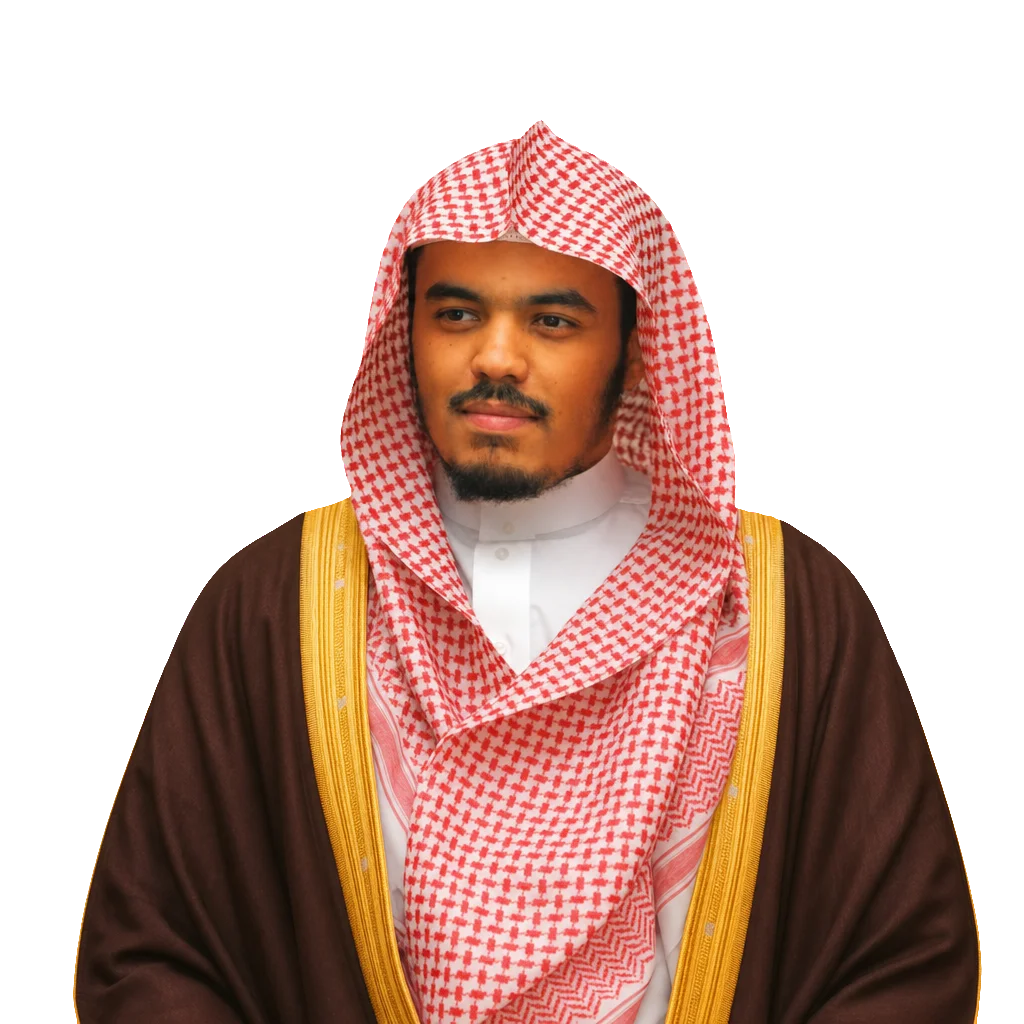
In this lecture delivered at Qassim University, Sheikh Dr. Yasser Al-Dosari outlines the Islamic methodology for grounding intellectual security. He emphasizes that true security stems from affirming Tawhid, adhering to the Quran and Sunnah according to the understanding of the Salaf, relying on recognized Rabbani scholars, and balancing reason with emotion to fortify society against ideological deviation.
I seek refuge in Allah ﷻ from Satan, the accursed.
O you who...
“O you who have believed,
fear Allāh as He should be feared and do not die except as Muslims [in submission to Him].”
“And hold firmly to the rope of Allāh all together and do not become divided. And remember the favor of Allāh upon you - when you were enemies and He brought your hearts together and you became,
by His favor, brothers. And you were on the edge of a pit of the Fire, and He saved you from it. Thus does Allāh make clear to you His verses that you may be guided.” (Quran 3:102-103)
“And hold firmly to the rope of Allāh all together and do not become divided.
And remember the favor of Allāh upon you - when you were enemies and He brought your hearts together and you became,
by His favor, brothers. And you were on the edge of a pit of the Fire,
and He saved you from it. Thus does Allāh make clear to you His verses that you may be guided.”
“And let there be [arising] from you a nation inviting to [all that is] good,
enjoining what is right and forbidding what is wrong,
and those will be the successful.”
“And do not be like the ones who became divided and differed after the clear proofs had come to them.
And those will have a great punishment” (Quran 3:103-105)
“In the name of Allāh, the Entirely Merciful, the Especially Merciful.”
“[All] praise is [due] to Allāh, Lord of the worlds -” (Quran 1:1-2)
May the peace and blessings of Allah ﷻ be upon our Prophet Muhammad ﷺ, and upon all his family and companions.
His Eminence, Professor Dr. Yasir ibn Rashid Al-Dosari,
Imam and Khatib of Al-Masjid Al-Haram.
Excellencies, Eminences, distinguished guests,
Peace be upon you, and the mercy of Allah ﷻ and His blessings.
Welcome, distinguished guests, as you illuminate Qassim University,
answering the call of sound knowledge,
mindful of the religious and national duty to engage with such blessed occasions.
From Founding Day until this day of ours, the sun of this great nation has shone with the light of its Creator,
"Who fed them against hunger and secured them from fear,"
so that the nation and its people enjoy the shade of a prosperous life,
renewed giving, and abundant blessings—in religion, peace, glory, and strength.
O blessed gathering, Allah ﷻ Almighty says in His Book:
“And whatever you have of favor - it is from Allāh. Then when adversity touches you, to Him you cry for help.” (Quran 16:53)
Today, we live in a world surging with transformations, ideas, and ideologies--
and amidst these changes,
our conviction grows and our faith strengthens in the abundant good we enjoy,
holding fast to the firm rope of Allah, and united behind our wise leadership under the banner of--
under the banner of our trustworthy leader, Custodian of the Two Holy Mosques King Salman bin Abdulaziz, may Allah protect him,
and his trustworthy Crown Prince, His Royal Highness Mohammed bin Salman bin Abdulaziz, may Allah support them both.
As individuals and communities, we bear direct responsibility for preserving our noble national fabric,
strengthening national cohesion, safeguarding it, and defending it.
Indeed, the top priority of our wise government is investing in the citizen
by safeguarding their thought, ensuring sound creed, and maintaining moderation and balance.
Honorable audience,
This meeting, organized by the University's Intellectual Awareness Unit,
comes with direct support from University President Prof. Dr. Muhammad bin Fahd Al-Sharekh,
Chairman of the Supreme Supervisory Committee for the Intellectual Awareness Unit,
who has dedicated his attention to the Unit's mission,
its operations, and direct correspondence with relevant authorities,
including the Presidency of Religious Affairs at the Grand Mosque and the Prophet's Mosque,
which has continually extended its support and blessed collaboration to the University,
culminating this morning with the presence of Prof. Dr. Yasser bin Rashid Al-Dossary, Imam and Preacher of the Grand Mosque,
who will now deliver his address on...
the topic of "The Sharia Approach to Grounding Intellectual Security."
Before handing the floor to His Eminence, I will briefly review his biography, may Allah preserve him.
He is Professor Dr. Yasser bin Rashid bin Hussain Al-Wada'ni Al-Dawsari.
Among his roles and responsibilities: Imam and Khatib of Al-Masjid Al-Haram,
in addition to being a Professor of Graduate Studies at the College of Sharia at Umm Al-Qura University,
and the Supervisor of Intellectual Affairs at Al-Masjid Al-Haram.
He is also a member of the Intellectual Awareness Unit at Umm Al-Qura University.
As for his academic qualifications, he earned his PhD with distinction and highest honors
in Comparative Fiqh from the Higher Judicial Institute at Imam Mohammad Ibn Saud Islamic University,
as well as his Master's degree with distinction and highest honors
in Comparative Fiqh from the Higher Judicial Institute at Imam Mohammad Ibn Saud Islamic University.
He obtained his Bachelor's degree in Fiqh from the College of Sharia at Imam University in Riyadh.
Among the key research works published by His Eminence is "Fiqh
Differences according to the Hanafi School in Sales" (PhD dissertation);
"Fiqh Principles Governing Racing and Rewards" (Master's thesis);
"The Impact of Illness on Maqasid-based Reasoning according to Ibn Qudamah";
"Precaution and Its Impact on Juristic Maxims";
"The Condition of Domicile and Its Impact on Fiqh Issues";
"The Objective of Compassion and Its Impact on Fiqh Issues", among numerous other works.
The Sheikh also studied under many scholars,
most notably His Eminence Sheikh Abdulaziz bin Abdullah Al ash-Sheikh,
may Allah have mercy on him; and His Eminence Sheikh Salih bin Fawzan Al-Fawzan,
the Grand Mufti of the Kingdom, may Allah preserve him;
His Excellency Sheikh Saad bin Nasir Al-Shatri, and His Excellency Sheikh Salih bin Abdulaziz Al Sheikh.
Among His Eminence's contributions
is teaching at the Two Holy Mosques:
Al-Masjid al-Haram and Al-Masjid an-Nabawi.
He served as Secretary-General of the Prince Sultan Association
for Quran Teaching in the Air Defense for seven years,
as well as heading the judging panel for local Quran memorization competitions in the Armed Forces,
along with chairing numerous judging committees
and serving on Sharia and advisory committees,
examining more than 23 master's and doctoral theses,
and supervising over 15 master's and doctoral theses.
Honored guests, I won't keep you long from His Eminence. You have illuminated our steps
and honored the university halls with your blessed presence.
May Allah ﷻ accept from us and from you.
I now give the floor to His Eminence; please welcome him.
May Allah reward you; may He record your reward.
“In the name of Allāh, the Entirely Merciful, the Especially Merciful.”
“[All] praise is [due] to Allāh, Lord of the worlds -” (Quran 1:1-2)
for His great blessings, and gratitude for His abundant favor and bestowals.
I bear witness that there is no god but Allah ﷻ alone, with no partner in His Lordship, Names, and Attributes.
And I bear witness that Muhammad ﷺ is His servant and Messenger, the role model in his words and deeds.
May Allah's blessings, peace, and grace be upon him, his family, companions,
and the followers who follow them in righteousness until the Day of meeting Him.
O Allah, teach us what benefits us, benefit us with what You have taught us, and increase us in knowledge.
O Allah, we ask You for beneficial knowledge and righteous deeds.
O Allah, grant us understanding of You and Your Messenger ﷺ
that elevates us to the rank of the truthful, martyrs, and righteous—excellent companions indeed.
To proceed:
Your Eminences, Your Excellencies,
university students, male and female,
distinguished attendees:
I am immensely happy, delighted, and overjoyed to be among you on this blessed day,
and I thank you for your presence and warm welcome;
goodness is no surprise coming from its people.
And I ask Allah... May Allah reward you with goodness.
I ask Allah ﷻ, as He gathered us in this blessed university,
to gather us together under the shade of His Throne,
“Indeed, the righteous will be among gardens and rivers,”
“In a seat of honor near a Sovereign, Perfect in Ability.” (Quran 54:54-55)
after a long life and righteous deeds.
I ask Allah Almighty to abundantly reward our leader,
the Custodian of the Two Holy Mosques, King Salman bin Abdulaziz, may Allah protect him,
and his Crown Prince, His Royal Highness Prince Mohammed bin Salman, may Allah protect him,
for their paramount care and great attention to knowledge and education,
and their unlimited support for all that benefits,
educates, and enlightens people
with what brings them goodness in their religion and worldly affairs.
I extend my sincere thanks to the Emirate of Qassim Region,
led by HRH Prince Dr. Faisal bin Mishaal bin Saud Al Saud, may Allah protect him,
for supporting such forums
and beneficial lectures.
My thanks also go to Qassim University, headed by His Excellency Prof.
Dr. Muhammad Al-Sharokh, may Allah protect him,
for the great excellence we see in this university,
whose reputation, achievements,
and outputs are widely renowned.
Thanks to them as well for organizing this lecture and honoring me with meeting you here today.
Thanks also go to the Intellectual Awareness
Unit for their qualitative programs
aiming to elevate the scholarly and intellectual
levels of the university
members and community.
I ask Allah Almighty to bless the Intellectual Awareness
Unit and this university for their blessed efforts,
headed by my brother Dr. Fahd Al-Dali', may Allah protect him.
This lecture, titled "The Sharia Approach to Establishing Intellectual Security,"
comes as an extension of these great efforts.
So I say, seeking the help of Allah Almighty:
Security is a divine gift that cannot be priced, nor bought with money.
Life is not pleasant without it, nor is life enjoyable in its absence.
Security is a Sharia requirement and a vital necessity,
and a safety valve, by the permission of Allah Glorified and Exalted.
For with the establishment of security, religious rituals are performed,
knowledge and education spread, unity is achieved,
ranks are consolidated, justice is upheld, and rights are preserved.
Benefits are fulfilled, and people exchange mutual interests.
Prescribed penalties are enforced, corruptors restrained, and enemies suppressed.
And people feel secure regarding their wealth, lives, and honor.
If security is disrupted, conditions change,
and no one enjoys peace of mind.
Ignorance spreads, injustice prevails,
rights are lost, livelihoods are ruined,
blood is spilled, honor is violated, and homelands are abandoned.
Allah ﷻ says: "Allah presents an example..."
“And Allāh presents an example: a city [i.e., Makkah] which was safe and secure, its provision coming to it in abundance from every location, but it denied the favors of Allāh. So Allāh made it taste the envelopment of hunger and fear for what they had been doing.” (Quran 16:112)
And the basis regarding security
is what is mentioned in Allah's ﷻ words:
“They who believe and do not mix their belief with injustice - those will have security, and they are [rightly] guided.” (Quran 6:82)
When we ponder this verse, we find in it a cause and a result.
As for the cause, it is faith and the absence of wrongdoing.
As for the result, it is security and guidance from Allah ﷻ.
And this depends upon the fact
because the dependence of one thing upon another—
causes depend on results, effects on their causes—
—means that the second is contingent upon the first.
And Abraham (AS), as you well know—
—Abraham (AS) linked security with Tawhid,
which shows the greatness of this matter and the Prophets' concern for it.
Therefore, Allah ﷻ said in His Book through Abraham: "And [remember] when Abraham said..."
“And [mention, O Muḥammad], when Abraham said, "My Lord, make this city [i.e., Makkah] secure and keep me and my sons away from worshipping idols.” (Quran 14:35)
The Prophet ﷺ every morning and every evening—
the Companion said he would never omit them in his morning or in his evening:
namely, that the Prophet ﷺ used to supplicate saying:
'O Allah, I ask You for pardon and well-being in this life and the next.
'O Allah, grant me pardon and well-being in my faith, life, family, and wealth.
O Allah, conceal my faults and calm my fears,
protect me from before, behind, my right, my left, above, and I seek Your greatness's refuge from being taken from below.'
Also, the Prophet ﷺ taught his Ummah, in the hadith recorded by al-Tirmidhi,
he taught them the importance of security when the Prophet ﷺ said:
'Whoever wakes up secure in his dwelling, healthy in body, with his day's food—it is as if the whole world were gathered for him.'
We notice that the Prophet ﷺ began with security
before provision and health, due to security's importance.
Thus, the high status of security in Islam is made clear,
as one of the major higher objectives and supreme goals.
Therefore, Allah ﷻ legislated rulings that guarantee it,
and surrounded it with a fence of protection to safeguard it.
So Allah ﷻ made it obligatory to preserve the five necessities:
preservation of intellect, life, religion above all, wealth, and honor.
And Allah ﷻ legislated rulings that prevent any violation...
or violating the sanctity of these five necessities.
In the hadith of Abu Hurairah (RA), the Prophet ﷺ said:
'A Muslim is one from whose tongue and hand others are safe,
and a believer is one whom people trust with their lives and wealth.”
Indeed, Islam did not stop at preserving security for Muslims only,
but was also concerned with protecting non-Muslims and safeguarding their rights,
to the extent that the Prophet ﷺ said in a hadith:
"Beware, whoever wrongs a Mu'ahid, or detracts from his rights,
or burdens him beyond his capacity, or takes something from him without his consent, I will be his adversary on the Day of Resurrection.”
All of this underscores the grand status of security,
which Allah ﷻ clarified in His Book,
and which the Prophet ﷺ clarified in his Sunnah.
This lecture addresses intellectual security,
and we will now shed light on intellectual security.
However, this has been an introduction to the importance of security in general,
as well as intellectual security in particular, which we will elaborate on shortly,
to demonstrate that security is a vital concern for all human beings,
for all nations, and for all societies.
They are all keen on achieving security
so that people may be safe in their lives and live in peace and safety.
Our blessed country, the Kingdom of Saudi Arabia, has achieved great successes, attested to by all, in
security, and in all matters pertaining to security in all its forms and manifestations.
These successes would not have been possible without the guidance of Allah ﷻ,
and the wise, righteous leadership Allah ﷻ has blessed this nation with,
possessing an insightful vision that has
balanced authenticity with modernity.
Hence, it became imperative for us to focus on intellectual security and fortify all members of society against intellectual deviations,
so that society may live in stability and tranquility, continuing to advance and build the earth.
Thus, it becomes clear that prioritizing intellectual security is, in reality, preserving core principles,
including the nation's religion, creed, values, and morals.
For the progress and survival of nations are measured by the minds and ideas of their people.
If those minds remain sound,
the nation achieves security in
its highest form and finest state.
While security in all its forms is a primary requirement for every nation, intellectual security is among the most vital of those forms
and the most critical, because it is closely tied to all other forms of security;
and achieving it automatically ensures the fulfillment of other forms of security.
For human beings are prisoners to their thoughts and beliefs.
That is why you know the beautiful wisdom that says:
"Watch your thoughts, for they become beliefs;
watch your beliefs, for they become behavior;
watch your behavior, for it becomes a habit;
and watch your habits, for they become destiny."
A wise person must realize that focusing on thought
is the starting point from which one must begin,
which is what
Islam established and clarified, as
as will be explained later in this lecture.
What is the concept of intellectual security?
The concept of intellectual security is achieving reassurance regarding the soundness of thought and belief,
achieving reassurance about sound thought and belief,
and protecting the individual and society from deviations that violate the teachings of Islam,
state laws, or sound societal traditions.
Thus, the concept of intellectual security revolves around fortifying
human thought against deviant ideas that do not adhere to Sharia,
legal, or societal standards.
So, what are the goals of intellectual security? The goals of intellectual security:
Intellectual security aims to achieve a number of important goals through which the individual becomes a constructive element within society.
And depending on the fulfillment of these goals, the educational,
economic, and developmental goals of society are realized,
in addition to being the foundation for societal security and state stability.
Now, what are the goals, briefly, so that we do not prolong this and can move directly into the Sharia methodology?
The goals: building the mind and protecting it. The first goal is building the mind and protecting it from what leads it to deviation.
Second: fortifying thought against
influences and challenges; fortifying thought
influences and challenges.
Third: addressing and correcting what may arise; addressing and correcting any flaw or disturbance that may affect thought,
which may make a person a source of threat to security and stability.
Fourthly,
safeguarding society from facing the outcomes of intellectual deviation in views and orientations.
Given the importance of achieving these goals,
society—its individuals and institutions—must contribute to promoting intellectual security
and support everything that would bring about safety and tranquility,
and play the expected role in preserving society's components, reinforcing its authenticity, and protecting its intellectual system.
Today, we discuss the Islamic methodology:
the Islamic methodology in grounding intellectual security.
When we say "Islamic methodology", what do we mean by this term?
We mean the disciplined scholarly approach,
the disciplined scholarly approach upon which that subject is built, according to the principles and rules of Sharia,
relying on the texts of revelation and the understanding of scholars, not on personal desires.
And the Islamic methodology has distinct features and characteristics.
First, one of its main features is that its source is divine—that it is from Allah ﷻ.
When we say its source is divine, it means it was revealed by Allah ﷻ, Who created this life
and created for it a system that guarantees that
people and creation live in peace and security.
The more they align, harmonize,
and accord with this system revealed by Allah ﷻ—which is the Book and the Sunnah—
the more they adhere to this Book and Sunnah,
the more stable, tranquil, and peaceful their lives become in this world and in the Hereafter.
And the Prophet ﷺ clarified this, saying:
"I left among you what, if you hold to, you will never go astray: the Book of Allah and my Sunnah."
So the guarantee that keeps people on the right path is the Book of Allah and the Sunnah of His Prophet ﷺ.
So, it is the divine nature of the source.
And Allah ﷻ sent down this Sharia not just for a specific time, but made it suitable for all times and places.
As for human-made methodologies, human beings have shortcomings
and cannot encompass everything, nor can they encompass every time and place.
Therefore, a major flaw and deficiency occurs in any methodology created by humans.
Even Imam al-Shafi'i—and he is al-Shafi'i—when he authored a book
and you know his scholarly status as the founder of the madhhab—
and gave it to a scholar to seek his feedback,
that scholar said to him in astonishment, "Should someone comment on the work of someone like you?"
Al-Shafi'i gave a timeless reply: "How not, when Allah said..."
“Then do they not reflect upon the Qur’ān? If it had been from [any] other than Allāh, they would have found within it much contradiction.” (Quran 4:82)
Since it is human work, it is subject to human flaws.
Whereas what comes from Allah ﷻ is undoubtedly suitable for every time and place.
The second feature of this methodology is that it is integrated—
it must be taken as a whole,
because its parts reinforce one another.
Now we will address the Sharia methodology in establishing intellectual security.
In this era where paths have become confused and media has proliferated,
and the world has opened up to one another,
and ways have blurred, and claims of righteousness and reform have abounded.
Therefore, everyone sincere to themselves and their homeland must reinforce
methodological, and above all, creedal security,
and beware of deviation from the path of Allah ﷻ
and from the Sunnah of the Prophet ﷺ into paths,
currents, and innovations whose consequences cannot be undone.
“Assuredly, that to which you invite me has no [response to a] supplication in this world or in the Hereafter; and indeed, our return is to Allāh, and indeed, the transgressors will be companions of the Fire.” (Quran 40:43)
Reinforcing intellectual security is the safety valve, after Allah ﷻ, in all areas of life.
However, this intellectual security can only be achieved when its prerequisites and causes are established.
The first of these causes is affirming the Oneness of Allah ﷻ, for Allah ﷻ says:
“They who believe and do not mix their belief with injustice - those will have security, and they are [rightly] guided.” (Quran 6:82)
Thus, Tawhid of Allah ﷻ, purifying it from shirk and avoiding innovations and superstitions,
yields safety and security,
as stated in the words of Allah ﷻ.
For the monotheist who is steadfast upon the command of Allah
is safe in this world and safe in the Hereafter.
Some commentators said regarding His ﷻ saying:
“Whoever comes [at Judgement] with a good deed will have better than it, and they, from the terror of that Day, will be safe.” (Quran 27:89)
Some scholars of tafsir said: 'Whoever comes with a good deed' means:
whoever comes with the tawhid of Allah— meaning, whoever comes with tawhid.
For the tawhid of Allah in His Lordship, His names, and His attributes, and His tawhid—
—Glorified and Exalted is He— in His
actions and in the actions of the servants,
safeguards one's thought from deviance, straying, and misguidance;
and whoever went astray did so only because they neglected the aspect of tawhid.
May Allah preserve you, reward you, and write your reward.
Tawhid must be realized in all its roots, fundamentals, branches, and aspects,
and fulfilling its rights as much as possible.
Whenever we realize tawhid,
all universals and particulars fall into order under it,
for it is their origin and ultimate return. Salafiyyah is principles, not slogans.
This was emphasized by Ibn al-Qayyim (RH) in his statements when he said:
'Everything contained in the Book of Allah is contained in Surat al-Baqarah,
and all in Surat al-Baqarah is in Surat al-Fatihah,
and everything in Surat al-Fatihah is in His saying: "It is You we worship and You we ask for help."
The Sharia was not established, nor the heavens and earth, except to realize "There is no god but Allah."
That is why some people wonder when we speak so much about creed and tawhid, but this is the primary basis.
This is the core foundation: always reminding of tawhid.
Ibn al-Qayyim (RH) said: 'The Quran in its entirety is tawhid:'
It is either a call to Tawhid, or a warning against shirk,
or an explanation of what Tawhid entails,
or the reward for monotheists in the Hereafter, and the punishment for polytheists,
and the deeds legislated by Allah ﷻ in the details of this Sharia,
which ultimately lead to fulfilling worship of Allah ﷻ.
So all of this is for tawhid.
“And I did not create the jinn and mankind except to worship Me.” (Quran 51:56)
Allah ﷻ says to the Prophet ﷺ,
and before that, Allah ﷻ says to the prophets (AS)—
and these are the prophets who convey the religion of Allah ﷻ—
Allah ﷻ said about them in Surah Al-An'am:
“That is the guidance of Allāh by which He guides whomever He wills of His servants. But if they had associated others with Allāh, then worthless for them would be whatever they were doing.” (Quran 6:88)
and they were prophets.
“That is the guidance of Allāh by which He guides whomever He wills of His servants. But if they had associated others with Allāh, then worthless for them would be whatever they were doing.” (Quran 6:88)
Rather, Allah ﷻ said concerning the Prophet ﷺ, addressing him:
"And it was revealed to you and to those
“And it was already revealed to you and to those before you that if you should associate [anything] with Allāh, your work would surely become worthless, and you would surely be among the losers.”
“Rather, worship [only] Allāh and be among the grateful.” (Quran 39:65-66)
'...among the grateful.' This was addressed to the Prophet ﷺ,
so what then of those below the Prophet ﷺ? We are all the more so.
Indeed, Allah spoke in the Quran about the angels, from whom committing shirk cannot even be conceived.
Allah ﷻ said about them in Surah Al-Anbiya:
“And they say, "The Most Merciful has taken a son." Exalted is He! Rather, they are [but] honored servants.”
“They cannot precede Him in word, and they act by His command.”
“He knows what is [presently] before them and what will be after them, and they cannot intercede except on behalf of one whom He approves. And they, from fear of Him, are apprehensive.” (Quran 21:26-28)
Here, the reference is to the angels.
Then Allah ﷻ said:
"And whoever of them says,
“And whoever of them should say, "Indeed, I am a god besides Him" - that one We would recompense with Hell. Thus do We recompense the wrongdoers.” (Quran 21:29)
This shows the greatness and importance of Tawhid,
and the importance of constantly reminding people of it.
Whoever knows the greatness of Tawhid will not wonder at constant reminders of it.
This is the principle.
Shaykh Ibn Baz (RH)—
listen to Shaykh Ibn Baz's (RH) lectures—he always emphasized this.
Shaykh Ibn 'Uthaymin (RH), Shaykh Al-Fawzan,
our senior scholars, Council of Senior Scholars members,
always emphasize Tawhid and the importance of creed and Tawhid.
Our state—may Allah protect it—raises the banner of Tawhid and Creed,
everywhere, defending and championing it.
I ask Allah to keep it steadfast, lofty, and honored until the Day of Judgment.
Yes. Now, the second matter
among the fundamental principles of Islamic methodology is:
sincerity and conformity—sincerity to Allah ﷻ by being sincere.
And this is Tawhid. Also, following the Prophet ﷺ,
that your deeds follow the Prophet ﷺ.
For deeds are not accepted—as you well know—except with sincerity and conformity.
So sincerity and conformity are essential, and this is well known to you.
There must also be reliance upon, and affirmation of, the absolute authority of Revelation.
And this is among the favors Allah ﷻ has bestowed upon us.
We praise Allah ﷻ for this, and we ask Allah to keep us steadfast upon it,
that Allah ﷻ has made our authority the Book and the Sunnah.
Allah ﷻ said: "O you...
“O you who have believed, obey Allāh and obey the Messenger and those in authority among you. And if you disagree over anything, refer it to Allāh and the Messenger, if you should believe in Allāh and the Last Day. That is the best [way] and best in result.” (Quran 4:59)
In the verse: "And if you disagree...
“O you who have believed, obey Allāh and obey the Messenger and those in authority among you. And if you disagree over anything, refer it to Allāh and the Messenger, if you should believe in Allāh and the Last Day. That is the best [way] and best in result.” (Quran 4:59)
the Book and the Sunnah—we refer to them; they are the absolute authority.
And if a person has an issue with this authority, then he has a major problem.
This is a foundation: the reference, judge, and arbiter between us must be "Allah said, His Messenger said,"
ﷺ, according to the understanding of the Righteous Predecessors,
and the favored generations.
That is why the Prophet ﷺ said: "My nation will split into seventy-three sects, all of them in the Fire,
except one." They asked, "Who are they, O Messenger of Allah?" He said, "Those who follow what I and my companions are upon today."
And he said in the Hadith: "The best of people are my generation, then those who follow them, then those who follow them." So these are the favored generations;
we look to their understanding—how they understood the Book of Allah ﷻ—and we take from them.
This leads us to a very important point: the importance of spreading Islamic knowledge.
This is among the most important things, per the understanding of the Salaf.
Many problems occur because of ignorance.
Ibn al-Qayyim (RH) said: "Ignorance is a tree that sprouts every evil."
Whereas knowledge is a light by which a person sees and perceives.
And Allah ﷻ made clear that this religion and the light brought with it is one light,
saying: "Alif, Lam, Ra. [This is] a Book which We have revealed..."
“Alif, Lām, Rā. [This is] a Book which We have revealed to you, [O Muḥammad], that you might bring mankind out of darknesses into the light by permission of their Lord - to the path of the Exalted in Might, the Praiseworthy -” (Quran 14:1)
Thus, 'darknesses' is plural, but light is one.
“Alif, Lām, Rā. [This is] a Book which We have revealed to you, [O Muḥammad], that you might bring mankind out of darknesses into the light by permission of their Lord - to the path of the Exalted in Might, the Praiseworthy -” (Quran 14:1)
So darknesses are many, but the light is one:
“And this is My path, which is straight, so follow it; and do not follow other ways.”
So the paths are many, but the way to Allah is one: “My path, which is straight.”
Every day, in every prayer and every recitation of Al-Fatihah, we ask Allah: “Guide us to the straight path, guide us to the straight path.”
Feel this deeply. Feel it from your heart—that you want Allah ﷻ to guide you to the straight path.
Allah must see sincerity in your heart that you seek the straight path, so that He grants you success upon that way.
The second matter is thanking Allah ﷻ for the blessing of Tawheed,
because the more you thank Allah, the more steadfastness He grants you.
“If you are grateful, I will surely increase you.”
And blessings, when given thanks for, remain; but when ungratefully denied, they flee.
Dua is also among the most important means in this methodology for remaining steadfast on the right path.
As for dua—every morning, the Prophet ﷺ taught us to recite the famous supplication:
“O Allah, Creator of the heavens and the earth, Knower of the unseen and the witnessed, You judge between Your servants concerning that in which they used to differ,
guide me to the truth concerning that over which there has been differed, by Your permission. Indeed, You guide whom You will to a straight path.”
We say it every morning and evening.
This is among the supplications we recite: “Guide me to the truth concerning that over which there has been differed, by Your permission.”
Especially in this day and age, a person's need for such supplications has only increased...
asking Allah ﷻ to keep you steadfast.
Distractions are many, and doubts are widespread.
Also, adhering to the scholars—the godly, firmly grounded, and reputable scholars.
Draw an underline under the word "reputable."
Reputable scholars, because pretenders to knowledge are many.
However, the true scholar is the one we must be connected to.
That is why Allah ﷻ said...
“And when there comes to them something [i.e., information] about [public] security or fear, they spread it around. But if they had referred it back to the Messenger or to those of authority among them, then the ones who [can] draw correct conclusions from it would have known about it. And if not for the favor of Allāh upon you and His mercy, you would have followed Satan, except for a few.” (Quran 4:83)
...those who draw conclusions from it.
Here, Al-Sa'di (RH) says: "Allah combined political authority and religious authority,
namely the rulers and the scholars."
That is why Imam Al-Qarafi (RH) said:
"People will remain upon goodness as long as they honor the rulers and scholars, because...
...the rulers safeguard people's bodies and lives, enact laws,
protect the country, and govern the people,
while the scholars preserve people's religion. So there must be integration between them."
That is why Allah ﷻ said right after that:
“And when there comes to them something [i.e., information] about [public] security or fear, they spread it around. But if they had referred it back to the Messenger or to those of authority among them, then the ones who [can] draw correct conclusions from it would have known about it. And if not for the favor of Allāh upon you and His mercy, you would have followed Satan, except for a few.” (Quran 4:83)
Al-Sa'di (RH) says, "Any path other than this path is among the paths of Satan."
A wise person adheres to the scholars. Why?
Because, by Allah's permission, he ensures the soundness of his methodology.
Today, methodologies are many, so one needs to be certain that he is on the right path,
as the scholars (RH) said: "Indeed, this knowledge is religion, so consider from whom you take your religion."
Take from the God-conscious (Rabbani) and recognized scholars,
and those with sound judgment. And scholars—and here,
pardon me if I elaborate on this a little bit.
Because these are points—what is coming now is the essence of this lecture,
along with what preceded, of course. But I mean we will elaborate on this a bit,
and it is very important: connecting with God-conscious scholars.
It guarantees you two things: sound understanding
and good intention, of which Ibn al-Qayyim (RH) spoke in I'lam al-Muwaqqi'in. Ibn al-Qayyim (RH) says:
"Sound understanding and good intention"—two things: sound understanding and good intention.
That a person has correct understanding; this is the first aspect.
The second: good intention—sincerity and following the Sunnah.
"Sound understanding and good intention"—these are the words of Ibn al-Qayyim—"are among the greatest blessings Allah bestows upon a servant."
Rather, they are the two pillars of religion; it cannot stand except upon them.
Through them, one is saved from the path of those who earned anger and those astray.
Through them, one is saved from the path of the angered and the astray—
through correct understanding and good intent. You cannot be saved except through this.
Even, Subhan-Allah, in worldly matters this exists; even in worldly matters.
Now, if you go to a doctor who has correct understanding, having studied medicine well,
but his intention is flawed—he wants, for instance, to take your money and extract even more—
will he harm you due to his correct understanding or due to his bad intent? He will harm you due to his bad intent,
because he understands medicine well, right?
And vice versa: you might go to a doctor who did not study medicine well,
but his intention is good, wanting to treat you, so he has good intent,
but he lacks correct understanding, so he harms you—
through his poor understanding, not through bad intent.
So in all matters, whether religious or worldly, when you learn from someone,
you need them to possess both correct understanding and good intent.
Scholars possess this correct understanding. Why do recognized, godly scholars have correct understanding?
Scholars possess this. Why do recognized, godly scholars have correct understanding?
"We Prophets (AS) leave no dinars or dirhams; we leave knowledge. Whoever takes it has taken an abundant share."
So we learn from scholars, the inheritors of the Prophets.
But true scholars follow the Quran and Sunnah per the righteous Salaf's understanding.
So now you have secured, Allah willing, sound understanding.
Secondly, as is the case with our senior scholars,
like Saleh Al-Fawzan and the Council of Senior Scholars—Allah ﷻ blessed this land with eminent scholars—
the Ummah affirms their sound understanding and good intent. We deem them pious, and Allah is their reckoner.
This became widely established. Scholars stated a beautiful principle:
"None should speak authoritatively on knowledge except one whose knowledge and piety are widely acknowledged."
There must be widespread recognition of both knowledge and piety—meaning well-known renown.
Ibn 'Uthaymin (RH)—can anyone on earth diminish his knowledge? No one can. Everyone conceded to it.
Ibn Baz (RH) too—people conceded; even their enemies attest to their knowledge.
If anyone tried to diminish it, people would mock him.
This widespread recognition was established. But is knowledge alone enough? No, there must also be widespread piety.
Such as Ibn Baz and Ibn 'Uthaymin (RH), Al-Sa'di (RH), and our senior scholars,
like Sheikh Saleh Al-Fawzan. When Ibn Baz and Ibn 'Uthaymin were asked—
"Whom do you recommend after you?" He said, "Salih Al-Fawzan,"
now the Grand Mufti of the Kingdom.
I ask Allah ﷻ to preserve him and grant him long life,
and to protect our scholars in this blessed state.
So [the key is] soundness of understanding and purity of intention.
Another matter is staying connected with the scholars,
which teaches you that religion is not taken piecemeal.
Religion is not taken piecemeal.
Religion is taken as a whole, parts of it explaining and complementing one another.
If you take religion piecemeal, you ruin
your understanding, as well as your religious and worldly affairs.
This happens very, very often.
For example, to give an illustration of this...
If someone were to read the hadith of the Prophet ﷺ, for example:
"Be in this world as if you were a stranger or a traveler,"
or the Prophet's ﷺ words: "I am but like a rider who rested under a tree, then moved on."
If someone reads this hadith in isolation from Sharia—
and says, "I want to apply this hadith,"
then goes and sits under a tree, living detached from life,
wanting no marriage, no life, no children, no work—nothing at all,
"I'll live as a stranger; just leave me."
[He has] understood religion piecemeal.
Is this what Allah ﷻ and His Messenger ﷺ intended?
This understanding is not intended.
This is not what Allah ﷻ and His Messenger ﷺ intended.
When some Companions understood this and came to the Prophet ﷺ,
what did the Prophet ﷺ say?
to rebuke them?
He ﷺ said: "I am the most fearful of Allah among you and the most mindful,
yet I marry, fast and break fast, pray at night and sleep.
Whoever turns from my Sunnah is not of me."
"You can't match me in devotion, yet I marry, fast, and break my fast."
Therefore, Al-Shatibi (RH) said something magnificent,
reflecting this holistic view when understanding religion.
Al-Shatibi (RH) explains that the principle is balance between the demands of worldly life and the Hereafter,
because there is a straight path that we must walk upon.
That is why the Prophet's ﷺ words in certain situations depended on the context.
Hence, scholars say one must understand the context.
Why did the Prophet ﷺ say this?
When the spoils of Bahrain arrived, the Companions (RA) came to receive them, and he saw their eagerness for worldly gain.
He gave them and distributed the spoils among them, saying:
"I don't fear poverty for you, but that wealth opens before you as it did for those before you,
so you compete as they did, and it destroys you as it destroyed them."
Here he warned them against worldly wealth because he saw their inclination toward it,
whereas in the other instance, he feared they might stray from the straight path, so his words were stern to bring them back...
...the straight path.
On the other hand, when three Companions came,
one said, 'I won't marry,' another, 'I fast without break,' another, 'I pray all night,'
he ﷺ said, 'I am the most God-fearing among you,'
Look at the statement on the opposite end:
'yet I marry, fast and break fast. Whoever shuns my Sunnah is not of me.'
Here, he saw a leaning toward extremism and austerity, so he wanted to bring them back.
When the Prophet ﷺ said, 'Ruined are the extremists!'—did he place it here or here?
He placed it here to bring people back to the middle course.
The principle is balance between worldly and Hereafter demands.
Allah ﷻ said: 'Seek, through what Allah gave you...'
“But seek, through that which Allāh has given you, the home of the Hereafter; and [yet], do not forget your share of the world. And do good as Allāh has done good to you. And desire not corruption in the land. Indeed, Allāh does not like corrupters."” (Quran 28:77)
Balance—there must be balance,
and all of this world must be used for the sake of Allah ﷻ.
So when you understand religion by taking an isolated text,
most of the misguidance today— many straying from the path of Allah ﷻ—is because of this.
One takes an isolated text, quoting Allah and the Prophet ﷺ—
quoting Allah and His Messenger, yet misguided, not knowing how to apply the text properly.
And because of that, major issues have arisen, as...
...as will follow. Allah ﷻ said in the Qur'an:
“It is He who has sent down to you, [O Muḥammad], the Book; in it are verses [that are] precise - they are the foundation of the Book - and others unspecific. As for those in whose hearts is deviation [from truth], they will follow that of it which is unspecific, seeking discord and seeking an interpretation [suitable to them]. And no one knows its [true] interpretation except Allāh. But those firm in knowledge say, "We believe in it. All [of it] is from our Lord." And no one will be reminded except those of understanding.” (Quran 3:7)
“...clear verses; they are the foundation of the Book, and others ambiguous.”
“It is He who has sent down to you, [O Muḥammad], the Book; in it are verses [that are] precise - they are the foundation of the Book - and others unspecific. As for those in whose hearts is deviation [from truth], they will follow that of it which is unspecific, seeking discord and seeking an interpretation [suitable to them]. And no one knows its [true] interpretation except Allāh. But those firm in knowledge say, "We believe in it. All [of it] is from our Lord." And no one will be reminded except those of understanding.” (Quran 3:7)
So proponents of deviant thought take ambiguous texts. They say, "Allah ﷻ said," "His Messenger ﷺ said,"
but apply them out of context and contrary to what Allah ﷻ intended, misguiding people,
even as they quote Allah ﷻ and His Messenger ﷺ. Let me give an example.
Now, in the Quran, which was revealed to the Prophet ﷺ,
the Prophet ﷺ went through stages of weakness and stages of strength.
Thus, some verses were revealed during stages of strength, while others were revealed during stages of weakness.
Why did Allah ﷻ make the Prophet ﷺ experience both weakness and strength?
So we as an Ummah know how to act during weakness,
and how to act when we go through stages of strength.
What do proponents of deviant thought do? They take texts revealed during a stage of strength and apply them to a stage of weakness.
They speak, saying, "Allah ﷻ said," "His Messenger ﷺ said," but their application of the text is wrong, incorrect.
A text must be applied in its proper context,
just like in worldly matters—like a doctor in a pharmacy who misdiagnoses and prescribes the wrong treatment.
The treatment itself is valid, but the diagnosis is wrong, so applying it incorrectly causes harm,
harming the patient because the medicine was used inappropriately based on a flawed diagnosis.
That is the scholars' role.
When scholars are presented with any issue, they diagnose it fully, keeping the Sharia in mind,
then apply the texts in the proper measure, in the right place, utilizing the text correctly.
A correct understanding of the texts.
Yes. For example,
among the matters you learn from the scholars is that
revelation takes precedence over reason.
I will give an example of this. I am going over these points quickly, Shaykh, so as not to prolong.
Revelation—what do we mean by revelation?
Revelation is "Allah said, His Messenger said." The Prophet ﷺ was taken by night to Bayt al-Maqdis,
and ascended to the heavens, as is well known to your noble knowledge.
When the Prophet ﷺ returned to the polytheists of Quraysh and told them, "I was taken by night to Bayt al-Maqdis,"
the Prophet ﷺ presented all the proofs confirming that he was taken by night to Bayt al-Maqdis.
Initially, he informed the polytheists that he was taken by night to Bayt al-Maqdis,
yet despite that, they did not believe the Prophet ﷺ.
What was the reason for their disbelief? Because they prioritized reason over revelation.
Because reason in their time dictated that it is impossible for a person to go to Bayt al-Maqdis and return on the same night.
Impossible, because the means of transport in their time were either...
horses, camels, a mule, a donkey, or walking on foot.
None of these allow a person to travel and return the same night.
If you brought the smartest intellectuals of that time,
and presented the matter rationally and logically, it would be impossible for this to happen.
Because for the mind to tell you whether something is possible or impossible,
it relies on its available data.
The mind is like a calculator or a computer—a device just like a machine.
A machine receives data, processes it, and gives you results.
So if your data is incomplete, processing will be incomplete—or if your data is wrong,
the result will be wrong for you. As for the machine, it didn't make a mistake.
The mind works the same way: based on input data, it determines what is correct or not, possible or impossible.
Now today, if you take the least intelligent person,
the least smart person, and ask him: 'Can someone travel to Egypt and return the same day?'
He'll say, 'Yes, it's possible.'
Because the data changed: now there are airplanes, cars... the means of transport changed.
That's why they said, 'No, impossible.'
But notice here how Abu Bakr (RA) passed the test.
He was named Al-Siddiq (RA)
when they came to him and said, "Your companion claims he was taken by night to Jerusalem."
He replied, "If he said so, then he has spoken the truth."
He prioritized revealed text over intellect,
even if his intellect could not comprehend it.
Revelation takes precedence, as Allah's Book and the Prophet's ﷺ Sunnah are valid for all times and places,
and that Allah's Book and the Sunnah of His Prophet ﷺ were not revealed for his time alone,
and that they came from Allah, so they are believed, even if his intellect could not accept it, as revelation takes precedence over intellect.
This is what scholarship specifies.
This connection with knowledge teaches you how to prioritize the text over your intellect.
Revelation takes precedence over intellect.
Many of the deviations that occurred among some people were because they prioritized intellect over revelation, saying, "This makes no sense."
So revealed text is prioritized over intellect.
Another matter is awareness of core concepts.
When you connect with scholars, they teach you correct concepts.
And when we say concepts...
Like moderation—what is it? What is balance? They teach you what beneficial knowledge is.
Today, we need beneficial knowledge more than at any other time.
Today, with many distractions, information overload, and the exponential growth of knowledge...
What is happening on Earth now is mind-boggling, beyond comprehension.
And AI now—and what will make you realize what AI is!
Enormous distractions—the era of algorithms now and what is happening on social media.
We truly need focus.
Focus on what? On beneficial knowledge.
The Prophet ﷺ sought refuge from non-beneficial knowledge.
He ﷺ said: "...and I seek refuge in You from knowledge that does not benefit."
Focus on what benefits you. The Prophet ﷺ said: "Strive for what benefits you."
Any information you want to learn,
ask yourself: is this useful or not?
I remember once a student came and asked me a question, saying:
"O Sheikh, were there humans before Adam (AS) or not?"
And he asked about the verse:
“And [mention, O Muḥammad], when your Lord said to the angels, "Indeed, I will make upon the earth a successive authority." They said, "Will You place upon it one who causes corruption therein and sheds blood, while we exalt You with praise and declare Your perfection?" He [Allāh] said, "Indeed, I know that which you do not know."” (Quran 2:30)
"How did the angels know humans would kill and shed blood?
Is this proof that there were humans before Adam (AS)?"
I said to him, "I will answer you, but let me ask you a question before I answer you."
I said, "If right now in prayer you missed a rukn or a wajib, what would be the ruling?"
He said, "By Allah, I do not know."
I said, "You are a university student,
and prayer is the second pillar of Islam after the two testimonies of faith—
the testimony of lā ilāha illallāh, then prayer—
the pillar of Islam, the first thing you're accountable for on Judgment Day.
You don't know what happens if you miss a rukn or wajib,
yet you ask if there were humans before Adam (AS) or not!
Name one benefit you'd gain from knowing if there were humans before Adam (AS) or not."
Though I did answer that most commentators say there were no humans before Adam (AS).
So regarding beneficial knowledge, focus on what benefits you. Focus on beneficial knowledge.
What is beneficial knowledge? Ibn Taymiyyah (RH) said:
"Beneficial knowledge is that which yields fruit; that which yields fruit.
Any knowledge that yields no fruit, leave it; stay away from it. Focus on knowledge that benefits you."
Now, take for example a student in the Faculty of Medicine.
Beneficial knowledge for him differs from a computer science student, right?
Strive for what benefits you.
Everyone assesses their needs according to their situation.
Correcting concepts. When you connect with scholars, they correct your concepts.
What does correcting concepts mean? For example, love of homeland.
This concept has been corrupted among some people.
Because of whom? Because of deviant sects and groups; they corrupted it.
Some of them said, "Loving the homeland? The homeland is merely dirt,"
"and a person belongs to the Ummah, not to a homeland."
This statement is entirely false and rejected, in whole and in detail.
The texts confirm the invalidity of their claims.
The Prophet ﷺ said, upon leaving Mecca, looking back: "By Allah, you are the most beloved land to Allah,"
"and had your people not driven me out, I would not have left." He was addressing Mecca.
And he ﷺ said when he went to Medina: "O Allah, make it beloved..."
Notice the phrasing. The Prophet ﷺ chose the word "make beloved."
The very word itself is used—the word "love." "O Allah, make beloved..."
And in the other Hadith he said: "You are indeed the most beloved of Allah's land."
He said: "O Allah, make Medina as beloved to us as Mecca, or more."
Ibn Hajar (RH) said—and when did Ibn Hajar die? Over seven hundred years ago.
What did Ibn Hajar say commenting on this?
Ibn Hajar (RH) said: "In this is the legitimacy of loving one's homeland," using this exact wording—
"loving the homeland." He used the exact same word.
He didn't say "loving the country," nor "loving society." No, "loving the homeland."
Even the word "homeland" was used: "loving the homeland." So the term exists.
Why was it corrupted for some people? Because of deviant groups and proponents of misguided ideology.
Al-Dhahabi (RH) said—Al-Dhahabi, the author of Siyar A'lam al-Nubala'—
who passed away 700 years ago. Notice what Al-Dhahabi says in commentary on this Hadith.
Imam Al-Dhahabi (RH) said, listing the things beloved to the Prophet ﷺ: "He used to love 'A'ishah,
and he loved her father, his two grandsons, honey,
sweets, Mount Uhud, and he loved his homeland."
Using this exact phrase: "and he loved his homeland."
Now, does loving one's homeland prevent your belonging to the Ummah? It does not.
Does belonging to Al-Qassim prevent your belonging to Saudi Arabia? It does not.
They are concentric circles. Does belonging to your tribe or family prevent belonging to your city? No, it does not.
They are overlapping circles, down to your immediate family, down to your own house,
even to your room. Even two brothers sharing a room, each belongs to his bed,
saying "this is mine"—one level of belonging doesn't negate another.
However, those with deviant ideology do not want this.
Now, we also have reason and emotion—reason and emotion.
Scholars teach you the difference between reason and emotion.
Most people act out of emotion, not out of reason.
Shaykh Ibn Uthaymeen (RH) made a timeless statement, recorded in history
and written in gold. He said: "If youth's emotions are not guided by scholars' wisdom, they turn into tempests."
We are in dire need of this connection. Scholars are the ones who regulate emotions.
Therefore, my advice to any young person, to anyone under thirty:
Anyone under thirty: focus on knowledge; leave emotions aside.
Do not be distracted; occupy yourself with knowledge.
Do not get distracted by public affairs.
Do not busy yourself with public affairs, societal issues, or global issues.
Occupy yourself with knowledge; focus on knowledge.
For you youth are the builders of the future.
If you build yourself upon knowledge, not emotion,
and time passes and the ruler assigns you any duty in the future,
or any responsibility,
having knowledge will let you make decisions based on knowledge,
not emotion.
Even if the ruler assigns you nothing,
you will make decisions based on knowledge, not emotion.
No one can drag you by emotion, because knowledge protects you.
Knowledge is light.
But notice those who act out of emotion from a young age,
getting involved in issues of the Ummah, society, the world, and so on—just pure emotion—
occupying themselves with what doesn't concern them.
In the future, SubhanAllah, they will base all their decisions on emotion, ruining themselves and those around them,
because they did not build their life upon knowledge.
We need balance between emotion and knowledge,
but focus on knowledge—it keeps emotions in check.
Regarding this, Shaykh Ibn ‘Uthaymin (RH) said: "The enthusiasm of youth must be guided by the wisdom of scholars."
So we are in need of this,
and remaining attached to knowledge protects the youth, by Allah's ﷻ leave, from being swept away.
Therefore, even regarding today's discussions on social media or the internet,
do not get into debates with anyone unless you have knowledge.
Because sometimes a person enters a debate driven by emotion, harming themselves because they debate based on emotion.
That is why the Prophet ﷺ said: "There will come after me favoritism and things that you will disapprove of."
The Companions (RA) asked: "O Messenger of Allah, what do you command us to do?"
The Companions didn't ask 'When?' or for examples. They asked, 'What do you command us?' They knew how to ask.
They understood the culture of asking questions.
If we were in the Companions' place and the Prophet ﷺ said:
"There will be selfishness and matters you will disapprove of,"
I think we'd ask, 'When, O Messenger of Allah?'
'Describe them, O Messenger of Allah?'
No! They asked, 'What do you order us?' What is my duty?
He ﷺ said, 'Fulfill your duties, and ask Allah for your rights.'
You have rights required of you, so fulfill them.
You have duties, so fulfill them.
And whatever is outside your sphere, you are not responsible for.
If we explained this Hadith in modern terms, they say there is a circle of control and a circle of concern.
The circle of concern is what matters to you, but you have no control over.
And the circle of control is what matters to you, and you do have control over.
Most people's talk and thoughts in gatherings are about things that concern them,
but they have no control over,
while neglecting the things that concern them and that they do have control over.
Notice how people discuss politics or world affairs outside their control—or
a teacher neglecting his students while complaining about his principal.
You're responsible for your students now! Why focus on someone else's circle? Focus on yours.
Studies actually prove this: people spend over 90% of their lives in the circle of concern, not the circle of control.
Ask them: "Who among you prayed Fajr today in congregation?"
Few answer. "Who among you prayed Fajr in congregation?
"Who among you today fulfilled Allah ﷻ's right in raising his children?
"Who among you today fulfilled Allah ﷻ's right in being dutiful to his parents?
"Who among you today fulfilled Allah ﷻ's right in the job entrusted to him by the ruler...
...or even regarding his health? Who among you exercised today?"
You will find great shortcoming in them, because they care about the circle of concern and neglect the circle of control.
Yes. The stage of firm grounding in knowledge—this is for the scholars.
Scholars have reached the stage of firm grounding in knowledge. Being firmly grounded in knowledge is not attained...
...O seekers of knowledge—the stage of firm grounding in knowledge is not attained except through a long time.
What did Al-Shafi'i (RH) say about the qualities of a student of knowledge and what he needs?
He said: "Intelligence, eagerness, diligence, sufficiency, company of a teacher, and a long time."
A long time is necessary for cumulative experience. Imam Ibn Nujaym (RH) in his book Al-Ashbah wa Al-Naza'ir...
...says about issuing fatwas: "Issuing fatwas is a craft." See the choice of the word "craft"? It truly is a craft you learn.
Is a craftsman—for instance, a carpenter of two years—the same as a carpenter of forty years?
Look at the choice of the word "craft"—it is a very precise term.
Does a mufti of forty years issue fatwas like a mufti of only five years?
Is a doctor who graduated from medical school five years ago like one who graduated forty years ago?
Therefore, staying connected to scholars protects you.
If you reflect on the Salaf—all of them—they received knowledge generation after generation,
and never left the scholars until they died.
Ibn 'Uthaymeen never left Al-Sa'di until he died.
His senior students never left him until he died.
Sheikh Ibn Baz (RH)—his students: Salih Al-Fawzan,
'Abdullah ibn Mani', the senior scholars, and Salih Al-Luhaydan (RH)—
may Allah ﷻ preserve those remaining and bless them—
did not leave Muhammad ibn Ibrahim until he passed away.
And so on. This is what the scholars practiced and consistently followed.
As for him whose teacher is his book, you know: his errors will be far more than his correct opinions.
Yes. Choosing role models—we will skip over this—a person must choose role models.
You are racing toward a Paradise whose width is as that of the heavens and the earth.
All nations race for this Paradise; from Adam (AS), they all race for this Paradise.
The Paradise you race for is one all nations race for.
As you race toward this Paradise, you must not only keep in mind the people of your own time;
you must keep in mind the past nations.
What did Ibn Mas'ud (RA) say?
"Whoever seeks an example to follow, let him follow the companions of the Prophet ﷺ,
for they had the purest hearts, the most knowledge, the deepest understanding, and the least pretense—
a people chosen by Allah to accompany His Prophet ﷺ." Look at their state
to get motivated. Reading biographies inspires a person because he reads about scholars
and knows his true standing, even in knowledge.
When you read Ibn al-Qayyim (RH), who composed *Zad al-Ma'ad* while traveling,
apologizing, "Forgive me, the library is far," yet he authored *Zad al-Ma'ad*—
See their knowledge, and know your true standing.
That is why Al-Shafi'i (RH) said: "Knowledge is four spans.
In the first span, he thinks he knows the most.
In the second, he sees how much he has missed.
When he enters the third span, he realizes that what he missed exceeds what he gained.
And when he enters the fourth span, he says, 'I am the most ignorant,' seeing its vastness."
Even non-Muslims reached this conclusion. Isaac Newton, the discoverer of gravity,
said near the end of his life: "My discoveries and I are nothing but
a boy playing on the seashore, picking up shells while the ocean lies before him."
They reached this realization, knowing that knowledge is vast. Good companionship...
So we will skip this,
and you already know the importance of companionship.
Keeping in mind...
Yes, the scholars teach you—and this brings us to the issue...
...that you must seek evidence before judging.
Most people judge first, and then...
...seek evidence—meaning they adopt a ruling, then search for texts to back it up.
The scholars teach you how to first...
...examine the texts, then pass judgment.
Also, one final point we learn from the scholars, after which we will conclude, insha'Allah.
The scholars teach you balance in life: how to give everyone their due right.
Not just the scholarly aspect; as a Muslim, you are required to balance worship, knowledge,
social life, work, economic matters, and family life.
You must balance all these areas. Thus, scholars teach you to give everyone their due right.
This is what the Prophet ﷺ taught his Ummah,
and what Salman al-Farsi told Abu al-Darda (RA).
He said: "Your Lord has a right over you, your self has a right over you, and your family has a right over you, so give everyone their due right."
The last point in this lecture, insha'Allah,
is regarding groups—and what will make you realize what these groups are.
We need such lectures that clarify...
and reinforce the importance of intellectual security to protect people,
and fortify them against corrupt beliefs, extremist ideas and groups, and suspicious sects.
The problem with partisan affiliation is that it is condemned in Sharia — indeed, condemned in Sharia.
“Indeed, those who have divided their religion and become sects - you, [O Muḥammad], are not [associated] with them in anything. Their affair is only [left] to Allāh; then He will inform them about what they used to do.” (Quran 6:159)
Partisanship makes a person see the negatives of those who differ, and ignore their positives.
The problem with partisanship is that one fails to see the faults of their own group,
nor see the virtues of those who differ with them.
It confines one, making the group's word the measure of truth and falsehood,
not the Book and Sunnah.
This is a severe danger for an individual, who must beware of partisan groups.
In truth, at the conclusion of this lecture,
we need all efforts to be joined together—
all state institutions and universities, which play a major and commendable role like this lecture.
And universities, by the grace of Allah ﷻ, are capable—
and this is what we see in our Saudi universities, in accordance with the education policy,
and the educational guidelines in the Kingdom of Saudi Arabia, to prepare upright citizens.
Universities, by Allah's ﷻ grace—as we see in their outcomes—
have truly succeeded in preparing, and continue to prepare,
generations capable of combining authenticity and modernity,
and generations who firmly believe and realize that authenticity does not mean closed-mindedness,
and that modernity does not mean losing one's identity,
and that true excellence lies in combining both.
Therefore, I ask Allah ﷻ at the conclusion of this lecture—
having skipped some points to save time—
at the conclusion of this lecture, I ask Allah ﷻ to bless the efforts of...
of this blessed nation,
and to protect it and keep it lofty and mighty,
and to grant it success always and forever,
and to preserve its creed, security, prosperity, stability, and tranquility,
and to keep it lofty, mighty, successful, and guided,
under the Custodian of the Two Holy Mosques,
and his Crown Prince, Prince Muhammad bin Salman, may Allah protect him.
I ask Allah ﷻ to grant them success in all good,
and I ask Allah ﷻ to reward this university's leaders,
led by the President, Prof. Dr. Muhammad Al-Sharikh, may Allah protect him.
And thanks to the colleagues and scholars in the Intellectual Awareness Unit.
And thanks to you all for your presence, good listening, and attentiveness.
Whatever is correct...
“What comes to you of good is from Allāh, but what comes to you of evil, [O man], is from yourself. And We have sent you, [O Muḥammad], to the people as a messenger, and sufficient is Allāh as Witness.” (Quran 4:79)
is from myself and from Satan.
I ask Allah ﷻ to grant us beneficial knowledge and righteous deeds,
and guide us to all He loves and is pleased with.
May Allah's blessings, peace, and grace be upon our Prophet Muhammad, his family, and all his companions.
May Allah reward you with goodness. May He reward you. I am grateful to you. Thank you.
"And he loves his homeland"—engraved in the depths of our hearts,
renewed in us by His Eminence,
Imam of the Grand Mosque in Makkah, Prof. Dr. Yasser bin Rashid Al-Dosari.
Indeed,
these were luminous words in these memorable moments—balance,
warning against extremism,
and rallying around the leaders and scholars.
As we conclude, on behalf of Qassim University,
represented by its President, Prof. Dr. Muhammad bin Fahd Al-Sharikh,
I offer profound thanks and appreciation to His Eminence,
Prof. Dr. Yasser bin Rashid Al-Dosari,
as well as the Presidency of Religious Affairs at
the Grand Mosque in Makkah and the Prophet's Mosque.
All thanks to this globally prominent institution.
Our thanks also extend to you, our honorable guests.
Before we end,
I share a passing thought and a
heartfelt observation with you:
Some of the audience are standing now,
having found no seats in a hall that accommodates over two thousand.
And many outside had to turn back because no
seats were available
due to arriving late.
Allah Almighty blessed me to pass by this hall at eight o'clock,
And lo,
some attendees were stepping over the scattered
chairs and seats in this large and blessed gathering,
sitting right among the people,
those souls who arrived at eight o'clock,
followed by others in groups and individually—
serving as a fruit, glad tidings, and reassurance
that we are doing well, by the grace of Allah Almighty,
and through our wise leadership—may Allah ﷻ protect them.
For as long as people gather around their trustworthy and virtuous scholars
to listen to this discourse, and experience this safety and security,
People will remain upon goodness, by the grace of Allah ﷻ.
Furthermore,
here is a word for everyone who has a youth or child they play with and cherish day and night:
It is vital to pass on experience,
guidance, knowledge, and sound upbringing.
In these devices in our children's hands is what would turn one's hair gray,
especially from anonymous sources.
Between our rulers and
our scholars, we have towering landmarks like mountains.
They are the many and constant role models.
I will not speak at length. I repeat my thanks to you, respected Sheikh,
and welcome you again to Qassim University. Peace be upon you, and Allah's mercy and blessings.
May Allah reward you; I am truly grateful to you,
and I wish I could greet every single one of you.
So in appreciation of this noble gathering, may Allah reward you and grant you immense reward.
However, we have a scheduled program, in sha' Allah, that we must proceed to.
I convey these feelings to express my love and appreciation for you and your coming.
I ask Allah to grant us all success in every good.
May Allah bless and grant peace to Muhammad ﷺ. See you soon, in sha' Allah.