The Principle of Moderation in Islam
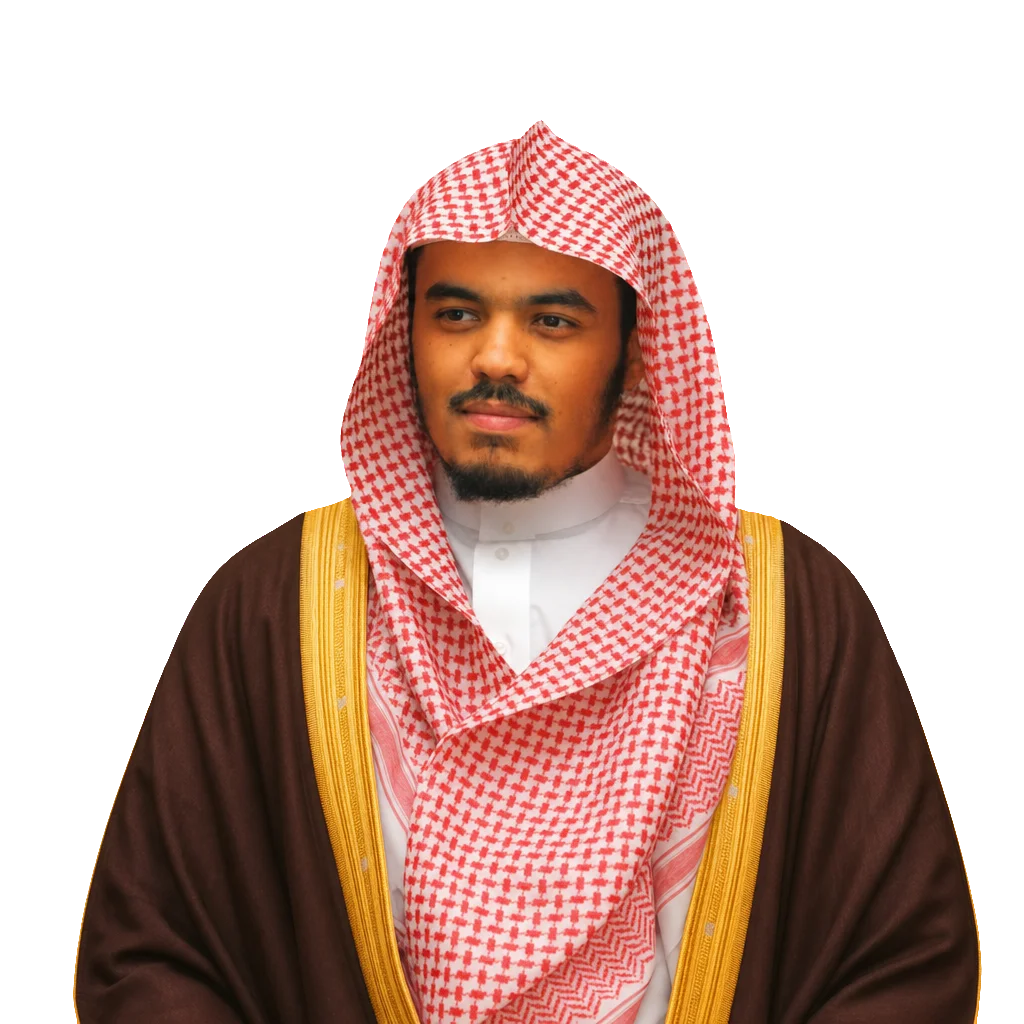
Sheikh Dr. Yasser Al-Dossari delivers a lecture at the Grand Mosque in Makkah explaining the core Islamic principle of moderation (wasatiyyah) and balance. He demonstrates how Hajj rituals and Prophetic teachings guide Muslims to maintain equilibrium between spiritual duties and worldly pursuits, steering clear of both extremism and negligence.
“In the name of Allāh, the Entirely Merciful, the Especially Merciful.”
“[All] praise is [due] to Allāh, Lord of the worlds -” (Quran 1:1-2)
[Allah ﷻ,] Possessor of grace, bounty, favor, and honor.
We praise Him, Glorified and Exalted, for His great blessings and immense favors;
we praise Him as befits the majesty of His Countenance and the greatness of His authority.
To Him belongs praise first and last,
and to Him belongs praise outwardly and inwardly.
We praise Him with His many praises,
those we know of them and those we know not;
glory be to Him, Exalted is He, we cannot enumerate His praise.
I bear witness that there is no god but Allah ﷻ,
and I bear witness that Muhammad ﷺ is His servant and Messenger.
He delivered the trust, advised the Ummah,
and left us upon the clear, bright path, its night as clear as its day,
from which no one deviates except one who is doomed.
To proceed:
We thank Allah ﷻ for what He has
bestowed upon us and upon you,
in completing the rituals of Hajj.
And we thank Him, Glorified and Exalted,
for all that He facilitated and granted.
Then, our thanks go to our wise leadership in this blessed state,
headed by the Custodian of the Two Holy Mosques and his Crown Prince,
for their great efforts in serving the Haramain
and those who visit them among pilgrims, Umrah performers, and visitors,
which resulted in a great, splendid,
and distinguished success for this Hajj season,
as in every year.
This is part of how Allah ﷻ has honored this blessed country,
its leadership and people,
by granting them the honor of serving the Haramain and their visitors.
Then, thanks go to the Religious Affairs Presidency of the Sacred Mosque and the Prophet's Mosque,
headed by His Excellency Sheikh Prof. Dr. Abdul Rahman ibn Abdul Aziz Al-Sudais.
for all that they offer and expend in enlightening,
guiding, and educating people,
and supporting everything that benefits people
and enlightens them on what brings them goodness, benefit, knowledge, and wisdom
in their religion and their worldly life.
This lecture comes within the context of the efforts exerted by the Religious Affairs Presidency
for the Affairs of the Grand Mosque and the Prophet's Mosque,
represented by the Agency for Intellectual and Guidance Affairs.
And this lecture is titled: "And thus We have made you a balanced nation."
There is no doubt
that it is religiously established that our religion is one of moderation,
balance, and equilibrium
in all affairs of this religion,
among which is Hajj.
We will address moderation,
and how Hajj should be—
how it plays a major role in promoting moderation and balance.
For Hajj embodies and instills the values of balance and moderation in believers' hearts.
For Hajj is not merely rituals to practice or rites to perform,
but rather a comprehensive school and an integrated scientific program.
Through this verse, we examine the meanings of Hajj
and how it contributes to spreading moderation and balance among individuals and communities,
as well as its profound impact
in consolidating moderation, promoting balance, and instilling the values of equilibrium
between the demands of this world and the requirements of the Hereafter,
between the needs of the soul and the needs of the body,
and striking a balance between excess and neglect.
In this, we seek light from the Book of Allah and the Sunnah of His Messenger ﷺ,
citing the statements of scholars and analyzing the effects,
both social and psychological, in that regard.
To explore how Hajj shapes the mindset of the
balanced Muslim and creates a moderate society.
This is what we will cover in the following themes.
As for the first theme,
it is the concept of moderation (wasatiyyah)
and its linguistic and technical connotations.
Linguistically, the word 'wasat' comes with several meanings,
yet they are close in significance when reflecting on their reality and implications.
Ibn Faris (RH) said: "'Waw', 'Seen',
and 'Ta' form a sound root indicating justice and fairness,
and the most just part of a thing is its middle and center."
Allah ﷻ said: "...a middle nation."
It is stated in Al-Misbah al-Munir: "A thing is said to be middle (wasat), meaning between good and bad."
And every praiseworthy trait has two blameworthy extremes;
generosity is a middle ground between stinginess and extravagance,
and courage is a middle ground between cowardice and recklessness.
And man is commanded to avoid every blameworthy trait.
The furthest point, measure, and meaning from both extremes is their middle,
which is the utmost distance from them.
So if one is in the middle, one has distanced oneself from the blameworthy extremes.
However this word is used, we find that its meaning does not depart
from justice, virtue, goodness, fairness,
intermediacy, and moderation between extremes.
As for its technical definition,
it means goodness and virtue;
thus, this nation is a middle nation,
possessing its own virtue and status. Allah ﷻ said:
“You are the best nation produced [as an example] for mankind. You enjoin what is right and forbid what is wrong and believe in Allāh. If only the People of the Scripture had believed, it would have been better for them. Among them are believers, but most of them are defiantly disobedient.” (Quran 3:110)
It is the most just of nations and the best of nations,
“You are the best nation produced [as an example] for mankind. You enjoin what is right and forbid what is wrong and believe in Allāh. If only the People of the Scripture had believed, it would have been better for them. Among them are believers, but most of them are defiantly disobedient.” (Quran 3:110)
And in technical terms,
it is defined as maintaining moderation in beliefs, worship, and transactions,
without excess or negligence, in line with the guidance and objectives of Sharia.
For religion organizes all aspects of human life,
thereby achieving moderation and balance across all areas of one's life.
Al-Shatibi (RH) said in his book Al-Muwafaqat:
"The Sharia operates in moral obligation according to benefit,
between two extremes: neither excess nor negligence."
As for moderation—we have spoken about wasat (the middle way),
and now we speak about i'tidal (moderation).
Linguistically, as in Al-Qamus Al-Muhit, justice is the opposite of injustice,
and that which is established in the soul as upright.
In technical terms, moderation is adhering to the most upright path of justice,
adhering to the most upright path of justice,
and the truth that lies between extremism and harshness, and between negligence and shortcoming.
So moderation and uprightness are a middle ground between excess and negligence.
However, this moderation must be governed by revelation and Islamic law,
not by custom or personal desire.
Thus, as we notice, moderation accompanies the balance (wasatiyyah) with which Allah distinguished this nation:
"And thus We have made you a just nation."
This confirms that moderation is remaining steadfast upon the truth and staying on the path,
undiverted by desires and unswayed by emotions.
The sacred texts have endorsed this methodology and urged towards it,
condemning extremism and harshness, and forbidding negligence and laxity.
The Prophet ﷺ said:
"Beware of extremism in religion,
'for those before you were destroyed only by extremism in religion.'"
So moderation is not a passing word; rather,
it is a divine methodology that illuminates the paths for man.
It is a balance between soul and matter,
and a middle path between extremism and harshness.
Therefore, Al-Shatibi (RH) also stated in his book Al-Muwafaqat:
"The principle is balance between the demands of this world and the demands of the Hereafter."
He cited this verse: "And thus We have made you a just community."
Saying: "The principle is balance between the demands of this world and the demands of the Hereafter."
So our religion is middle between this and that; thus we say: "Guide us to the Straight Path,"
and we ask Allah ﷻ in every prayer, more than once,
reading Surah Al-Fatihah repeatedly
throughout the day in our prayers:
"Guide us to the Straight Path." In Surah Al-Fatihah: "Guide us to the Straight Path."
The Straight Path is a balanced path that Allah ﷻ willed for us
to tread upon as we cross the wilderness of this life.
The Prophet ﷺ exemplified it in his life,
and his companions (RA) learned it
from him and walked with moderation.
The Prophet ﷺ used to direct his companions
to that and nurture them upon it.
Whenever the Prophet ﷺ saw any deviation from the Straight Path,
he corrected that crookedness
and brought them back.
So when some companions went to extremes in their understanding of religion,
the Prophet ﷺ cautioned them, reprimanded them,
and taught them the correct
understanding of this religion.
When three men came,
as reported in Sahih al-Bukhari from Anas ibn Malik (RA),
seeking the Prophet ﷺ.
He said, "Three men came to the houses of the wives of the Prophet ﷺ asking about how he worshipped.
When told, it was as if they considered it little.
They said, "Where are we compared to the Prophet ﷺ, when he has been forgiven
“That Allāh may forgive for you what preceded of your sin [i.e., errors] and what will follow and complete His favor upon you and guide you to a straight path” (Quran 48:2)
One of them said, 'As for me, I will pray all night forever.'
Another said, 'I will fast continuously without breaking my fast.'
And another said, 'I will stay away from women and never marry.'
The Prophet ﷺ came and said, 'Are you the ones who said such and such?'
'By Allah, I am the most fearful of Allah among you and the most conscious of Him.'
'Yet I fast and break my fast, I pray and sleep, and I marry women.'
'So whoever turns away from my Sunnah is not of me.'
So these men imposed hardship upon themselves.
One of them resolved to fast continuously,
the second resolved to pray all night long,
and the third resolved never to marry.
So the Prophet ﷺ alerted them that this goes against the religion,
and that they would never reach the status of the Prophet ﷺ.
So the Prophet ﷺ said to them, 'I am the most fearful of Allah among you and the most conscious of Him,'
'yet I fast and break my fast, I pray and sleep, and I marry women,'
'and whoever turns away from my Sunnah is not of me.'
Here, they leaned towards extreme strictness.
On the other hand, there are those who lean towards dilution,
towards laxity in religion and pursuing worldly gains.
Here, the Prophet ﷺ takes another stance to bring them back as well.
When he sees excessive pursuit of the world, the Prophet ﷺ says...
In the Hadith narrated by Abu Ubaydah ibn al-Jarrah (RA),
he said, 'It is not poverty that I fear for you...'
"rather, I fear that worldly wealth will be opened up before you, as it was opened up for those before you,
and you will compete for it as they competed for it, and it will destroy you as it destroyed them."
Here, he is warning them against the worldly life,
and abandoning the middle path, abandoning religion, and veering off in this manner.
Therefore, Al-Shatibi (RH) said:
"The fundamental rule is balance between the demands of this world and the Hereafter.
Strictness, warnings,
and intimidation are used against those who are lax in religion,
while hope, encouragement,
and easing are used against those who are overly strict in religion."
When the Prophet ﷺ says, for example:
"Indeed, the religion is easy, and no one overburdens himself in religion but that it overpowers him."
How should this text be applied? With whom do we apply it? With those who are rigid and extreme in religion.
But it is not appropriate to quote this text to someone who is lax in religion.
And the texts that censure worldly life are presented to someone who is lax in religion.
That is why Al-Shatibi says—notice how the scholars' words are grounded in a correct understanding of religion:
He said:
"If there is neither this nor that"—meaning neither
someone who is overly strict nor someone who is lax—
he said: "If there is neither this nor that, you will see moderation evident and balance established."
This is our religion. If we want to understand
our religion, we must understand it through the understanding of the Prophet ﷺ and the Companions (RA), through the understanding...
...the righteous Salaf."
That is why the Prophet ﷺ said: "My nation will split into seventy-three sects,
all in the Fire except one." They asked, "Who are they, O Messenger of Allah?"
He said, "Those who follow what I and my Companions are upon today."
The guarantee for a person to walk upon the correct, moderate, balanced path,
which Allah desires, is to follow this religion with the understanding of the Prophet ﷺ,
the understanding of the Companions (RA), the understanding of the first vanguard: the righteous Salaf.
Therefore, scholars always emphasize understanding the Quran and Sunnah
according to the understanding of the righteous Salaf. And this can only be achieved by following Allah's Book,
following the Sunnah of the Prophet ﷺ, and following the understanding of the righteous Salaf.
Now, how do we know the understanding of the righteous Salaf today?
Through the scholars, the heirs of the Prophets. The Prophet ﷺ said: "We Prophets leave no dinar nor dirham;
we only leave behind knowledge. Whoever takes it has taken an abundant share."
So a person should safeguard his religion and
strive to seek out firmly grounded scholars
who have understood the religion correctly,
according to the understanding of the righteous Salaf.
For our religion is one of moderation, uprightness, and balance.
We will see many practical applications of this balance in our talk.
Now, how should we deal with the worldly life— all of this world? How do we deal with it?
There are many texts censuring the worldly life— "And the worldly life is nothing but..."
...except the enjoyment of delusion."
"Know that the life...
“Know that the life of this world is but amusement and diversion and adornment and boasting to one another and competition in increase of wealth and children - like the example of a rain whose [resulting] plant growth pleases the tillers; then it dries and you see it turned yellow; then it becomes [scattered] debris. And in the Hereafter is severe punishment and forgiveness from Allāh and approval. And what is the worldly life except the enjoyment of delusion.” (Quran 57:20)
The Prophet ﷺ says: "Beware of the world."
How can we understand these texts,
when Allah, Glorified and Exalted, says:
“And if it were not that the people would become one community [of disbelievers], We would have made for those who disbelieve in the Most Merciful - for their houses - ceilings and stairways of silver upon which to mount.”
“And for their houses - doors and couches [of silver] upon which to recline”
“And gold ornament. But all that is not but the enjoyment of worldly life. And the Hereafter with your Lord is for the righteous.” (Quran 43:33-35)
'...the enjoyment of worldly life.'
How do we approach these texts according to the methodology of the righteous Salaf?
And how do you understand that some Companions (RA), for example, were rich?
The correct understanding is to view all of this dunya as a means, not an end.
So if Allah grants you wealth or opens for you in any sphere of life,
you employ what Allah has granted you for the sake of the Hereafter.
That is how the Companions (RA) acted: the dunya was in their hands, not hearts.
They utilized the dunya with all its gains. Solomon (AS) was given a kingdom
such as none after him should have, yet Allah said: 'An excellent servant! He was ever-returning.'
So he employed this dunya, with all its gains, for the Hereafter.
If we understand this, we see why Allah ﷻ commands us to work until our last breath:
'If the Hour comes while one of you has a palm seedling in hand, let him plant it.'
Until the very last moment, you work,
not for the dunya itself, but to employ it with all its gains for the Hereafter.
When the dunya becomes the ultimate goal, a person's destruction begins.
If the dunya becomes the ultimate goal, a person's destruction begins.
He treads a perilous path that ruins him and causes him to plunge into Hellfire.
For this world was created as a farmland for the Hereafter.
This world was created as an abode of transit, not an abode of permanent stay.
Allah ﷻ created us in this life—He who created death and life—"to test which of you is best in deed."
So we exist in this life so that Allah ﷻ may test us.
And based on this trial and test, your ultimate fate in the Hereafter is determined.
If you use this world for the Hereafter to please Allah ﷻ,
through whatever halal means you acquire,
then God willing, you are on the right path as long as you utilize this world to please Allah ﷻ.
That is why the Companions
(RA) lived in this manner,
as did the righteous predecessors (RH).
Shaykh Abdul-Aziz ibn Baz (RH)—may Allah ﷻ cover him with His vast mercy—
lived to be over ninety years old; may Allah forgive him and have mercy on him.
On the very last night
before he passed away,
the Shaykh completed seventeen official matters.
This shows that he (RH)—may Allah forgive him and our scholars, and grant us long lives in obedience.
and prolong the lives of our scholars in His obedience and service to His religion, and forgive those of them who have passed away.
Sheikh Ibn Baz (RH) lived past the age of ninety,
yet on his final night, he completed over seventeen official transactions, may Allah have mercy on him.
He worked until his last breath, as the Prophet ﷺ said: "If the Final Hour arrives while one of you has a palm seedling, he should plant it."
A person is required to work and strive.
The texts that have been revealed are not for man to withdraw or refrain, but rather to work in what pleases Allah ﷻ.
Alright.
Hajj is a practical arena that teaches us this moderation, in which the meanings of ease and removal of hardship are manifested,
the paths of balance become clear, and the values of tolerance and brotherhood among the Ummah are reinforced.
Therefore,
the duty is to deepen the concept of
moderation and raise awareness of it.
Protecting the mind from the doubts that assault it,
and protecting the heart from the desires that sweep it away is
one of the greatest Sharia objectives brought by this religion.
The second theme:
Hajj is a school—a school of moderation
and balance in belief and conduct.
In Hajj, Tawhid is proclaimed.
As is well known, one of the greatest objectives of Hajj is realizing Tawhid. The Prophet ﷺ raised his voice in Talbiyah with Tawhid,
and Allah ﷻ says: "And complete the Hajj and 'Umrah for Allah."
And the entire Talbiyah is Tawhid: "Here I am, O Allah, here I am. Here I am, You have no partner, here I am. Indeed, all praise, grace, and sovereignty belong to You. You have no partner."
In every single ritual,
a person proclaims his Tawheed to Allah ﷻ,
and his disavowal of Shirk.
This is clear and evident in Hajj.
And our Prophet ﷺ says:
"The best of what I and the prophets before me have said is: 'There is no god but Allah alone, with no partner,'"
“Whatever is in the heavens and whatever is on the earth is exalting Allāh. To Him belongs dominion, and to Him belongs [all] praise, and He is over all things competent.” (Quran 64:1)
So monotheism is present in every detail of Hajj.
At the end of Surah Al-Hajj, Allah Almighty said: "O...
“O people, an example is presented, so listen to it. Indeed, those you invoke besides Allāh will never create [as much as] a fly, even if they gathered together for it [i.e., that purpose]. And if the fly should steal from them a [tiny] thing, they could not recover it from him. Weak are the pursuer and pursued.” (Quran 22:73)
Allah ﷻ issues a challenge that
mankind, no matter how advanced their knowledge or status,
if all the scientists gathered in one place,
and tried to create just a single fly,
they could not, and they never will.
“Indeed, those you invoke besides Allah can never create a fly, even if they gathered together for it.”
“O people, an example is presented, so listen to it. Indeed, those you invoke besides Allāh will never create [as much as] a fly, even if they gathered together for it [i.e., that purpose]. And if the fly should steal from them a [tiny] thing, they could not recover it from him. Weak are the pursuer and pursued.” (Quran 22:73)
Then Allah ﷻ challenged them with
something even simpler than that.
He said:
“O people, an example is presented, so listen to it. Indeed, those you invoke besides Allāh will never create [as much as] a fly, even if they gathered together for it [i.e., that purpose]. And if the fly should steal from them a [tiny] thing, they could not recover it from him. Weak are the pursuer and pursued.” (Quran 22:73)
Allah ﷻ here is saying: "Just give Me back the morsel that the fly took from you."
Now, modern science proves that the fly has no stomach.
So when it comes to a morsel it wants to eat,
it secretes a substance onto it
before it enters its body, completely transforming it into another substance,
and then it enters its body.
If you searched the fly afterwards, you would find nothing left of that morsel it took.
He said:
“O people, an example is presented, so listen to it. Indeed, those you invoke besides Allāh will never create [as much as] a fly, even if they gathered together for it [i.e., that purpose]. And if the fly should steal from them a [tiny] thing, they could not recover it from him. Weak are the pursuer and pursued.” (Quran 22:73)
'Weak are the seeker and the sought.'
Hajj came with Tawhid in all its details.
Allah ﷻ reminds us in the verses of Hajj of the importance of Tawhid.
In fact, right in the middle of the verses of Hajj, Allah ﷻ says in Surah Al-Hajj:
“That [has been commanded], and whoever honors the sacred ordinances of Allāh - it is best for him in the sight of his Lord. And permitted to you are the grazing livestock, except what is recited to you. So avoid the uncleanliness of idols and avoid false statement,” (Quran 22:30)
"...and avoid false speech." Then He said regarding that: "[Being] upright to Allah, assigning no partners to Him. And whoever associates..."
“Inclining [only] to Allāh, not associating [anything] with Him. And he who associates with Allāh - it is as though he had fallen from the sky and was snatched by the birds or the wind carried him down into a remote place.” (Quran 22:31)
And at the same time,
and we have spoken about this—that
at the same time, Muslims adhere to what is established in the sources of Sharia regarding the veneration of sacred rituals,
so they implement, act,
and perform Hajj just as the Prophet ﷺ performed Hajj,
because the Prophet ﷺ said: "Take from me your rituals."
We do that following the example of the Prophet ﷺ.
And as is well known, there are matters,
commands, and rulings mentioned by Allah ﷻ in the Quran,
while details and explanations were left to the Sunnah, such as establishing prayer: "And establish prayer." Now, how do we pray? How much do we pray? How many units?
These, the Prophet ﷺ explained, saying: "Pray as you have seen me pray."
There are also some details of certain rulings that Allah ﷻ explained, such as Hajj;
He mentioned some details of Hajj,
but many of the details of Hajj came in the Sunnah of the Prophet ﷺ.
The Quran is from Allah, in both word and meaning,
while the Sunnah is meaning from Allah,
but the words are from the Prophet ﷺ—as they say.
However, we are certain that the Prophet ﷺ does not...
“Nor does he speak from [his own] inclination.”
“It is not but a revelation revealed,” (Quran 53:3-4)
As for the ahadith in which Allah spoke, let us call this a Hadith Qudsi.
We say: Allah ﷻ said in the Hadith Qudsi,
such as: "O My servants, all of you are astray except those I have guided...
...O My servants, if the first of you and the last of you, the humans and the jinn... were to stand on one plain...
...and ask Me, and I gave each one their request, that would not diminish My kingdom at all...
...any more than a needle diminishes the sea when dipped into it," and so on.
We do so following the example of the Prophet ﷺ, as his Companions (RA) did.
For example, the stance of 'Umar ibn al-Khattab (RA) when he kissed the Stone.
What did 'Umar ibn al-Khattab (RA) say to the Stone?
As reported in Al-Bukhari,
when 'Umar ibn al-Khattab (RA) came to the Black Stone, he kissed it,
and said: "I know that you are a stone that can neither harm nor benefit,
and had I not seen the Messenger of Allah ﷺ kiss you, I would not have kissed you."
Here is following (ittiba'), not inventing (ibtida').
Religion is about following the Prophet ﷺ, and deeds are not accepted—as you know—except with sincerity and following.
One must make deeds sincere for Allah, but sincerity alone is not enough; there must also be following of the Prophet ﷺ.
Religion consists of nothing but sincerity and emulation,
so these two conditions must be met for a deed to be accepted: most sincere and most correct.
If a person is sincere to Allah,
but does not follow the Prophet ﷺ, it will not be accepted.
And if a person follows the Prophet ﷺ, but is not sincere, it will not be accepted either.
Among the manifestations of behavioral moderation in Hajj is the garment of Ihram,
for it lies midway between
extravagance and boasting,
and nudity, as in Jahiliyyah.
So Islam came as a middle ground between this and that.
The third topic, so as not to prolong, is also manifestations of moderation:
in Ihram, in Tawaf, in Sa'i,
and in standing at Arafah.
The balance between fear and hope.
When a person turns to Allah, for instance, there is fear and there is hope.
A person should be as Ibn al-Qayyim (RH) said: "A person in life,
while journeying to Allah, is like a bird with two wings and a head.
As for the two wings, they are fear and hope;
and as for the head, it is love.
If one of the wings is cut, the bird falls;
but if the head is cut, the bird dies."
A person is in need of that.
He turns to Allah ﷻ and places his hope in Allah ﷻ,
and also fears Allah, Glorified and Exalted is He.
Through this, he stays safe from the path of misguidance and error.
As you know, some deviant sects prioritized fear,
while other sects prioritized hope.
As for the creed of Ahl al-Sunnah wa'l-Jama'ah, it is moderation between the two.
Among the things that emphasize the balance between worldly pursuits and those of the Hereafter
is what comes in the words of Allah ﷻ in Surah al-Hajj:
“There is no blame upon you for seeking bounty from your Lord [during ḥajj]. But when you depart from ʿArafāt, remember Allāh at al-Mashʿar al-Ḥarām. And remember Him, as He has guided you, for indeed, you were before that among those astray.” (Quran 2:198)
Some people used to feel uncomfortable
trading during Hajj—buying and selling—
so Allah ﷻ revealed this verse:
“There is no blame upon you for seeking bounty from your Lord [during ḥajj]. But when you depart from ʿArafāt, remember Allāh at al-Mashʿar al-Ḥarām. And remember Him, as He has guided you, for indeed, you were before that among those astray.” (Quran 2:198)
Our religion is a religion of moderation and balance in everything,
even in the concept of asceticism.
As Ibn al-Qayyim (RH) said, asceticism is a worship of the heart.
And as one of the Salaf said: "Do not testify to anyone's asceticism, for it is in the heart."
You cannot judge whether someone is ascetic or not based on their outward appearance;
you cannot, because this is something in the heart.
Ibn al-Qayyim (RH) said that David (AS) and
Solomon (AS) were not given only wealth,
rather, Allah gave them kingship, and no one doubts their asceticism.
Allah says of Solomon: "An excellent servant! Indeed, he was one who repeatedly turned."
So our religion is one of balance,
and a person acts according to his state.
The worldly life is in his hand, not in his heart.
That is why scholars differed:
is the grateful rich person better,
or the patient poor person?
A debate arose among the scholars on this: is this one better, or is that one better?
Shaykh al-Islam Ibn Taymiyyah (RH) said: "The better of them is the most righteous of them."
We cannot say this one is better or that one is better.
The better of them is the most righteous of them with what Allah ﷻ has granted him.
There are examples praised by Allah, just as He praised Solomon, saying: "An excellent servant! Indeed, he was one who repeatedly turned."
"An excellent servant; indeed, he constantly returned [to Allah]."
And Allah Subhanahu wa Ta'ala also said about Ayyub (AS):
"An excellent servant; indeed, he constantly returned [to Allah]."
So Allah praised both of them, each according to his condition and what Allah ﷻ tested him with.
And Allah Subhanahu wa Ta'ala tests some people with good, and tests others with the opposite of that.
"And We test you with evil and with good as trial."
Allah said in the Quran: "And We test you with evil and with good as trial."
And a person cannot determine what kind of trial Allah ﷻ will test him with.
Allah Subhanahu wa Ta'ala knows best about your condition,
so He decrees for you what suits your condition.
Therefore, it was narrated in a hadith as recorded by al-Lalaka'i, attributed to Ibn Mas'ud (RA), that the Prophet ﷺ said:
The hadith is marfu', he said: "A servant...
...may intend an affair of business or leadership until it is made easy for him,
and Allah looks at him and says to His angels, 'Divert it from him,
for if I make it easy for him, I will enter him into the Fire.'
He said: 'So it is diverted from him, and this servant remains pessimistic, saying, "So-and-so beat me to it, so-and-so ruined me,"
'when it is nothing but the favor of Allah 'Azza wa Jall.'"
"A servant may intend an affair of business or leadership until it is made easy for him,
and Allah looks at him and says to His angels, 'Divert it from him, for if I make it easy for him, I will enter him into the Fire.'
He said: 'So it is diverted from him, and he remains pessimistic, saying, "So-and-so beat me to it, so-and-so ruined me,"
'when it is nothing but the favor of Allah 'Azza wa Jall.'"
Allah knows best your condition and knows best what is suitable for your condition.
And in another hadith (with some weakness): 'Indeed, among My servants is he for whom nothing is suitable except wealth,
and if I were to impoverish him, it would corrupt him.
And indeed, among My servants is he for whom nothing is suitable except poverty,
and if I were to enrich him, it would corrupt him.'
Allah ﷻ knows best your condition. Strive and do whatever you can,
but your heart must submit to Allah ﷻ,
content with whatever Allah ﷻ decrees for you.
Therefore, one of the six pillars of faith is belief in divine decree, both its good and its bad;
to believe in the decree of Allah ﷻ and submit to the command of Allah ﷻ,
and to not take things at face value. Things are not always as they appear.
Why did Allah ﷻ command us to recite—as a
recommended act of worship—Surah Al-Kahf every week?
One of the profound meanings this Surah
reinforces is that things are not as they appear,
as shown in the story of Al-Khidr and Moses (AS).
Things are not as they appear.
That is why Ibn al-Qayyim (RH) said: 'Whoever knows Allah through His names and attributes
will know with certainty that the hardships and afflictions that
befall him contain hidden benefits beyond his intellect's grasp.
Indeed, a servant's true interests in what he dislikes are greater than in what he loves.'
And even more beautiful than that is the saying of Allah ﷻ:
“Battle has been enjoined upon you while it is hateful to you. But perhaps you hate a thing and it is good for you; and perhaps you love a thing and it is bad for you. And Allāh knows, while you know not.” (Quran 2:216)
a person entrusts their affairs to Allah ﷻ.
Omar ibn Al-Khattab (RA) said, "I wake up every morning without caring
whether I wake up to what pleases me or what displeases me."
They asked, "Why, O Commander of the Faithful?"
He said, "Because I do not know whether good lies in what pleases me or what displeases me."
Here lies entrustment and submission to the command of Allah ﷻ.
Therefore, there is faith in the divine decree, and as Ibn al-Qayyim said, there is the level of contentment with divine decree.
For what does this faith produce within you? It yields contentment with Allah's decree and predestination.
Contentment with the divine decree, faith in the divine decree,
is a pillar of faith.
That is why Allah ﷻ emphasized it
in this hadith through His Prophet ﷺ.
If you notice,
when Jibril (AS) stood up from the Prophet ﷺ
and left, what did the Prophet ﷺ say to the Companions? He asked, "Do you know who this was?"
They said, "Allah and His Messenger know best."
The Prophet ﷺ said,
"This was Jibril, who came to teach you your religion."
Also among the matters that emphasize moderation and balance in Hajj
is that Hajj teaches a person how to balance between
their emotion and their intellect and religion.
For when emotion dictates something to you—such as getting angry over a situation,
as happens, for instance, in crowds or in certain places—
However, a person's intellect restrains him, controlling his reactions.
For you are not responsible for the actions of others, but you are responsible for your reaction.
You are responsible for your reaction. Should someone act improperly, you control yourself.
Therefore, the Prophet ﷺ, as stated in the famous hadith,
said, "The strong person is not the one who can wrestle, but the strong person is the one who controls himself when angry."
That is why, when a noble Companion came to the Prophet ﷺ and said, "O Messenger of Allah, advise me," he said, "Do not become angry."
He repeated it to him three times: "Do not become angry, do not become angry."
Why? Because many evils stem from anger.
The Prophet ﷺ—and this reflects balance, moderation, and equilibrium—
said ﷺ, "Your Lord has a right over you, your self has a right over you, and your family has a right over you; so give every rightful person their due right."
Therefore, when Salman al-Farsi (RA) visited Abu al-Darda' (RA), he found him...
...preoccupied with religion.
This is undoubtedly commendable, but he found that he had completely renounced worldly life.
He saw Umm al-Darda' looking unkempt, so Salman al-Farsi asked her—
for the Prophet ﷺ had established brotherhood between Abu al-Darda' and Salman al-Farsi—he asked, "O Umm al-Darda',
why do I see you unkempt, not beautifying yourself for your husband?"
She said, "Your brother Abu al-Darda' has no desire for worldly things."
So Salman al-Farsi went to Abu al-Darda' and said, "O Abu al-Darda',
your Lord has a right over you, your self has a right over you, and your family has a right over you; so give everyone their due right."
After this incident, Abu al-Darda' (RA) and Salman al-Farsi went to the Prophet ﷺ.
When the Prophet ﷺ heard what had happened, he said,
"Salman has spoken the truth; Salman has spoken the truth."
In one of the battles, as you know, the Prophet ﷺ told the army to march ahead,
then he stayed back to race with 'A'ishah (RA).
Even in such a situation,
where a leader would be completely focused,
prepared, and preoccupied,
despite that, the Prophet ﷺ did not forget his wife.
He did not forget his family ﷺ. He told the army to march ahead, then went to race with 'A'ishah.
When the Prophet ﷺ won the race, he ﷺ said, "This one is for that one,"
because she had beaten him before. 'A'ishah said she herself had forgotten the incident,
but the Prophet ﷺ did not forget, saying, "This one is for that one."
And the Prophet ﷺ laughed.
And in a narration by al-Bayhaqi, the Prophet ﷺ laughed.
O Allah, send peace and blessings upon him.
So notice this balance.
The most beautiful portrait of balance in life was painted by Muhammad ﷺ.
The most beautiful practice of the religion was by Muhammad ﷺ.
“There has certainly been for you in the Messenger of Allāh an excellent pattern for anyone whose hope is in Allāh and the Last Day and [who] remembers Allāh often.” (Quran 33:21)
So if you want balance, look at the Prophet ﷺ and how he maintained balance in his life.
It is not unusual to find a person who excels in one pillar of their life,
either focusing on their career to become a high-ranking employee,
or focusing on wealth to become a prominent merchant, or focusing on their family to raise an outstanding family,
or focusing on their health so they enjoy good health.
It is not unusual for a person to excel in one pillar of their life,
but what truly wins your admiration and aligns with Allah's religion is the
one who manages to paint a balanced picture across all pillars of their life.
So you find him worshipping Allah,
caring for his family, taking care of his health,
his job, his wealth, and even his social relationships and community,
intent on building balance and giving everyone their due right.
The Prophet ﷺ says: "Your Lord has a right over you, your self has a right over you, and your family has a right over you."
In another narration, "and your body," and in another: "and your guest has a right over you." "Visitor" means a guest—even your guest is given their right.
This is our religion: a religion of balance and moderation in everything, in everything.
Even in thoughts, a person maintains balance,
just as we mentioned regarding the balance between fear and hope.
And reflect on all deviant and misguided groups...
All the groups that deviated and strayed from the path,
you will find that they strayed from the straight path,
either through extremism or negligence.
They possess no balance, nor do they have any moderation,
but rather extremism or negligence.
Therefore,
a proper understanding of this religion keeps you on the right path that came from the Messenger of Allah ﷺ,
which came from Allah Almighty and His Messenger ﷺ according to the understanding of the righteous predecessors.
A person must exert all their effort and strive to the utmost degree
to attain the correct understanding, and choose godly scholars
who enlighten them and teach them the Book of Allah and the Sunnah of the Prophet ﷺ with a proper understanding;
and not surrender themselves or lend their ears to just anyone, but rather go search for godly scholars.
You would be amazed when you see people, in worldly matters, striving to search for...
...the best people in their worldly affairs, making inquiries just as they inquire about medical matters.
If someone wants treatment, they seek out the best doctors and physicians
until it is established beyond doubt that this doctor is outstanding.
He says, "This is my health, so I won't entrust it to just anyone." What about your religion?
"Indeed, this matter is religion, so look to whom you take your religion from."
Do not entrust your religion to just anyone, nor take your religion from just anyone.
Rather, take it from the godly, upright scholars,
as is the case with our scholars in this blessed state.
Ibn Baz and Ibn Uthaymin (RH) passed away, but our living scholars—may Allah prolong their lives and the lives of all Muslim scholars—
such as our Sheikh, His Eminence the Mufti, Sheikh Salih Al-Fawzan, and others among our scholars—may Allah preserve them and all Muslim scholars.
Hajj is a meeting point of diverse cultures; people come "from every distant pass."
A person meets with various people
and engages in dialogue with them,
and this benefits his mind and his perspective.
For our religion is a religion of coexistence and tolerance.
The Prophet ﷺ exemplified this in the best manner, peace and blessings be upon him, as did his noble Companions (RA).
When the Prophet ﷺ arrived in Madinah
after migrating to it, there were Jews in Madinah,
and the Prophet ﷺ coexisted with them and established a treaty with them, peace and blessings be upon him.
And in Madinah, as is well known, there were the Muhajirun who arrived,
and the Ansar who resided in Madinah. So the Prophet ﷺ established brotherhood among them in coexistence.
This is the most beautiful picture of coexistence, peace and blessings be upon him,
and how the Prophet ﷺ reconciled the hearts of Aws and Khazraj, peace and blessings be upon him.
The pinnacle of coexistence! Madinah was an exemplary model of this.
It was, and continues to be so.
I ask Allah ﷻ to perpetuate upon us and you the blessings of security, faith, and safety.
to sustain upon this land the blessing of security, safety,
and tranquility, upon our lands and the lands of Muslims everywhere.
Balance in our religion, as we mentioned, is also between the soul and the body.
You, as a human being, have a body and a soul, right?
The body was created from the earth.
Allah ﷻ says: "O..."
“O people, if you should be in doubt about the Resurrection, then [consider that] indeed, We created you from dust, then from a sperm-drop, then from a clinging clot, and then from a lump of flesh, formed and unformed - that We may show you. And We settle in the wombs whom We will for a specified term, then We bring you out as a child, and then [We develop you] that you may reach your [time of] maturity. And among you is he who is taken in [early] death, and among you is he who is returned to the most decrepit [old] age so that he knows, after [once having] knowledge, nothing. And you see the earth barren, but when We send down upon it rain, it quivers and swells and grows [something] of every beautiful kind.” (Quran 22:5)
So the body was created from what? From dust.
"...for We created you...
“O people, if you should be in doubt about the Resurrection, then [consider that] indeed, We created you from dust, then from a sperm-drop, then from a clinging clot, and then from a lump of flesh, formed and unformed - that We may show you. And We settle in the wombs whom We will for a specified term, then We bring you out as a child, and then [We develop you] that you may reach your [time of] maturity. And among you is he who is taken in [early] death, and among you is he who is returned to the most decrepit [old] age so that he knows, after [once having] knowledge, nothing. And you see the earth barren, but when We send down upon it rain, it quivers and swells and grows [something] of every beautiful kind.” (Quran 22:5)
“…a lump of flesh, formed and unformed.”
Now, where does this body get nourishment from?
From the earth, because it was created from it.
“From it We created you,
“From it [i.e., the earth] We created you, and into it We will return you, and from it We will extract you another time.” (Quran 20:55)
As for the soul, it was created in the heavens.
So where does its nourishment come from? From the heavens.
No matter how hard you strive to nourish the body while not nourishing the soul,
the soul will feel constricted and live in hardship.
For Allah ﷻ said: "And whoever turns away from My remembrance..."
And where does remembrance come from? From the heavens.
“And whoever turns away from My remembrance - indeed, he will have a depressed [i.e., difficult] life, and We will gather [i.e., raise] him on the Day of Resurrection blind."” (Quran 20:124)
A person cannot achieve balance unless they properly nourish the body and properly nourish the soul.
Therefore, Allah ﷻ clarified to us in His Book that this nation,
the Ummah of Muhammad ﷺ, is balanced between soul and body.
And Allah ﷻ criticized those who exaggerated in the spiritual aspect while neglecting the body, and vice versa.
Allah ﷻ criticized those who exaggerated in the physical aspect and forgot the soul.
Where is this mentioned in the Book of Allah?
In the very last verse of Surah Al-Fat'h.
Notice when this verse came in Surah Al-Fat'h: after Allah ﷻ spoke about...
...the entry into Makkah, Hajj, and 'Umrah, Allah ﷻ said:
“Certainly has Allāh showed to His Messenger the vision [i.e., dream] in truth. You will surely enter al-Masjid al-Ḥarām, if Allāh wills, in safety,
with your heads shaved and [hair] shortened, not fearing [anyone]. He knew what you did not know and has arranged before that a conquest near [at hand].”
“It is He who sent His Messenger with guidance and the religion of truth to manifest it over all religion. And sufficient is Allāh as Witness.” (Quran 48:27-28)
What did He say after that?
“Muḥammad is the Messenger of Allāh; and those with him are forceful against the disbelievers, merciful among themselves. You see them bowing and prostrating [in prayer], seeking bounty from Allāh and [His] pleasure. Their sign is in their faces from the effect of prostration [i.e., prayer]. That is their description in the Torah. And their description in the Gospel is as a plant which produces its offshoots and strengthens them so they grow firm and stand upon their stalks, delighting the sowers - so that He [i.e., Allāh] may enrage by them the disbelievers. Allāh has promised those who believe and do righteous deeds among them forgiveness and a great reward.” (Quran 48:29)
This is the nation of Muhammad ﷺ—the nation of Muhammad ﷺ—
"and those with him" are the Companions (RA), of course.
Here, the Companions—
“Muḥammad is the Messenger of Allāh; and those with him are forceful against the disbelievers, merciful among themselves. You see them bowing and prostrating [in prayer], seeking bounty from Allāh and [His] pleasure. Their sign is in their faces from the effect of prostration [i.e., prayer]. That is their description in the Torah. And their description in the Gospel is as a plant which produces its offshoots and strengthens them so they grow firm and stand upon their stalks, delighting the sowers - so that He [i.e., Allāh] may enrage by them the disbelievers. Allāh has promised those who believe and do righteous deeds among them forgiveness and a great reward.” (Quran 48:29)
What? "...seeking bounty from Allah and His pleasure."
Are these characteristics spiritual or material?
Spiritual.
“Muḥammad is the Messenger of Allāh; and those with him are forceful against the disbelievers, merciful among themselves. You see them bowing and prostrating [in prayer], seeking bounty from Allāh and [His] pleasure. Their sign is in their faces from the effect of prostration [i.e., prayer]. That is their description in the Torah. And their description in the Gospel is as a plant which produces its offshoots and strengthens them so they grow firm and stand upon their stalks, delighting the sowers - so that He [i.e., Allāh] may enrage by them the disbelievers. Allāh has promised those who believe and do righteous deeds among them forgiveness and a great reward.” (Quran 48:29)
These are spiritual characteristics; they pertain more to the soul, right?
Even though the body is involved—bowing and prostrating—they pertain more to the soul.
He said: "Such is their description"—what?— "in the Torah."
And the Torah was revealed to whom? The Torah was revealed to the Jews, right?
Then He said—notice the transition here— "And their description in the Gospel."
The Gospel was revealed to whom? To the Christians.
“Muḥammad is the Messenger of Allāh; and those with him are forceful against the disbelievers, merciful among themselves. You see them bowing and prostrating [in prayer], seeking bounty from Allāh and [His] pleasure. Their sign is in their faces from the effect of prostration [i.e., prayer]. That is their description in the Torah. And their description in the Gospel is as a plant which produces its offshoots and strengthens them so they grow firm and stand upon their stalks, delighting the sowers - so that He [i.e., Allāh] may enrage by them the disbelievers. Allāh has promised those who believe and do righteous deeds among them forgiveness and a great reward.” (Quran 48:29)
Are these descriptions physical and tangible, or spiritual descriptions?
Tangible—building, construction.
Now, why in the Torah did He speak to the Jews,
and describe the generation of Muhammad ﷺ and his nation as having a spiritual aspect,
while to the Christians He spoke of something physical?
Because the Jews exaggerated the physical aspect and neglected the spiritual,
so He informed them that the nation of Muhammad ﷺ cares about spirituality alongside physical matters, of course.
And the Christians exaggerated the spiritual aspect at the expense of physical bodily needs,
to the extent that Allah said of them in Surah Al-Hadid: "Monasticism which they invented; We did not prescribe it for them."
You see?
So He addressed them by stating that the nation of
Muhammad ﷺ cares about building and developing the earth,
and fulfilling vicegerency on earth through development.
So the nation of Muhammad ﷺ is balanced between spirit and body.
He addressed each nation with what they lacked—
He addressed these with what they lacked, and those with what they lacked.
Thus, the nation of Muhammad ﷺ is balanced between spirit and body,
between intellect and emotion.
There must be a balance between this and that.
Hence, our religion is a religion of balance.
And we draw inspiration from this verse and its context,
because the order of verses—as is well known to you—is it based on human judgment or divinely ordained?
Is the arrangement of verses in the Quran based on opinion or divinely ordained?
Divinely ordained, divinely ordained. So Allah ﷻ placed it in this position.
Thus, from Hajj we learn.
And we benefit from its balance, moderation, and middle ground in everything.
And that the Ummah of Muhammad ﷺ, as Allah ﷻ said:
“You are the best nation produced [as an example] for mankind. You enjoin what is right and forbid what is wrong and believe in Allāh. If only the People of the Scripture had believed, it would have been better for them. Among them are believers, but most of them are defiantly disobedient.” (Quran 3:110)
Allah Almighty said, as we began this lecture or lesson:
"And thus We have made you a moderate nation."
So a person travels through this life and traverses the desert of this world as Allah Almighty intended,
in moderation, in balance,
and that he should not deviate from the path,
and beware of excess, extremism, and neglect.
Even in the Hadith, the Prophet ﷺ said:
"Indeed,
part of glorifying Allah is honoring the bearer of the Quran,
who neither exaggerates regarding it nor turns away from it."
Reflect on the lives of the Companions (RA) and their understanding, as they witnessed the revelation.
The Companions (RA) were the best people in understanding the religion from the Prophet ﷺ,
because Allah Glorified and Exalted chose them for His Prophet's companionship,
as Ibn Mas'ud (RA) said, that Allah looked at the hearts of creation and found no hearts
purer than the hearts of His Companions, so He chose them for His Prophet's companionship,
or as he (RA) said, that Allah Almighty chose them to accompany the Prophet ﷺ.
So they witnessed the revelation and lived alongside the Prophet ﷺ,
observing the Prophet's ﷺ understanding of the Book and the Sunnah.
Therefore, they took directly from the source, from the primary source, from the Prophet ﷺ,
so their understanding was the best of understandings, as Ibn Mas'ud (RA) said:
"Whoever wishes to follow an example, let him follow the Companions of the Prophet ﷺ, for they had the purest hearts among people,"
"the most knowledgeable, the deepest in understanding, and the least burdened with affectation."
Even if disagreement occurred among the Companions (RA) in some situations,
and in their understanding of the texts.
This understanding, as Ibn al-Qayyim (RH) said in "Al-Sawa'iq Al-Mursalah"—he said:
Ibn al-Qayyim said: "Even if the Companions' apparent state was disagreement on some issues,
in reality, it was harmony.
He said: 'Because they were all agreed upon fulfilling Allah's ﷻ intent on earth.'
One would say, 'This is Allah's ﷻ intent,' and the other would say, 'This is Allah's ﷻ intent.'
Therefore, when the Prophet ﷺ said in the Hadith:
"None of you should pray 'Asr except in Bani Quraydhah."
One group took the explicit text, while the other took the implied meaning.
When they presented the matter to the Prophet ﷺ, he affirmed both groups.
This, of course, gave scope to the scholars— the scholars of the Ummah—
for religion to accommodate both:
those who took the explicit text and those who took the implied meaning.
And this is part of the flexibility Allah ﷻ
granted the Ummah in understanding religion.
And it is part of Allah's ﷻ mercy upon the Ummah.
Therefore,
the narration "The disagreement of my
Ummah is a mercy" is not authentic.
However,
the statement "The disagreement of the scholars is a
mercy" was reported from scholars like Imam Ahmad (RH).
And this is part of facilitating ease, even in Hajj.
When people came to the Prophet ﷺ, one saying, "I did such-and-such," and another saying, "I did such-and-such,"
the Prophet ﷺ would say, "Do so, and there is no harm; do so, and there is no harm; do so, and there is no harm."
This is part of ease;
“The month of Ramaḍān [is that] in which was revealed the Qur’ān, a guidance for the people and clear proofs of guidance and criterion. So whoever sights [the crescent of] the month, let him fast it; and whoever is ill or on a journey - then an equal number of other days. Allāh intends for you ease and does not intend for you hardship and [wants] for you to complete the period and to glorify Allāh for that [to] which He has guided you; and perhaps you will be grateful.” (Quran 2:185)
This is what was possible to present in this lecture,
commenting on the statement of Allah ﷻ: "And thus We have made you a just community,"
and how Hajj can have an impact on promoting
and embedding moderation among Muslims.
We ask Allah ﷻ to grant us understanding of Him and of His Messenger ﷺ,
that elevates us to the rank of the truthful, the martyrs, and the righteous;
and we ask Him ﷻ for beneficial knowledge and righteous deeds.
And we ask Allah ﷻ, as He gathered us in His Sacred House, to gather us under His Throne,
in Gardens...
“Indeed, the righteous will be among gardens and rivers,”
“In a seat of honor near a Sovereign, Perfect in Ability.” (Quran 54:54-55)
We ask Allah ﷻ to return the pilgrims
to their homelands safe and sound,
and to grant them success, accept from them,
and make their Hajj accepted and effort appreciated,
and to bestow upon us and them acceptance in all our
deeds and in everything by which we draw near to Him ﷻ.
And we ask Allah ﷻ to preserve this country.
O Allah, preserve for this country its security,
prosperity, stability, flourishing, and its leaders.
Grant success to our leader, the Custodian of the Two Holy Mosques, and his trustworthy Crown Prince to all You love and are pleased with,
and reward them with the best reward for all they provide for the Haramain and their visitors,
and reward all their aides, workers,
and everyone whom Allah has honored with
serving the guests of the Most Merciful.
We ask Allah ﷻ to grant success to our security personnel and our soldiers on our frontiers,
to protect them with His protection, guard them with His care, and preserve all Muslim lands,
and to extend over them security, safety, stability, and prosperity,
and to unite the word of Muslims upon the truth.
We ask Allah ﷻ to show us the truth as truth and grant us following it,
and show us falsehood as falsehood and grant us avoiding it,
and we ask Him ﷻ to keep us steadfast upon religion until we meet Him while He is pleased with us,
and to direct our hearts to His obedience,
and to employ us and you in His obedience and in the service of His religion.
We ask Allah ﷻ for us and for you success in all He loves and is pleased with, and to bless us and you with righteous offspring,
And we ask Him, Exalted and Glorified, to grant us success in every good in all our affairs,
and to fulfill for all of us what we hope for and beyond what we hope for,
and to avert from all of us what we fear, even beyond what we fear,
and to grant every asker among us his request, and to decree for us the best reward and more.
May Allah send blessings and peace upon our Prophet Muhammad and upon all his family and companions.