Who Requires Perfection in the Muslim Ruler?
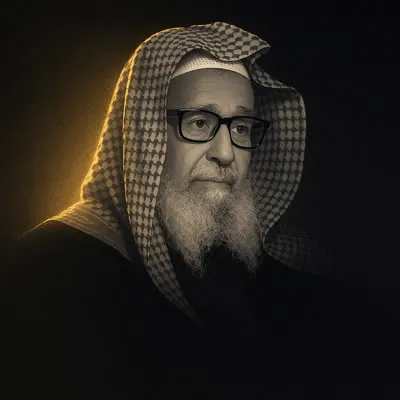
Description
Transcript 47 lines
This is an issue that must be noted.
It is not required that the Muslim ruler be perfect.
There are shortcomings. There are concerns.
There are violations. But unless it reaches the point of disbelief.
We are commanded to hear and obey him.
"Unless you see open disbelief."
"Unless you see open disbelief."
"As long as they establish prayer among you."
Then it is obligatory to obey them and to join them.
Because that brings much good to the individual and society.
Because it brings security and stability.
And it also brings great benefits.
"Adhere to the Muslim community and its imam."
And this does not mean the ruler must have authority over all Muslims.
This may be impossible, and it has been so for long periods.
Since the Abbasid caliphate fell.
And Muslims are spread across regions and lands.
Each region and each large country has a Muslim ruler over it.
There are many Muslim rulers.
Each one oversees his own province and region.
Yes. The people of the region and country obey their ruler.
And the others obey their ruler.
This has existed among Muslims since the Abbasid caliphate fell.
Muslims are divided into Islamic states.
So everyone under a state must obey its ruler.
And remain with its community.
This is how the Muslims have been.
Because there are those now calling for general authority.
They say there is no hearing or obedience unless the ruler is over all.
as it was in the time of the Messenger.
the Rightly Guided Caliphs and the Umayyad state.
Yes, if that happened, fine. But that has ended; it doesn't happen now.
Should we leave hearing and obedience until that comes?
Then come division, strife, and fighting. And the enemy intervenes among us.
Do we say, 'We await general authority'? No. This is not permissible.
And no one says this except a person with no faith.
Or a person who has no knowledge or fiqh in the religion of Allah ﷻ.
After the fall of the Abbasid state.
Muslims continued obeying their rulers.
Did they remain so? May Allah grant well-being.
They continued upon guidance, praise be to Allah.
Allah ﷻ says: "Fear Allah as much as you are able, and listen and obey."
Fear Allah as best you can.
If the whole matter can't be done, don't abandon it entirely.
This is a matter that must be noted.
For there are those who oppose it.
Either deliberately or out of ignorance. So we must know this.