Explaining Hadith 23 of Al-Nawawi: Purity, Patience, and the Quran
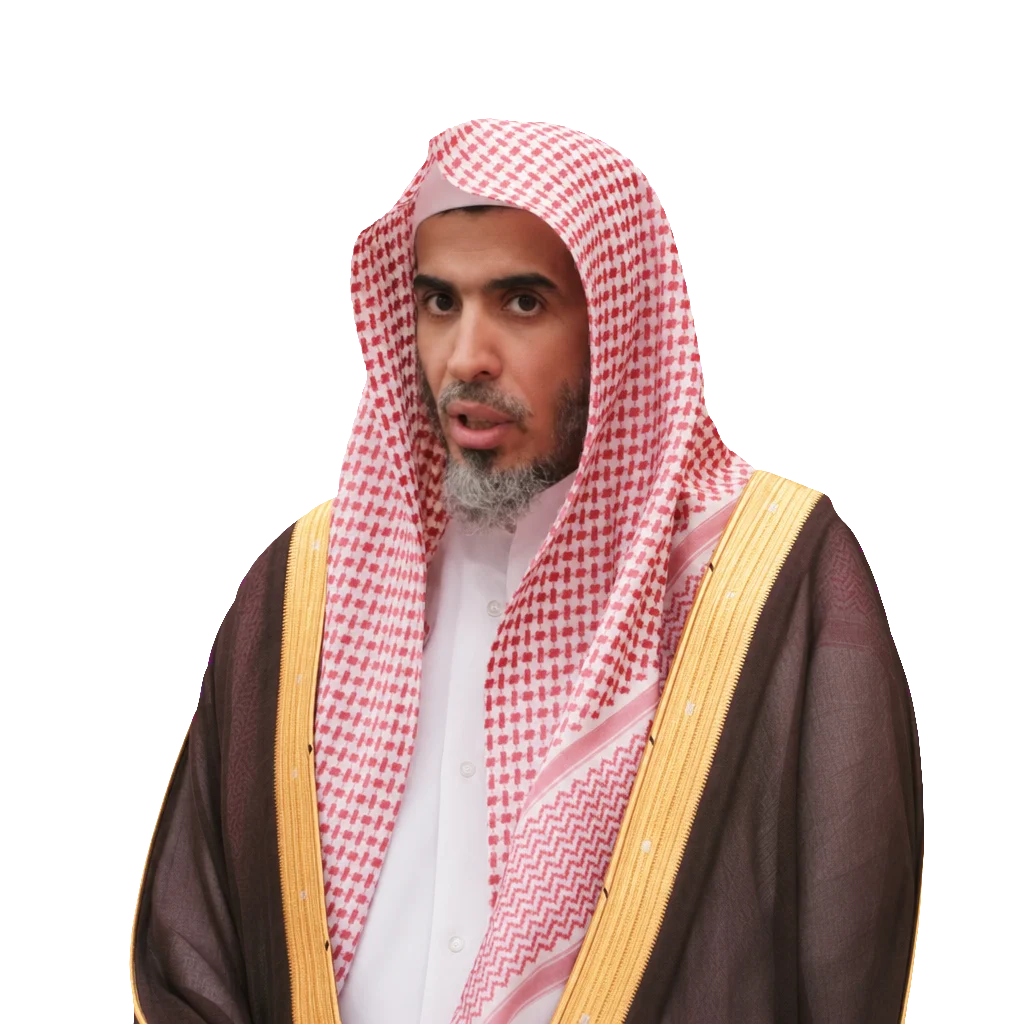
This lecture provides a detailed commentary on the 23rd Hadith of Imam al-Nawawi, containing the concise speech of the Prophet Muhammad ﷺ. The speaker explains the meanings of purity as half of faith, the virtues of praising Allah ﷻ, and how prayer, charity, and patience guide a believer. Finally, it addresses how the Quran acts as a proof for or against us.
He (RH) said:
The twenty-third Hadith: On the authority of Abu Malik al-Harith bin Asim al-Ash'ari (RA)
who said: The Messenger of Allah ﷺ said:
"Purity is half of faith,
and 'Alhamdulillah' (praise be to Allah) fills the scale,
'SubhanAllah' and 'Alhamdulillah' fill—or fills—what is between the heavens and the earth,
prayer is a light, charity is a proof,
patience is illumination,
and the Quran is a proof for you or against you.
Everyone starts their day, selling themselves, thereby either freeing it or destroying it.
Reported by Muslim."
Yes, this Hadith, the Hadith of al-Harith bin Asim (RA),
contains sentences, all of which are from the concise speech.
The first of these sentences is the Prophet's ﷺ saying: 'Purity is half of faith.'
Purity is half of faith...
Because worship is either belief in the heart or actions of the limbs,
and the greatest action of the limbs is undoubtedly prayer.
For prayer is the first thing the servant will be asked about on the Day of Resurrection,
and it is the last thing the Prophet ﷺ advised before his death.
It is the most important act of worship: if sound, the rest of one's deeds flourish; if rejected, the rest are rejected.
And for this reason, since purification is a condition for the validity of prayer,
"Allah ﷻ does not accept the prayer of any one of you who has broken wudu, until he performs ablution."
Thus, purification — that is, tahara — is half of faith,
because prayer is the most important of physical acts of worship, and the other half relates to belief.
Some of the commentators have mentioned that this hadith has another meaning,
since the speech of Allah ﷻ and the speech of His Messenger ﷺ carries multiple meanings, as Abu al-Darda' said,
on two conditions: that no part contradicts another, and that it does not conflict with the Arabic language.
Some scholars said that what is meant by purification here is the purification of the heart,
by the heart being free from shirk,
and free from actions that Allah عز وجل dislikes, such as malice and other things.
So whoever's heart is free from hypocrisy, showing off, and shirk,
and whose heart is likewise free from malice, envy, and hatred towards Muslims,
has fulfilled half of faith, leaving the other half, which is the actions of the limbs.
Both meanings are plausible.
And just as the Quran has multiple facets, the Sunnah also has multiple facets.
And his saying ﷺ: "And Al-hamdulillah fills the scale,"
"and SubhanAllah and Al-hamdulillah fill what is between the heavens and the earth."
This combination of the greatest words a servant says after the Quran, which are 'Al-hamdulillah'
'and SubhanAllah, and La ilaha illa Allah, and Allahu Akbar,' and we will discuss them later.
And his saying: "Prayer is light, and charity is proof."
This highlights the virtue of charity and the virtue of prayer,
and before it: "Patience is illumination."
This shows the importance of patience, as it is illumination for the heart and a cause for peace of mind.
For when a person is patient and seeks reward from Allah ﷻ,
knowing that whatever befell him is only by the decree and preordainment of Allah ﷻ,
then his soul will find peace, and his life will not be miserable,
unlike the misery of one who suffered the same trial but did not show patience.
Therefore, the scholars say patience is of different types:
some of it is obligatory, and some is recommended, in which people differ.
And among the greatest levels of patience is contentment, which exceeds patience,
and the scholars have discussions regarding this.
He said: "The Quran is a proof for you or against you."
This shows us that not every reader of the Quran excels in it,
for among those who read the Quran, it will be a witness against them.
Therefore, the Prophet ﷺ explained that honoring Allah ﷻ includes...
...honoring the bearers of the Quran who do not exaggerate in it nor neglect it.
People who recite the Quran fall between two extremes and a middle:
the extremist and the negligent — the middle path is the one to be honored.
He said, "Every person goes out selling themselves, either freeing or destroying them."
Every person goes out, so there is no one except that they work and strive.
And that is why the Prophet ﷺ said, "The most truthful names are Harith and Hammam."
His heart is concerned with thought, action, and deeds, and his limbs are occupied with striving and earning.
But the Prophet ﷺ said, "...selling themselves, thereby either freeing them or destroying them."
So you are between these two men: either you free yourself from the punishment of Allah ﷻ,
or destroy it in the Fire of Allah ﷻ. We ask Allah ﷻ for safety.