Explaining Hadith 36: Relieving Distress, Seeking Knowledge, and Good Deeds
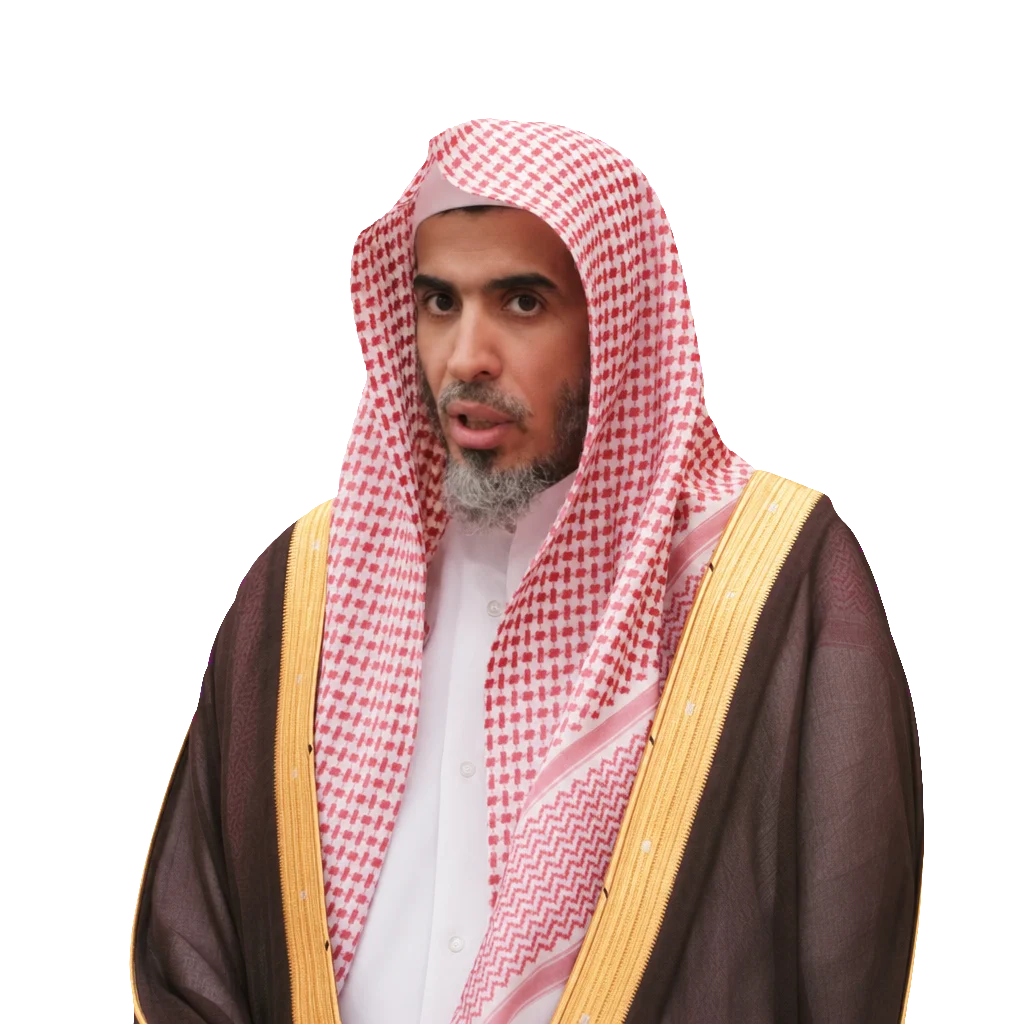
An explanation of the 36th Hadith of Imam al-Nawawi, focusing on the virtues of relieving the distress of fellow Muslims and seeking Islamic knowledge. The speaker highlights the blessings of gathering in the houses of Allah ﷻ to study the Quran and warns that noble lineage cannot compensate for a lack of righteous deeds.
As-salamu alaykum.
He (RH) said:
Hadith Thirty-Six:
On the authority of Abu Hurayrah (RA),
from the Prophet ﷺ, who said:
"Whoever relieves a believer of a worldly distress,
Allah ﷻ will relieve him of a distress on the Day of Resurrection.
Whoever eases one in difficulty, Allah ﷻ will ease for him in this world and the next.
Whoever conceals a Muslim's faults, Allah ﷻ will conceal his in this world and the next.
Allah ﷻ aids His servant so long as the servant aids his brother.
And whoever treads a path seeking knowledge, Allah will make easy for him a path to Paradise.
And no people gather in one of the houses of Allah, reciting the Book of Allah
and studying it among themselves, but tranquility descends upon them,
mercy envelops them, and the angels surround them,
and Allah mentions them among those who are with Him.”
"And he whose deeds slow him down, his lineage will not speed him up."
Narrated by Muslim with this wording.
This is the hadith of Abu Hurayrah (RA), which contains...
...multiple principles, including what relates to doing good to Muslims,
when the Prophet ﷺ said: "Whoever relieves a Muslim of a worldly distress,
Allah ﷻ will relieve him of a distress on the Day of Resurrection.
Whoever eases one in difficulty, Allah ﷻ will ease for him in this world and the next.
Whoever conceals a Muslim's faults, Allah ﷻ will conceal his in this world and the next.
Allah ﷻ aids His servant so long as the servant aids his brother.
This hadith also points to a principle: that the recompense is of the same kind as the deed.
For when a person performs an action, Allah ﷻ rewards him in this world and the next with the like of what he did.
Whoever does good to people, Allah ﷻ will do good to him,
and this is observed in many things,
and some scholars have written books on recompense being of the same nature as the deed.
The third rule from this Hadith regarding seeking knowledge
is that seeking knowledge is the path to Paradise. The Prophet ﷺ said:
"Whoever takes a path seeking knowledge, Allah will make easy for him a path to Paradise."
This shows us that the path to Paradise and Allah's pleasure is knowledge,
not as some people say, that the path to Islam and perfection is al-ilm al-ladunni.
Some people say this out of superstition and innovation,
and others say it out of glorifying intellects.
Both paths, even if they differ, their result is one.
The greatest path to the knowledge of Allah ﷻ is His revelation.
For Allah ﷻ has only made Himself and His perfect attributes known to us through this Book,
and through what the Prophet ﷺ informed about Him.
This is the path to knowledge of Allah ﷻ and to reaching His Paradise.
The path is not what some claim of ilm al-ladunni
which they acquire through spiritual exercises or contemplation.
Indeed, in our current era, there have been many calls
in many Muslim countries to revive contemplation through intellect
and reasoning, without looking into the source of Sharia, which is the two revelations: the Book and the Sunnah.
This points us to the third rule, which is that means are important.
For considering the means is important, not just the end result,
for the virtue of the means is derived from the virtue of the objective.
Thus, if the objective is noble, the means to it are also noble.
The Prophet ﷺ mentioned some of the primary means that lead to acquiring knowledge, saying:
"No people gather in a house of Allah, reciting and studying His Book, but tranquility descends upon them,"
We ask Allah ﷻ for His bounty.
"mercy envelops them, and the angels surround them,"
"and Allah mentions them to those in His presence; and Allah mentions them to those in His presence."
These are very, very great virtues.
His saying "in one of the houses of Allah" guides us to an important path:
one of the greatest ways of acquiring knowledge is for it to be in the mosques.
It was reported from some of the Salaf—I believe from the Tabi'un—
that he said, "This Ummah will continue to be in a good state
as long as knowledge is in the mosques."
Knowledge in the mosques is goodness, full of blessing.
Does the hadith not mention four virtues? That is why knowledge was in the mosque.
Knowledge in the mosque is the way of the scholars of Ahl al-Sunnah, because one speaks publicly.
If I make a mistake, you correct me.
If I am not correct, you alert me.
If I exceed the limit, you advise me.
Whereas he who brings his knowledge in the alleyways,
and brings it in private places, not showing it to everyone,
this person is subject to very many doubts.
He only speaks to those he deems ignorant and who agree with his whims because he has a deviance.
"This Ummah will remain in a good state as long as knowledge is in the mosques."
Its proof is the hadith mentioned earlier.
So strive to ensure knowledge remains in the mosque.
Your revision of the Quran,
your recitation to your Sheikh.
learning the Sunnah, and so on.
At the end of this hadith, the Prophet ﷺ said:
"He whose deeds slow him down, his lineage will not speed him up."
This lineage, boasting about it...
Boasting of noble descent and defaming lineages.
The Prophet ﷺ mentioned that they will remain in his Ummah until the Hour begins.
The Prophet ﷺ clarified his lineage; he did not dismiss it.
but he never boasted about it.
And likewise the righteous after him.
Some scholars said: "Ahmad never boasted of his lineage to us."
Lineage is merely an identification, just like your name.
Allah ﷻ named you with a name and associated you with a lineage.
So whoever is slowed down by their deeds, and whose deeds are slow,
and whose good deeds are weak, and whose obedience is deficient,
then by Allah, their lineage will not benefit them at all.
Even if he were descended from the best lineage,
meaning his fathers were from Quraysh and his mothers from the progeny of
Fatimah (RA), the daughter of the Prophet Muhammad ﷺ.
So the point is that whoever is like that,
if his deeds slow him down, he is in disgrace.
Indeed, the sons of the Companions killed a son of Abdullah bin Ja'far, the son of the Prophet's ﷺ cousin,
because he was a heretic who insulted Allah and His Messenger and apostatized, despite being the son of the Prophet's ﷺ cousin.
Whoever is slowed by his deeds will not be speeded up by his lineage.
No matter his lineage, even if he were Qurayshi — the best of lineages.
Yes. Peace be upon you.