The Role of the Council of Senior Scholars in Countering Deviant Groups
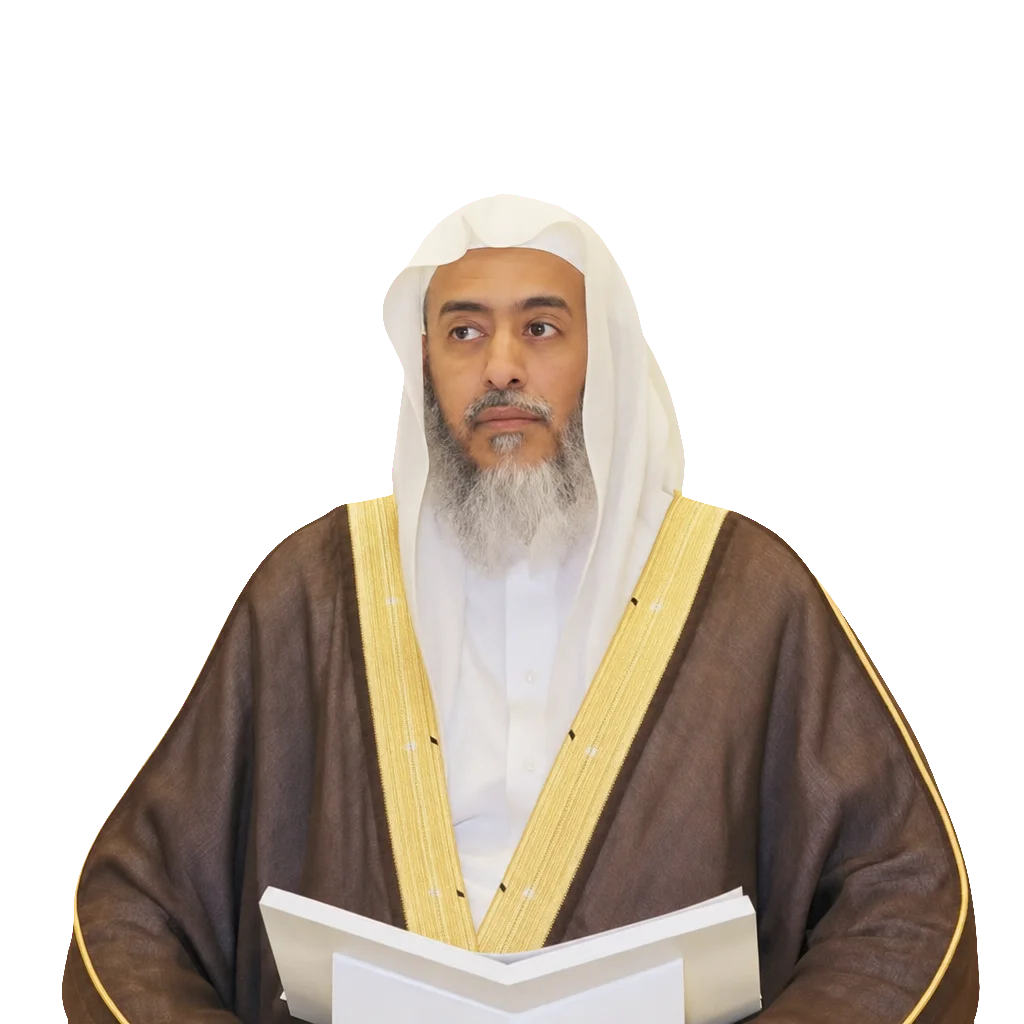
This lecture highlights the vital role of the Council of Senior Scholars in safeguarding the community. The speaker explains the Islamic duty to protect the intellect, preserve security, and uphold treaties, citing the warnings of the Prophet ﷺ against harming non-Muslims under treaty (Mu'ahid). He also warns against attempts to undermine the status of scholars.
May the peace, mercy, and blessings of Allah be upon you.
Praise be to Allah, who made the scholars the heirs of the Prophets,
and established them in their place in bringing glad tidings, warning, da'wah, and ifta.
I bear witness that there is no deity worthy of worship except Allah alone, without partner,
the true God to be worshipped,
and I bear witness that Muhammad ﷺ is His servant and Messenger,
who conveyed the message truthfully.
O Allah, send prayers upon Muhammad ﷺ and upon the family of Muhammad ﷺ,
as You sent prayers upon Ibrahim (AS) and his family; indeed, You are Praiseworthy and Honorable.
O Allah, send blessings upon Muhammad ﷺ and upon the family of Muhammad ﷺ,
as You sent blessings upon Abraham (AS) and upon the family of Abraham (AS); indeed, You are Praiseworthy and Honorable.
To proceed:
Indeed, safeguarding the intellect is one of the necessities of the Sharia,
by providing it with what strengthens and develops it,
and protecting and preserving it from what corrupts and weakens it.
And indeed, it is among the duties of the ruler in the Islamic state
to provide security of all kinds,
and among these kinds of security
intellectual security, which serves to preserve the intellect.
For if intellectual security is established,
it becomes possible to preserve the intellect by safeguarding it from what corrupts it,
and providing it with what strengthens and develops it.
This mission in the Islamic state is primarily undertaken by the ruler,
and then assumed by his deputies who assist him
in providing security of all types,
including intellectual security.
Among the deputies who assist the ruler
in providing intellectual security is the body of scholars,
and among them are the scholars who form the Council of Senior Scholars
in this country.
For they have a tangible contribution in preserving intellectual security.
The need arises to speak about them in this lecture
for three reasons.
First, to highlight their effort and that they stand
in the place of the Prophet ﷺ in the duty of conveying the message.
For when the Prophet ﷺ was sent to us,
the duty entrusted to him was to convey to us the ruling of Allah ﷻ.
And for this reason, His saying, the Exalted, was established in several places in the Quran:
“Say, "Obey Allāh and obey the Messenger; but if you turn away - then upon him is only that [duty] with which he has been charged, and upon you is that with which you have been charged. And if you obey him, you will be [rightly] guided. And there is not upon the Messenger except the [responsibility for] clear notification."” (Quran 24:54)
Furthermore, among those who carry the trust of conveying after the Prophet ﷺ are the scholars.
And part of the trust of conveying is what they do to preserve intellectual security.
The second is following their example,
for Allah ﷻ said:
“Those are the ones whom Allāh has guided, so from their guidance take an example. Say, "I ask of you for it [i.e., this message] no payment. It is not but a reminder for the worlds."” (Quran 6:90)
When students of knowledge in particular, and Muslims in general, realize
the commendable efforts of the senior scholars in maintaining intellectual security,
this will lead them to follow their example in striving to protect people
from the evils of thought that weaken and corrupt their realities of faith.
The third is complying with the principles they called to,
which encompass the preservation of intellectual security,
For the greatest benefit from the scholars lies in complying with what they call to.
Allah ﷻ said:
“And it is not for the believers to go forth [to battle] all at once. For there should separate from every division of them a group [remaining] to obtain understanding in the religion and warn [i.e.,
advise] their people when they return to them that they might be cautious.” (Quran 9:122)
The meaning of the verse is that marching forth for Jihad
is not prescribed for all believers; rather, there should march forth
“And it is not for the believers to go forth [to battle] all at once. For there should separate from every division of them a group [remaining] to obtain understanding in the religion and warn [i.e., advise] their people when they return to them that they might be cautious.” (Quran 9:122)
while another group remains behind to gain understanding of the religion,
so that when those who went out to Jihad return to them, they may teach them
by warning them against neglecting what they are commanded or forbidden.
Thus, one of the scholars' roles through which people benefit
is benefiting from their guidance and clarification, and complying with what they call to.
Indeed, among the terms common on the tongues of scholars,
past and present, is the term "senior scholars",
and this term is a genitive construction that has two contexts of application:
one of which is a sovereign office, and the other is a scholarly rank.
As for the first, which is the sovereign office, it is an official post
designated by the ruler in the Islamic state for whoever he appoints to this authority.
This principle regarding the functions of the Islamic state and the involvement of scholars in some of them
was pointed out by a group of experts, among them Ibn Khaldun in his book "Al-Muqaddimah".
al-Mawardi in "Al-Ahkam al-Sultaniyyah," and Ibn Tulun
in "Naqd al-Talib fi Zaghal al-Manasib."
Among these is the one who represents the ruler in the function of knowledge,
just as there are those who represent him in the function of judiciary or Hisbah.
Likewise, there are those who represent him in the function of knowledge and ifta,
and further explanation of this will follow.
As for the second context, which is the scholarly rank, it is realized through two characteristics:
one is the greatness of knowledge, and the other is the greatness of following.
As for the greatness of knowledge, it is the breadth of understanding of the Sharia sciences.
So you find the one described as such to be well-versed in the core sources of knowledge
in Hadith, Tafsir, Fiqh, and the auxiliary sciences serving them,
just as he combines with the greatness of knowledge the greatness of adherence by acting in accordance with it,
And the requirement of knowledge is not only action,
rather, Sharia has expressed it in multiple places in the Quran as 'following',
such as the saying of Allah ﷻ: “And this is My path, straight, so follow it”
such as the saying of Allah ﷻ: "And this is My path, straight, so follow it,"
“Then We revealed to you, [O Muḥammad], to follow the religion of Abraham, inclining toward truth; and he was not of those who associate with Allāh.” (Quran 16:123)
Therefore, in terms of scholarly rank, a person is not considered among the senior scholars
until he combines greatness of knowledge and greatness of following.
If his share of either of them is lacking, he has no share,
in reality, in this scholarly rank, which is the rank of the senior scholars.
The difference between the two aforementioned categories—the state office
and the scholarly rank—is in four aspects.
First, the state office is restricted by time or place,
whereas the scholarly rank is not restricted by any of that.
For it is correct, regarding the state office, to say
that so-and-so was formerly a member of the Council of Senior Scholars,
But regarding the scholarly rank, it cannot be said
of anyone who is among the senior scholars that he was formerly so.
Rather, whoever is characterized as a senior scholar by greatness of knowledge and greatness of following,
this title is never removed from him.
The second is that the first
is defined by the ruler's decree and dismissed by it,
as he is counted as such or not counted according to the ruler's decree.
As for the second, it is not determined by the ruler's decree,
but rather by the scholarly reality we mentioned: greatness of knowledge and adherence,
and likewise, this title is not stripped from him
as long as he is characterized by greatness of knowledge and adherence.
The third is that the first is exclusive to the ruler only,
for he is the one who appoints someone to the official post described as a senior scholar.
As for the scholarly rank, judging it is not up to the ruler,
but rather according to the ways by which it is known
whether so-and-so is a senior scholar or not.
This will be addressed at a later point in the discussion.
The fourth is that the first
which is the official post, may coexist with greatness of knowledge and greatness of following,
and sometimes it may not. As for the second, these two attributes must be present in it.
Because of this, someone might be considered one of the senior scholars
by virtue of academic rank and official post, and this...
“O you who have believed, whoever of you should revert from his religion - Allāh will bring forth [in place of them] a people He will love and who will love Him [who are] humble toward the believers, strong against the disbelievers; they strive in the cause of Allāh and do not fear the blame of a critic. That is the favor of Allāh; He bestows it upon whom He wills. And Allāh is all-Encompassing and Knowing.” (Quran 5:54)
And someone may be considered one of the senior scholars solely by virtue of the authority-appointed rank,
and someone may be considered one of the senior scholars solely by virtue of their scholarly rank.
Once this is clear,
when the exhortation to follow senior scholars is mentioned in the usage of the people of knowledge,
what is meant by them are those characterized by greatness in knowledge and adherence, even if they are not organized
within a body called the Council of Senior Scholars,
for this principle is one of the foundations of receiving knowledge and religion among Ahl al-Sunnah wa al-Jama'ah,
and that the follower of the Sharia follows the senior scholars.
This seniority refers to the description of greatness in knowledge and greatness in adherence, as we mentioned.
At that point, if this description is found along with the authority-appointed position, then this
is the most perfect of states, because his greatness in knowledge and adherence is joined by his special connection to the ruler.
This characteristic is not found in other scholars who might share with him greatness in knowledge and adherence.
These two sources of the aforementioned title, "Senior Scholars"—namely, as a state office...
...or a scholarly rank, are very ancient.
The second is older than the first, as it is found in the speech of the Companions (RA), the Successors, and those after them,
referring to them as "our elders" or "our seniors".
Indeed, they are also referred to by the term "Kibar al-Ulama" (senior scholars),
which is found in the speech of Al-Muzani, the companion of Al-Shafi'i,
and in the speech of Abu Abdillah Al-Hakim, the author of Al-Mustadrak.
As for using this title as an official state office,
it existed after the seventh century under the title "Shaykh al-Islam",
then it was later referred to as "Al-Mashyakha al-Islamiyyah",
then, about a hundred years ago, it was referred to as "Kibar al-Ulama".
Thus, the first body called the Council of Senior Scholars in the Islamic world was formed
in Egypt in the year 1911,
which roughly corresponds to the year 1330 AH.
After that, this title was adopted in the state structures of this country,
and among the state structures, there came to be what is called the Council of Senior Scholars.
What all people need, and students of knowledge in particular,
is to know the ways to identify senior scholars.
This is based on three comprehensive ways.
The first is widespread recognition, such that it becomes widely known among people
that so-and-so is considered one of the senior scholars,
so his status becomes, as the saying goes, 'something that not even two goats would butt heads over'
that so-and-so is counted among the senior scholars.
Thus, you find the old and the young, the learned and the ignorant,
flocking to attribute to him greatness in knowledge,
and that he is counted among the senior scholars.
Relying on al-istifadah is a valid method of proof in many Sharia rulings,
including this matter.
The second way is that he is described as such
based on his works that testify to his scholarship,
such that he has personal impact in teaching, issuing fatwas, being emulated, and followed,
and other such circumstances revolving around him
that definitively indicate he is among the senior scholars.
So whoever encounters these effects, such as teaching, writing, ifta, or otherwise,
will be certain that so-and-so is among the senior scholars.
The third is the designation by a reliable authority,
such that a scholar counted among the senior scholars
whose word is reliable designates that so-and-so is among the senior scholars.
This is restricted by two conditions: the first is
that the one granting him this title must possess it himself,
for none knows the ranks of the people of knowledge except one who is counted among them.
The second is that he must be someone whose word is reliable,
because some people are lenient with titles, applying them to just anyone.
In some Muslim countries, the title 'Allamah' is given to beginners
in seeking knowledge if one of them shows promise,
and they say they describe him as such out of optimism
that he might reach the rank of 'Allamah.
Therefore, such a designation is not taken into account unless
it comes from a reliable scholar.
These three ways we have mentioned are with respect to scholarly rank,
which is what is required by Sharia.
For it is known that a person is counted among the senior scholars
in terms of scholarly rank through these ways.
As for knowing whether he is counted as such in terms of official state appointment,
this is very easy.
One can simply look at the official decrees of the ruler to know
whether someone is a member of the Council of Senior Scholars or not.
The most important matter is knowing the best way
to count someone among the senior scholars,
based on scholarly rank, because this is a matter that has recently been corrupted.
So some people now include whoever they want among the senior scholars,
and exclude whoever they want from them.
This corruption occurring among people stems from three matters.
The first is the deficiency of the judge himself; you
will find a youth with no discernment
in knowing the ranks of the people of knowledge,
who is overcome by love for a scholar,
so he describes him as a senior scholar.
And perhaps he is obscure to him, so he does not describe him
as a senior scholar, even if he is indeed so.
The state of the deficient person cannot be used to know the state of the complete one.
So whoever is deficient cannot judge those who are complete,
for he might consider the complete deficient, or the deficient complete.
The second is following whims and desires,
where one may feel an affinity for someone due to a shared whim between them,
so he considers him one of the major scholars based on their shared whim,
whether in his country, his sect, or his party.
And you also find another who harbors resentment against him due to a conflicting whim,
so he does not consider him one of the major scholars, even if he is.
The third is considering personal interests—meaning the benefits that reach the one making this judgment.
Some people, if they receive a benefit from a scholar, say he is one of the major scholars,
but if they want to obtain a benefit from him and fail to get it,
they strip him of the title of major scholar,
even if he is indeed worthy of it.
Indeed, what brings peace to the hearts is knowing that religious titles are gifted, not earned.
They are gifts from Allah ﷻ to whom He wills of His servants.
Even if people gathered to give someone a title that he does not deserve,
Allah ﷻ would strip him of that title.
And even if people gathered to deny someone a title he deserves,
they would not be able to do so,
for the source of knowledge, which is prophethood, is a selection and choice from Allah Subhanahu wa Ta'ala,
and the scholars are the heirs of the Prophets. Indeed, Allah does not place the status of His heirs in the hands of people,
rather, the judgment is from Him, Subhanahu wa Ta'ala. To Him belongs all judgment, and He is the Most High, the Most Great.
Once what has been previously mentioned is clear to you,
regarding the title of "Senior Scholars" as a governmental appointment or an academic rank,
then those specifically designated to demonstrate their role in preserving
intellectual security are a group of scholars to whom the ruler gave this title,
so they were named the Council of Senior Scholars.
This council was established as one of the state institutions,
for an Islamic state needs those who advise the ruler,
and the people best suited to advise and give him counsel are the scholars.
For they possess knowledge of Sharia, along with sound intent and good will, that others do not.
Since the foundation of this state was based on Islamic Sharia,
the need arose to establish an institution called the Council of Senior Scholars.
Thus, a royal decree was issued on the eighth of Rajab, 1391 AH,
forming a scholarly body called the Council of Senior Scholars,
consisting of a number of senior specialists in Islamic Sharia,
who are selected by royal decree, and it is tasked with two matters:
one of which is expressing opinions on what is referred to it by the ruler,
and the other is making recommendations on religious issues related to establishing general rulings,
to guide the ruler.
This characterization in the Royal Decree defines its features,
concerning the nature of the Council of Senior Scholars and its assigned role.
This is clear in seven points.
First, it is a scholarly body,
it was formed to be a body concerned with clarifying knowledge
by the scholars who are its source.
A common mistake today is calling it the religious institution
or the highest religious institution in the state.
For the term "religious institution" is acceptable in a secular state
which divides state institutions into religious and non-religious.
As for a state established on Sharia,
there is no term "religious institution" for any of its institutions,
rather, all state institutions, based on their founding principle, are religious.
It is permissible to call it a Sharia institution,
as it is concerned with clarifying Sharia rulings,
but it is never correct to call it a religious institution.
Second, it is linked to the ruler, reflecting the high
standing and great status among state institutions.
Third, it provides counsel on what is referred to it by the ruler,
or takes the initiative to make recommendations on religious issues related to establishing general rulings.
Fourth,
it does not issue general fatwas on private matters of
government entities or personal affairs of individuals,
as this is the mandate of the Permanent Committee branching from this Council.
Fifth, it is an independent body,
meaning it issues its decisions through consultation
among its members, and nothing is dictated to it from the outside.
The meaning of independence in Sharia is the servant's servitude to Allah ﷻ,
such that there is no servitude in his heart to anyone—neither to a ruler nor to a subject.
And whoever imagines that independence means the scholar should be disconnected from the ruler,
this is a modern definition of independence that is hardly found today,
For that scholar who remains far from any connection to the ruler
is still considered a citizen under his sovereign rule.
Therefore, what are called today ifta or scholarly bodies
that claim no state affiliation have no validity,
for they cannot operate in any country in the world
except by its permission and according to its regulations.
The best of these bodies is the one that has permission
from a Muslim state like this country,
and whose members practice their work according to Islamic Sharia.
Sixth, it is not an executive body;
rather, it is an advisory body to the ruler.
Seventh, the recommendations and decisions attributed to it
are those presented to its council,
and the decision or statement is issued by its members.
Therefore, nothing else is attributed to it, nor to them.
For example, what is issued by the Permanent Committee, or by the General Secretariat of the Council of Senior Scholars,
or by one of the members of the Council of Senior Scholars,
cannot be said to be decided by the Council of Senior Scholars.
For instance, what is issued by the Permanent Committee is attributed to the Permanent Committee,
and not to the Council of Senior Scholars.
Similarly, what is issued by the General Secretariat of the Council of Senior Scholars
is attributed to the Secretariat, and not to the Council of Senior Scholars.
Likewise, what is issued by a single member of the Council of Senior Scholars is attributed to him alone.
Once you know this, you will recognize the academic and media error common today,
when something issued by what we mentioned is attributed to the Council of Senior...
Scholars.
Indeed, whoever looks into this Council
must recognize the right of this Council over the people
and the right of the people over this Council.
As for the right of the Council of Senior Scholars over the people,
it stems from knowing that they are a group of scholars who perform ijtihad,
even if it is a partial ijtihad on a matter to determine the ruling of Allah ﷻ,
and this requires establishing two great principles: one is respecting them and honoring their standing,
and the other is refraining from disputing with them or defaming them.
These two principles stem from two matters:
one is the presence of the attribute of knowledge in them, even if it varies or is little in one of them,
for the presence of this attribute requires respecting him and recognizing his status,
and the other is that they are among those delegated by the ruler, chosen by a royal
decree. So opposing them is a form of disputing the ruler,
And this falls under the Hadith of Awf ibn Malik in Sahih Muslim, that the Prophet ﷺ said:
“Will you leave my commanders alone for me?”
And his ﷺ commanders were those whom he gave
direct command over an army, a detachment, or otherwise.
The term 'Amir' in its modern usage is a recent term to which the Sharia definition of 'Amir' does not apply.
For the Sharia definition of 'Amir' is whoever the ruler delegates authority to, to act on his behalf.
Among these are the members of the Council of Senior Scholars,
for they are delegated by the ruler to clarify what is referred to them,
along with the recommendations they submit to them regarding religious rulings on public matters.
And if you examine the state of people today, you will find
many errors spreading among them that violate these two mentioned principles.
Among the manifestations found among people
is dictating to the Council of Senior Scholars.
You find so-and-so and so-and-so talking
about directives that the Council of Senior Scholars should follow,
and that they must do this and that, or say this and that.
This is something that violates respecting them and refraining from disputing with them.
Likewise, you find among the manifestations the call to undermine their status,
which some have called "stripping away sanctity."
For some people seek to undermine the status of this Council,
because undermining the scholars leads to undermining what follows them.
For if the moral value of the scholars in the Ummah falls, it becomes easy after that
to undermine many religious truths.
They are a strong wall and a fortified fortress against many things.
Among these manifestations are also the arbitrary accusations spread by some people, which are contrary to reality.
You find some people accusing the Council of being one-sided, even though its decisions are issued by majority vote.
So its decisions are issued based on the majority of votes. Furthermore, its internal regulations...
...request dissenting members to write down their
views and the evidence that led them to dissent.
Therefore, it is not one-sided in the decisions it makes.
Likewise, if you examine the research of the Council of Senior Scholars,
you will see its broad perspective on the followed madhhabs,
and the examination of evidence and ways of reasoning,
which refutes the accusation that they are one-sided in their views.
Another accusation mentioned by some people is that it is a regional council, meaning it is restricted to one region.
And if they think this based on...
If they mean its location, headquarters, and place of residence, then yes.
But in terms of its members, throughout the history of this Council,
there have been members from many regions of the Kingdom.
There were members from the region of Makkah al-Mukarramah,
members from al-Madinah an-Nabawiyyah, Riyadh, Qassim, Jazan, and Abha,
which refutes the accusation of regionalism.
Among the accusations mentioned by some is that it is limited in scope and scarce in knowledge.
This stems from their lack of knowledge about its members.
For among the members of this Council are those who possess private libraries
unmatched by those intellectuals and thinkers who accuse them of lacking knowledge.
Likewise, they read to an extent that others do not.
One of its members, Sheikh Saleh bin Muhammad al-Luhaydan (may Allah preserve him),
read a book of literature, which is far from the specialization of this committee's work,
namely the book of "al-Aghani", seven times.
If one of its members has done this with a book of literature,
which most of those speaking today on culture and thought have not read even once,
you realize that whoever makes this accusation does not know their true reality,
and that they have a grasp of contemporary cultures, like sociology and psychology,
which many of those who accuse them do not possess.
In addition to these accusations, the bylaws of the Council's work...
require the presence of economic or social specialists to consult their opinions,
perhaps one or more, depending on what the situation requires,
so a ruling cannot be rushed on these issues without referring to those specialists.
Another accusation circulated is that the Council of Senior Scholars is politicized,
Even if they say it follows the ruler's policy, this falls under obeying the ruler.
So if the ruler has a policy, domestically or internationally, that is in accordance with what is right,
then those under this authority are commanded to obey the ruler.
And if they mean that these scholars accept what
they call the ruler's political imposition,
and that he dictates to them, then this is absolutely non-existent.
This is one of the oldest members of the Council of Senior Scholars,
Sheikh Saleh bin Muhammad al-Luhaydan,
and his tenure in the Council has now approached 48 years.
He mentioned—and he is truthful—
that not once was it mentioned to them—in the Council of Senior Scholars or elsewhere—
"say it this way" or "write it this way."
So who claims that the Council was told: "say it thus" and it complied, or "write it thus" and it complied—
through its council session— this is a lie,
with absolutely no basis in truth.
Among the accusations promoted by some people is the claim that it has been infiltrated by banned groups.
If the claimant of this allegation is truthful,
then out of sincere advice to the ruler, he must submit these proofs to the ruler.
Once he submits them to the ruler, he has cleared his conscience.
If something becomes clear to the ruler, yet he leaves the matter as it is, then the ruler must still be obeyed.
For the ruler has a perspective on the public interests of Muslims that no one else has,
and others must obey him.
Such a claim only leads to two cunning agendas:
One is promoting banned groups by claiming that so-and-so and
so-and-so from the Council of Senior Scholars belong to them.
Then the commoner would say, "If these scholars belong to those groups, then those groups must be on the truth."
Paired with it is another cunning agenda:
that aims to undermine the status of the Council of Senior Scholars,
to devalue it in the hearts of the people,
and thereby, evil ideas and false beliefs are spread among the people,
under the pretext that this Council is not fit to have its statements accepted.
For this reason, the ruler proceeded to issue a royal decree
on the 13th of Rabi' al-Thani, 1432 AH,
warning against criticizing or offending the Grand Mufti
or the members of the Council of Senior Scholars.
As for the right of the people upon the Council of Senior Scholars,
the Senior Scholars have such a connection with the ruler
that makes them the people most worthy of advising him,
and they must comply with his saying ﷺ, "Religion is sincere advice."
We said, "To whom?"
He said: "To Allah, His Book, His Messenger, and to the leaders of the Muslims and their common folk." Narrated by Muslim.
And they offer sincere advice to the ruler in authority according to the Sharia-prescribed and pleasing method.
For they do not publicize before the people their advising of the ruler, nor do they speak about it,
because the beneficial method of advising is the one they followed in adherence to the Salaf,
which is addressing the ruler in authority privately between him and them, and not informing the people about that.
And they are likewise keen to bring the people closer to the ruler in authority,
and to remind him to show them mercy and compassion, and to look after them with care.
Once this is established, then this body—which is the Council of Senior Scholars—
had a prominent role in preserving intellectual security by calling to many principles
published in statements over twenty years, from the year 1412 AH to this day.
Many scholars participated in drafting them, including...
“Among the believers are men true to what they promised Allāh. Among them is he who has fulfilled his vow [to the death], and among them is he who awaits [his chance]. And they did not alter [the terms of their commitment] by any alteration -” (Quran 33:23)
Among them were our Sheikh, Abdul Aziz bin Abdullah bin Baz, and Sheikh Muhammad bin Salih bin Uthaymeen,
Sheikh Salih bin Abdul Rahman al-Atrash, and Sheikh Salih bin Fawzan al-Fawzan,
Sheikh Abdullah bin Abdul Rahman bin Ghudayyan, and Sheikh Salih bin Ghusun,
and Sheikh Salih bin Muhammad bin Haydar. May Allah ﷻ have mercy on the deceased and preserve the living.
And others besides them participated in formulating a set of
principles that help preserve intellectual security.
The first principle is calling to adhere to the upright religion,
and walking upon the straight path based on the Book and the Sunnah,
according to the understanding of the Companions (RA) and those who followed them in righteousness.
These principles that I am mentioning are almost in the exact wording of their statements.
This principle
which they called to is the confirmation of the saying of Allah ﷻ:
"And, indeed, this is My path..."
“And, [moreover], this is My path, which is straight, so follow it; and do not follow [other] ways, for you will be separated from His way. This has He instructed you that you may become righteous.” (Quran 6:153)
The second principle is emphasizing the obligation of rallying
around the leadership of this country and its scholars.
This is further emphasized in times of tribulations.
This is confirmed by the saying of Allah ﷻ:
“And when there comes to them something [i.e., information] about [public] security or fear, they spread it around. But if they had referred it back to the Messenger or to those of authority among them,
then the ones who [can] draw correct conclusions from it would have known about it. And if not for the favor of Allāh upon you and His mercy, you would have followed Satan, except for a few.” (Quran 4:83)
Allah ﷻ commanded the believers, when something regarding security or fear occurs,
to refer it to the Messenger ﷺ, referring it to him while he was alive,
and to his Sunnah ﷺ after his death,
and to also refer it to those in authority, meaning those in charge.
Authority in this Ummah revolves around governance and fatwa,
governance belongs to the rulers, and fatwa belongs to the scholars.
The third principle is the affirmation that the religion of Islam commanded unity,
and Allah ﷻ made that obligatory in His Book, and forbade division.
It is known from the religion by necessity that adhering to the main body is obligatory.
This is confirmed by the saying of Allah ﷻ:
“And hold firmly to the rope of Allāh all together and do not become divided. And remember the favor of Allāh upon you - when you were enemies and He brought your hearts together and you became, by His favor, brothers. And you were on the edge of a pit of the Fire, and He saved you from it. Thus does Allāh make clear to you His verses that you may be guided.” (Quran 3:103)
In the interpretation of a group of the Salaf, they mentioned that 'the rope of Allah' here is the Jama'ah.
And the verses and Hadiths regarding this meaning are numerous.
The fourth principle is urging obedience to whoever takes charge of the leadership of the Muslims in what is right,
for Allah ﷻ said: "O you...
“O you who have believed, obey Allāh and obey the Messenger and those in authority among you. And if you disagree over anything, refer it to Allāh and the Messenger, if you should believe in Allāh and the Last Day. That is the best [way] and best in result.” (Quran 4:59)
It is obligatory upon the servant to obey the ruler
whom Allah ﷻ has placed in authority over us, in what is right.
And the fifth principle is
clarifying the prohibition of attacking protected lives
of Muslims and covenanted non-Muslims, and their wealth as well,
for Allah ﷻ said:
“But whoever kills a believer intentionally - his recompense is Hell, wherein he will abide eternally, and Allāh has become angry with him and has cursed him and has prepared for him a great punishment.” (Quran 4:93)
And in Sahih al-Bukhari, from the hadith of 'Abdullah bin 'Amr (RA),
the Prophet ﷺ said:
"Whoever kills a Mu'ahid will not smell the fragrance of Paradise."
This demonstrates the heinousness of attacking what is protected of life or property.
The sixth principle is the severe prohibition of violating the sanctities of religion
regarding lives, wealth, security, and stability,
because Allah ﷻ has made the believers sacred to one another.
And in the Sahih, the Prophet ﷺ said:
"Every Muslim is sacred to another Muslim: his blood, his wealth, and his honor."
The seventh principle:
is that these criminal acts committed by some people,
such as bombings, killings, and so on,
necessarily involve various types of prohibitions in Islam,
such as treachery, betrayal, and transgression.
criminality, and terrorizing Muslims and others.
All of these are evils rejected and detested by Allah ﷻ, His Messenger ﷺ, and the believers.
For indeed, Allah ﷻ said:
“If you [have reason to] fear from a people betrayal, throw [their treaty] back to them, [putting you] on equal terms. Indeed, Allāh does not like traitors.” (Quran 8:58)
And the Exalted said:
“Fight in the way of Allāh those who fight against you but do not transgress. Indeed, Allāh does not like transgressors.” (Quran 2:190)
And the Most High said:
“And do not argue on behalf of those who deceive themselves. Indeed, Allāh loves not one who is a habitually sinful deceiver.” (Quran 4:107)
The eighth principle:
Refuting the claim of those who claim that these acts of destruction and what
is intended by them of bombing and killing is jihad,
they are not jihad in the cause of Allah ﷻ
in any way. Rather, they are corruption, destruction, and clear misguidance.
And people must fear Allah ﷻ,
and whoever has fallen into them must turn back from them,
and not be led by corrupt phrases and slogans
raised to divide the Ummah and drive it to corruption,
while they are not truly part of the religion.
These people have a share of Allah the Exalted's saying:
“That is because they say, "Never will the Fire touch us except for [a few] numbered days," and [because] they were deluded in their religion by what they were inventing.” (Quran 3:24)
And His saying, the Most High:
“Then is one to whom the evil of his deed has been made attractive so he considers it good [like one rightly guided]? For indeed, Allāh sends astray whom He wills and guides whom He wills. So do not let yourself perish over them in regret. Indeed, Allāh is Knowing of what they do.” (Quran 35:8)
The ninth principle is defining that whoever is legally proven to have committed
an act of sabotage and corruption in the land,
which destabilizes security by attacking lives and private and public property,
such as bombing homes, mosques, schools, hospitals, or factories,
bridges, weapons depots, water resources, or public utilities,
such as oil pipelines, or hijacking and bombing airplanes, and the like,
their punishment is death.
For Allah ﷻ has strictly forbidden spreading corruption in the land.
Those mentioned acts in their statement are forms of corruption in the land.
Indeed, it is as they said, because the danger of those who carry out sabotage
and their harm is greater than the danger and harm of a highway robber
who attacks a person, killing them or taking their wealth.
And Allah ﷻ has decreed for him the punishment mentioned in the verse of Hirabah.
The tenth principle is declaring that Islam is innocent of these actions,
and that every Muslim who believes in Allah ﷻ and the Last Day is innocent of them.
Rather, it is the behavior of someone with deviant thought and a straying creed,
so he bears his sin and crime; his action is not attributed to Islam,
nor to the Muslims guided by the guidance of Islam,
who hold fast to the Book and Sunnah and cling to the firm rope of Allah ﷻ.
Rather, it is sheer corruption and criminality rejected by Sharia and human nature.
For this reason, the texts of Sharia came decisively forbidding it,
and warning against associating with its people.
So those who attribute these actions to Islam
are like those mentioned by Allah ﷻ in His saying:
“And indeed, there is among them a party who alter the Scripture with their tongues so you may think it is from the Scripture, but it is not from the Scripture. And they say, "This is from Allāh," but it is not from Allāh. And they speak untruth about Allāh while they know.” (Quran 3:78)
“And indeed, there is among them a party who alter the Scripture with their tongues so you may think it is from the Scripture, but it is not from the Scripture. And they say, "This is from Allāh," but it is not from Allāh. And they speak untruth about Allāh while they know.” (Quran 3:78)
“And indeed, there is among them a party who alter the Scripture with their tongues so you may think it is from the Scripture, but it is not from the Scripture. And they say, "This is from Allāh," but it is not from Allāh. And they speak untruth about Allāh while they know.” (Quran 3:78)
And He, the Exalted, said:
“Say, "Indeed, those who invent falsehood about Allāh will not succeed."” (Quran 10:69)
The eleventh principle: Warning against the plots of Satan,
for he continues to entice the servant until he throws him into destruction,
either through extremism in religion, or through turning away from it and fighting it—we seek refuge in Allah.
And Satan does not care which of the two he wins from the servant,
because both paths—extremism and turning away—are from Satan's ways, which plunge their follower into the wrath of the Most Merciful.
And Allah ﷻ said: "And do not follow the footsteps of Satan. Indeed, he is to you a clear enemy."
The thirteenth principle:
Supporting the state's efforts in tracking down this deviant group
and exposing them to protect the land and the people from their evil,
and to ward off fitnah from the lands of Muslims and protect their unity.
This is confirmed by the fact that the most merciful of creation to creation, Muhammad ﷺ,
when he mentioned the Kharijites in the Sahih, said: "If I were to reach them, I would surely kill them like the killing of ʿĀd,"
and that is due to the greatness of their evil, and because their evil cannot be repelled from the Muslims except by the likes of this.
The fourteenth principle is advising all Muslims
to cooperate in eliminating these dangerous phenomena,
because that is part of cooperating in righteousness and piety,
and Allah ﷻ has said:
“O you who have believed, do not violate the rites of Allāh or [the sanctity of] the sacred month or [neglect the marking of] the sacrificial animals and garlanding [them] or [violate the safety of] those coming to the Sacred House seeking bounty from their Lord and [His] approval. But when you come out of iḥrām, then [you may] hunt. And do not let the hatred of a people for having obstructed you from al-Masjid al-Ḥarām lead you to transgress. And cooperate in righteousness and piety, but do not cooperate in sin and aggression. And fear Allāh; indeed, Allāh is severe in penalty.” (Quran 5:2)
...and aggression." And the Prophet ﷺ said:
"Allah has cursed the one who shelters an innovator/wrongdoer."
Among those who fall under the term 'wrongdoer' is anyone who strives to cause corruption in the land.
The fourteenth principle:
Warning against the enemies gaining power over the Islamic Ummah,
and that the enemies rejoice at the pretexts that justify humiliating Muslims and exploiting their resources.
So whoever assists them in their goal has assisted in undermining Muslims and gaining power over their countries.
And Allah Almighty has said: "Indeed, the disbelievers are ever to you a clear enemy."
The fifteenth principle:
Explaining the danger of Takfir and warning against laxity in pronouncing it.
Just as declaring things lawful, prohibited,
or obligatory is a judgment that belongs to Allah and His Messenger ﷺ, so too is Takfir.
And not everyone who is described...
as disbelief, whether a statement or action,
expels its doer from the fold of Islam.
So whoever dares to do this should be deterred by the words of Allah ﷻ:
“And do not say about what your tongues assert of untruth, "This is lawful and this is unlawful," to invent falsehood about Allāh. Indeed, those who invent falsehood about Allāh will not succeed.” (Quran 16:116)
A servant is forbidden from saying 'halal' or 'haram' regarding any matter,
so how about when the matter is greater than that,
which is judging someone to have left the fold of Islam and become an apostate disbeliever?
The sixteenth principle:
emphasizing that declaring the rulers to be disbelievers is more severe, because of what it leads to of
rebellion against them, bearing arms, spreading chaos,
shedding blood, and corrupting the land and its people.
For this reason, the Prophet ﷺ was strict in this matter and said:
"...unless you see open disbelief, for which you have a proof from Allah."
All of these are constraints that show the gravity of the matter.
They said: His saying ﷺ,
"...unless you see" means that mere suspicion and rumors are not enough.
His saying 'disbelief' indicates that transgression is not enough,
even if it is a major sin, such as injustice, drinking alcohol, and gambling.
And his saying 'open' indicates that disbelief that is not open—meaning explicit and manifest—is not enough.
And his saying 'for which you have a proof from Allah' indicates that there must be a clear proof,
such that it is authentic in transmission and explicit in meaning,
So, a proof with a weak chain is not sufficient, nor is one with an obscure meaning.
His saying 'from Allah' indicates that no consideration is given to the opinion of
any scholar, no matter how high his status in knowledge and trustworthiness, if
his statement has no clear proof from the Book of Allah or the Sunnah of His Messenger ﷺ,
end of his words — and it is a beneficial clarification of the meaning of this hadith.
The seventeenth principle: having a good opinion of the scholars.
and learning from them, and preventing the plots of the enemies
to separate the youth of the Ummah from its scholars and rulers.
For indeed, there is no way to know the religion except by learning from its people.
And if someone wanted to turn to books to extract his religion from them,
it would not be a straight path. For the books of the People of the Book
were in their hands during the time of the Prophet ﷺ until this day of ours,
yet they were not a guidance for them. So people are in need of scholars who
guide them and direct them to the ruling of Allah ﷻ,
so the basis of learning the religion became receiving it from the scholars,
and this is mentioned in the hadith narrated by Abu Dawud from Ibn Abbas (RA),
that the Prophet ﷺ
said, "You hear, and people will hear from you,
and people will hear from those who hear from you."
And this receiving of knowledge cannot be correct and blessed unless it is accompanied by thinking well of the scholars,
rather, thinking well of Allah ﷻ,
For indeed, it is a form of thinking ill of Allah ﷻ that occurs in the hearts of some people, that Allah...
would preserve His religion through one not trustworthy in preserving it.
For this is indeed part of thinking ill of Allah ﷻ.
The eighteenth principle: Denouncing the fatwas and views that justify this criminality
or encourage it, as it is one of the most dangerous and heinous matters.
And Allah ﷻ has magnified the gravity of giving fatwas without knowledge, and warned His servants against it,
and made it clear that this is from the command of Satan.
The nineteenth principle:
Whoever issues such fatwas or views that justify this criminality,
then the ruler must refer him to the judiciary.
so that the judicial ruling may be applied to him and the like,
out of sincerity to the Ummah, to clear one's conscience, and to protect the religion.
The nineteenth or twentieth principle
is that one of the most important duties upon those whom Allah ﷻ has given knowledge
is to warn against false statements, clarify their corruption, and expose their falsehood,
for this is part of complete sincerity to Allah ﷻ, His Book, and His Messenger ﷺ,
and to the leaders of the Muslims and their common folk.
This warning is entrusted to the firmly grounded scholars
who observe the rulings of Sharia and the regulations of the ruler.
For the matter of warning and clarifying the state of the people of misguidance
differs between a state of innovation and a state of Sunnah.
Thus, the rulings that were applied in a state of innovation, like the Abbasid state
during the era of Imam Ahmad, do not apply to the rulings in a state of Sunnah, like the Kingdom of Saudi Arabia.
This principle was established in accordance with the Sunnah during the Umayyad state,
when what happened occurred with Umar ibn Abd al-Aziz (RH) regarding Ghaylan,
and Khalid al-Qasri with al-Jahm during the Umayyad era.
it is a mistake made today not to differentiate between applying this principle in a state of Sunnah and bid'ah,
and failing to observe the regulations of the ruler that define this.
The ruler may accept something related to these regulations from one of the scholars
whose knowledge and trustworthiness he trusts, but he would not accept it from others.
For indeed, he would accept Sheikh Ibn Baz (RH), for example, saying something of this nature about a specific person,
because if the grievance is raised to the ruler,
and then it is made clear to the ruler that the one saying it is...
Sheikh Ibn Baz (RH).
The response was, "We know this man's piety and honesty, and trust his word,
so he is not a suspect; the suspect is the one about whom this was said."
Later, this principle became corrupted,
and people began to speak according to their whims, opinions, and desires,
and according to how tight or at ease their chests feel.
And this is a dangerous matter.
Ibn Daqiq al-Eid (RH) mentioned that the honor of Muslims
is a pit of Hellfire, at the edge of which stand rulers and scholars.
So one must follow the Sharia method and the paths observed by Sharia and law,
so that Muslims may benefit from what he produces in this regard.
Not just to be called a defender of the Sunnah,
for the defender of the Sunnah is the one who defends it according to the Sunnah.
A person may stand up to defend
the Sunnah in a manner contrary to the Sunnah.
As long as this country is preserved—praise be to Allah ﷻ— with scholars trusted by the people,
who possess the qualities of knowledge and adherence,
then clearing one's conscience lies in referring all of this to them,
and a person's conscience is cleared when they refer this matter to them,
and raise it to them, seeking advice from them for the Muslims.
The twenty-first principle:
is that the ruler must prevent those who dare to attack religion and scholars,
and who beautify complacency in matters of religion and audacity against it and its people,
and who link what occurred to being religious,
and that what is written by some writers linking
these destructive acts to educational curricula,
or exploiting these events to undermine the foundations of this blessed state,
established upon the creed of the righteous predecessors,
and to undermine the reformist call established by Sheikh al-Islam Muhammad ibn Abd al-Wahhab (RH).
All of this is among the paths of misguidance and corruption that must be prevented.
The twenty-second principle: warning against evil whispers and paths of intellectual deviance,
doctrinal corruption, and destructive trends;
for the soul is prone to evil, and if given free rein,
it will go down every path of vice and wickedness.
The twenty-third principle: caring for Sharia knowledge,
grounded in the Book and the Sunnah,
according to the path of the Salaf of the Ummah;
disseminating it in schools, universities, mosques, and the media;
as it is a great fortress against falling into fitnah.
The twenty-fourth principle: the duty of raising the youth and young generation
upon this upright methodology and straight path,
so that they may be saved, by the success granted by Allah ﷻ, from corrupt trends,
and from the influence of callers to misguidance, fitnah, and division;
and so that Allah ﷻ may benefit the Islamic Ummah through them,
and be among the bearers of knowledge and heirs of the Prophets,
and people of goodness, righteousness, and guidance.
The twenty-fifth principle:
is paying attention to enjoining good, forbidding evil, and advising to the truth.
For the need, rather the necessity, for it now is greater than at any time in the past,
And Allah ﷻ has said: "The believing men and believing women..."
“The believing men and believing women are allies of one another. They enjoin what is right and forbid what is wrong and establish prayer and give zakāh and obey Allāh and His Messenger. Those - Allāh will have mercy upon them. Indeed, Allāh is Exalted in Might and Wise.” (Quran 9:71)
It is obligatory upon all Muslims to recommend the truth and advise one another,
and to cooperate in righteousness and piety, enjoining good and forbidding evil.
The twenty-sixth principle:
to remind everyone, both rulers and the ruled,
of the evil consequences of sins and complacency regarding the command of Allah ﷻ.
For the matter of sins is grave, and indeed Allah ﷻ punishes people for their sins.
He said: 'Because of their sins they were drowned and put into the Fire,'
And He said: 'Why [is it that] when a disaster struck you...'
“Why [is it that] when a [single] disaster struck you [on the day of Uḥud], although you had struck [the enemy in the battle of Badr] with one twice as great, you said, "From where is this?" Say, "It is from yourselves [i.e., due to your sin]." Indeed, Allāh is over all things competent.” (Quran 3:165)
and remain steadfast upon Allah's command, establish their religion's rituals, enjoin good and forbid evil.
And Muslims must fear Allah in private and in public, and offer sincere repentance from all sins,
for no calamity descends except due to a sin, and it is not lifted except through repentance.
These are a number of principles related to preserving intellectual security,
numbering twenty-some principles,
all of which demonstrate that spreading these principles,
acting upon them, establishing them, and calling to them
is what preserves intellectual security,
and that the scholars have participated in defining these principles and guiding towards them.
O Allah, protect us with Islam while standing, protect us with Islam while sitting, and protect us with Islam while sleeping.
O Allah, preserve for this country its religion, its worldly affairs, its faith, and its security.
O Allah, grant success to its rulers to act according to Your Sharia and to follow Your Prophet Muhammad ﷺ.
O Allah, inspire us with guidance and protect us from the evil of ourselves.
O Allah, grant our souls their piety and purify them — You are the best to purify them, their Guardian and Master.
And praise be to Allah, Lord of the worlds,
and may Allah's peace and blessings be upon His servant and Messenger Muhammad ﷺ, his family, and all his companions.
And I remind you that tomorrow after Fajr and after Asr,
there will be here an explanation of the book "Ad-Da'i ila Khayr al-Masa'i",
and this book will be distributed in the study circle.
And Allah is the Granter of success. The conclusion: And praise be to Allah, first and last.