Understanding the Importance of Intellectual Security in Islam
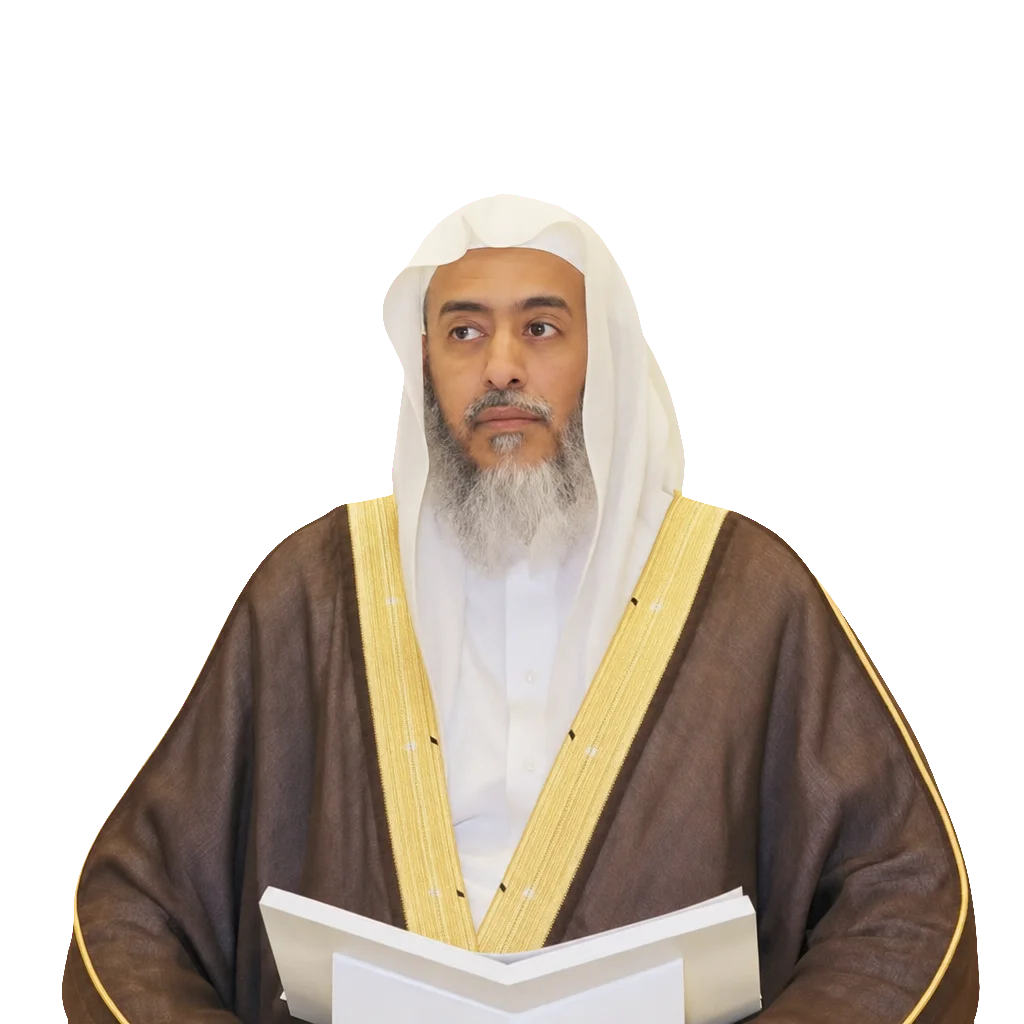
This lecture addresses the vital concept of intellectual security (al-amn al-fikri) and its role in safeguarding a Muslim's mind and faith from deviances. The speaker explains how grounding oneself in the Quran and the Sunnah of the Prophet Muhammad ﷺ protects the heart from hastiness, misguidance, and extremist ideologies.
Peace be upon you, and the mercy of Allah ﷻ and His blessings.
Praise be to Allah ﷻ, Lord of the worlds, Lord of the heavens and the earth, Lord of the Great Throne.
I bear witness that there is no deity except Allah ﷻ alone, without partner,
and I bear witness that Muhammad ﷺ is His servant and Messenger.
O Allah ﷻ, send prayers upon Muhammad ﷺ and the family of Muhammad ﷺ,
as You sent prayers upon Ibrahim (AS) and his family. Indeed, You are Praiseworthy and Glorious.
O Allah ﷻ, bless Muhammad ﷺ and the family of Muhammad ﷺ,
as You blessed Abraham (AS) and the family of Abraham (AS). Indeed, You are Praiseworthy and Glorious.
To proceed:
Indeed, Allah ﷻ, Glorified and Exalted be He, has favored us
with the sending of Muhammad ﷺ,
sending him to us as a bringer of glad tidings,
“O Prophet, indeed We have sent you as a witness and a bringer of good tidings and a warner”
“And one who invites to Allāh, by His permission, and an illuminating lamp.” (Quran 33:45-46)
Through him, Allah ﷻ guided hearts and united them,
and directed them to their comprehensive interests in this world and the Hereafter,
both immediate and future.
Indeed, Allah ﷻ has reserved for this Ummah what was not given to others,
of the light of revelation and its guidance.
For He revealed to Muhammad ﷺ the best of His Books, which is the Quran,
and He made for him ﷺ the most perfect of His religion, which is Islam.
Thus, there combined in what was revealed of the words of Allah,
and what the Prophet ﷺ was given of the perfection of religion,
the complete light of revelation by which people are guided.
And this luminosity present in revelation is what is referred to as knowledge.
For the Prophet ﷺ came to us with the greatest knowledge from the words of Allah,
and his own words ﷺ.
And he indicated that among the signs of Allah ﷻ willing good for His servant is that He grants him success in this.
For in the Sahihayn, from the Hadith of Mu'awiyah (RA), the Prophet ﷺ said:
“Whomever Allah ﷻ wishes good for, He grants him fiqh in the religion,”
meaning, in what the Prophet ﷺ brought.
And the religion that the Prophet ﷺ brought
refers back to the Quran and his Sunnah ﷺ.
So he brought this religion to us.
So whoever accepts it and acts upon it acquires the description of having fiqh in the religion,
and becomes one of those for whom Allah ﷻ wishes good.
For the term 'fiqh' is not restricted to mere knowledge; rather, it must be accompanied by action.
Ibn al-Qayyim (RH) related in
Miftah Dar al-Sa'adah the consensus of the Salaf that the term "fiqh"
does not apply except with knowledge and action.
So if a servant is guided to the knowledge of the religion brought by the Prophet ﷺ
in the Quran and Sunnah, and then acts upon it, he becomes a faqih in the religion.
For the levels of understanding the address of the Sharia are three:
The first is knowledge, which is understanding the address of the Sharia.
The second is fiqh, which is understanding the address of the Sharia and acting upon it.
And the third is ta'wil, which is understanding the address of the Sharia and acting upon it,
along with knowing the outcomes of matters.
This was mentioned by Ibn al-Qayyim in Miftah Dar al-Sa'adah and Ibn Sa'di in Majmu' al-Fawa'id.
We are commanded to seek knowledge. The verses and Hadiths regarding the virtue of knowledge,
encouraging it, and commanding it are numerous,
to the point that the command to seek knowledge has become one of the definitive matters of the Sharia.
And if you browse what Ibn al-Qayyim (RH) mentioned in Miftah Dar al-Sa'adah
of the proofs mentioning the virtue of knowledge and the urging to seek it,
you will find that he mentioned hundreds of proofs that guide to this and command it.
Thus, seeking knowledge became one of the pursuits of pure and complete souls,
because knowledge leads you to the recognition of the religion brought by the Prophet ﷺ.
For we today, who exist after the mission of the Prophet ﷺ
by more than one thousand four hundred years,
if we want to know what he brought, the way to that is knowledge.
And attaining knowledge occurs through a process called learning,
and this process is shared among all nations: their believers and disbelievers, their righteous and wicked,
for it is impossible to comprehend what is intended by a discourse except through learning.
And this word structure in the speech of the Arabs is designed for what involves difficulty, hardship, and exerting effort.
The Sheikh of Sheikhs, al-Kawahiji, said in his poem on al-binā':
"The fourth pattern is for exertion, like ta'allamtu and ji'tu muqtafī."
Meaning that our saying ta'allamtu — which is learning — or takkallamtu — which is speaking — or
tahallamtu — which is forbearance — is coupled with the servant's expenditure of effort to reach his goal.
For there is no knowledge except through learning.
And it has been narrated as a marfū' hadith: "Knowledge is only through learning" — though its chains are weak,
from the narrations of a group of companions from the Prophet ﷺ.
And it has been narrated as mawqūf from the words of 'Abdullah
ibn Mas'ūd and Abū al-Dardā' — in Ibn Ahmad's al-Zuhd and Wakī'
Wakī' ibn al-Jarrāh in al-Zuhd, and Ibn 'Abd al-Barr in Jāmi' Bayān al-'Ilm wa Fadlih.
And it is a definitive principle that requires no specific textual proof.
And from this, the earlier poet al-Barbarī said: "It was said before me in speech most ancient: verily I found knowledge through learning."
Meaning, it has become agreed upon by people of intellect
that knowledge is acquired by learning.
So if you want to reach your goal in knowing something,
then you must learn by seeking to acquire it.
Since the religion brought by the Prophet ﷺ refers to the Book and the Sunnah,
the learning required of us to achieve those perfections
is learning the Book and the Sunnah.
The beginning of learning the Book and the Sunnah
was through dictation and oral transmission.
For the Prophet ﷺ received the Quran in this manner,
as he was told: "So when We have recited it..."
“So when We have recited it [through Gabriel], then follow its recitation.”
“Then upon Us is its clarification [to you].” (Quran 75:18-19)
Jibril (AS) would recite, and then the Prophet ﷺ would recite to him.
Thus, the Word of Allah was transmitted to us through Jibril (AS) hearing it from his Lord ﷻ,
and conveying it to Muhammad ﷺ,
and Muhammad ﷺ heard it from Jibril (AS) directly, then transmitted it to us.
The same occurred with the Sunnah,
as the Prophet ﷺ would speak it in words or perform it in actions,
then his Companions (RA) would transmit it from him in that state,
And he ﷺ guided them to observe this,
by receiving the religion from him in this manner.
In the Two Sahihs—the wording being Al-Bukhari's, with its origin in Muslim alone—
the Prophet ﷺ said:
"Pray as you have seen me pray," from the hadith of Malik ibn al-Huwayrith.
And in Sahih Muslim, from the hadith of Jabir ibn Abdillah (RA),
that the Prophet ﷺ said, "Take your rituals from me."
Thus, acquiring knowledge in the beginning of this Ummah
was through oral transmission and listening.
This became the hallmark of transmitting knowledge across the generations of the Ummah.
Then, vessels of knowledge emerged, such as books and other means,
through which people began to transmit knowledge among themselves.
So whoever wants to learn the religion brought by the Prophet ﷺ,
must make an effort to seek knowledge of what the Prophet ﷺ brought,
which traces back to the Book and the Sunnah.
Then, when books were compiled and became vessels for transmitting knowledge,
what is known as 'mutun' became widespread.
These mutun, whether they are concise, intermediate, or detailed,
gather the core essentials and fundamentals of a given science.
So people began to turn to them to acquire this knowledge and receive it from the sheikhs.
The reality of these mutun is equivalent to what is called today in academic usage 'curricula',
as they are most similar to curricula in creed, exegesis, Hadith, or fiqh.
The content of these curricula came to be referred to as the 'syllabus topics'.
For example, you might find a curriculum in the science of creed,
such as Al-Aqeedah Al-Wasitiyyah, whose syllabus topics you can identify, as its author (RH)
made it into three educational units.
The first section is on the pillars of faith,
the second section is on the fundamentals of Sunnah, and the third section is on the method of receiving religion.
These three units are what they refer to as the curriculum topics.
This prevailing convention has ancient origins, found in the contents of books they call
curricula, referring to them as learning topics.
Higher than that is looking into the contents of the Sharia discourse from the Quran and Sunnah,
then what has come from the predecessors of the Ummah in which they called to learning.
For example, at a certain stage of your studies,
the courses you study contain
learning topics such and such.
You will not complete this course until you cover them.
Likewise, in the Sharia discourse and in the speech of the predecessors,
there are contents referred to as learning, which are the highest required learning topics,
even if it is not explicitly stated in a particular curriculum.
but it is the summary of a combination of Sharia evidence and scrutinizing examination
regarding what ought to be learned.
And this is what they usually refer to by saying, "Learn such and such,"
or "Learn such and such," or "to learn such and such."
These subjects of learning are the highest that deserve the utmost care.
And these subjects have different sources,
For it is possible to derive from these subjects what relates to the tool of understanding.
And it is possible to derive from them what relates to reforming social life,
and it is possible to extract from them what relates to the purification of the soul,
and it is also possible—which is the focus of attention today—
to derive from them what relates to preserving intellectual security.
What is meant by intellectual security is the tranquility of the mind's movement.
For the mind has a movement referred to as thought.
Even if the expressions of scholars in the rational sciences differ in referring to the reality of thought,
yet the sum of what they mentioned revolves around the movement of the mind,
and the movement of the mind is called thought.
And this movement requires two principles:
one that nurtures, strengthens, and develops it,
and the other that protects it from what corrupts it.
And Sharia came with both.
For example, the statement of Allah ﷻ:
“Say, "Travel through the land; then observe how was the end of the deniers."” (Quran 6:11)
In this verse is the command to contemplate,
due to what it yields in regulating the mind's movement in what strengthens and develops it.
And Allah ﷻ says: "O you...
“O you who have believed, indeed, intoxicants, gambling, [sacrificing on] stone alters [to other than Allāh], and divining arrows are but defilement from the work of Satan, so avoid it that you may be successful.” (Quran 5:90)
This verse contains the prohibition of intoxicants
due to the corruption, impairment, and instability it causes to the mind.
Thus, you are commanded to safeguard your mind
by providing it with what strengthens it and protecting it from what corrupts and misleads it.
For if the movement of the mind is weak, it causes harm;
and likewise, if it is impaired and unstable, it causes harm.
Therefore, you must ensure the protection of your mind.
Hence, the scholars of Sharia made the preservation of the mind one of the essential objectives of Sharia.
Among the details of preserving the mind is preserving its intellectual security
in the manner we have mentioned, in a way that suits the context.
Among the pathways leading to the preservation of the mind
is seeking out the elements of learning found in the Sharia discourse and the narrations of the Salaf,
for they expand the mind's perception,
strengthen it, and protect it from corrupting evils.
So I chose for our talk today to be a discussion
about preserving intellectual security through the elements of learning that guided...
...guided to by those who preceded, whether included in the Prophetic Sunnah or in the words of the Salaf (RH).
These elements are extensive, and the time does not allow for encompassing them all,
but what I mention is to direct attention to seeking what remains and examining it,
and seeking the types of knowledge and perceptions therein, which are not restricted,
as previously mentioned, in the chapter on preserving intellectual security,
but we have extracted this portion from it to suit the context.
The first term is knowledge, which is
understanding the address of the Sharia.
A group of the Companions (RA) commanded this; Umar ibn al-Khattab (RA) said:
"Learn knowledge." Reported by al-Ajurri in Akhlaq Hamalat al-Quran.
This was also reported from Abdullah ibn Mas'ud,
and Abu al-Darda' al-Ansari, and Mu'adh ibn Jabal (RA).
This command to seek knowledge is, as previously mentioned, a command to comprehend Sharia.
Among the specific matters of learning we are commanded with...
...is seeking knowledge, because ignorance, as they say, is darkness.
If this darkness is cast upon the intellect, it weakens it and may corrupt it.
One cannot emerge from this darkness except by seeking knowledge.
Once a person acquires knowledge, their intellect then...
...rejects the darkness of ignorance, which leads to the disruption of intellectual security.
Many manifestations of the disruption of intellectual security stem from ignorance,
so it cannot be removed except through knowledge. Once a person learns,
they can repel everything that corrupts their religion and intellect.
Ibn al-Qayyim (RH) mentioned in "Miftah Dar al-Sa'adah"
the state of the firmly grounded scholar regarding doubts, and how, if the army of doubts
descends upon his heart, he repels them, defeated, one by one.
And this repelling of doubts is only possible through knowledge.
For when he possesses knowledge, he is able to ward off these doubts.
But if the heart is devoid of knowledge, these doubts take hold and may destroy it.
So, their (RA) command, 'Learn knowledge,' is guidance towards
seeking it, because of the many benefits it yields,
among which is achieving intellectual security in the manner we mentioned.
The second term is Islam.
Abu al-Aliyah al-Riyahi (RH) said,
who was one of the Tabi'un: 'Learn Islam.'
He said: 'Learn Islam.'
Narrated by Ibn Waddah in 'Al-Bida' wan-Nahyu
'Anha', and by Ibn Nasr in 'Ta'dhim Qadr as-Salah'.
And this command to learn Islam is a command to learn the religion
brought by the Prophet ﷺ,
because of the reality of submission to Allah ﷻ through Tawhid that it contains.
And when the servant submits to Allah through Tawhid, that helps him safeguard his intellectual security,
because one who submits to Allah through Tawhid does not see any of creation as having authority over him.
His complete servitude is to Allah, Mighty and Majestic,
and he knows that if he wishes to act within the dominion,
the dominion belongs to Allah, and judgment belongs to Allah,
so his actions should conform to the reality of his servitude to Allah,
which is submission to Him, and this is pure Islam.
Thus, submitting to Allah prevents his intellect from being enslaved to any of the creation,
who might feed him certain ideas or weaken his faculties.
For he derives from his servitude to Allah
his strength, which guides him to good and restrains him from evil.
Therefore, the greatest of stations through which a servant attains the good of this world and the Hereafter
is his servitude to Allah and his steadfastness upon His religion.
And through it, the greatest honor is attained.
Ibn Taymiyyah, the grandson, said:
“The greatest honor is adhering to uprightness,
for a servant is not honored with anything greater than being upright for Allah
upon the religion that Allah ﷻ has ordained.”
The third term is faith.
Jundub ibn Abdillah al-Bajali (RA) said:
“We were with the Prophet ﷺ
when we were strong youths near the age of puberty.
We learned faith before we learned the Quran,
then we learned the Quran and it increased us in faith.”
Narrated by Ibn Majah and al-Bayhaqi in Shu'ab al-Iman,
and he added: 'And today, you learn the Quran before faith.'
This is a great narration, broader than just its connection to preserving intellectual security,
for it shows that the reality of benefiting from religious knowledge
originates from turning completely to Allah ﷻ,
believing in His command, submitting to His judgment, desiring what is with Him,
and fearing His punishment and wrath.
So when this meaning is found in the heart, the heart becomes strong
to receive the religious realities conveyed to it, the greatest of which is the Noble Quran.
For the one who reads the Quran without the presence of the meaning of faith in venerating this Quran,
desiring it, loving it, and rejoicing that it is the speech of Allah ﷻ,
and that it remained with us after the death of the Prophet ﷺ,
does not enjoy the sweetness of the Quran like the one who keeps this meaning in mind,
And likewise, in maintaining intellectual security, when
the servant knows that in this world
he must be a believer in Allah ﷻ,
and makes all his inner and outer actions
solely for Allah ﷻ,
hoping for His mercy and fearing His punishment,
and constantly guarding and protecting his heart from what corrupts and misleads it,
or fears that he might abandon something from which his heart benefits and grows strong.
If this concept is realized, a person's thinking becomes upright and protected,
and no one can feed him intellectual corruptions that ruin it,
because he knows that the true state he ought to be in...
...is belief in Allah ﷻ and adhering to His rulings inwardly and outwardly.
This faith grants him perfection of state, the greatest of which is a perfect intellect.
Therefore, perfection of intellect coexists with perfection of faith.
If perfection of faith is present, he is most worthy of a perfect intellect.
And if a servant's faith decreases, his intellect decreases,
allowing corrupting influences to slip in, or losing what strengthens his intellect,
which will affect him negatively, whether sooner or later.
The third element is the Quran, and the fourth element is the Quran.
It was narrated in Musnad Ahmad with a good chain from the Hadith of 'Abd al-Rahman ibn Shibl (RA)
that the Prophet ﷺ said: "Learn the Quran."
This was also narrated from a group of the Companions
with varying wordings, but their core and primary command is to learn the Quran,
which is the Book of Allah that He revealed to Muhammad ﷺ.
Learning the Quran yields the preservation of intellectual security, because the Quran
is a book of guidance. You read at the beginning of the Mus-haf, after Al-Fatihah:
"Alif, Lam, Meem. This is the Book"
“This is the Book about which there is no doubt, a guidance for those conscious of Allāh -” (Quran 2:2)
So the Quran is a book of guidance,
and this guidance is not confined to a single area or type of knowledge or practice,
rather, it is a comprehensive guidance that encompasses all that people need.
This created, in those who realize the reality of the Quran, a sense of sufficiency in it.
So they wrote books or dedicated chapters on finding sufficiency in the Quran.
Among them is the Imam of the Da'wah in his book "Fadl al-Islam."
And among those who wrote on it is Abu al-Faraj ibn Rajab (RH), who has a beneficial book on finding sufficiency in the Quran,
but it is lost today; rather, there are abridgments of it, one of which was edited at the Islamic University.
It is an abridgment by Ibn Abd al-Hadi the younger (RH), known as Ibn al-Mubarrad (RH),
for he wrote a book abridging the book of Abu al-Faraj ibn Rajab (RH),
which acquaints one with the reality of finding sufficiency in the Quran.
And among that...
is attaining sufficiency through it in preserving intellectual security.
For when a servant turns to the Quran, learns it, and makes it a book of guidance for himself,
it becomes impossible for the corruptors of the mind to affect him,
because the guidance he derives from the Quran repels those evils,
for the Quran is like the sun, and those evils are like harmful insects.
When the sun rises upon them, it kills them.
Likewise, when the sun of Quranic guidance rises upon the heart,
it empties it of everything that corrupts it, and provides it with everything that strengthens it.
From here, it is known that the Quran is the source of all knowledge and goodness.
Indeed, Ibn Abbas (RA) sought all knowledge in the Quran, but the understanding of men fell short of it.
So, whoever reads the Quran and learns it,
looking at it as a book of guidance, will benefit from it in many areas,
Among them is what is called intellectual security,
so the Quran yields in him the preservation of his intellect from imbalance.
If he constantly reads the Quran and adheres to it, his intellect becomes upright,
due to divine guidance taking over his heart from what is in the Noble Quran.
The fifth element is the Sunnah.
‘Umar ibn al-Khattab (RA) said: "Learn the Sunnah."
Narrated by Sa'id ibn Mansur in his Sunan, and al-Bayhaqi in Shu'ab al-Iman.
This was also reported from Mwarriq al-'Ajli, one of the Tabi'un.
The Sunnah in their usage is a term for the religion brought by the Prophet ﷺ,
for the Prophet ﷺ brought us the religion of Islam,
but he informed that people would split away from this religion that he brought.
The Prophet ﷺ said in the Hadith of Abu Hurayrah and Mu'awiyah, in Abu Dawud and others:
"And my Ummah will split into seventy-three sects, all of them in the Fire except one."
These sects are within the fold of Islam,
so they are, as is said, Islamic sects, meaning they have not left Islam.
For 'firqah' (sect) is a term for those within the fold of Islam,
while 'millah' is a term for those who have left the fold of Islam.
And these sects that deviated from the religion brought by the Prophet ﷺ
are threatened with the Fire,
because it is decreed for each of them that they will be in the Fire,
but this is of the nature of a threat, and those who remain safe from this
are those who adhere to the religion brought by the Prophet ﷺ.
And this religion is called, in Sharia terminology, the Sunnah,
and from it is what was narrated in the hadith of Al-Irbad ibn Sariyah in the Sunan,
except Al-Nasa'i, that the Prophet ﷺ said, "Adhere to my Sunnah."
And in the Hadith of Anas in the Sahihayn: "Whoever turns away from my Sunnah is not of me."
Meaning, from what the Prophet ﷺ brought of the religion.
Thus, the servant is commanded to adhere to the Sunnah, which is the name of the religion brought by the Prophet ﷺ.
Al-Saffarini (RH) pointed to this meaning in his Durrah when he said:
"Know, may you be guided, that the report has come from the Chosen Prophet, the best of mankind,"
"That the Ummah will split into seventy-odd beliefs,"
"And the lover is he who follows the path of the Chosen Prophet and his Companions, without deviation or harshness."
And this description is certainly not applicable to any sect except Ahl al-Athar,
meaning, except those who follow his footsteps ﷺ, adhering to his Sunnah.
Thus, the command to learn the Sunnah is a command to adhere to what the Prophet ﷺ brought of...
religion. This is a safeguard against the corruption of intellectual security,
because the sects that departed from what the Prophet ﷺ brought, their reality is
the presence of an impairment in intellect that led to the views they held.
Thus, the disturbance of their intellects and understanding in grasping rulings
and evidences produced these corrupt views.
So when the servant is guided to adhere to the Sunnah, he protects his intellect, his self, and his religion
from falling into these statements and what circulates among people
in different times or places, of ideas or opinions,
which protects you from them and places you in a fortress,
by being keen on following the religion brought by the Prophet ﷺ,
which is called the Sunnah. The sixth term is al-fara'id (laws of inheritance),
and this has been narrated in a marfu' Hadith: "Learn al-fara'id,"
and it was mentioned in the previously cited report of 'Umar (RA) by Sa'id ibn Mansur: "Learn the Sunnah and al-fara'id."
This was also narrated as a mawquf report from Ibn Mas'ud (RA) in Al-Bayhaqi's Al-Sunan al-Kubra: "Learn the fara'id."
The term "fara'id" has two meanings: one is general,
which is whatever is obligatory upon the servants, as it is called a faridah.
And from this is what was mentioned in the Hadith Qudsi in Al-Bukhari, from Abu Hurayrah (RA), in which Allah ﷻ says:
"And My servant does not draw near to Me with anything more beloved to Me than what I have made obligatory upon him."
The other is specific, which is the science of inheritance (ilm al-mawarith). And what has been narrated from the Salaf,
including what is quoted here, could mean either of the two, as it is applicable to both.
Both of them together help preserve intellectual security.
However, what I mean by it here in my speech, as fits the context—since I have left out many details out of consideration for time—
my intention in referring to it
which is the general term that encompasses all that is obligatory upon us.
When a servant learns the obligatory duties, this brings him intellectual security from two aspects.
One of them is occupying and filling his
time with what he is obligated to do,
for his conscience is occupied with obligations,
and forcing oneself to perform these obligations prevents idleness and free time, which lead to intellectual imbalance.
And the other is that whoever turns to Allah ﷻ with the obligatory duties, safeguarding His command, Allah ﷻ will protect him.
In the Hadith of Ibn Abbas (RA) in at-Tirmidhi, in the Prophet's ﷺ advice to him,
starting with: "O boy, safeguard Allah, and He will protect you."
Whoever safeguards Allah's obligations by fulfilling them, Allah ﷻ will protect him.
Among Allah's ﷻ protection for him is the securing of his intellect,
so his intellect becomes strong, enlightened,
and protected from falling into what corrupts or impairs it.
And the result of that is that he glorifies Allah ﷻ.
And whoever glorifies Allah has entered under the shelter of His care. Allah ﷻ said:
“Indeed, My servants - no authority will you have over them, except those who follow you of the deviators.” (Quran 15:42)
authority.
So when one is admitted into the fortress of protection from Allah ﷻ,
he will be safe from many evils,
including the afflictions that corrupt his mind and thought,
and strip away his peace and stability.
The seventh point:
Acting upon knowledge.
Jabir ibn Abdillah (RA) said,
“Learn how to act upon knowledge.”
Narrated by al-Bayhaqi in Shu'ab al-Iman.
And Yusuf ibn Asbat said,
“Learn the soundness of deeds from their sickness.”
Narrated by Abu Nu'aym al-Asfahani in Hilyat al-Awliya.
Among the means to preserve intellectual security for the mind and its activity
is that a person is keen to learn how to act upon knowledge,
because seeking this occupies a person with seeking what benefits and concerns him,
So he spends his strength and energy in learning the deeds that bring him good,
among the righteous deeds we are commanded to do, and they are many.
Al-Nawawi (RH) in Riyad al-Salihin—one of his finest chapter headings—
Chapter: The Many Gates of Good,
Chapter: The Many Gates of Good — for the gates of good are many.
And when a servant seeks to learn how to act upon them,
he directs his energy toward what is beneficial,
and in this, the mind is kept from what corrupts it,
and a supply for it of what strengthens it.
Just as Allah ﷻ — among His names is al-Shakur (the Most Appreciative),
and among His attributes is gratitude (shukr),
and among His gratitude to His servants
is that whoever spends his time learning how to act upon knowledge,
Allah ﷻ grants him the sweetness of those acts of obedience
that draw him closer to Allah ﷻ.
Ibn Taymiyyah RH said: "If you perform an act of obedience for Allah
and do not find sweetness in it, then question yourself, for the Lord is Appreciative."
End of his quote. That is, Allah ﷻ hastens to reward His servants
for their deeds with the pleasure they find, and the perfection that crowns their state.
For Allah ﷻ is the Most Generous, the Greatest Benefactor to creation.
If a servant acts well towards Allah ﷻ, Allah will act well towards him.
Thus, the pleasure the servant finds in obedience leads to soundness of thought.
And whoever is blessed with turning to Allah, intimacy, longing, and loving to converse with Him,
corrupt thoughts that disrupt the mind's function can never find a way to them.
Unlike one who is devoid and deprived of this.
For if a person sits idle, Satan takes control of him.
Umar ibn al-Khattab (RA) said: 'I hate to see a man idle,
engaged neither in the work of this world nor the work of the Hereafter.'
His words end here — due to the dire consequences that result from this,
including what we mentioned earlier.
And in the saying of Yusuf ibn Asbat (RH):
"Learn the correctness of deeds from their defects."
This is an indication that what we are commanded to do...
...in terms of learning how to act through knowledge,
is to seek what conforms to the address of the Sharia,
For a person may perform a deed, but it does not conform to the Sharia's address.
For we see those who pray to Allah,
but not in accordance with the guidance of the Prophet ﷺ in prayer.
Hudhayfah ibn al-Yaman (RA) saw
a man praying without completing his bowing or prostration, so he called him and said:
"How long have you been praying this prayer?"
The man replied, "For forty years."
He said, "If you were to die, you would die upon other than the fitrah of Muhammad ﷺ."
His action would then be defective, for it contradicts the Prophet's ﷺ guidance.
Thus, the servant is required to learn action through knowledge,
and that this action be in accordance with the address of the Sharia,
lest he fall into defective action which yields no good for him, but rather might yield evil.
The eighth term is silence.
Jabir ibn Abdillah (RA) said, "Learn silence."
"Learn silence." Narrated by al-Bayhaqi in Shu'ab al-Iman.
Abu al-Darda (RA) said, "Learn silence
just as you learn speech."
"Learn silence just as you learn speech."
Narrated by al-Kharai'ti in Makarim al-Akhlaq.
Silence is refraining from speech despite having the ability to speak,
and it is something more than mere quietness,
for a quiet person may be able to express something in words, or they may not be able to.
As for the silent person, he has the ability to speak,
but he bridles his tongue from running with anything.
Once a person becomes accustomed to silence, it becomes a strong faculty
that indicates complete self-control.
The Salaf used to learn this, be keen on it, and strive against themselves to achieve it.
Iyas al-'Ijli said: "I strove against myself to learn silence for ten years."
"I strove against myself to learn silence for ten years."
So he kept training himself by reminding it of silence
until his soul became upright and he became able to hold his tongue.
And this restraint, regarding intellectual security,
is a restraint from what would be a fitnah for him or for others.
For if a person restrains his tongue, no speech will flow from it
that causes a fitnah for him or for others,
nor would he love seeking out news, collecting it, and transmitting it in a way that harms his intellect.
Whoever guards his tongue, his heart becomes strong; and whoever's heart is strong, his intellect becomes complete.
Thus, guarding the tongue and speaking little produce strength of intellect in a servant.
The predecessors (RH) used to observe this, knowing that a sign of the soundness of a man's intellect is speaking little.
They would count one's words from one Friday to the next,
indicating that speaking little grants a servant strength of intellect.
And when the intellect is strong, nothing can occur that compromises its security;
rather, his restraint was a means for his intellect to grow stronger.
So, those who remain silent, speaking only when necessary, are the most complete of people in intellect,
and the completeness of their intellect guides them to the completeness of their religion.
You will hardly find a person of much silence whose intellect becomes disordered,
whether in his security or in other matters, due to anything at all.
Most of those whose minds suffer from imbalance and disorder,
whether regarding security, economy, marital life, or otherwise,
are babblers, talkative, and speak too much.
For whoever babbles much, his mind becomes scattered;
and whoever's mind is scattered, his condition worsens.
Among the consequences of this is the corruption of his mind
through its imbalance and disorder.
Therefore, one should learn silence and be keen on it, to protect one's mind
from evils, among which is what harms him and ruins his security and stability.
The ninth element is forbearance (al-hilm).
Jabir ibn 'Abdullah (RA) said: 'Learn forbearance.'
'Learn forbearance.'
Al-Layth ibn Sa'd often used to say to the people of Hadith—
meaning students of knowledge: 'Learn forbearance before knowledge.'
'Learn forbearance before knowledge.'
It was narrated by Ibn Abd al-Barr in Jami' Bayan al-Ilm wa Fadlih.
The reality of forbearance (hilm) is tranquility of the soul.
And this tranquility protects it from hastiness.
If a servant protects himself from hastiness, nothing that corrupts his security will creep into his thought,
and he becomes capable of distinguishing what occurs before him of speech, action, or belief,
so you do not find him rushing to adopt the cloak of that speech, action, or belief.
For he is tranquil of soul, seeking to distinguish the things revolving around him.
Once he attains this tranquility, he is able to distinguish between what harms him and what benefits him,
thereby preserving his intellectual security.
The tenth element: excellence in worship.
Al-Hasan al-Basri said to Abu Raja' al-Utaridi (RH) — and both of them were from the Tabi'un —
"Has it not reached you..."
Umar (RA) used to say, 'Learn Arabic and the excellence of worship,'
'learn Arabic and the excellence of worship.'
What is meant by the excellence of worship is perfecting it.
Ibn Rajab mentioned this. So, the one who excels in his worship is the one who perfects it...
...by performing it in the most complete manner.
This most complete manner sometimes relates to the inward, in terms of what it contains...
...of humility and turning towards Allah ﷻ,
and it sometimes relates to the outward, in terms of the stillness of the limbs and bodily parts...
...in obedience to Allah ﷻ.
So, when a servant's worship is excellent, he benefits from it, and when his worship is poor, his benefit from it decreases.
In the Hadith of 'Ammar ibn Yasir (RA) narrated by Abu Dawud, with a good chain of transmission:
'A man may finish his prayer and nothing is recorded for him except...
...a tenth of it, a ninth, an eighth, a seventh, a sixth, a fifth, a fourth, a third, or a half.'
So people vary in the reward of prayer based on how well they perform it.
Likewise, the Prophet ﷺ said in the Hadith of Abu Hurayrah regarding fasting:
"Whoever does not give up false speech and foolish behavior,
Allah has no need for him to leave his food and drink."
Meaning, if he does not seek that by which the excellence of fasting is realized,
then the objective of fasting in Sharia is not merely to leave food and drink,
rather, what is intended is the rectification of one's state.
And this rectification occurs with the excellence of worship;
for when the servant's worship is good, his state becomes good.
And part of that excellence is that whoever turns to Allah by perfecting worship,
Allah turns to him by perfecting his state through the completeness of his intellect.
Allah ﷻ said: "And these examples..."
“And these examples We present to the people, but none will understand them except those of knowledge.” (Quran 29:43)
...except by those of knowledge. Knowledge here is not mere perception,
but knowledge that includes perception along with submission,
for knowledge devoid of submission does not benefit.
Ibn al-Qayyim (RH) said in Al-Fawa'id:
"If knowledge without action were beneficial,
Allah ﷻ would not have condemned the rabbis of the People of the Book.
When a servant performs his worship well, his intellect becomes strong and upright,
and in its strength and uprightness is that which protects him from the perils of corruption.
So the one with good worship will be, in the most complete of states, in the uprightness of his mind,
in that nothing which corrupts it can reach him.
Clear.
If someone were to say:
these Khawarij — it is mentioned in the Prophetic hadith what they were upon of intense worship
and its abundance, to the point that the companions felt their own worship was little beside theirs,
then how did the corruption of their minds occur, with its disorder and disturbance,
and their rebellion against the Muslim community—from the Companions' era to our day—with the sword?
What is the answer? "From the abundance..." Well done.
That what they actually do is perform a lot of worship without perfecting it.
And what they actually do is perform a lot of worship without perfecting it.
And those who know Allah ﷻ are occupied with perfecting worship before increasing it,
by having the servant perform it in the perfect manner to realize the Sharia's objective.
For when a person is clothed in the beauty of worship, it yields strength of intellect,
which protects him from the evils that corrupt his intellect and strip away his security.
Among those individual matters—and this is the eleventh matter—is certainty.
Khalid ibn Ma'dan (RH), who was one of the Tabi'un, said:
"Learn certainty just as you learn the Quran.
Learn certainty just as you learn the Quran."
Narrated by Ibn Abi al-Dunya in Kitab al-Yaqeen,
and Abu Nu'aym al-Asfahani in Hilyat al-Awliya.
The reality of certainty is the settling of truth in the heart,
the settling of truth in the heart.
For when truth settles in the servant's heart, falsehood finds no way to it.
Thus, when learning the truth, he is commanded to learn it with absolute certainty,
knowing that what he learned from the Word of Allah and the words of His Messenger ﷺ
is the plain truth, and anything else presented to me, I pay no attention to it.
Hence, what the Imam of the Da'wah (RH) mentioned
in 'Kashf al-Shubuhat' when debating with people of falsehood,
is that if a servant does not know the nature of the misconception raised by the person of falsehood,
he should tell him that he knows what Allah and His Messenger ﷺ have stated,
As for what you mention, O promoter of falsehood, I do not know its reality.
This is holding onto certainty and abandoning what arises.
And this is a firm principle in preserving the religion:
that when truth and certainty become settled in a servant's heart,
nothing will move him away from it to something else.
Yet the habit of people is contrary to this.
For people are eager to rush toward strange things they hear,
so you find one of them — even if he has heard many times an established Sharia principle —
the moment someone hints at a doubt, he magnifies it and abandons the certainty
that had come to him previously through the widespread prevalence of the religion,
its clarity, and the abundance of what he heard from the scholars and its establishment in the Quran and Sunnah.
This stems from weakness of certainty in the truth — not observing within himself that he knows it with certainty.
When a person receives a truth from one whose religion is trusted, supported by Quran and Sunnah evidences,
then when something appears to him —
he will not rush to adopt it, under the illusion that this is a truth he did not know.
And you hear from time to time people saying,
“We have learned and come across views that the sheikhs never mentioned to us.”
This is ignorance, because when the sheikhs mentioned these views to you,
it was not due to their ignorance of them; rather, they are usually well aware of them.
For this is the norm for a scholar, given the breadth and abundance of his knowledge,
but he addressed you with what preserves your religion.
If this becomes settled in your heart,
and you come across something contradicting the certainty settled in your heart,
you would not respond to its caller,
and you would refer this problematic matter to someone who can clarify it for you.
Let me give you an example.
In the words of one of them, I saw him praising a treatise on one of the issues,
which contained an assertion that Allah ﷻ,
when He commanded us to obey those in authority in His saying: "O you..."
“O you who have believed, obey Allāh and obey the Messenger and those in authority among you. And if you disagree over anything, refer it to Allāh and the Messenger, if you should believe in Allāh and the Last Day. That is the best [way] and best in result.” (Quran 4:59)
Its author established in it
that the plural form in "Uli al-Amr" shows that the administration of the Ummah is not by a single person,
but rather by a group,
because is the word "Uli" singular or plural?
Plural. It is plural; its origin is "ulu".
So, he in whose heart certainty is not established hastens to admire this view.
But the one who continues receiving knowledge and certainty from the Sheikhs, letting it take root in his heart,
if something like this arises, he refers back to firmly grounded scholars and asks them about it.
And the firmly grounded scholar, as soon as he comes across this statement, refutes it with a single sentence.
And that is what Al-Bukhari narrated from Umar bin Al-Khattab (RA) who said:
'And those in authority among you' was revealed concerning Abdullah bin Hudhafah as-Sahmi.
Meaning, how many?
One, in the story of the expedition sent by the Prophet ﷺ, over which he appointed Abdullah bin Hudhafah.
When he grew angry with his companions, he lit a fire and ordered them to throw themselves into it, to the end of the Hadith.
So it was revealed regarding one person, meaning the singular is intended,
but the plural is used for honorific purposes, to highlight the status of authority in his regard,
so that he knows that the matter is grave, and that the questioning before Allah is severe,
and regarding the people, so they know this position is of great importance for religion and worldly life.
So whoever has certainty established in his heart, this view will find no way into his mind,
even if he is not able to refute this misconception, but he would refrain from accepting it, then...
perhaps he refers back to one firmly grounded in knowledge to debunk it for him,
so one must learn certainty,
by learning that when the truth is established, it should settle in your heart and not leave it,
and that when certainty settles in the soul, it is one of the greatest things that protects the mind,
preventing it from falling into what corrupts and disrupts it.
The twelfth term is Athar,
meaning what has been narrated from the Companions (RA), the Tabi'un, and their successors,
for the term Athar is sometimes applied to all transmissions, including the Hadith of the Prophet ﷺ,
and sometimes this specific meaning is intended.
Sufyan al-Thawri (RH) said, "Learn these Athar,"
Learn these Athar. If someone speaks by opinion,
say, 'My opinion is like your opinion.'
Narrated by Al-Khatib al-Baghdadi in Al-Faqih wa Al-Mutafaqqih.
The meaning of this narration is the command to learn the narrations transmitted from the Salaf,
namely the Companions, the Tabi'un, and their followers,
because they are the path to understanding the religion from the Book and the Sunnah,
And that whoever expresses an opinion, that opinion will be met with another opinion,
say: 'My opinion is like yours' — meaning you have your opinion and I have mine.
And this is what became widespread recently when people glorified the term "opinion."
Previously, the term "opinion" was related to religious rulings concerning the lawful and the prohibited.
But today, opinion has even entered the domain of reports,
So you find someone speaking on matters of creed,
and then saying to you: "This is your opinion, and I have my opinion."
And this is wrong in both cases, for religion is not based on opinion.
And you all know the saying of Ali bin Abi Talib (RA) regarding wiping over the khuffayn:
He said, "If religion were by opinion, wiping the bottom of the khuff would have been more appropriate than its top."
Narrated by Abu Dawud, in Bulugh al-Maram, in the chapter of wiping over the khuffayn.
Meaning, if religion were by opinion, this is what should have been followed,
but religion is not by opinion; rather, religion is taken by transmission.
And in the hadith of Ibn Abbas (RA) in Abu Dawud, and its chain of narration is authentic,
that the Prophet ﷺ said, "You listen, others listen to you, and others listen to those who heard you."
Meaning that religion is taken by transmission, narration, hearing, and word of mouth,
and among that are the narrations (athar). So the aspect of the Sunan that come in it, or...
the meanings of the Quran that appear to us,
one should look at the consistency of this view with the words of the Companions (RA), the Tabi'un, and their followers,
for he will then, through these narrations, reach the correct understanding that should be followed.
For people's perceptions are diverse and different,
and they have no protection against what corrupts their intellects except
by understanding the Sharia discourse that has come to us from the Quran and Sunnah
through those who transmitted it to us, namely the Companions (RA), the Tabi'un, and their followers (RH).
So if a servant is keen on understanding his religion through the narrations,
that will safeguard the security of his thought.
Logicians say that logic is an instrument that protects the mind from error,
meaning, by virtue of being rational laws that people in various nations have agreed upon,
Its origin is in Greek logic, then it spread among nations
and evolved until it reached European logic and other types of logic.
However, they are in reality intellectual laws, some of which draw upon Sharia evidence,
but the point is that they claimed this,
considering it a common factor that safeguards the intellect.
Likewise, these traditions that the Salaf (RH and RA) consecutively followed
in understanding the Sharia, are
consistent, consecutive ways, like a coherent system
by which a person understands the religion brought by the Prophet ﷺ.
At that point, their thinking is safe from disorder and confusion,
because they refer it back to a secure fortress.
The thirteenth term is intention.
Yahya ibn Abi Kathir (RH) said:
"Learn intention, learn intention."
And this command to learn intention, which was mentioned by Yahya ibn Abi Kathir (RH),
is a command to observe the inner self, for the place of intention is the heart.
And when a servant observes his inner self to purify it, the inner self becomes pure and clean.
And when the inner self is purified, the outer self becomes righteous.
And part of its righteousness is that the intellect is protected from what corrupts it and is aided by what strengthens it,
so nothing that leads to the impairment of the intellect can affect it once the righteousness of his inner self is complete.
For if a person is free from corrupt motives, such as the love of seeking prominence on earth and self-exaltation,
or seeking reputation among people or praise,
then he makes the direction of his heart towards Allah ﷻ, and his state becomes:
"For the One, be one, on one [path]."
Meaning, the path of truth and faith.
So the direction of his heart is none other than towards Allah ﷻ.
So when he makes the direction of his heart...
sincerity to Allah ﷻ in his religion, his inner self becomes upright, and thus
this upright inner self yields the uprightness of the outer self.
Part of the uprightness of the outer self is for the intellect to be sound,
protected from what corrupts it, disrupts its function, and leads to its instability,
so that things which corrupt intellectual security find no way to that intellect.
And if intentions are bad,
that results in the corruption of man's inner self, and then his outer self.
For among people, there are those whose corrupt thinking is driven by the intention in their heart to seek self-exaltation in the land,
or to have followers, or for their word to be heard,
or other such egoistic desires whose reality leads to the corruption of the intellect.
If a person's intellect were complete, they would seek the uprightness of their intention,
because the intellect guides to the truth by the light of the Sharia.
So when it is established in a person's mind that this Sharia came to make servants...
...worshippers of Allah and followers of His Messenger ﷺ,
the intellect will not seek other than the guidance of the Sharia that came to it,
thus achieving self-sufficiency through Sharia, dispensing with anything else,
so there will be no turning in his heart to other than the Sharia.
Sufyan al-Thawri (RH) said:
"The scholar is independent of people, while people are in need of him."
Because the true scholar never looks to the people,
but rather looks only to Allah ﷻ.
For even if he only attained the safety of his religion and the tranquility of his heart,
the peace of his soul and the expansion of his chest, that would suffice him from needing people,
As for the people, they need him for the guidance, direction, and orientation they seek.
The fourteenth point: Fiqh of the Hadith.
Ibn 'Uyaynah—who is Sufyan ibn 'Uyaynah al-Hilali—said: "O people of Hadith,
learn the fiqh of Hadith! O people of Hadith, learn the fiqh of Hadith!"
It was narrated by al-Khatib al-Baghdadi in Al-Faqih wal-Mutafaqqih.
What is meant by the fiqh of Hadith is understanding it in the correct manner,
which is a branch of the sciences of Hadith mentioned by the early scholars and neglected by the later ones.
For those among the later scholars who enumerated the sciences of Hadith—such as Ibn al-Salah,
then al-'Iraqi, up to al-Suyuti, reaching over ninety branches—left out this branch, even though...
Abu 'Abdullah al-Hakim, author of Ma'rifat 'Ulum al-Hadith, mentioned among the branches:
the fiqh of Hadith, through knowing it, comprehending it, and understanding its rulings.
And directing towards this is a direction to seek the understanding of what is transmitted from the Prophet ﷺ.
peace and blessings be upon him, because understanding that
makes the application of the Prophetic guidance manifest.
For the hadiths narrated from the Prophet ﷺ, whether in word, deed, or tacit approval,
or attribute, contain the guidance of the Prophet ﷺ.
And the way to understand them in order to apply this guidance is to know their fiqh,
by understanding the hadith and knowing its meanings,
so that once these meanings are established, you hasten to apply them.
For example, you hear the hadith narrated from the Prophet ﷺ
in Sahih Muslim, from Tamim's hadith: "Religion is sincerity."
They said, "To whom, O Messenger of Allah?" He said, "To Allah, His Book, His Messenger, and to the leaders of the Muslims and their common folk."
And if you want to apply this hadith, you need to know
the Prophetic guidance on how to practice this sincerity.
So you need to know what is included in the meanings of sincerity
to Allah, His Book, His Messenger ﷺ, and to the leaders of the Muslims and their common folk.
If you do not seek the fiqh of Hadith, there arises,
even if by merely relying on the Arabic language, there arises
from that, error in understanding its meanings,
which leads to intellectual corruption, imbalance, and confusion,
because a person starts attributing the meanings he claims
to the Hadiths of the Prophet ﷺ while they are not from them.
Therefore, one must pay attention to the fiqh of
what has been transmitted from the Prophet ﷺ of the Sunnah,
for if he understands it most completely, he preserves his intellectual security,
because the understanding of this Hadith will not incline towards a corrupt meaning
not intended by this Hadith. And this has become common among people recently,
due to their reliance on mere rational speculation, even among those who attribute themselves to the Athar,
so you find him saying, "The apparent meaning of this Hadith is such and such,"
meaning by 'apparent' what has occurred in his own mind.
And when you look at this apparent meaning, you will not find anyone
among the scholars of Islam who has held it, to the extent that
you search through the generations of the Ummah, century after century,
and you will not find anyone saying that among the meanings of Sharia
is what was deduced as recommended or obligatory from this Hadith's meanings,
which indicates an error in the understanding of the Hadith because it was cut off
from its context in which it came, being the words of the Prophet ﷺ,
and that it was transmitted to us from the Companions (RA),
and the Companions (RA) transmitted it to the Tabi'un,
and the Tabi'un transmitted it to the Tabi' al-Tabi'in,
and so on through the generations of the Ummah.
So if you want to understand the fiqh of the Hadith,
you should start from the generations that transmitted this Hadith to you.
And this sometimes relates to the previously mentioned care in knowing the narrations,
and at other times, to the correctness of the Arabic tongue.
For among the things that corrupt the mind is corruption of the Arabic tongue.
Al-Hasan al-Basri and Abu 'Amr ibn al-'Ala' mentioned that the people of innovation were affected by foreign influence,
meaning that their lack of knowledge of the Arabic language
produced corrupt meanings of the Sharia discourse in their minds, which they applied to it.
This is found today in matters of intellectual security: that people, even if they claim to be Arabs,
yet their tongues are not Arabic. They are Arabs in terms of their lineage,
but if you look at their Arabic tongue, you do not find the strength of language needed to understand Sharia discourse.
If a person cannot be trusted with the language, how can they be trusted to understand Sharia through it?
This was mentioned by Abu Muhammad ibn Hazm (RH).
The fifteenth point is: a profession.
Umar ibn al-Khattab (RA) said, "Learn a profession."
It was narrated by Ibn Abi al-Dunya in "Islah al-Mal".
What is meant by "mihnah" is a manual craft of any form — occupying the hand with something you master.
For example, calligraphy, drawing,
weaving, and other types of crafts.
Because occupying the hand with a craft
allows the inner faculties to be occupied with it, turning away from what corrupts them.
For if a person has nothing to exert the strength of their body in,
including a profession or otherwise,
then these internal faculties turn into a corrupt force that manifests in their limbs.
And this leads to those corrupt forces taking over the mind, so it becomes impaired and disturbed,
resulting in this person falling into matters that impair their thinking.
And the beginning of this impairment in their thinking is the lack of a craft in their hand,
having no profession, so you find they have no knowledge of anything to make with their hand, being clumsy,
knowing nothing to apply the skill of their hand to.
Scholars used to pay attention to this, and the greatest thing they cared about was writing,
which is called today the science of calligraphy,
It has been abandoned recently, and abandoning it is a mistake in the educational and reformative process,
while there is a dire need for it in seeking knowledge in the first place,
as well as in training the soul to do what benefits it, and channeling inner energies outwardly into beneficial things.
For if a person practices a craft and has a profession, it leads him to spend his free time on it,
occupying him away from matters that disrupt and corrupt his mental security.
The sixteenth point, with which we conclude the section on manners.
Hisham ibn Abd al-Malik, the famous Umayyad Caliph, said: "Learn manners,"
"learn manners." Narrated by al-Harawi in "Dhamm al-Kalam".
For manners, as Ibn al-Qayyim (RH) said, are the sign of a servant's righteousness and happiness,
and bad manners are the sign of his misery, corruption, and ruin.
If a person has good manners and etiquette, they will be happy in this world and the Hereafter.
And if they are not well-mannered and have bad etiquette, they will be miserable in this world and the Hereafter.
May Allah ﷻ protect us from the state of misery.
Therefore, a person should learn etiquette,
which is seeking to know what is praised in Sharia or custom,
because if a person adheres to seeking etiquette, it will lead them to be mindful of how they treat people,
or it will lead them to what is higher than that, which is etiquette with Allah ﷻ and His Messenger ﷺ.
For the well-mannered person, their etiquette leads their thoughts to be guarded,
because they observe seeking what is praised,
and fear the consequences of what is condemned.
So if they possess this etiquette, it prevents them from falling into anything that compromises the safety of their thoughts,
and supports their thoughts with what strengthens and develops them. Thus, in that...
a protection for it from the corrupting evils that ruin his intellect.
These are a set of concepts that I chose to call the elements of...
What? Elements of what? Elements of learning.
These elements of learning are the "higher elements of learning."
The elements of curricula are at a lower level than these higher elements.
These are the elements of which we have mentioned some.
There are elements in the Salaf's words that would amaze you, such as: "Learn how to walk."
But if you read about the philosophy of walking, ancient and modern,
you will realize that walking is a means to ease the chest, dispel distress and worries, and bring about many other benefits.
But time does not permit. However, the point is that observing this status by learning these higher elements
benefits the worshiper greatly. I invite you, after this lecture, to look closely into this principle.
The servant should be keen to draw from the words of the early generations
and the later understandings that they praised learning,
then seek to benefit from them in all aspects of his life,
among which is the understanding we restricted ourselves to: preserving intellectual security.
You have seen, in what has been previously mentioned of the matters we discussed,
what that yields in terms of preserving intellectual security.
This is the end of the explanation, as fits the occasion,
regarding the role of learning components in preserving intellectual security.
And we will answer whatever questions are possible.
We will limit ourselves to questions related to the topic of the lesson.
Why?
So that the benefit is widespread.
Because they are the most important,
to clarify what is unclear.
For two reasons: first, what I mentioned,
that the most important is prioritized and cared for.
Second, because the regulations in this country, which are issued by a royal decree,
state that the questions to be answered in the Haramain are only those related to the lesson.
An exception is the Council of Senior Scholars, permitted to speak on general matters and issue fatwas.
As for others, they are religiously obligated, in obedience to the ruler, to restrict themselves to that.
And although the regulations exempt me, I do not see a need for that,
as long as the senior scholars are present, they are sufficient.
So we will restrict ourselves to what is appropriate for the occasion, regarding the lesson.
This brother asks:
"What are the best books written on the intellect, and how can a student learn from them?"
Old books have been written on the intellect, some of which remain in people's hands,
"The Intellect and its Virtue" by Ibn Abi al-Dunya,
which is a book of narrations with chains of transmission, containing reports
that clarify the perceptions of the intellect, but it does not cover all its requirements.
Just as in what is higher than that, which is the Holy Quran,
or the Hadiths of the Prophet ﷺ narrated in the Sunnah,
are perceptions from which intellects benefit.
But there is no single book of which you can say, "This book is useful for building the intellect."
Because building the intellect is a great matter that no single book can fulfill.
And in the individual writings of the scholars, especially Ibn al-Qayyim (RH),
and particularly in "Miftah Dar al-Sa'adah",
are things that are useful in building, preserving, and developing the intellect.
This questioner asks:
"Aren't terms like 'intellectual security' newly introduced terms?"
Some might say that these are terms of the people of Kalam and philosophy.
The answer is that there is no issue with terminology itself,
rather, the issue is if the term contradicts Sharia.
This is the meaning of their saying: "There is no dispute over terminology."
For Ibn al-Qayyim (RH) mentioned that this famous rule among scholars is governed by two conditions:
First, that the terminology does not contradict Sharia,
and second, that it does not violate the Arabic language.
So if it does not contradict Sharia or the Arabic language, then there is indeed no dispute over terminology.
People have come to need to use these terms because they are closer to their understanding,
and due to their popularity, spread, and people's adoption of them—since a term becomes terminology through widespread use—
makes communicating through them more effective for the benefit of the people.
This questioner asks: What is the importance of intellectual security in a Muslim's life?
Its importance lies in being one of the elements of preserving the intellect, which the Sharia came to protect.
Among the objectives of Sharia—one of the five necessities—is preserving the intellect.
Thus, a Muslim needs to preserve his intellect,
and one of the elements of this preservation is caring for his intellectual security.
This brother says: "You mentioned the narration from Umar ibn al-Khattab (RA): 'Learn Arabic, for it is a good act of worship.'"
"Don't you think it is appropriate to dedicate a specific element to Arabic?"
Yes, but here I said, what should I limit myself to?
I have gathered more than thirty of these elements,
but time does not permit us to cover all of them.
With a scholar, it is enough for him to open the window for you so that you can enter through the door,
because he opens the window for you, telling you to enter.
In old houses, they would open the window and say, "Come in."
It is enough that they open the window for you to enter through the door.
So you continue and build upon this perception and understanding,
into a great foundation, and you might even surpass them with a sincere intention and wide reading.
He asks, "Where do I obtain these elements?"
"What are the sources where I can find them?"
First is the lecture: "The Role of Learning Vocabulary in Safeguarding Intellectual Security."
This is your first source.
After that, you trace the books, especially the old Musnad books.
You will find things in them, but it requires effort. And knowledge...
...delights a person when they spend their effort on it.
He asks, "What is meant by the science of lines?"
This person may have gone too far, thinking it means calligraphy.
This is what they call the science of letters, mentioned in ancient books.
The science of calligraphy is the science of writing.
In the past, there were curricula with copybooks written in Naskh script: "Bismillah ir-Rahman ir-Raheem,"
then written below it in dotted lines, this sentence in Naskh script several times,
then in Ruq'ah script, then in Thuluth script, and so on.
So you benefit from this by learning the scripts. This is what we mean,
and we do not mean the science of letters, which is a type of magic.
He asks: "What is the best book on etiquette, especially for a student of knowledge?"
Declaring something as "the best" is relative.
A certain book might be best for a beginner, and another book might be best for an intermediate student,
and a third book best for an advanced student.
So they vary depending on which one people deem to be the best.
So, a general answer is not possible, saying, "This is the best book."
You cannot answer in a vague manner,
without knowing if the questioner is a beginner, intermediate, or advanced.
Rather, look for books written on the etiquette of seeking knowledge, for example, and benefit from them.
Likewise, look for books written on general etiquette and benefit from them.
This questioner asks: "How does a scholar nurture his students?"
This is a matter related to intellectual security, because from whom do we fundamentally receive religion?
From a sheikh, a teacher. So how can this nurturing be done?
It can be done in two ways:
First, by observing their words,
and second, by observing their actions—meaning their conduct.
Observing conduct—and conduct is a broader concept that encompasses actions and other things.
So the scholar himself should observe his own words and conduct among the learners.
This is the meaning of what some of the Salaf reported: "We had leeway in this until people began following our example,"
meaning we had leeway to indulge in excessive laughter, joking, or the like,
but when he became a role model, he could no longer afford to do that.
Likewise, the student should observe
this in his teacher, observing his words and observing his actions,
sometimes drawing from his words, and at other times—more frequently—drawing from his conduct.
Al-Marrudhi mentioned that five thousand people would attend the gathering of Imam Ahmad (RH), not to write down Hadith,
but to look at his guidance and manners, learning guidance and manners from him.
For example, in the reports about Abu Abdullah, a man entered upon him with a book,
and threw the book on the ground. So he became angry and said, "Is this how the words of the righteous are treated?"
From this, you learn from the state of anger that came over him,
you learn from it the veneration of the book, that the book must be venerated.
And at times, you might find that he was asked a question and remained silent.
This has its basis in the Sunnah, and silence is an answer, as Al-A'mash said.
So you benefit from this that not every question is to be answered.
Indeed, Ibn Mas'ud (RA) said, in what Al-Darimi narrated: "Whoever gives a fatwa to people on everything they ask him is insane."
Insane—"whoever gives a fatwa on everything he is asked is insane."
For example, you find that Al-Sha'bi (RH) was asked by a man:
"What is the name of Iblis's wife?"
He replied, "That is a wedding we did not attend."
He answered according to his level of intellect.
He said to him: "That is a wedding we did not attend."
So you find that a person asks many questions that might not be beneficial at all, or might not be beneficial to the questioner.
The teacher notices that this questioner is asking a question
while he will not benefit from it, so he leaves it and does not answer it.
This questioner says: "We want advice for students of knowledge in the College of the Haram."
And have I been doing anything today but giving advice? All of this is advice.
All of this is advice. So let them return to these words and understand them well.
And if they understand them, if Allah ﷻ wills, they will find much good in them.
He says: "Does reading books and studying without following a Sheikh..."
"...cause doubts and similar ideas to arise in the student?"
Yes, that happens with books that he is not qualified to read.
And for this reason, they forbade beginners from reading detailed works,
because he might come across words he does not understand, so he interprets them in a way that was not intended, and it becomes a doubt for him.
So a person begins seeking knowledge by focusing on memorization and understanding,
in what builds his scholarly foundation,
what they call the fundamentals or core texts of the sciences.
Then, when he advances beyond that, he should seek
books that suit his level of advancement, and seek guidance from a Sheikh.
For the path to Allah through knowledge cannot be traversed
except with a guide who leads you — and that is the teaching Sheikh.
So you must seek his guidance until you grow strong,
and once you are strong and able to distinguish between good and evil, truth and falsehood,
then you can do as you wish.
This concludes our session.
I ask Allah ﷻ to grant us all success in what He loves and is pleased with.
All praise be to Allah, Lord of the worlds. May Allah's peace and blessings be upon His servant and messenger Muhammad ﷺ, his family and companions.
Until next time, O Sheikh.
May Allah reward you.
May Allah reward you with goodness. Our Sheikh, you mentioned a Hadith...